What Size Travel Backpack for Carry On Fits Every Airline Requirement
Choosing the right size travel backpack for carry on can make your airport experience smooth and hassle-free. This guide covers airline size limits, measurement tips, and how to pick a backpack that fits all major airlines’ carry-on rules.
Key Takeaways
- Carry-on size limits vary: Different airlines have slightly different maximum dimensions for carry-on luggage, so knowing these is crucial.
- Standard backpack size: Most airlines accept backpacks around 22 x 14 x 9 inches or smaller as carry-on items.
- Measure correctly: Include straps and external pockets when measuring your backpack to ensure it fits airline requirements.
- Lightweight and expandable: Choose a travel backpack that’s lightweight but offers expandable compartments to maximize space.
- Check airline policies: Always verify the specific airline’s carry-on size rules before your trip.
- Pack smart: Organize your backpack efficiently to avoid overstuffing and ensure it fits in overhead bins or under the seat.
- Consider personal item size: Some airlines allow a small personal item in addition to your carry-on backpack.
What Size Travel Backpack for Carry On Fits Every Airline Requirement?
Traveling with a backpack is convenient, but the key is choosing the correct size to avoid extra fees and hassles at the airport. This guide will teach you how to select the perfect travel backpack for carry on that fits the size restrictions of most airlines worldwide. You’ll learn how to measure your backpack, understand airline size limits, and get tips on packing efficiently.
Step 1: Understand Airline Carry-On Size Restrictions
Every airline has rules about the maximum dimensions allowed for carry-on luggage. While the exact measurements vary, most airlines have similar size limits that you can use as a guideline.
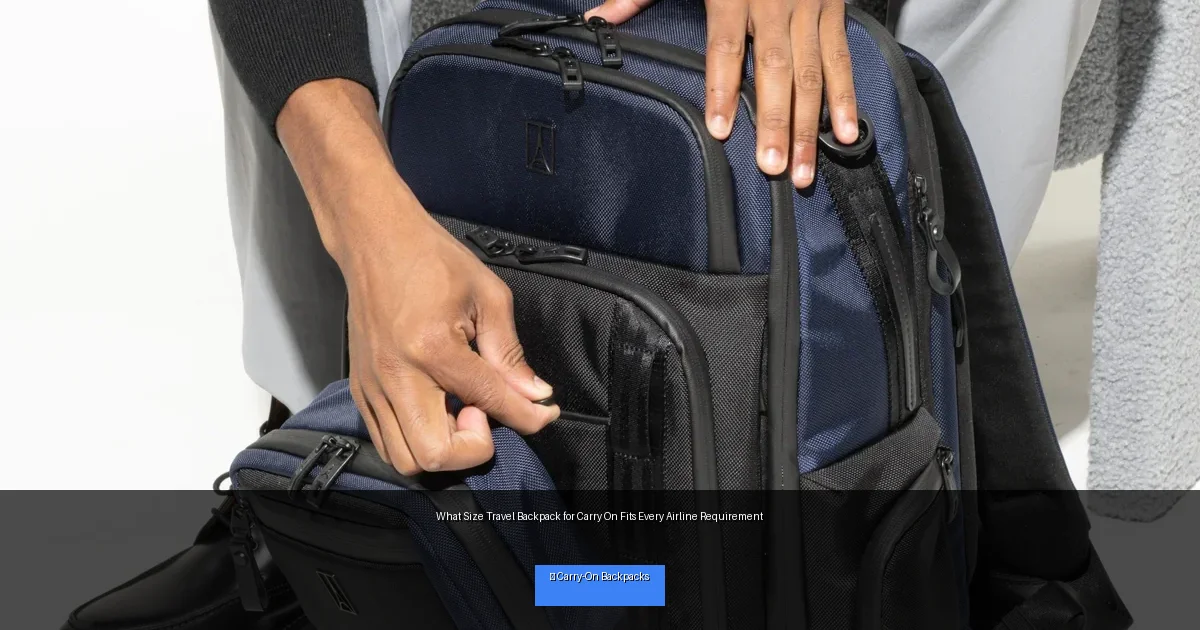
Visual guide about What Size Travel Backpack for Carry On Fits Every Airline Requirement
Image source: travelpro.com
Common Size Limits
- Typical maximum dimensions: 22 inches (height) x 14 inches (width) x 9 inches (depth)
- Some airlines allow slightly smaller or larger sizes, but staying within these dimensions works for nearly all.
- Weight limits may also apply, usually between 15-22 pounds, depending on the airline.
Tip: Always check your specific airline’s website before traveling, as policies can change.
Step 2: Measure Your Backpack Correctly
Knowing how to measure your backpack accurately ensures it fits the carry-on size requirements.
How to Measure
- Height: Measure from the bottom of the backpack to the top of the highest point, including handles or straps.
- Width: Measure across the widest part of the backpack, including side pockets.
- Depth: Measure from front to back at the thickest point.
Don’t forget to include any protruding parts like external pockets, water bottle holders, or compression straps.
Practical Example
If your backpack measures 21 x 13 x 8 inches including straps and pockets, it should fit the carry-on size limits of most airlines.
Step 3: Choose a Backpack Designed for Carry-On Use
Not all backpacks are created equal when it comes to traveling. Look for backpacks specifically designed to meet carry-on size standards.
Features to Look For
- Compact size: Close to or smaller than 22 x 14 x 9 inches
- Lightweight materials: To avoid exceeding weight limits
- Expandable compartments: For extra packing space when needed
- Easy access: Front-loading or clamshell designs for quick packing and security checks
- Durability: Strong zippers and water-resistant fabric
Example: Travel backpacks like the Osprey Farpoint 40 or Nomatic Navigator are popular carry-on sizes that work well for many travelers.
Step 4: Pack Smart to Maximize Space
Even the right size backpack can be a pain if it’s packed poorly. Here’s how to maximize space and ensure your bag fits in overhead compartments or under the seat.
Packing Tips
- Roll clothes: Rolling saves space and reduces wrinkles.
- Use packing cubes: Organize your items and compress clothes.
- Limit bulky items: Wear heavier jackets on the plane instead of packing them.
- Distribute weight evenly: To make carrying more comfortable.
- Keep liquids accessible: Store travel-sized liquids in a clear ziplock for security checks.
Step 5: Understand Personal Item vs. Carry-On Backpack
Most airlines allow a personal item in addition to a carry-on bag. This personal item can be a smaller backpack, purse, or laptop bag.
How This Helps
- Use your travel backpack as your carry-on and bring a small personal item for essentials.
- Check size limits for personal items — usually around 18 x 14 x 8 inches.
This approach maximizes your packing potential while following airline rules.
Troubleshooting: What If Your Backpack Is Too Big?
If your backpack exceeds the allowed size, here are some things you can do:
- Compress or repack: Remove non-essential items and compress clothes with packing cubes.
- Use a smaller backpack: Consider downsizing to a model designed for carry-on compliance.
- Check airline exceptions: Some airlines allow a slightly larger personal item or have flexible policies.
- Gate check option: If forced to check your bag, ask about gate check to avoid long waits.
Conclusion
Choosing the correct travel backpack for carry on size is essential for smooth air travel. By understanding airline size restrictions, measuring your backpack properly, and packing smart, you can avoid extra fees and stress. Remember to check each airline’s specific rules and opt for a lightweight, durable backpack designed for carry-on use. With the right backpack and packing techniques, your travels will be easier and more enjoyable.
🎥 Related Video: Best Lightweight Travel Backpacks for 2026 (Tested Head to Head)
📺 Away Together w/ Nik and Allie
Looking for the best lightweight travel backpack for one-bag travel? In this video, I’m comparing 9 of the top-rated lightweight …