Would a Backpack Be Considered a Carry On for Air Travel Tips
Wondering if a backpack can be your carry on for air travel? This guide breaks down airline policies, size requirements, and practical tips to help you pack smartly. Discover how to choose the right backpack and avoid travel hassles.
Key Takeaways
- Backpacks are generally accepted as carry on bags: Most airlines allow backpacks as carry ons if they meet size limits.
- Size matters: Always check your airline’s specific size and weight restrictions for carry on luggage.
- Choose the right backpack: Lightweight, durable, and organized backpacks work best as carry ons.
- Packing efficiently helps: Use packing cubes and roll clothes to maximize space inside your backpack.
- Check for additional personal item rules: Some airlines allow a backpack as a personal item instead of a carry on.
- Be prepared for security checks: Backpacks should be easy to open and organize for TSA screening.
- Consider airline variations: Low-cost carriers often have stricter carry on rules than major airlines.
Would a Backpack Be Considered a Carry On for Air Travel Tips
Planning your next trip and wondering, “Would a backpack be considered a carry on?” You’re not alone. Many travelers prefer backpacks for their convenience and comfort. This guide will explain everything you need to know about bringing a backpack as your carry on, how to pick the right one, and how to pack it efficiently to breeze through airport security and onto the plane.
Understanding Airline Carry On Policies
What Counts as a Carry On?
A carry on is any bag you bring into the airplane cabin with you. Airlines typically allow one carry on bag plus one personal item, like a purse or laptop bag. A backpack often counts as your carry on bag, but size and weight restrictions vary by airline.
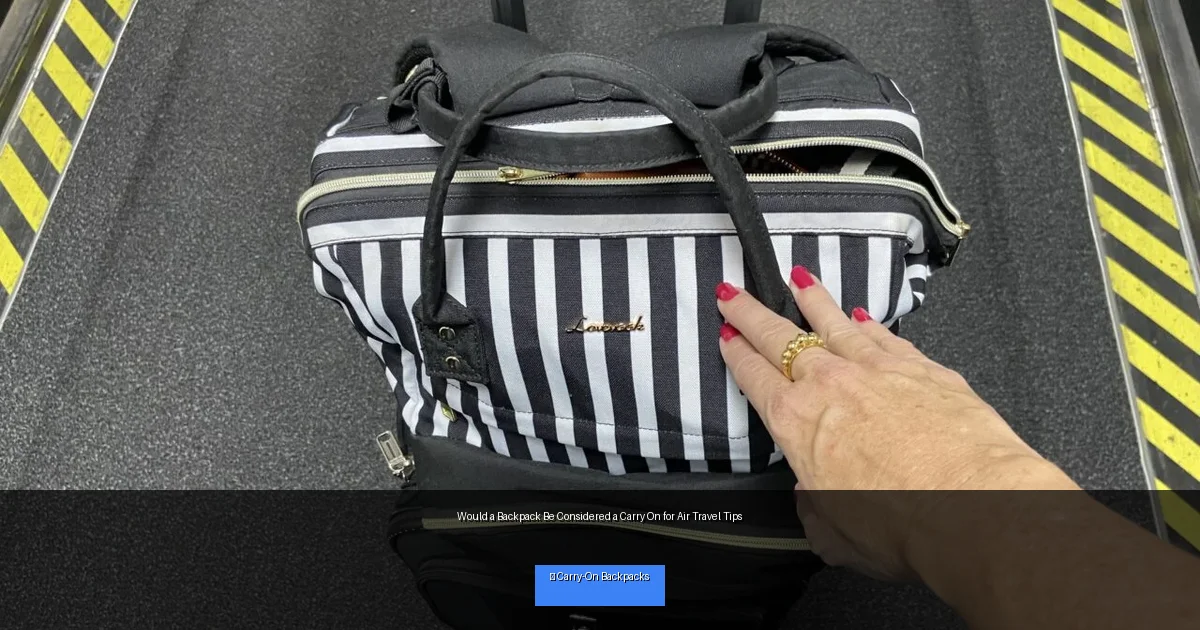
Visual guide about Would a Backpack Be Considered a Carry On for Air Travel Tips
Image source: traveltipsbylaurie.com
Common Size Restrictions
Most airlines limit carry on bags to about 22 x 14 x 9 inches (56 x 36 x 23 cm). Your backpack must fit within these dimensions to qualify as a carry on. Always check your specific airline’s website before flying, as some low-cost carriers have stricter size limits.
Weight Limits
While many U.S. airlines do not have strict weight limits for carry ons, international flights and budget airlines may enforce limits ranging from 15 to 22 pounds (7 to 10 kg). A lightweight backpack helps you stay within these limits.
Choosing the Right Backpack for Carry On
Size and Dimensions
Pick a backpack that fits the airline’s carry on size limits. A 40-liter backpack is usually a good size for carry on travel. Avoid oversized daypacks or hiking backpacks that exceed dimensions.
Material and Weight
Look for backpacks made of durable yet lightweight materials like nylon or polyester. This helps reduce the total weight you carry.
Compartments and Organization
A backpack with multiple compartments makes packing and unpacking easier. Consider one with a dedicated laptop sleeve and quick-access pockets for travel essentials.
Comfort Features
Choose a backpack with padded shoulder straps and a breathable back panel. Adjustable straps help customize the fit for comfort on long walks through airports.
How to Pack Your Backpack as a Carry On
Step 1: Make a Packing List
Start by listing essentials: clothes, toiletries, electronics, documents, and any other must-haves. This prevents overpacking.
Step 2: Use Packing Cubes or Compression Bags
Packing cubes help organize items and compress clothes to save space. Roll clothes tightly to avoid wrinkles and maximize room.
Step 3: Place Heavier Items at the Bottom
Put shoes and heavier gear near the bottom to balance the load and keep the backpack comfortable to carry.
Step 4: Pack Electronics and Valuables in Easy-to-Access Compartments
Keep laptops, tablets, chargers, passports, and wallets where you can reach them quickly during security checks.
Step 5: Keep Liquids in a Clear Bag
Follow TSA rules and pack liquids in a quart-sized clear bag for smooth security screening.
Tips for Traveling with a Backpack Carry On
- Check the airline’s carry on rules before packing. Each airline can have different size and weight limits.
- Wear your backpack on the plane to save overhead bin space. This is especially helpful on crowded flights.
- Use a backpack with lockable zippers for security.
- Label your backpack with your contact info in case it gets lost.
- Keep travel documents and boarding passes in an easy-to-reach pocket.
Troubleshooting Common Issues
Backpack Too Large for Carry On?
If your backpack exceeds size limits, consider switching to a smaller daypack or compressing items into a soft-sided bag that fits better.
Weight Limit Exceeded
Remove non-essential items or wear heavier clothing on the plane to reduce backpack weight.
Security Check Delays
Organize electronics and liquids for quick removal at security. A backpack with a lay-flat laptop compartment speeds up screening.
Conclusion
Yes, a backpack is typically considered a carry on for air travel. It is a popular choice thanks to its comfort and convenience. The key is to ensure your backpack meets airline size and weight rules. By choosing the right backpack and packing smartly, you can avoid surprises at the airport and enjoy a hassle-free travel experience. Always double-check your airline’s current policies before flying, and you’ll be set to go!