Should a Woman Avoid Saying Her Hotel Room Number Out Loud?
Quick Answer
Yes. A woman traveling alone should generally avoid saying her hotel room number out loud where strangers can overhear, especially in a busy lobby, elevator, restaurant, or hallway. Ask reception to write the number down instead, and request a different room if staff announce it publicly. This simple privacy habit supports the broader hotel safety practices recommended by the U.S. Department of State.
How to Keep Your Room Number Private
- Request discretion: Ask the receptionist to write your room number on the key packet or show it to you privately.
- Protect your key: Keep the key card separate from any sleeve displaying your room number.
- Limit disclosure: Don’t share your room number with unfamiliar guests, strangers, or people you have just met.
- Correct mistakes: If staff announce your number within earshot of other guests, request a room change if you’re concerned.
- Verify unexpected visitors: Call the front desk before responding to an unfamiliar person at your door.
- Know when to escalate: If someone follows you, repeatedly approaches your room, or makes you feel threatened, contact hotel security or local emergency services.
One Important Reminder
- Keeping your room number private is a sensible precaution, not a reason to assume every person nearby is dangerous. Combine discretion with locked doors, reliable hotel staff, and a plan for getting help.
When you’re traveling alone, small privacy decisions can make a hotel stay feel more secure. One of the easiest habits to adopt is keeping your room number out of conversations that strangers might overhear.
In this guide, I’ll explain why room-number privacy matters, what to do at check-in, how to handle accidental disclosure, and when sharing your room details is appropriate. You’ll also find practical responses for uncomfortable situations without feeling that you need to be constantly on guard.
In This Guide
- Why should a woman keep her hotel room number private?
- How can you keep your room number private at check-in?
- What should you do if hotel staff announce your room number?
- When is it appropriate to share your room number?
- What other hotel privacy habits help solo female travelers?
- How should you respond to suspicious hotel situations?
- Frequently asked questions
Why Should a Woman Keep Her Hotel Room Number Private?
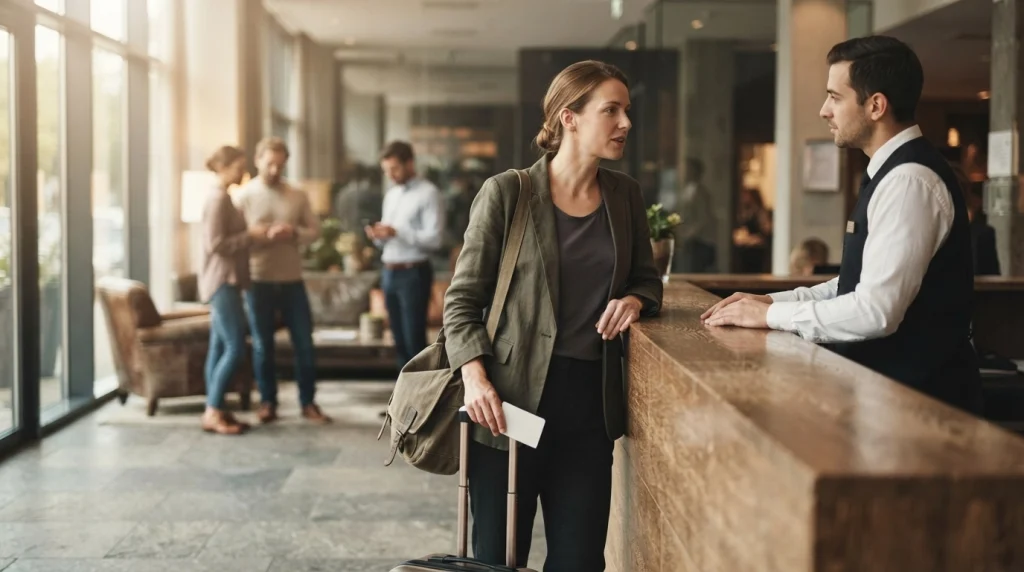
A woman traveling alone should keep her hotel room number private because it helps prevent unfamiliar people from easily locating her accommodation. A room number can give someone information they don’t need, particularly when they have no legitimate reason to know where you’re staying.
This doesn’t mean that saying a number automatically puts you in danger. It means there’s little benefit to announcing your room location in public, so keeping it discreet is a sensible precaution.
What could happen if someone overhears your room number?
Most hotel guests are simply checking in, collecting keys, or heading to their rooms. However, someone who overhears your number may be able to find your door or use that information to make an unwanted approach.
Potential concerns include:
- Unwanted visits: Someone you don’t know could approach your door without an invitation.
- False familiarity: A person might claim you previously agreed to meet them in your room.
- Privacy loss: An unfamiliar person may learn which part of the hotel you’re staying in.
- Targeted harassment: In an uncomfortable situation, knowing your room location could make it easier for someone to continue approaching you.
These are possible risks, not inevitable outcomes. The point is to avoid giving strangers unnecessary information that could make unwanted contact easier.
Why does room-number privacy matter during solo travel?
Solo female travel means taking a trip without a travel companion and making your own decisions about accommodation, transportation, and personal safety. That independence is rewarding, but it also makes it useful to establish clear privacy boundaries.
When you travel with friends, another person may notice an uncomfortable interaction or help you seek assistance. When you’re alone, protecting your personal information is one practical way to reduce unnecessary exposure.
Room-number privacy is especially useful when:
- You’re checking into an unfamiliar hotel late at night.
- The reception desk is crowded or close to a seating area.
- Other guests are standing within hearing distance.
- You’ve just met someone who wants to know where you’re staying.
- You feel uncomfortable with someone paying unusual attention to you.
You don’t need to assume bad intentions. A quiet, consistent privacy habit is enough.
Section takeaway: Keep your room number private around strangers because it reveals your location inside the hotel without offering them any necessary information.
How Can You Keep Your Room Number Private at Check-In?
The simplest approach is to ask reception to communicate your room number discreetly rather than saying it aloud. You can make this request politely before the receptionist assigns your room, so there’s no need for an awkward correction later.
What should you say to the receptionist?
You don’t need to explain your personal circumstances or give a detailed reason. A short, confident request is enough.
- “Could you please write my room number down instead of saying it aloud?”
- “I’d prefer to keep my room number private, please.”
- “Could you show me the room number on the key packet?”
- “Please don’t disclose my room number to anyone who asks.”
These requests are reasonable and easy for hotel staff to understand. If you’re booking ahead, you can also contact the property and ask whether it can accommodate discreet check-in procedures.
What should you do with your key card?
Some hotels provide a paper sleeve with the room number printed on it. Treat that sleeve as private information rather than something to display in public.
Use these simple habits:
- Remove the key card from its sleeve before using it in public areas.
- Store the sleeve in a closed pocket or bag rather than holding it outward.
- Avoid leaving the sleeve on a restaurant table, lobby counter, or shared workspace.
- Keep the card secure and don’t hand it to unfamiliar people.
- Check whether your key packet includes the hotel address and other identifying details before displaying it.
You can still carry the hotel’s address and telephone number separately for navigation or emergencies. Just avoid displaying the room number alongside them unnecessarily.
How should you handle check-in when the lobby is crowded?
A crowded lobby makes discreet communication more important because several people may be within hearing distance. Stand close enough to speak privately with the receptionist, but don’t feel you must repeat sensitive details loudly to be understood.
If the desk is busy, you can ask the staff member to point to the room number on a paper slip or key sleeve. Wait until the conversation is private before discussing any issue involving your room assignment.
Also, pay attention to the information on any registration paperwork. Don’t leave documents containing your room number, name, or booking details visible to other guests.
Should you ask the hotel to keep your room number confidential?
Yes. Ask staff not to disclose your room number to callers or people who inquire in person, and confirm that they can follow this preference.
Some hotels have specific guest-privacy procedures, while others may handle requests differently. If confidentiality is important to you, clarify the policy during check-in rather than assuming every property follows the same process.
Section takeaway: Request a discreet check-in, keep your key sleeve out of public view, and ask reception to treat your room assignment as confidential.
What Should You Do If Hotel Staff Announce Your Room Number?
If a receptionist says your room number aloud where other guests can hear, calmly ask for another room if you believe the disclosure has compromised your privacy. The situation doesn’t automatically mean you’re in danger, but you can request a practical solution.
When is a room change worth requesting?
A room change is worth considering when the number was clearly audible to unfamiliar people nearby, especially if someone appeared to be listening or paying unusual attention to you. You can explain that you prefer a room assignment that hasn’t been publicly announced.
Try this wording:
“My room number was announced where other guests could hear it. For privacy reasons, could I please be assigned another room and have the new number given to me discreetly?”
Hotel staff may need to check availability and complete a new assignment. Ask them to avoid announcing the replacement number as well.
What if the receptionist refuses?
Explain your concern clearly and ask to speak with a supervisor or the duty manager. You can request that the hotel document your privacy preference and confirm that staff won’t disclose your room details to other guests.
If the hotel cannot offer another room, consider the circumstances rather than making an automatic decision. A brief, overheard announcement in an otherwise calm lobby may not justify relocating, while suspicious behavior or repeated unwanted attention deserves a stronger response.
Consider changing accommodation if the staff dismiss a credible safety concern, someone continues to target you, or you no longer feel comfortable staying there. Ask the property to help arrange safe transportation if you need to leave.
What if someone seems to have followed you to your room?
Don’t confront the person alone or continue directly to your room if you believe you’re being followed. Return to a staffed public area, contact reception or security, and explain what you’ve observed.
If the person is already near your door, move to a place where staff can assist you rather than engaging with them in the corridor. If you face an immediate threat, contact local emergency services.
Section takeaway: A room change is a reasonable request after public disclosure, but the right response depends on the circumstances and any signs of unwanted attention.
When Is It Appropriate to Share Your Room Number?
You don’t have to keep your room number secret from everyone. Sharing it with trusted people or authorized hotel staff can be appropriate, but it’s best to disclose it only when there’s a clear reason.
Who may need to know your room number?
- Trusted family or friends: You may choose to share your accommodation details with someone you trust for trip coordination or emergency planning.
- Authorized hotel staff: Reception, housekeeping, maintenance, or security may need your room information to provide a requested service.
- Emergency responders: If you need help, providing your location to appropriate responders can be essential.
- Travel companions you trust: If you’re meeting a friend or relative, sharing the number may be convenient, though a lobby meeting is often a better option.
Even with trusted contacts, use a private channel when possible. You can share the hotel name, address, and booking details with a trusted person without announcing your room number to everyone nearby.
Should you tell someone you just met at a hostel or hotel?
Generally, there’s no need to tell a new acquaintance your room number. If you’d like to socialize, arrange to meet in the lobby, café, restaurant, or another public area instead.
Someone may be friendly and well-intentioned, but you don’t need to provide access to your accommodation to maintain a social connection. A person who respects your boundaries should accept a public meeting without pressure.
Be particularly cautious if someone insists on knowing your room number, asks to visit unexpectedly, or becomes annoyed when you decline to share it. You can end the conversation without explaining yourself.
What if room service or a delivery needs your room number?
Hotel staff may need your room number to deliver a service you’ve requested. Use the hotel’s official ordering process, and confirm the employee’s identity through reception if an unexpected person arrives.
For outside food deliveries, follow the property’s delivery rules and consider collecting the order in the lobby. That avoids giving an unfamiliar delivery worker unnecessary access to your room or corridor.
Room-number privacy is about controlling unnecessary disclosure, not making normal hotel operations difficult.
| Situation | Recommended response |
|---|---|
| Receptionist at a crowded desk | Ask for the room number in writing. |
| Trusted friend coordinating a visit | Share privately if needed, or arrange to meet in the lobby. |
| New acquaintance asking where you sleep | Decline to share and suggest a public meeting place. |
| Unexpected visitor claiming to be hotel staff | Keep the door locked and verify the visit with reception. |
| Emergency requiring assistance | Give your location to hotel security or emergency responders. |
Section takeaway: Share your room number when it’s necessary and appropriate, but don’t treat it as casual information for new acquaintances or strangers.
What Other Hotel Privacy Habits Help Solo Female Travelers?
Keeping your room number private works best alongside other basic hotel security habits. The goal is to make it harder for strangers to identify, locate, or approach you without a legitimate reason.
How can you protect your hotel room key?
Your key card gives access to your room, so handle it as carefully as you would a house key. Don’t leave it unattended or lend it to someone you don’t trust.
- Keep your key card in a secure pocket or bag.
- Don’t leave it on a table while eating or working in public spaces.
- Report a lost key card to reception promptly and ask staff to deactivate it if the system supports that feature.
- Ask the hotel how it verifies identity before issuing a replacement key.
These habits reduce avoidable access risks. They also help prevent someone from taking advantage of a lost card or a casually shared key.
Should you share your hotel location on social media?
Consider waiting until after you leave a property before posting identifiable room details, room views, or live location updates publicly. A photo may reveal your hotel name, floor, view, or other clues even if you don’t mention your room number.
If you want friends and family to know where you are, send your itinerary directly to trusted contacts. You can also agree on a check-in time with someone who will notice if you miss a planned update.
What should you check when entering your hotel room?
Once you arrive, make sure the room’s security features work before settling in. The U.S. Department of State recommends checking locks, confirming that the room phone works, and learning the emergency exit route.
- Check that the door closes securely and that the deadbolt or other available locks work.
- Make sure windows, balcony doors, and connecting doors are secured.
- Locate the nearest emergency exit and read the posted evacuation instructions.
- Find out how to contact the front desk or hotel security from your room.
- Report broken locks, unexpected access, or other concerning issues immediately.
These checks are particularly useful when you arrive after dark or stay in an unfamiliar property. If a lock doesn’t work properly, ask for a repair or a different room rather than assuming the problem is harmless.
How can you keep your location private in shared spaces?
Think about what others can hear or see when you’re using hotel facilities. Conversations about your room, travel schedule, or periods when you’ll be away may reveal more information than you intend.
- Avoid announcing your room number in elevators, lobbies, bars, and restaurants.
- Keep booking confirmations and key sleeves out of other guests’ view.
- Meet new acquaintances in public spaces rather than inviting them to your room.
- Use a hotel contact number saved on your phone so you can reach reception quickly.
Section takeaway: Room-number privacy is one part of a broader safety routine that includes secure keys, working locks, careful social sharing, and a clear emergency plan.
How Should You Respond to Suspicious Hotel Situations?
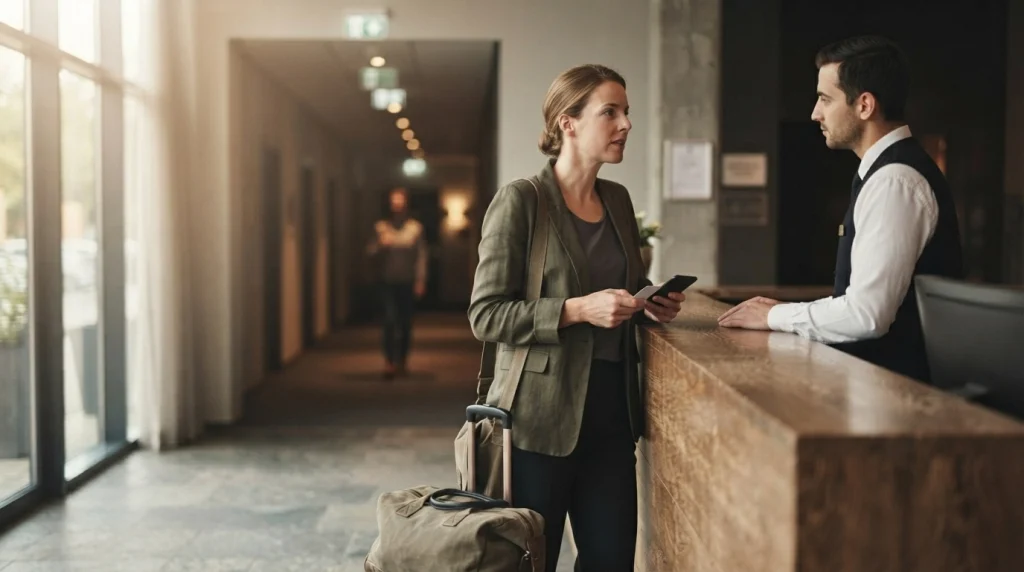
If someone appears to know your room number and behaves in a way that makes you uncomfortable, take the concern seriously without assuming you know their intentions. Move toward a staffed public area and ask hotel security or reception for assistance.
What if someone knocks and claims to know you?
Keep the door locked until you can verify the person’s identity and reason for visiting. A claim that someone sent them, that they’re delivering something, or that they’re hotel staff isn’t enough on its own to establish that they’re authorized to enter.
Call reception using the hotel’s verified contact information and ask whether the visit is expected. If staff cannot confirm the person’s identity, don’t open the door simply to be polite.
What if someone asks reception for your room number?
Ask the hotel to keep your room assignment confidential and to direct unexpected visitors to contact you through an approved method. If a person claims to be a friend or relative, you can decide whether to contact them yourself.
You don’t need to confirm your presence or explain your plans to someone you don’t want to see. If the inquiry is part of repeated unwanted contact, request assistance from the manager or security team.
When should you leave or contact emergency services?
Consider leaving the property if you face a credible threat, repeated harassment, unauthorized attempts to enter your room, or a hotel response that fails to address a serious security concern. If you can do so safely, move to a staffed public place and arrange transportation to another suitable location.
Contact local emergency services if someone threatens you, attempts to force entry, assaults you, or creates an immediate danger. Use the emergency number applicable to your destination, since numbers differ between countries.
For international trips, review official destination safety guidance before departure. The U.S. Department of State travel resources provide country-specific advisories for travelers, while the Government of Canada’s travel advice and advisories offer another official source of destination information.
Pro tip: Before traveling, save your hotel’s direct telephone number, identify the local emergency number, and review your government’s current travel advisory for your destination.
Section takeaway: Trust your judgment when a situation feels unsafe, verify unexpected visitors through the hotel, and seek immediate help when there is a credible threat.
Frequently Asked Questions
Is it dangerous to say your hotel room number out loud?
Not necessarily, but announcing your room number where strangers can hear it reveals your location inside the hotel. Keeping it private is a sensible precaution because it limits unnecessary information sharing without requiring you to assume everyone nearby poses a threat.
Should I ask for a new room if the receptionist says my room number aloud?
Yes, you can request a new room if other guests could hear the number and you’re concerned about privacy. Explain the issue calmly and ask staff to communicate the replacement number discreetly. Whether a room change is necessary depends on the circumstances and your comfort level.
Can hotel staff give my room number to another guest?
Hotel privacy policies and local requirements vary, so don’t assume every property follows identical procedures. Ask reception not to disclose your room number and clarify its guest-confidentiality policy. If someone asks for you, staff can direct them to contact you through an appropriate channel.
Should I tell a taxi driver which hotel room I’m staying in?
No. A taxi driver generally needs your destination address, not your room number. Give the driver the hotel name or street address, and keep your room assignment private unless a specific, legitimate need arises.
Is it safe to share my room number with someone I meet while traveling?
It’s generally better not to share your room number with a new acquaintance. If you’d like to spend time together, arrange to meet in the hotel lobby, café, or another public location. You can be friendly without providing access to your accommodation.
What should I do if someone already knows my hotel room number?
Knowing your room number alone doesn’t prove that someone intends harm. If the person is behaving suspiciously or repeatedly approaches you, notify hotel staff, request a room change if appropriate, and avoid meeting them alone. Contact local emergency services if you face an immediate threat.
Should I give my hotel room number to family or friends?
You may share it privately with trusted people when it’s useful for coordination or emergencies. You can also share the hotel’s name, address, and contact number without providing your room number. The important distinction is between a trusted contact and someone who has no legitimate reason to know your location.
**Final takeaway:** Yes, a woman traveling alone should generally avoid saying her hotel room number out loud in public. Ask staff to write it down, protect your key sleeve, and request a different room if the number is announced where strangers can hear it and you feel your privacy has been compromised.
A few discreet habits can help you protect your personal space while still enjoying your trip with confidence. You don’t need to be fearful or secretive with everyone; simply share your room details thoughtfully and act promptly when something feels wrong.