
What Should a Solo Female Traveler Do If Someone Knocks on Her Hotel Door?
Quick Answer
If someone knocks on your hotel room door while you’re traveling alone, keep the door locked until you know who is outside. Check through the peephole or door viewer if available, but verify unexpected visitors by calling the front desk using a trusted number. If the person acts threateningly, refuses to leave, or tries to force entry, contact hotel security and local emergency services immediately.
What to do right away
- Keep the door locked: Use the deadbolt, security latch, or other built-in lock while you assess the situation.
- Identify the visitor: Look through the peephole or use a door camera without opening the door.
- Verify their identity: Call reception independently if someone claims to be hotel staff, maintenance, or room service you didn’t request.
- Don’t reveal you’re alone: You don’t need to explain your circumstances, booking details, or travel plans.
- Get help early: Contact reception or security if the knock feels suspicious, continues repeatedly, or makes you uncomfortable.
- Act on immediate danger: Move away from the door and call local emergency services if someone threatens you or attempts to enter by force.
Remember
- You don’t owe an unexpected visitor an explanation or access to your room.
- Trust your discomfort, verify the situation independently, and prioritize safety over politeness.
When you’re traveling alone, an unexpected knock at your hotel door can make you pause, especially late at night or in an unfamiliar destination. Knowing how to respond helps you stay calm, protect your privacy, and decide when to ask for assistance.
In this guide, I’ll explain how to assess an unexpected visitor, verify hotel employees, handle persistent knocking, and recognize when to contact security or emergency services. The goal is a practical response you can follow even when you’re tired, startled, or unsure what to do next.
In This Guide
- What should you do first when someone knocks?
- How can you identify and verify the visitor?
- What if someone keeps knocking or acts suspiciously?
- When should you contact hotel security or emergency services?
- How should you handle common hotel-door situations?
- How can you prepare your hotel room for a safer night?
- Frequently asked questions
What Should You Do First When Someone Knocks?
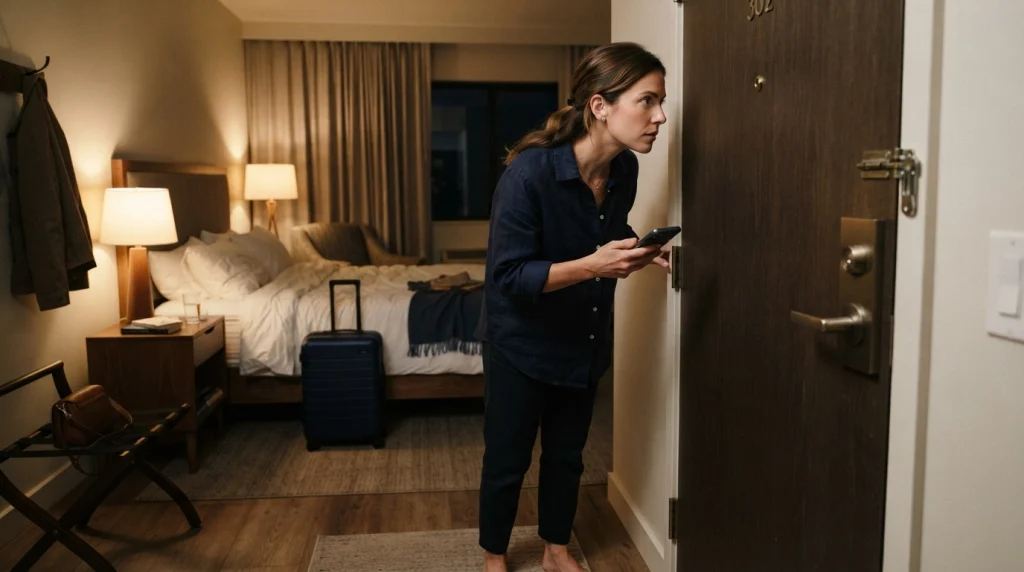
The safest first response is to keep the door closed, secure the lock, and assess what’s happening before responding. An unexpected knock doesn’t automatically mean danger, but you should never feel obliged to open the door before verifying the visitor.
1. Keep the door secured
If the door is already locked, leave it that way. Engage the deadbolt, swing lock, or built-in security latch if your room has one.
Don’t open the door a little to ask who is there. A partially opened door can give someone an opportunity to push their way inside.
2. Pause and listen
Notice whether the person knocks once, calls out a name, identifies themselves, or continues knocking without explanation. These details can help you decide whether to contact reception, but they cannot establish someone’s identity by themselves.
If you’re startled, take a slow breath and reach for your phone. You can handle the situation one step at a time.
3. Check without opening the door
If your room has a peephole, use it to see who is outside while keeping the door locked. A door camera or other built-in viewing system may also help.
If you can’t see the visitor clearly, don’t step into the hallway to investigate. Call the front desk instead.
4. Avoid sharing personal information
You can ask, “Who is it?” through the closed door if you feel comfortable doing so. You don’t need to confirm your name, say you’re alone, or explain why you’re in the room.
If the person claims to have the wrong room, you can simply remain inside and let hotel staff resolve the confusion.
Section takeaway: Keep the door locked, assess the situation without exposing yourself, and verify unexpected visitors before considering any further interaction.
How Can You Identify and Verify the Visitor?
Seeing a uniform or hearing someone claim to work for the hotel isn’t enough to confirm their identity. The safest approach is to verify unexpected visitors through a separate, trusted contact channel before granting access.
If someone claims to be hotel staff
A visitor might say they’re from housekeeping, maintenance, reception, or room service. If you didn’t request a visit, keep the door closed and call the front desk to confirm whether an employee was sent to your room.
Use the number printed on your key packet, the hotel’s official website, or a trusted booking confirmation. Don’t rely solely on a phone number supplied by the person outside.
Ask reception to confirm three things:
- Whether someone was assigned to visit your room.
- The reason for the visit and the employee’s identity.
- Whether staff can accompany the employee or handle the request another way.
If reception cannot verify the visit, tell the caller that you won’t open the door until the situation is clarified. Legitimate staff should be able to work through the hotel’s normal procedures.
If someone says they have a delivery
If you haven’t ordered anything, don’t assume a food delivery, package, or other item is meant for you. Confirm any expected delivery through the service you used or through reception.
If you did order room service, ask the employee to leave the order outside or arrange a handoff that follows the property’s security procedures. Never compromise your door security simply because someone says a delivery will be returned.
If the visitor claims there’s an emergency
Someone might say there’s a leak, a maintenance problem, or an urgent issue that requires immediate access. Keep the door closed while you independently contact reception or hotel security.
If there is a credible fire alarm, visible smoke, or another immediate hazard, follow the hotel’s emergency instructions and evacuate when necessary. Don’t remain in a dangerous room merely to avoid interacting with someone outside.
Pro tip: The U.S. Department of State’s lodging safety guidance recommends contacting the front desk about suspicious activity and meeting strangers in public areas rather than inside your room.
Section takeaway: Verify unexpected visits independently, even when the visitor sounds convincing or appears to be an employee. You can refuse access until your concerns are resolved.
What If Someone Keeps Knocking or Acts Suspiciously?
Repeated knocking, attempts to pressure you into opening the door, or unexplained activity outside your room warrant extra caution. Keep the door locked, avoid confronting the person, and contact hotel security or reception for assistance.
When the knocking continues
If someone knocks repeatedly without identifying themselves, you don’t need to keep answering or negotiate through the door. Call the front desk and describe what’s happening, including your room number and the time the behavior started.
Ask hotel security to investigate and remain available by phone. If you feel unsafe, request that staff arrange a room change or escort you to another secure location.
When someone tries the handle
If someone tries your door handle, treat the situation more seriously, particularly if you haven’t invited anyone in. Don’t unlock the door to challenge the person or check whether they have made a mistake.
Contact security immediately and tell them that someone is attempting to access your room. If the person is trying to force entry, threatening you, or creating an immediate danger, call local emergency services.
When someone refuses to leave
A visitor who ignores your refusal, threatens you, or waits outside your door after you request assistance may be creating a safety risk. You don’t have to determine their motives before seeking help.
Move away from the entrance if you suspect an attempted break-in. Keep your phone with you, follow instructions from emergency responders, and avoid going into the hallway to confront the person.
When you’re unsure whether your concern is justified
You don’t need proof of bad intentions before asking hotel staff to check an unexpected visitor. A mistaken delivery or confused guest can be handled safely without opening your door.
Focus on observable behavior rather than guessing why someone is there. Repeated attempts to enter, threats, and refusal to leave are more useful reasons to escalate than appearance or assumptions about the visitor.
Section takeaway: Persistent or threatening behavior deserves a response, even if you cannot explain it. Keep the barrier between you and the visitor, and let trained staff or emergency responders handle the situation.
When Should You Contact Hotel Security or Emergency Services?
Contact hotel security whenever an unexpected visitor makes you uncomfortable, refuses to leave, or behaves in a way you cannot verify. Call local emergency services if someone attempts forced entry, threatens violence, or creates an immediate danger.
Call the front desk for verification
For an unexplained but non-threatening knock, reception is usually the right first contact. Explain what happened and ask staff to verify the visitor before sending anyone to your door.
If you are staying in a vacation rental without a staffed reception desk, contact the host or property manager through the official booking platform. If the situation becomes dangerous, don’t wait for a reply from the host before seeking emergency assistance.
Contact hotel security for suspicious behavior
Ask security for help if someone keeps knocking, lingers outside, tries the handle, or ignores requests to leave. Describe the person’s behavior clearly instead of relying on labels such as “suspicious-looking.”
Give staff your room number, explain whether the person is still present, and state whether you feel in immediate danger. Ask whether a security employee can attend your floor and stay with you while the matter is resolved.
Call emergency services when danger is immediate
If someone is forcing the door, making credible threats, or attempting to enter your room, contact local emergency services. Use the emergency number for your current destination rather than assuming your home country’s number will work.
When you call, provide your hotel’s name, full address, room number, and a brief description of what’s happening. If you cannot safely reach the door or speak loudly, tell the dispatcher that when possible and follow their instructions.
Should you change rooms or leave the hotel?
A room change may help when the visitor’s identity remains uncertain, the property cannot explain the incident, or you no longer feel safe in your room. Ask management to arrange the change securely rather than walking alone into a corridor where the person may still be waiting.
If you suspect someone has obtained your room key or knows your room number, request a new room and ask staff to invalidate the old key where possible. Don’t share the new room number with the person involved or anyone you don’t trust.
If management dismisses a credible threat or cannot provide adequate protection, consider moving to another accommodation. Arrange transport and assistance through trusted staff or a verified service, provided leaving is safer than remaining inside.
Section takeaway: Use reception for verification, security for suspicious behavior, and emergency services for immediate danger. Don’t wait for hotel procedures to finish if someone is actively trying to hurt you.
How Should You Handle Common Hotel-Door Situations?
The right response depends on what the visitor does and whether the visit was expected. In every case, preserve the locked barrier until you have enough reliable information to decide what happens next.
| Situation | Safest response | Who to contact |
|---|---|---|
| One unexplained knock | Keep the door locked and check who is there without opening it. | Reception if the visitor is unknown. |
| Unexpected housekeeping visit | Verify the employee and reason through a trusted hotel contact. | Front desk. |
| Unrequested food delivery | Don’t open the door; verify whether you placed an order. | Delivery service or reception. |
| Repeated knocking without explanation | Stay inside, avoid confrontation, and request assistance. | Hotel security. |
| Someone tries the handle | Keep the door secured and move away from it. | Security; emergency services if danger is immediate. |
| Someone forces entry or threatens violence | Move to a safer position, call emergency services, and follow their instructions. | Local emergency services and hotel security if safe to contact. |
| A genuine fire alarm or immediate hazard | Follow the property’s emergency plan and evacuate if required. | Emergency responders and hotel staff. |
Why politeness should not come before safety
Many travelers hesitate because they don’t want to offend a hotel employee or appear unfriendly to another guest. You can be courteous without giving an unverified visitor access to your private space.
A simple response such as “Please contact reception to confirm your visit” is enough. You don’t need to justify your decision or continue a conversation that makes you uncomfortable.
What if the person is someone you met earlier?
A fellow traveler, tour acquaintance, or person you met socially may still be someone you don’t want in your room. If you haven’t invited them, keep the door locked and communicate through the door or your phone.
If you’d like to meet, suggest the hotel lobby, café, or another public place instead. You can change your mind about an invitation at any time.
Section takeaway: Match your response to the behavior you observe, but never treat an unexpected knock as permission to enter. Verification and a locked door are sensible precautions, not rudeness.
How Can You Prepare Your Hotel Room for a Safer Night?
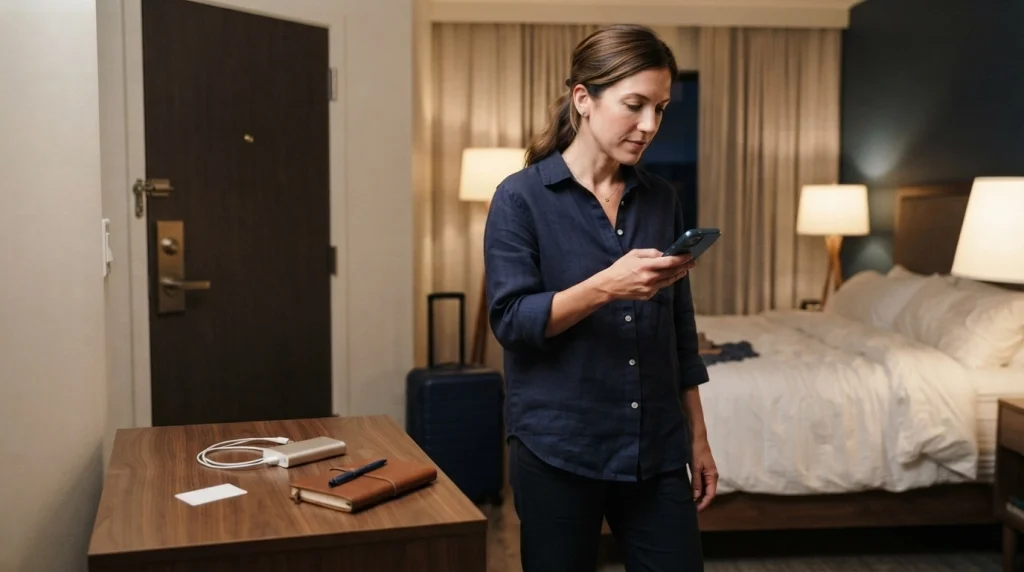
A few checks when you arrive can make an unexpected knock easier to handle. Before settling in, confirm that your room locks work, your phone is usable, and you know how to reach help.
Check the door and room locks
Test the main lock and any deadbolt or built-in security latch. Check that the door closes fully and that windows, balcony doors, and connecting doors are secure.
If the lock doesn’t work properly, report it immediately and request repairs or another room. Don’t assume a loose latch will protect you through the night.
Save important contact details
Save the hotel’s main number and the local emergency number on your phone. If you’re staying in a rental, keep the booking platform and host’s verified contact information accessible.
Know where to find the front desk, security office, and nearest emergency exit. The U.S. Department of State also recommends learning the evacuation route and checking essential room safety features when you arrive.
Keep your phone charged and accessible
Charge your phone before bed and keep it somewhere you can reach without going near the door. If you travel with a power bank, keep it charged and ready to use.
If your room phone is available, check that it works. Knowing how to call reception without searching through your luggage can save time when you’re stressed.
Use additional security devices carefully
Some travelers carry a portable door alarm or a travel doorstop designed to resist opening from the outside. These devices may add another layer of awareness or resistance, but they cannot replace a functioning lock or a response plan.
Before using any device, check the accommodation’s rules and make sure it won’t prevent you from leaving quickly during a fire or other emergency. Never block an emergency exit or rely on a gadget as your only protection.
Protect your room number and travel information
Avoid announcing your room number in public, posting it online, or giving it to people you’ve just met. If you think someone has learned your room number without permission, tell management and ask whether a room change is appropriate.
When checking in, you can also ask staff not to disclose your room number or confirm your presence to other callers. This is especially useful when traveling alone and wanting to keep your accommodation details private.
Pro tip: Review the official lodging safety recommendations before an international trip, and check your destination’s current official travel advice for local emergency contacts and safety considerations.
Section takeaway: Reliable locks, accessible contact details, a charged phone, and a clear exit plan can make you better prepared to respond calmly if someone knocks unexpectedly.
Frequently Asked Questions
Should I open my hotel door if someone knocks late at night?
No. Keep your door locked until you can identify and verify the visitor. If you weren’t expecting anyone, contact reception using a trusted number rather than opening the door to ask questions. If the person behaves threateningly or attempts entry, contact hotel security or local emergency services.
What if someone says they’re from hotel security or the police?
Keep the door locked and independently contact reception or the relevant local authority to verify the visit. Ask for the visitor’s name, role, and reason for attending, then confirm those details through a trusted channel. If an immediate emergency requires action, follow verified emergency instructions without putting yourself in unnecessary danger.
Should I tell the person outside that I’m traveling alone?
No. You don’t need to disclose whether you’re alone, how long you’re staying, or what your plans are. Keep your response brief and neutral, and contact hotel staff if you need help. Protecting your privacy is sensible regardless of whether the visitor seems friendly.
What should I do if someone repeatedly knocks but doesn’t speak?
Leave the door locked and avoid going into the hallway to investigate. Contact reception or security, describe the repeated knocking, and ask staff to check the situation. If the person tries to force entry or threatens you, call local emergency services immediately.
Can I use a portable door lock or doorstop in a hotel room?
A compatible travel door lock or doorstop may provide an extra layer of security, but it cannot replace the room’s built-in locks or hotel security. Check that the device is permitted and does not interfere with emergency evacuation. Choose equipment that fits your door and follow the manufacturer’s instructions.
Should I change rooms after an unexplained knock?
Not necessarily after a single harmless incident, but request a room change if you feel unsafe, someone repeatedly targets your door, or staff cannot resolve a credible concern. Ask management to arrange the move discreetly and prevent unauthorized disclosure of your new room number.
What should I do if someone starts forcing my hotel door open?
Move away from the door, call local emergency services, and contact hotel security if you can do so safely. Give responders your hotel name, address, and room number, and follow their instructions. Don’t attempt to confront the person or open the door to negotiate.
Final Takeaway: You Don’t Have to Open the Door
If someone knocks on your hotel room door while you’re traveling alone, remember three priorities: keep the door locked, verify the visitor independently, and get help when something feels wrong.
You don’t need to decide whether a visitor has bad intentions before protecting your privacy. A legitimate employee or delivery worker can wait while you confirm the visit.
Good solo female travel safety isn’t about expecting danger everywhere. It’s about having a clear plan, knowing whom to contact, and feeling confident enough to put your safety first.
Before your next trip, save your accommodation’s contact details, check your room locks when you arrive, and learn the local emergency number. Those small preparations can make a stressful moment much easier to manage.
