How Can a Woman Choose a Safe Hotel Neighborhood?
Quick Answer
A woman can choose a safe hotel neighborhood by researching local crime and travel advisories, checking recent reviews, and assessing how easy it is to reach transport, shops, and well-used streets. Look for a well-connected area with reliable transport after dark, accessible hotel entrances, and reputable accommodation. For solo female travel safety, prioritize the route between your hotel and everyday destinations, not just the hotel’s rating or price.
What to check before booking
- Local safety advice: Research neighborhood-specific risks and read current official travel advisories.
- Street conditions: Check lighting, pedestrian access, nearby businesses, and whether your route feels isolated after dark.
- Transport access: Confirm reliable public transport, licensed taxis, or reputable ride services are available when you need them.
- Recent reviews: Look for repeated reports of harassment, poor access control, unsafe surroundings, or difficult late-night arrivals.
- Essential services: Identify nearby food shops, pharmacies, medical facilities, and places where you can ask for assistance.
- Hotel security: Check reception hours, entrance controls, working locks, and the availability of staff when problems arise.
One important precaution
- Compare the neighborhood during daylight and after dark using recent street imagery, traveler reports, and local advice. If the evidence is unclear, choose a better-connected alternative.
Choosing a safe hotel neighborhood can make solo travel feel more manageable before you even arrive. I recommend looking beyond attractive hotel photos and comparing the streets, transport options, and practical risks surrounding each property.
This guide explains how to research an unfamiliar area, recognize warning signs, compare neighborhoods, and choose accommodation that suits your itinerary and comfort level. The goal is to make a confident decision without assuming that any neighborhood is completely risk-free.
In This Guide
- What makes a hotel neighborhood safe for women traveling alone?
- How can you research neighborhood safety before booking?
- Which type of neighborhood should you choose?
- How can you check whether an area is safe at night?
- Is hotel location more important than hotel security?
- What should you check before confirming your booking?
- Frequently asked questions
What makes a hotel neighborhood safe for women traveling alone?
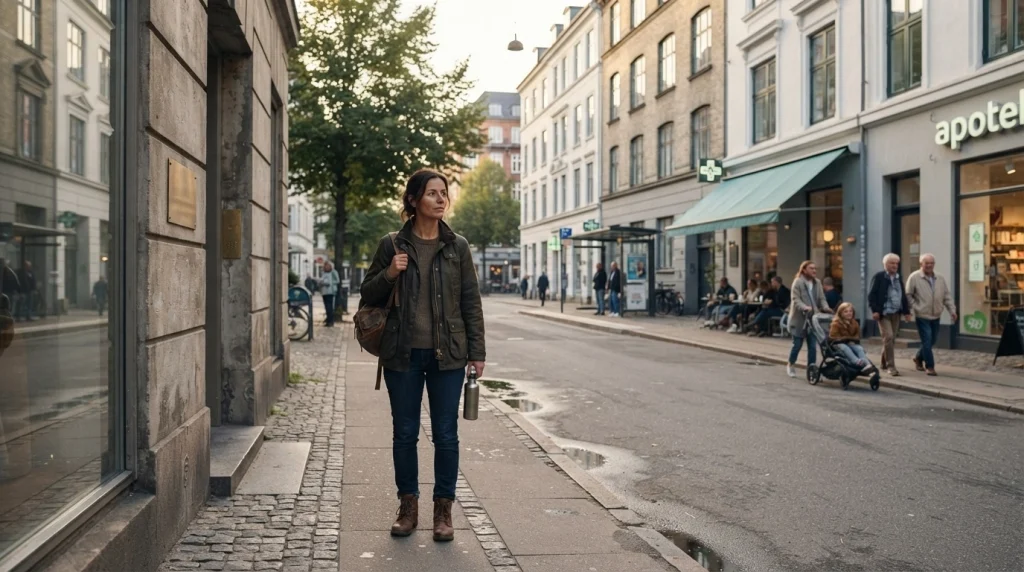
A safe hotel neighborhood is an area where you can reach your accommodation, transportation, and essential services without unnecessary exposure to risks. It should suit your itinerary, arrival time, mobility needs, and comfort level.
Neighborhood safety means evaluating the surrounding streets, local crime concerns, transport reliability, public activity, and access to assistance. It does not mean finding a place where crime never happens.
Look for these practical safety features
- Well-connected streets: Choose an area with straightforward routes to your main attractions, restaurants, and transport hubs.
- Reliable transportation: Check whether you can return to your hotel without depending on a long walk through unfamiliar or isolated streets.
- Useful nearby services: Convenience stores, pharmacies, restaurants, and staffed businesses can make everyday needs easier to manage.
- Clear hotel access: Look for a recognizable entrance, secure access arrangements, and staff availability that matches your arrival time.
- Suitable surroundings: Consider pedestrian conditions, lighting, traffic, noise, and whether the route includes deserted stretches.
A busy neighborhood is not automatically safe, and a quiet residential area is not automatically dangerous. What matters is the combination of local risks, street conditions, and practical ways to get help.
Match the neighborhood to your travel style
Consider how you will spend your days before choosing an area. A neighborhood near museums may suit a sightseeing trip, while a location near a major transit station could work better for frequent day trips.
For a first solo trip, I would prioritize an easy arrival and a simple route back to the hotel. Saving a little money is less appealing when the cheaper property requires complicated transfers or an uncomfortable walk after dinner.
Section takeaway: Choose a neighborhood that supports your actual travel routine, with manageable routes, dependable transport, and accessible assistance.
How can you research neighborhood safety before booking?
The most useful approach combines official travel advice, map research, recent guest reviews, and direct questions to the accommodation. No single rating or website can establish whether an unfamiliar neighborhood is suitable for you.
1. Start with official travel advice
Read the current government travel advice for your destination before narrowing down hotels. Look for information about crime, harassment, transport risks, demonstrations, restricted areas, and precautions relevant to women traveling alone.
The U.S. Department of State’s lodging safety guidance recommends researching accommodation carefully, checking local crime concerns, and considering transport access and security arrangements.
Official advice may not evaluate every individual street. Use it to identify broader risks, then investigate the specific neighborhood and hotel address.
2. Examine the hotel address on a map
Search the exact hotel address rather than relying on a neighborhood name alone. Two properties with similar prices can have very different walking routes, transport connections, and surrounding facilities.
- Check the nearest public transport stops and their operating hours.
- Identify the streets connecting the hotel to restaurants and attractions.
- Look for major roads, pedestrian crossings, and barriers that could make walking difficult.
- Locate nearby pharmacies, hospitals, and staffed businesses.
- Check whether the hotel entrance faces a public street or sits down an isolated lane.
Street imagery can reveal useful details, but it may be old or unavailable in some places. Treat it as one clue rather than proof of present-day conditions.
3. Read recent reviews for repeated patterns
Guest reviews can reveal problems that official hotel descriptions leave out. Focus on comments about the surrounding streets, late-night arrivals, entrance security, staff responsiveness, and transport availability.
Look for patterns rather than one dramatic comment. Several recent reports describing the same issue deserve more attention than an isolated complaint without supporting detail.
Search reviews using practical terms such as “walk back at night,” “street lighting,” “solo traveler,” “entrance,” and “taxi.” Reviews from women traveling alone may offer useful context, although individual experiences cannot guarantee what you will encounter.
4. Contact the property before paying
Ask the hotel specific questions if its location or security arrangements remain unclear. A clear, helpful response can tell you more than a generic claim that the property is safe.
- Is reception staffed throughout the night?
- Is the entrance secured outside regular check-in hours?
- Can the property arrange a reputable airport transfer?
- Is there a convenient, well-used route from the nearest transit stop?
- What should a guest do if they arrive late or need immediate assistance?
Pro tip: Recheck official travel advice shortly before departure because local security conditions and transport arrangements can change.
Section takeaway: Cross-check the address, local advice, recent reviews, and hotel responses before making a decision.
Which type of neighborhood should you choose?
The best neighborhood depends on your destination, budget, and daily plans. Central commercial areas, residential districts, and transport hubs each offer different advantages and drawbacks.
Compare the options using practical features rather than assuming one neighborhood type is universally safer.
| Neighborhood type | Potential advantages | What to check |
|---|---|---|
| Central commercial district | Convenient access to shops, restaurants, and attractions. | Crowds, nightlife disturbances, pickpocketing concerns, and late-night street conditions. |
| Established residential area | Potentially quieter surroundings and everyday services. | Reduced evening activity, limited transport, and isolated walking routes. |
| Area near a major transit hub | Convenient arrivals, departures, and connections across the city. | Station surroundings, traffic, crowds, and the exact route to the hotel. |
| Tourist or museum district | Easy access to popular sights and visitor services. | Tourist scams, inflated prices, seasonal closures, and quieter streets after attractions close. |
| Budget district farther from the center | Potentially lower accommodation costs and more local services. | Extra transfer costs, infrequent transport, and the safety of returning after dark. |
These are general trade-offs, not safety rankings. A well-managed budget hotel in a suitable area may be a better choice than an expensive property on an isolated street.
Calculate the real cost of staying farther away
Compare the total cost of each option, not just its nightly rate. A hotel that saves $20 per night but requires $12 in additional daily transport costs saves only $8 per night before considering extra travel time.
For a five-night stay, that difference amounts to $40 in potential savings. If the cheaper location also requires an inconvenient late-night transfer, the more central property may offer better overall value.
Use your actual prices and expected journeys for the comparison. Transport costs, hotel rates, and neighborhood conditions vary widely by destination.
Choose for your itinerary, not reputation alone
A popular tourist district can be convenient without being ideal for every traveler. Similarly, an area with a poor reputation may contain streets or properties with very different conditions.
Research the specific location and consider the hours you will be out. Your own requirements matter more than a broad label such as “downtown,” “residential,” or “tourist-friendly.”
Section takeaway: Compare each neighborhood’s actual conditions, convenience, and total trip cost instead of relying on generalizations.
How can you check whether an area is safe at night?
Assess the route you will use after dark, including its lighting, pedestrian access, transport alternatives, and availability of staffed businesses. A neighborhood that feels convenient at lunchtime may have very different conditions after restaurants and shops close.
Trace your likely evening route
Imagine returning to the hotel after dinner, a concert, or a delayed train. Check whether the route involves isolated streets, poorly lit passages, large road crossings, or long stretches without practical alternatives.
Look at the whole journey, not just the distance shown on a map. A short route through an isolated area may be less suitable than a slightly longer route along established streets.
Verify transport after your usual return time
Check the operating hours of nearby metro stations, buses, and other public transport. If you expect to return late, identify a reputable taxi company or licensed ride service as a backup.
- Confirm when the last practical public transport connection runs.
- Check whether pickup points are easy to find and reach.
- Identify a reliable alternative if your planned service stops running.
- Ask the hotel how late arrivals and transport requests are handled.
Do not assume a ride service operates everywhere or at every hour. Verify local availability and keep enough battery power and mobile data to access your arrangements.
Recognize warning signs without jumping to conclusions
Be cautious when several indicators appear together, especially when recent reviews or official guidance support the concern.
- Repeated reports of harassment or theft around the same streets.
- Long, isolated approaches to the hotel entrance.
- Unreliable transport combined with limited evening activity.
- Recent reports of serious local disruption or security incidents.
- Hotel staff who cannot explain basic arrival or security arrangements.
One closed shop or quiet street does not prove that an area is dangerous. Consider the wider context and look for corroborating information before ruling out a property.
For additional planning advice, consult the Australian government’s safety tips for solo travellers, which cover accommodation research, transport planning, and preparation for emergencies.
Section takeaway: Evaluate the route you will actually use at night and prepare a dependable alternative before you arrive.
Is hotel location more important than hotel security?
Neither can replace the other. A convenient neighborhood does not guarantee a secure room, and strong hotel security does not remove the risks associated with an isolated or poorly connected location.
The strongest choice combines a suitable neighborhood with accommodation that has practical security measures and responsive staff.
Check the property’s security arrangements
Before booking, look for clear information about access control, reception hours, room locks, and assistance when something goes wrong. These features matter because you will rely on the property as your base throughout the trip.
- Controlled entry: Check how the property limits access to guest areas.
- Available staff: Confirm how to contact reception or management outside normal hours.
- Secure doors and windows: Look for functioning locks and a clear process for reporting problems.
- Emergency preparation: Check that the property provides emergency instructions and accessible exits.
- Privacy: Consider whether room access, check-in procedures, and staff interactions support your comfort.
A security guard or impressive lobby can look reassuring, but neither proves that every aspect of the property is well managed. Give more weight to verifiable arrangements and consistent guest feedback.
Know when to reject a property
Consider another hotel if you cannot verify essential security details or if several credible reports describe unresolved problems. A low price or nonrefundable discount should not pressure you into accepting risks you do not understand.
After checking in, confirm that the door and windows lock, identify the nearest emergency exit, and keep your room number private. If the room or surrounding circumstances feel unsafe, contact management and request a change or alternative accommodation.
For further guidance, the UK government’s solo and independent travel guidance explains why researching accommodation, planning transport, and keeping backup options matter when traveling alone.
Section takeaway: Choose a suitable location and a property with clear, working security measures. Treat both as essential parts of your decision.
What should you check before confirming your booking?
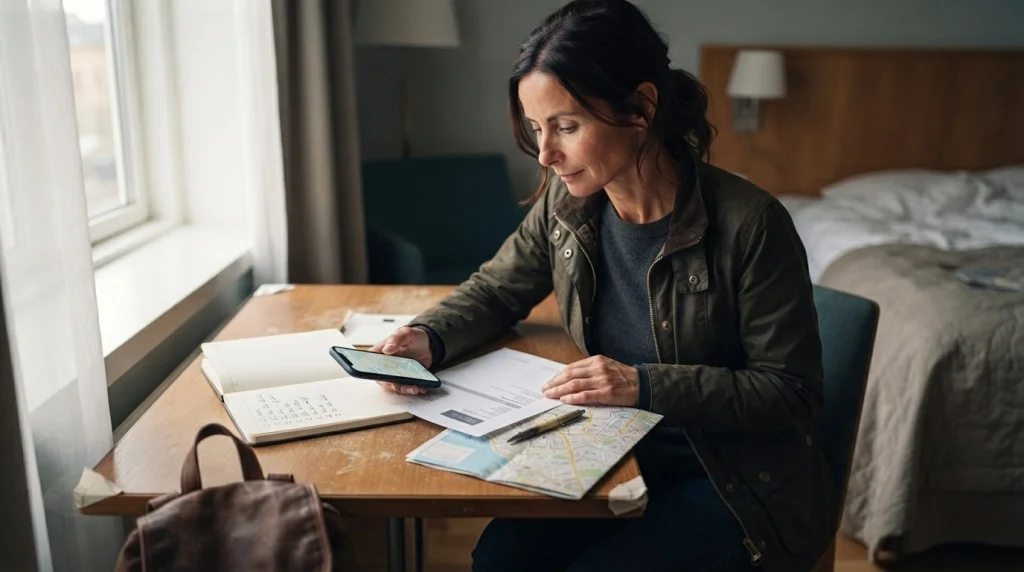
Use a final checklist to compare your shortlisted properties consistently. This makes it easier to identify a practical option without getting distracted by photographs, promotional language, or a single high review score.
Complete this pre-booking checklist
- Official advice: Have you checked current destination guidance and any relevant local warnings?
- Exact address: Have you located the property and inspected the streets around it?
- Recent reviews: Have you checked for repeated concerns about the neighborhood or hotel security?
- Evening access: Can you return from your likely activities using a route and transport option you are comfortable with?
- Essential services: Are food, pharmacies, and other useful services reasonably accessible?
- Arrival arrangements: Do you know how to reach the property, especially if your flight or train arrives late?
- Hotel security: Have you checked access control, staff availability, and room-lock arrangements?
- Backup plan: Do you know how to contact the property and where you could look for another room if necessary?
- Booking flexibility: Have you reviewed the cancellation policy and the cost of changing accommodation?
Compare your top two or three options
If several properties meet your basic requirements, compare their location, transport, reviews, security, and total cost side by side. You do not need a complicated scoring system; a short written comparison can expose important differences.
Give greater weight to essential safety concerns than to optional comforts. A hotel with a smaller room may be a better choice if it offers a more convenient route, dependable transport, and clearer security arrangements.
Finally, book your first night’s accommodation before departure whenever possible. Save the address offline, share your itinerary with someone you trust, and arrange your arrival transport in advance when appropriate.
Pro tip: Revisit official travel advice before departure and check local transport updates if your arrival time or itinerary changes.
Section takeaway: Book when the neighborhood, transport plan, property security, and backup arrangements all meet your needs—not simply when the price looks attractive.
Frequently asked questions
What is the safest type of neighborhood for a woman traveling alone?
There is no universally safest neighborhood type. Look for an area with manageable local risks, convenient transport, accessible essential services, and routes that suit your schedule. Verify current local conditions and the specific hotel’s surroundings rather than relying on labels such as “central” or “upmarket.”
Is it safer to stay in a city center or outside the city?
Either option can work, depending on the destination and property. City centers may offer more transport and services, while outer districts may be quieter or cheaper. Compare local safety advice, evening transport, walking routes, and the total cost of reaching your planned activities.
How can I tell whether a hotel neighborhood is safe at night?
Check recent guest reviews, official travel advice, street imagery, local transport hours, and the route between the hotel and nearby services. Look for repeated reports of problems rather than relying on one comment. If important details remain unclear, contact the property or choose a better-verified alternative.
Should a woman traveling alone avoid hotels near train stations?
Not automatically. A hotel near a station can simplify arrivals and departures, but the immediate surroundings may vary considerably. Inspect the exact walking route, station access, nighttime activity, and transport alternatives. A reputable property on a convenient street may be a practical choice.
Are expensive hotels safer than budget hotels?
Not necessarily. Price alone does not establish neighborhood safety or hotel security. Compare the property’s access arrangements, staff availability, room locks, recent reviews, and surrounding streets. A well-managed budget property can suit a solo traveler better than a costly hotel with inconvenient access.
What should I do if my hotel neighborhood feels unsafe after arrival?
Move to a staffed, public place if you feel uncomfortable, and contact the hotel or a trusted local assistance service. Arrange reputable transport if needed, and consider changing accommodation when concerns persist. If you face immediate danger, contact local emergency services and follow official safety guidance.
How far in advance should I research a hotel neighborhood?
Start researching as soon as you begin comparing accommodation, ideally before making a nonrefundable booking. Recheck official travel advice, recent reviews, and transport arrangements shortly before departure. Early research also gives you time to compare alternatives and arrange a backup if conditions change.
Choose a hotel neighborhood that supports your confidence
Choosing a safe hotel neighborhood is about making an informed decision, not finding a guarantee that nothing will go wrong. Research the specific streets, compare transport options, read recent reviews, and verify the hotel’s security arrangements before committing.
As you plan your next solo trip, give yourself time to compare at least two or three suitable properties. The right choice is one that fits your budget and itinerary while helping you feel prepared to arrive, explore, and return comfortably.