
How Can a Solo Female Traveler Navigate a Road Trip Without a Companion?
Quick Answer
A solo female traveler can navigate a road trip without a companion by planning manageable driving days, booking reliable overnight accommodation, preparing for vehicle emergencies, and sharing her itinerary with a trusted contact. Use offline maps, travel during daylight whenever practical, and identify safe stops before leaving. Review the official driving and transportation safety guidance before traveling abroad.
Essential steps for a safer solo road trip
- Plan your route: Choose realistic daily distances and identify fuel stations, restrooms, hospitals, and overnight stops.
- Share your plans: Give someone your accommodation details, planned route, and expected arrival times.
- Prepare your vehicle: Check tires, lights, fluids, spare-tire equipment, and roadside assistance coverage.
- Protect your privacy: Avoid publicly sharing live locations or revealing that you are traveling alone to strangers.
- Keep backup navigation: Download offline maps and carry a charging cable or power bank.
- Trust your judgment: Leave uncomfortable situations, skip isolated stops, and change plans when conditions deteriorate.
One rule worth remembering
- You do not need to complete every planned stop. Your safety, rest, and comfort matter more than your itinerary.
A road trip alone can offer freedom, flexibility, and the chance to explore at your own pace. However, driving without a companion means handling navigation, vehicle problems, accommodation, and personal safety yourself.
In this guide, I’ll walk through practical ways to prepare for a solo female road trip, navigate unfamiliar roads, choose safer stops, and respond when plans change. The goal is not to eliminate every risk, but to make confident decisions throughout your journey.
In This Guide
1. How Should You Plan a Solo Female Road Trip?
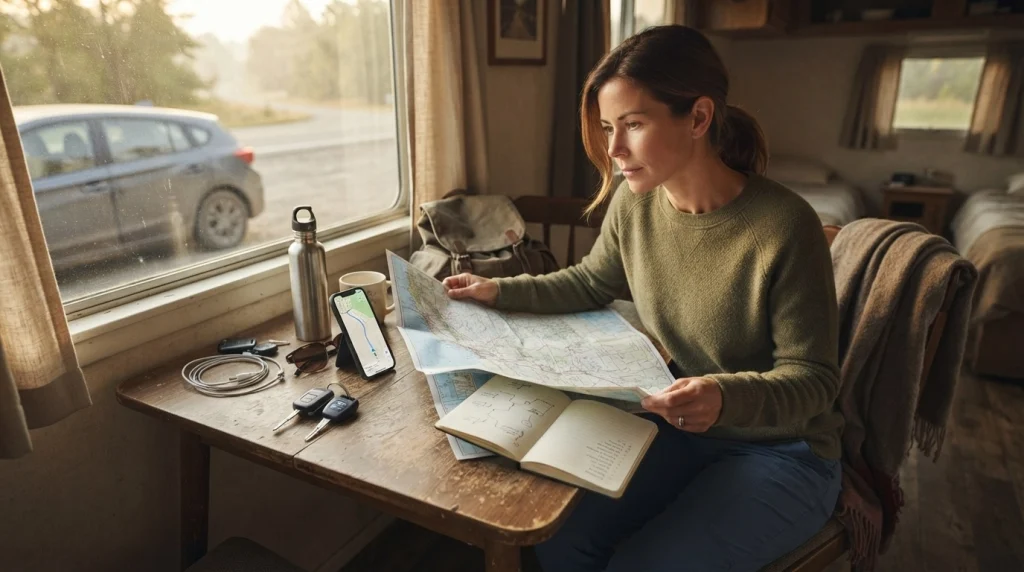
The best solo road trips begin with a realistic route, reliable overnight arrangements, and a backup plan. Planning these details beforehand reduces the number of decisions you must make while tired or under pressure.
Choose manageable driving distances
Start by deciding how many days you have and how much driving you can comfortably manage. For a first solo road trip, a route with approximately three to five hours of driving per day can leave room for breaks and sightseeing.
Treat that range as a planning guideline, not a safety guarantee. Mountain roads, heavy traffic, unfamiliar driving rules, poor weather, and frequent stops can make a relatively short journey exhausting.
For example, imagine planning a three-day trip with a hotel booked each night. A route covering 150 miles on the first day may be more comfortable than one covering 300 miles if the shorter journey includes winding roads and scenic stops.
Research the route before departure
Don’t depend on your navigation app to make every decision. Review the route yourself and identify the following essentials:
- Fuel stops: Note reputable stations, particularly before long rural stretches.
- Rest areas: Identify busy, maintained locations where you can take breaks.
- Overnight stops: Book accommodation in areas that suit your arrival time and transportation needs.
- Medical facilities: Locate hospitals or urgent-care facilities along longer routes.
- Alternative roads: Identify another route if construction, flooding, or closures interrupt your plans.
Check local weather forecasts, road closures, and travel advisories before leaving. International travelers should also verify driving-license requirements, rental-car rules, insurance coverage, and local traffic laws.
Create a simple itinerary and backup plan
Share your itinerary with a trusted person who can notice when something appears wrong. Include your planned stops, accommodation addresses, estimated arrival times, and a time to check in.
Agree on what happens if you miss a check-in. Your contact should try reaching you first and escalate concerns appropriately rather than assuming every delay means an emergency.
Keep your plans flexible enough to accommodate unexpected changes. If weather or fatigue makes a drive unsafe, stopping early is a sensible decision rather than a failed trip.
Build a realistic preparation schedule
- One to two weeks beforehand: Check the vehicle, confirm accommodation, review insurance, and research road conditions.
- The day before departure: Download maps, charge devices, check the weather, and pack your emergency supplies.
- Each morning: Recheck the route, estimate driving time, and tell your trusted contact when you expect to arrive.
Section takeaway: A well-planned route gives you more freedom, not less. Leave enough time to change your plans without creating pressure to drive when you’re tired or uncomfortable.
2. How Can You Navigate Unfamiliar Roads Alone?
Use digital navigation as your primary guide and offline maps as your backup. Learning the route before driving also helps you recognize unexpected detours without making rushed decisions.
Use navigation tools strategically
Choose a navigation app that provides reliable local coverage, then download the relevant map areas while you have a stable internet connection. Offline navigation can help when mobile data disappears in mountains, rural areas, or remote stretches of highway.
Before departure, prepare your navigation setup:
- Enter the destination and review the route while parked.
- Mount your phone securely within easy view without obstructing your vision.
- Connect your device to a reliable charger.
- Save accommodation addresses and essential stops for quick access.
- Keep a paper map or written directions for particularly remote journeys.
Never type an address or adjust your route while moving. Pull into a suitable, legal parking space before changing your destination or investigating a confusing direction.
What should you do when your GPS sends you somewhere unfamiliar?
Don’t follow an unexpected detour automatically, especially if it directs you onto an isolated road or through an area with poor conditions. Stop somewhere safe and reassess the route before proceeding.
Compare your offline map with road signs and current traffic information. If a route seems unsuitable, choose a recognized main road or return to a familiar, populated area when safe.
Navigation apps can suggest roads that are technically accessible but unsuitable for your vehicle or experience. This can happen on narrow mountain roads, unpaved tracks, or routes affected by seasonal weather.
Plan stops instead of improvising every time
Choose a few likely stops before setting out rather than waiting until you’re desperate for fuel or a restroom. This is particularly helpful when traveling through rural regions with limited services.
Prefer established fuel stations, staffed visitor centers, busy cafes, and maintained rest areas. If a location feels deserted or poorly maintained, continue to a suitable alternative when your fuel level and road conditions allow.
Keep your fuel tank comfortably supplied, especially before entering areas where stations are far apart. The right reserve depends on the route, vehicle, weather, and availability of services.
Know when not to continue
Daylight driving is generally easier when you’re unfamiliar with an area because visibility is better and road features are easier to recognize. It can also make it easier to assess parking areas and find open businesses.
If your route takes longer than expected, avoid treating the original arrival time as a deadline. Contact your accommodation if necessary, reassess the road conditions, and choose a safe stopping point.
Section takeaway: Navigation works best when you combine technology with common sense. If the road, surroundings, or directions don’t feel right, stop safely and reassess instead of pressing forward.
3. How Can You Stay Safe as a Woman Traveling Alone?
Solo female travel safety depends on preparation, awareness, and the ability to leave situations that make you uncomfortable. No single precaution guarantees safety, but several small decisions can reduce avoidable risks.
Protect your location and personal information
Share your detailed itinerary with trusted people rather than broadcasting every location publicly in real time. You can post photographs after leaving a location instead of announcing where you’re staying that night.
When meeting people along the way, you don’t need to explain that you’re traveling alone or disclose your next destination. A simple answer about meeting someone later or keeping your plans flexible can protect your privacy without inviting further discussion.
Use these practical habits:
- Keep your accommodation details and travel documents private from strangers.
- Use a strong phone passcode and enable device tracking where available.
- Keep emergency contacts accessible even when your phone is locked, if your device supports that feature.
- Store digital copies of important documents securely, separate from the originals.
- Carry a backup payment method separately from your main wallet.
Choose safer parking and public stops
Whenever possible, park in legal, well-lit places with reasonable foot traffic and clear access to the exit. Avoid leaving valuables visible inside the car, even during a short stop.
Before getting out, check your surroundings and keep your keys accessible. If someone is making you uncomfortable or appears to be following you, remain in a secure location and seek help rather than walking into an isolated area.
At fuel stations, stay aware of your belongings and avoid leaving your phone or wallet unattended. If you feel pressured by a stranger offering unsolicited help, you can decline and approach a member of staff instead.
Choose accommodation with safety in mind
Look beyond price and attractive photographs when booking overnight stays. Read recent reviews and examine the location, arrival arrangements, parking options, and access to staffed areas.
Useful things to check include:
- Access: Is entry controlled, and can you contact staff if a problem occurs?
- Parking: Is there suitable parking close to the entrance?
- Arrival: Can you check in during your expected arrival window?
- Location: Are nearby roads, businesses, and transport options suitable for your plans?
- Reviews: Do recent guests mention recurring concerns about security, cleanliness, or service?
A female-friendly hostel, guesthouse, or established hotel can be a good option depending on your budget and destination. A hostel is shared accommodation that may offer dormitory beds and communal spaces, while a private room can provide more privacy.
Trust your instincts without letting fear run the trip
It’s reasonable to feel nervous before your first independent road trip. Confidence usually grows through preparation and manageable decisions rather than trying to prove you can handle every situation.
If a person, road, parking area, or accommodation feels wrong, give yourself permission to leave or change plans. You don’t owe anyone an explanation for prioritizing your comfort.
For international trips, review official government travel advice for the destination, local laws, emergency contacts, and transportation risks. Conditions can vary significantly between regions within the same country.
Section takeaway: Good personal safety habits preserve your independence. You can be friendly, meet people, and enjoy spontaneous stops without sharing private information or ignoring warning signs.
Pro tip: Check the destination’s official travel advisory and local emergency-service information before departure. If you are a U.S. citizen traveling internationally, review the State Department’s travel guidance and consider enrolling in the Smart Traveler Enrollment Program (STEP).
4. What Should You Do About Car Trouble or Emergencies?
Prepare for a breakdown before leaving, and decide how you’ll request help if your vehicle becomes unsafe to drive. A charged phone, suitable roadside equipment, and reliable assistance coverage can make an unexpected stop easier to manage.
Complete a basic vehicle safety check
Have a qualified mechanic inspect the vehicle if you notice warning lights, unusual noises, leaking fluids, or other signs of a problem. For a rental car, confirm the vehicle’s condition and understand how the rental company handles breakdowns.
Before a long drive, check:
- Tire condition, pressure, and the availability of a spare or approved repair kit.
- Engine oil, coolant, and other fluids specified in the owner’s manual.
- Headlights, brake lights, indicators, and windshield wipers.
- Fuel level, battery condition, and any active dashboard warnings.
- Roadside assistance details and the rental company’s emergency contact number, if applicable.
Pack a practical roadside emergency kit
Your kit should help you stay visible, communicate with assistance, and manage a short delay. Adapt its contents to local laws, climate, and the kind of vehicle you’re driving.
- Fully charged phone, charging cable, and power bank.
- First-aid supplies and any necessary medication.
- Drinking water and shelf-stable snacks.
- Flashlight, reflective warning equipment, and a high-visibility vest where appropriate.
- Warm clothing or a weather-appropriate emergency blanket.
- Basic tools and tire equipment suitable for your vehicle.
- Paper map, emergency contact details, and insurance information.
Review the National Highway Traffic Safety Administration’s road-trip safety advice for additional vehicle-preparation guidance.
What should you do if your car breaks down?
Your first priority is getting out of immediate danger, not repairing the car yourself. The correct response depends on your location, traffic, weather, and the nature of the breakdown.
- Move out of traffic if possible. Use a suitable shoulder or nearby safe stopping area without creating another hazard.
- Make yourself visible. Turn on hazard lights and follow local guidance about warning triangles or reflective equipment.
- Assess your surroundings. If exiting the vehicle would expose you to fast-moving traffic or another danger, remain inside with your seat belt fastened when that is the safer option.
- Contact assistance. Call roadside support, your rental provider, or local emergency services if there is immediate danger.
- Share your situation. Tell your trusted contact your location and the help you’ve requested.
Avoid accepting unsolicited rides from strangers or entering an unfamiliar vehicle because someone offers help. If assistance arrives, verify the provider’s identity where possible before following their instructions.
Prepare for emergencies beyond the vehicle
Mechanical problems aren’t the only emergencies that can disrupt a road trip. Severe weather, road closures, illness, theft, and unexpected local restrictions can also require quick decisions.
Keep local emergency numbers saved offline, understand your travel insurance coverage, and know how to contact your country’s embassy or consulate when abroad. Insurance policies differ, so confirm whether your coverage includes roadside assistance, medical treatment, accommodation changes, and emergency transport.
In a medical emergency or immediate threat, contact the appropriate local emergency service rather than relying on a travel app or social media for urgent help.
Section takeaway: You don’t need to be a mechanic to travel independently. You need to recognize when a vehicle is unsafe, know whom to call, and avoid exposing yourself to unnecessary danger while waiting for help.
Pro tip: The U.S. Centers for Disease Control and Prevention provides international road-safety guidance, including advice on seat belts, local traffic laws, and avoiding distracted driving.
5. How Do You Manage Accommodation, Costs, and Fatigue?
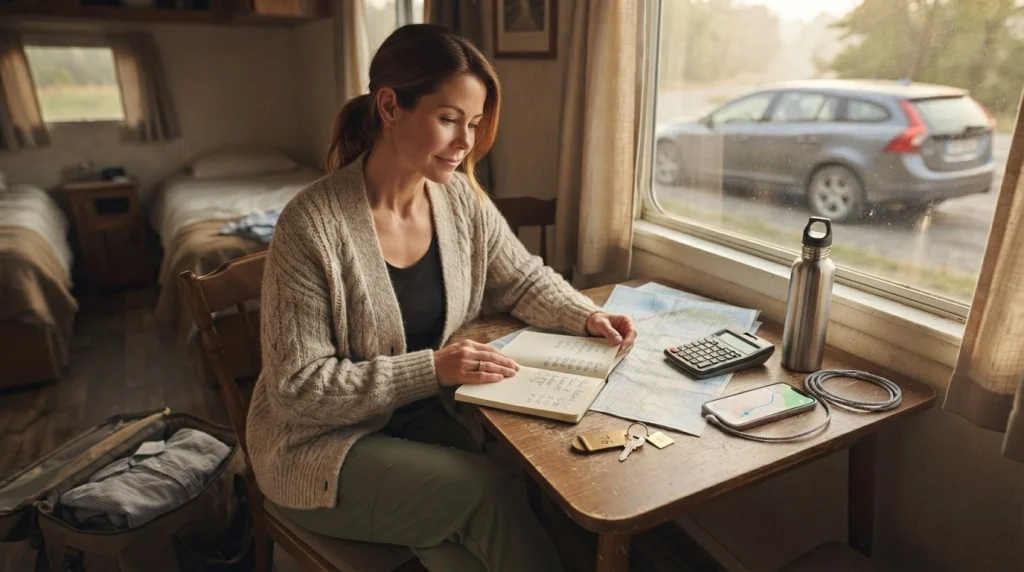
A comfortable solo road trip balances cost savings with reliable places to sleep, eat, and recharge. When you travel without a companion, you also need to budget for expenses that another person might otherwise share.
Compare accommodation options before booking
The cheapest room isn’t always the best value if it requires a long drive after dark or leaves you far from essential services. Compare the total cost, location, parking, and arrival arrangements before making a reservation.
The following table compares common options. Actual prices vary by country, season, location, and booking date, so use the figures only as illustrative planning examples rather than current market quotes.
| Accommodation | Illustrative nightly cost | Main advantage | What to check |
|---|---|---|---|
| Hostel dormitory | $20–$50 | Lower cost and opportunities to meet travelers | Locker security, access controls, and female-only dorm availability |
| Budget hotel or guesthouse | $50–$100 | Private room and greater privacy | Parking, reception hours, and room access |
| Midrange hotel | $100–$180 | More amenities and potentially convenient facilities | Total fees, parking charges, and cancellation terms |
| Established campground | $20–$60 | Outdoor experience and potentially lower costs | Facilities, weather exposure, check-in hours, and site security |
For a first solo road trip, booking the first night’s accommodation in advance can reduce arrival-day stress. Reserve later nights too when you’re visiting busy destinations, traveling during peak season, or driving through areas with limited lodging.
If your plans remain flexible, choose accommodation with reasonable cancellation terms. This gives you options when weather, fatigue, or road conditions force a change.
Build a road-trip budget that includes unexpected costs
Calculate the likely total cost instead of comparing room prices alone. A simple daily budget helps you decide where to save and where spending a little more improves comfort or safety.
| Expense | Example daily budget |
|---|---|
| Accommodation | $70 |
| Fuel | $25 |
| Meals and drinks | $30 |
| Parking and activities | $20 |
| Emergency reserve | $25 |
| Illustrative total | $170 |
At this example budget, five days would cost about $850 before any additional rental-car fees, insurance, tolls, or major unexpected expenses. Adjust every category to local prices and your own travel style.
Keep emergency money separate from your regular spending budget. A reserve can help cover an unexpected hotel night, an alternate route, or a necessary repair without forcing you into an uncomfortable decision.
Manage fatigue before it becomes dangerous
Driving alone requires sustained attention because nobody else can take over the wheel. Drowsiness, hunger, dehydration, and long periods of concentration can affect your ability to react safely.
Schedule breaks before you feel exhausted, eat regularly, and stop for the night when you notice your concentration slipping. Caffeine and open windows are not substitutes for sleep.
Keep your day flexible enough for a slower pace. Visiting two attractions and arriving rested is often better than squeezing in six stops and reaching your hotel exhausted.
Make the trip enjoyable, not just efficient
Solo travel doesn’t mean every moment must involve sightseeing. Plan time for a leisurely breakfast, a scenic walk, a local museum, or a quiet evening at your accommodation.
If you’d like company, consider a guided walking tour, a reputable group activity, or a hostel event. You can enjoy social experiences without depending on strangers for transportation or accommodation.
Section takeaway: Budget for comfort, flexibility, and unexpected changes. A sustainable pace and a reliable place to sleep are more valuable than squeezing every possible expense out of the trip.
6. Frequently Asked Questions About Solo Female Road Trips
Is it safe for a woman to take a road trip alone?
A woman can take a solo road trip with sensible preparation, but no route or precaution guarantees safety. Research local conditions, check your vehicle, choose appropriate accommodation, share your itinerary with someone you trust, and adjust plans when risks or circumstances change.
How many hours should I drive each day on my first solo road trip?
Three to five hours of driving can be a reasonable starting point for a first solo road trip, depending on road conditions and your experience. Allow additional time for breaks, traffic, sightseeing, and unexpected delays. Stop sooner whenever fatigue or weather makes continuing unsafe.
How do I avoid feeling lonely when traveling alone?
Plan activities that interest you, visit welcoming cafes, join reputable group tours, or attend organized events where you can meet other travelers. Keep in touch with friends and family, but leave space to enjoy your own company. You can seek connection without making your itinerary dependent on others.
Should I tell people that I’m traveling alone?
You can decide what to share based on the situation, but you don’t owe strangers personal details about your travel arrangements. Keep accommodation information and your real-time location private, and share your complete itinerary with trusted contacts who can help if something goes wrong.
What should I do if I feel unsafe at a rest stop or parking area?
Leave if you can do so safely, and head toward a staffed, well-lit public location. If someone threatens or follows you, avoid confrontation when possible and contact local emergency services if you face an immediate danger. Don’t leave your vehicle to investigate a situation that feels threatening.
Is it better to book accommodation in advance or find places along the way?
Booking ahead is useful for first-time solo travelers, remote routes, busy seasons, and destinations with limited lodging. Flexible bookings can preserve some freedom while reducing the risk of arriving late without a suitable room. Research any last-minute accommodation before committing to it.
What is the most important thing to remember on a solo road trip?
Your original itinerary is a plan, not an obligation. If you encounter bad weather, fatigue, a vehicle problem, or an uncomfortable situation, adjust your route or stop. The ability to make independent decisions is one of the most useful skills you can develop as a solo traveler.
Make Your Solo Road Trip Your Own
Navigating a road trip without a companion becomes more manageable when you prepare for the practical details before leaving. A realistic route, reliable navigation, suitable accommodation, and an emergency plan give you a stronger foundation for independent travel.
Start with a short trip through a familiar region, then build toward longer journeys as your confidence grows. You don’t need to be fearless or know every answer before you leave.
Most importantly, give yourself permission to slow down, change direction, and make choices that suit your needs. A successful solo road trip isn’t about completing every mile on schedule; it’s about exploring independently while looking after yourself along the way.
Ready to plan your first solo drive? Choose a manageable destination, share your itinerary with someone you trust, and make your first booking. You can build the rest of the adventure one thoughtful decision at a time.
