How Can a Solo Female Traveler Handle a Transportation Strike?
Quick Answer
A solo female traveler should handle a transportation strike by confirming which services are operating, moving to a safe place, and contacting her accommodation or transport provider before choosing an alternative. Avoid protest areas, unlicensed rides, and isolated routes. If the strike involves violence or widespread disruption, delay nonessential travel and follow official local guidance.
What to Do First
- Check official updates: Confirm cancellations, road closures, and service suspensions through transport operators and local authorities.
- Find a safe location: Stay inside a staffed station, airport, hotel, or another secure public building when appropriate.
- Contact your provider: Ask about refunds, rebooking, replacement transport, and expected delays.
- Compare alternatives: Consider verified taxis, reputable ride-hailing services, operating trains, or a later departure.
- Tell someone your plans: Share your location, revised route, and estimated arrival time with a trusted contact.
- Protect your budget: Keep emergency money available and check insurance coverage before paying for replacement travel.
One Important Safety Rule
- If a strike involves demonstrations, violence, or blocked roads, prioritize shelter and official safety instructions over reaching your destination on time.
A transportation strike can disrupt a solo trip in minutes, especially when you’re unfamiliar with the local language or transport system. Knowing how to respond helps you protect your safety, manage unexpected costs, and avoid rushed decisions.
In this guide, I’ll explain how to handle a transportation strike as a woman traveling alone, from checking service updates to finding safer alternatives and deciding when to postpone your journey. These steps apply whether you’re dealing with a canceled train, suspended buses, airport disruption, or a wider transport shutdown.
In This Guide
- What should you do first when a transportation strike begins?
- How can you check which transportation services are operating?
- What are the safest alternatives during a transport strike?
- How can you stay safe as a woman traveling alone?
- How can you manage extra costs and canceled bookings?
- Should you continue traveling or postpone your journey?
- Frequently asked questions
What Should You Do First When a Transportation Strike Begins?
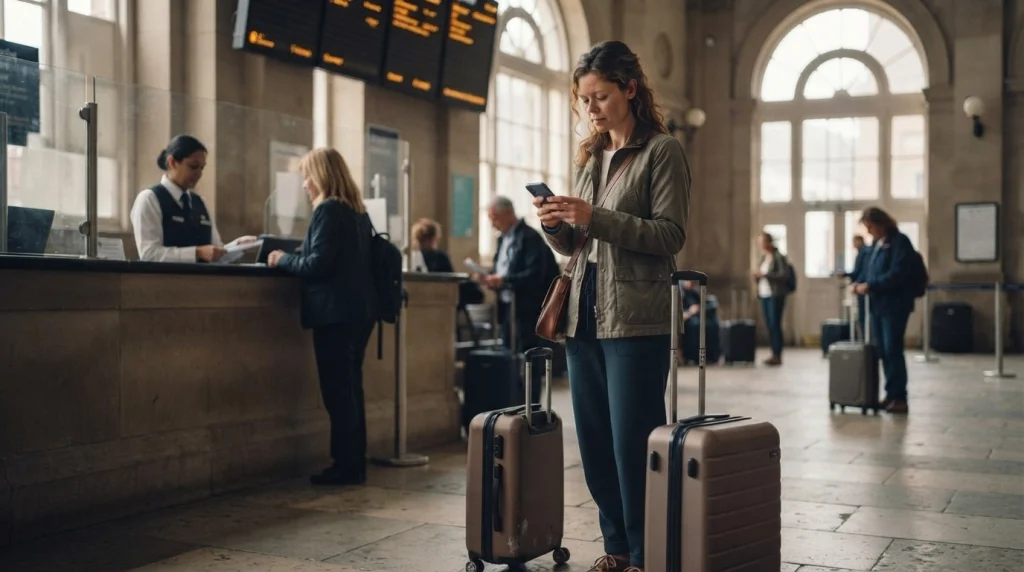
When a transportation strike begins, pause before making a new travel arrangement. First, establish whether the disruption affects your route, your immediate surroundings, or the wider region.
A transportation strike is a work stoppage or organized industrial action that disrupts some or all transport services. It may affect buses, trains, taxis, ferries, airport operations, or several networks at once.
Follow these first-response steps
- Stop and assess your surroundings. If you’re at a station or terminal, look for official announcements and staffed information desks.
- Check whether the area is safe. A routine labor dispute differs from a strike accompanied by demonstrations, roadblocks, or violence.
- Secure your belongings. Keep your passport, phone, wallet, and luggage close while crowds gather or queues grow.
- Notify someone you trust. Explain what’s happened and share your current location and intended next step.
- Contact your accommodation or operator. Ask whether you should wait, change your booking, or arrange a later departure.
Don’t assume every service has stopped simply because one train or bus has been canceled. Some strikes affect particular operators, routes, or hours, while others bring a wider network to a halt.
For example, imagine your train to another city is canceled two hours before departure. Rather than immediately buying an expensive taxi ride, check whether another train runs later and whether your hotel can accommodate a delayed arrival.
If the disruption involves public unrest, your first priority changes. Move away from demonstrations and blocked roads, and follow local authorities’ instructions about sheltering or leaving the area.
Pro tip: Consult your country’s current travel advisory and local emergency guidance when a strike coincides with political unrest or public-safety concerns.
How Can You Check Which Transportation Services Are Operating?
The most reliable way to assess a transportation strike is to compare official service updates with information from your actual transport provider. Social media can alert you to a problem, but it shouldn’t be your only source for deciding where to go.
Use a simple information-checking routine
- Transport operator: Check the official website, app, station notices, or customer-service channel for cancellations and revised timetables.
- Local transport authority: Look for confirmed service suspensions, operating restrictions, and replacement arrangements.
- Airport or airline: Verify flight status, terminal access, airport transfer availability, and check-in guidance separately.
- Local news: Follow reputable outlets for reports of road closures, demonstrations, and regional disruption.
- Accommodation staff: Ask reception or your host about currently operating services and routes to avoid.
Check the time and date on every update. An announcement published early in the morning may no longer reflect conditions later that afternoon.
Useful sources include the [UK government’s transport disruption guidance](https://prepare.campaign.gov.uk/get-prepared-for-emergencies/travel-advice/) and [Australian Smartraveller’s advice on protests and civil unrest](https://www.smartraveller.gov.au/while-overseas/conflict-and-unrest/protests-and-civil-unrest). Both explain why travelers should monitor changing conditions and assess whether leaving is safe.
What if you don’t speak the local language?
Use a translation app to understand notices, but confirm important information with transport staff or an official source. You can also show staff your ticket and ask whether your service is canceled or delayed.
Save essential information offline before you leave your accommodation, especially if mobile networks become congested or your data connection fails.
Keep these details accessible:
- Your accommodation’s address and telephone number.
- Your ticket reference and transport operator’s contact details.
- A trusted contact’s phone number.
- The local emergency number and your country’s embassy or consulate details, if relevant.
In 2026, digital updates remain useful, but a low phone battery or unreliable connection can quickly limit your options. A screenshot of your booking and a written address provide a simple backup.
Section takeaway: Verify the disruption through official channels, then confirm that any alternative is genuinely operating before paying or setting out.
What Are the Safest Alternatives During a Transport Strike?
The safest alternative depends on the strike’s cause, your location, the time of day, and which services remain operational. Choose a verified option that avoids affected areas rather than automatically choosing the fastest or cheapest route.
Before switching transport modes, compare your choices carefully. A replacement bus might be practical during a routine rail strike, but it may be unsuitable if the strike also involves road blockades.
Compare your transportation options
| Alternative | Best situation | Main concern |
|---|---|---|
| Replacement train or bus | The operator confirms that services are running. | Overcrowding, limited seats, or further cancellations. |
| Licensed taxi | Roads are open and the route is considered safe. | Higher fares, traffic, and unofficial drivers. |
| Verified ride-hailing service | The service operates locally and accepts bookings. | Surge pricing, cancellations, and driver availability. |
| Hotel-arranged transfer | You need a prearranged pickup or unfamiliar route. | Availability, additional fees, and road closures. |
| Later departure | Waiting is safer than traveling during disruption. | Accommodation costs and schedule changes. |
| Walking | The destination is nearby and the route is confirmed safe. | Isolation, poor lighting, heavy luggage, or unrest. |
These are conditional options, not guarantees of safety. During civil unrest, even a normally reliable taxi or hotel transfer may be unable to operate safely.
How to choose between waiting and booking another ride
I recommend comparing three things before committing to a replacement: confirmed availability, the full cost, and the safety of the route.
For instance, if a train strike leaves you with a four-hour wait, a verified daytime bus might make sense. If the same disruption occurs late at night and alternative services are uncertain, a staffed hotel or a safe overnight stay may be the better choice.
Ask your accommodation to confirm whether a driver is authorized, where pickup will happen, and the expected fare. Avoid anyone who approaches you unsolicited and pressures you to leave immediately.
Never assume that a route is safe simply because a navigation app recommends it. Mapping tools may not reflect demonstrations, temporary road closures, or changing local restrictions.
Section takeaway: Choose alternatives based on verified availability and local conditions, not urgency alone. If no safe option is confirmed, wait in a secure location.
How Can You Stay Safe as a Woman Traveling Alone?
During a transportation strike, personal safety means more than choosing a reputable driver. You also need to manage your location, protect your belongings, communicate clearly, and avoid becoming stranded in an unfamiliar area.
Stay somewhere secure while making arrangements
If you’re already inside an airport, hotel, or staffed transport terminal, ask personnel where you can wait safely. Don’t leave for an unfamiliar pickup point until you have confirmed that the service is operating and the route is accessible.
If a strike is accompanied by protests or violence, avoid gathering crowds, barricades, and areas where police are confronting demonstrators. Follow official instructions, even if that means abandoning your original travel plan.
The [U.S. Department of State’s general travel safety guidance](https://travel.state.gov/en/international-travel.html) offers advice on transportation risks, local conditions, and planning for emergencies abroad.
Use a few practical precautions
- Verify the vehicle: Match the registration plate, vehicle description, and driver details with your booking.
- Share your journey: Send a trusted contact the driver’s details, destination, and estimated arrival time.
- Keep control of your belongings: Retain your passport, phone, medication, and payment cards rather than placing them in an inaccessible bag.
- Protect your phone battery: Reduce unnecessary battery use and keep a charged power bank available if you have one.
- Stay in contact: Tell your accommodation or trusted contact if your route changes or you expect a significant delay.
- Trust your judgment: Decline a ride or leave a pickup arrangement if something feels unsafe, provided you can move to a safer location.
Don’t share your live location publicly on social media. Send it privately to someone you trust instead.
What if you feel unsafe or become stranded?
Move to the nearest appropriate staffed location, such as an open hotel reception, airport information desk, or police facility. Explain that transport has stopped and ask what safe assistance is available.
If you’re in immediate danger, contact local emergency services. If a language barrier makes communication difficult, show your location on a map and use a translation app to explain the problem.
When the strike involves civil unrest, don’t attempt to walk through a demonstration or cross a roadblock to reach a hotel. Seek shelter and follow local emergency instructions instead.
Pro tip: Before traveling internationally, save your destination’s official emergency numbers and review your government’s current travel advisory. Emergency contacts and safety conditions vary by country.
Section takeaway: Your safety comes before your itinerary. Stay connected, use verified transport, and never let pressure from a driver, crowd, or booking deadline force a risky decision.
How Can You Manage Extra Costs and Canceled Bookings?

A transportation strike can create unexpected expenses, including new tickets, extra hotel nights, meals, and airport transfers. You can limit the financial impact by documenting the disruption and checking your options before spending more money.
Contact the original provider first
If your ticket or transfer becomes unusable, contact the company that sold or operates it. Ask whether it offers a refund, rebooking, replacement transport, or other assistance under its terms.
Don’t buy a replacement ticket until you understand your original booking’s cancellation conditions, unless immediate action is necessary to protect your safety.
Keep a record of disruption-related expenses
- Save your original ticket and booking confirmation.
- Screenshot official strike announcements and cancellation messages.
- Keep receipts for replacement transport, accommodation, and necessary meals.
- Record the dates, times, and names of providers you contacted.
- Save written confirmation of any refund or rebooking offer.
These records can help you make a claim, but reimbursement isn’t guaranteed. The rules depend on the country, transport mode, ticket terms, and reason for the disruption.
Will travel insurance cover a transportation strike?
Travel insurance may cover certain additional expenses or trip interruptions, but coverage depends on your specific policy and the circumstances. Some policies exclude industrial action, civil unrest, known events, or expenses that weren’t authorized in advance.
Contact your insurer’s emergency assistance line before making expensive arrangements when possible. Ask which costs qualify, whether you need prior approval, and what evidence you must provide.
Check the policy’s wording for trip interruption, travel delay, missed connections, additional accommodation, and alternative transport. A general promise of travel protection doesn’t establish that every strike-related expense will be covered.
For better budgeting, keep emergency funds separate from your ordinary daily spending. An unexpected hotel night or last-minute transfer can be costly, particularly when many travelers compete for limited availability.
Section takeaway: Contact providers and your insurer early, save evidence, and get approval where required. Never assume a strike automatically qualifies you for a refund or insurance payment.
Should You Continue Traveling or Postpone Your Journey?
Continue only when you can confirm that your chosen route is operating and the surrounding conditions are safe. Postponing is often the more sensible decision when transport services are uncertain, roads are blocked, or public unrest makes movement dangerous.
Use this decision guide
| Situation | Practical response |
|---|---|
| Limited strike with confirmed services still running | Consider traveling after checking the route, timetable, and local guidance. |
| Canceled service but safe, verified alternatives available | Compare costs and safety, then rebook if the alternative works. |
| No confirmed transport late at night | Arrange safe accommodation or remain in a secure staffed location. |
| Violent unrest, roadblocks, or official warnings against movement | Avoid affected areas, shelter as directed, and postpone nonessential travel. |
| Flight or international connection at risk | Contact the airline and relevant operators immediately; confirm any replacement itinerary. |
This guide is a decision aid, not a substitute for local emergency instructions. If authorities direct people to shelter or restrict movement, follow those directions rather than relying on a general travel plan.
What if you have a flight, tour, or hotel check-in?
Contact each provider affected by the delay. An airline may need to handle your flight separately from the train or transfer you booked to reach the airport.
Ask your accommodation whether late check-in is possible and whether your reservation can be adjusted. For a prepaid tour or ticket, check the cancellation and rescheduling terms before assuming you will lose the full amount.
If your onward journey depends on several connections, reconsider the entire itinerary instead of focusing only on the first canceled service. A cheaper replacement route may leave you stranded at a station with no reliable onward transport.
How can you prepare for future disruptions?
Before the next leg of your trip, build a small contingency plan. It doesn’t need to be complicated.
- Check for announced strikes before departure.
- Identify one alternative route and one reliable transport provider.
- Keep enough accessible funds for an unexpected meal or overnight stay.
- Allow extra time for important flights, tours, and connections.
- Store booking details, addresses, and emergency contacts offline.
- Know when to abandon a journey rather than keep trying increasingly risky options.
For a solo traveler, flexibility is part of good safety planning. A delayed arrival is inconvenient, but a rushed decision can create a much bigger problem.
Section takeaway: If the route is verified and safe, a revised journey may be reasonable. If safety or availability remains uncertain, postpone and reassess.
Frequently Asked Questions
1. Is it safe to take a taxi during a transportation strike?
A taxi may be a reasonable option if local conditions are safe, roads remain open, and you can verify the driver and booking. During civil unrest or road blockades, however, taxis may be unavailable or unsafe. Ask a trusted local provider before arranging a ride.
2. Should I stay at the airport if public transport stops?
If you’re already at the airport, staying inside a staffed terminal may be safer than searching unfamiliar streets for transport. Confirm terminal access, available accommodation, and airport guidance. If officials issue different instructions, follow them and avoid unverified transfer offers.
3. What should I do if a transportation strike makes me miss my flight?
Contact your airline as soon as possible and explain the disruption. Ask about rebooking options and keep evidence of the canceled transport service. Whether the airline or your insurer covers the missed flight depends on your ticket conditions, applicable rules, and policy wording.
4. Can I rely on ride-hailing apps during a strike?
Ride-hailing apps can help when drivers are available and local authorities permit travel, but demand may increase prices or reduce availability. Confirm the vehicle and driver through the app, share your trip details privately, and avoid pickup points near demonstrations or unsafe road closures.
5. Should I travel alone to another city during a strike?
Travel between cities only if your transport operator confirms the service and reliable information indicates that the route is safe. If the strike includes violence, roadblocks, or official warnings against travel, postpone the journey and seek a secure place to stay.
6. Does travel insurance cover accommodation during a strike?
Some policies cover additional accommodation after a qualifying travel disruption, while others exclude strikes or require advance authorization. Read the policy’s exclusions and contact the insurer before booking an expensive hotel when possible. Keep receipts and written evidence of the disruption.
Final Takeaway: Put Safety Before Your Schedule
A transportation strike doesn’t have to derail your entire solo trip. Check official updates, find a secure place to wait, contact your transport provider, and compare alternatives before spending money or leaving the area.
Most importantly, don’t feel pressured to solve everything immediately. If the situation is unsafe or reliable transport isn’t available, delaying your journey is a sensible travel decision, not a failure of planning.
Before setting off again, confirm your route, update someone you trust, and make sure you have enough battery power, money, and essential information to manage another delay. A calm, flexible plan gives you more control when circumstances change.