How Can a Solo Female Traveler Trust Her Instincts Without Becoming Fearful?
Quick Answer
A solo female traveler can trust her instincts without becoming fearful by treating intuition as a signal to pause, check her surroundings, and make a calm safety decision. Trusting your gut does not mean assuming everyone is dangerous. It means recognizing warning signs, setting boundaries, and combining awareness with practical travel safety preparation.
Five ways to stay confident and aware
- Notice early signals: Pay attention when someone’s behavior or a situation feels unusual.
- Check the facts: Look for specific warning signs instead of assuming the worst.
- Keep an exit option: Know how to leave a place without depending on strangers.
- Set clear boundaries: Say no, change plans, or walk away without feeling guilty.
- Allow yourself to enjoy: Notice positive experiences as carefully as potential risks.
How can a solo female traveler trust her instincts without becoming fearful? I think the answer starts with understanding that being careful and being afraid are not the same thing.
Solo travel becomes much easier when you learn which concerns deserve action and which simply reflect unfamiliar surroundings. This guide explains how to recognize red flags, manage travel anxiety, make safer decisions, and still enjoy the freedom of exploring alone.
In This Guide
- What Does Trusting Your Instincts Mean?
- How Can You Tell Intuition From Fear?
- How Can You Trust Your Gut Without Becoming Paranoid?
- When Should You Act on Your Instincts?
- How Do You Build Confidence Before and During a Solo Trip?
- How Can You Stay Aware Without Letting Fear Control Your Trip?
- Frequently Asked Questions
What Does Trusting Your Instincts Mean for a Solo Female Traveler?
Trusting your instincts means noticing your internal reactions and using them to guide sensible decisions. It doesn’t mean treating every uncomfortable feeling as proof of danger.
Your intuition can alert you to patterns before you’ve consciously explained them. However, intuition isn’t perfect, so it works best alongside observation and reliable information.
Understanding intuition in unfamiliar places
Imagine arriving at a train station in a city you’ve never visited. Everything looks different, and you don’t immediately understand the signs.
Feeling nervous is understandable. But that nervousness alone doesn’t establish that the station is unsafe.
Now imagine someone follows you between platforms, repeatedly asks where you’re staying, and ignores your requests for space. Those behaviors provide specific reasons to take precautions.
The difference matters.
Travel intuition is your sense that something may need attention. It’s a prompt to assess your situation, not a guarantee that your first interpretation is correct.
Why instinct matters when traveling alone
When you travel solo, you often make decisions without a companion’s immediate input. This makes your ability to observe, evaluate, and respond especially useful.
You may need to decide whether to:
- Accept help from someone you’ve just met.
- Enter an unfamiliar building or street.
- Continue a conversation that feels uncomfortable.
- Use a particular taxi or transport service.
- Leave a social event earlier than planned.
None of these decisions requires you to become suspicious of everyone. They require enough awareness to recognize when circumstances change.
Why constant fear is not the same as awareness
Fear can make ordinary choices feel threatening. It may also leave you mentally exhausted before your day has begun.
Awareness works differently. You notice relevant details, make a decision, and then return your attention to the experience.
For instance, checking your route before leaving a restaurant is practical. Rechecking it every thirty seconds despite no new information may reflect anxiety rather than a useful safety need.
**Section Takeaway:** Your instincts should help you make decisions, not force you to expect danger everywhere. Treat feelings as useful information that deserves context.
How Can You Tell the Difference Between Intuition and Fear?
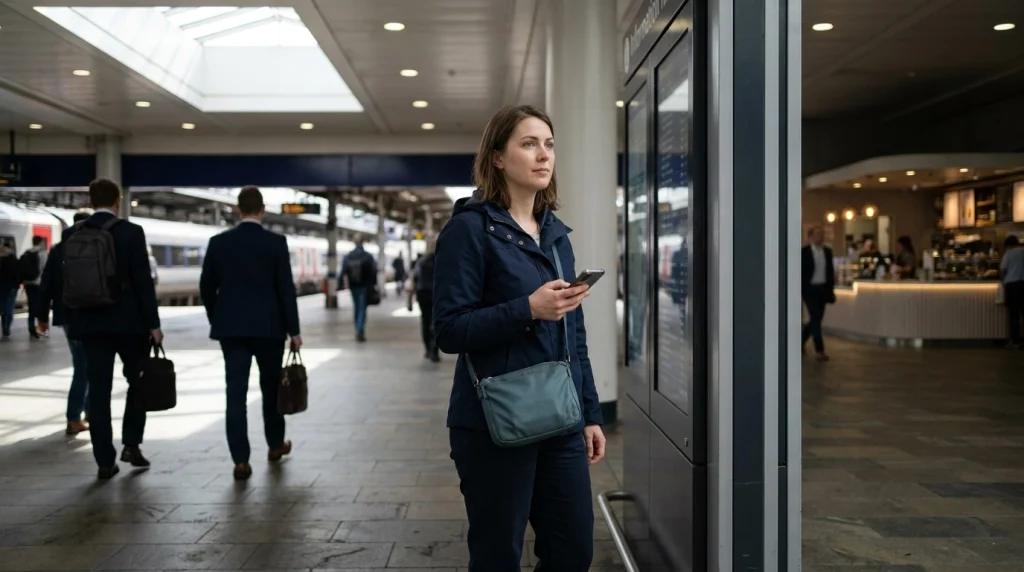
Intuition often draws your attention to something specific, while anxiety may produce broad worries about what could happen. Neither feeling is always easy to identify.
A useful question is: “What am I noticing right now, and what evidence supports my concern?”
Signs your instincts may be responding to a genuine concern
Look for observable behavior rather than relying only on a vague feeling. Examples include:
- Someone keeps following you after you’ve changed direction.
- A driver refuses to follow the agreed route without a reasonable explanation.
- A stranger pressures you to reveal your hotel or room number.
- Someone repeatedly ignores your stated boundaries.
- A person attempts to isolate you from a public setting.
- Your accommodation has a broken lock or another clear security problem.
These are reasons to adjust your plans, seek assistance, or move somewhere safer. You don’t need absolute proof of malicious intentions before protecting your personal space.
Signs your fear may be driven by uncertainty
Travel anxiety often becomes louder when you lack sleep, feel overwhelmed, or encounter unfamiliar customs. Your mind may start filling information gaps with frightening possibilities.
Consider these examples:
- Feeling unsafe simply because everyone speaks another language.
- Assuming a crowded market is dangerous because it feels chaotic.
- Worrying that getting briefly lost means something terrible will happen.
- Thinking every friendly stranger has hidden intentions.
- Believing that traveling alone automatically makes you helpless.
These thoughts deserve attention, but they don’t automatically describe the reality around you. Check your surroundings and seek trustworthy information before drawing conclusions.
Intuition vs. anxiety vs. a real warning sign
| Situation | What it might mean | Helpful response |
|---|---|---|
| Nervous in a busy station | Unfamiliarity or sensory overload | Move aside, check directions, and observe. |
| Someone follows you repeatedly | An observable safety concern | Enter a staffed public place and seek help. |
| Worried about a booked hostel | Uncertainty about accommodation | Check recent reviews and arrival details. |
| A driver won’t confirm the destination | A practical transportation warning | Do not begin the ride; choose another option. |
| A friendly local starts chatting | Ordinary social interaction | Enjoy the conversation while keeping boundaries. |
These examples are guides, not a psychological test. Anxiety and genuine risks can occur together, and you may need to act before understanding which feeling came first.
Use the three-question reality check
When a situation feels uncertain and you have time to assess it, ask:
- What happened? Identify the specific behavior or event.
- What do I know? Separate facts from assumptions.
- What is my safest reasonable next step? Choose an action you can control.
For example, someone asking for directions isn’t automatically suspicious. Someone continuing to follow you after the conversation ends deserves a different response.
If danger seems immediate, skip the extended evaluation. Move toward safety and contact appropriate help.
**Section Takeaway:** You don’t have to label every feeling correctly. Identify observable clues and choose a response that fits the situation.
How Can You Trust Your Gut Without Becoming Paranoid?
Build a small decision-making routine that helps you respond calmly rather than overthinking every encounter. Consistent habits can reduce how many stressful choices you face each day.
1. Pause before reacting when it’s safe
When something feels wrong, give yourself a moment to look around. Notice your location, nearby people, available exits, and whether anything has changed.
Take a slow breath if the circumstances allow it. You don’t need to force yourself to relax before taking sensible action.
2. Give yourself permission to leave
You can leave a conversation, café, vehicle before departure, or social gathering without explaining your entire decision. Politeness should never require you to ignore repeated boundary violations.
Simple phrases can help:
- “No, thank you. I have other plans.”
- “I’m going to head back now.”
- “I’d prefer to arrange my own transport.”
- “Please give me some space.”
- “I need help. That person is following me.”
You don’t have to deliver these words perfectly. If speaking increases the risk, prioritize moving away and finding assistance.
3. Prepare your exit options in advance
Confidence grows when you know how to change plans. Before exploring a new area, identify your return route and a practical backup.
Useful preparation includes:
- Saving your accommodation address offline.
- Downloading an offline map of the area.
- Checking legitimate transport services.
- Keeping enough accessible money for a return journey.
- Knowing where to find staffed public spaces.
- Saving local emergency contacts.
Think of these steps as reducing uncertainty, not predicting disaster. The goal is to spend less time worrying because you already know your options.
4. Practice small boundaries before bigger ones
It can be surprisingly difficult to say no when you’re worried about appearing rude. Practice with low-pressure situations first.
Decline a shop offer you don’t want. Ask a hotel employee to explain a charge you don’t recognize.
These little decisions build familiarity with speaking up. Over time, the words may become easier to find when they matter more.
5. Avoid turning every stranger into a threat
Friendly interactions are part of what makes solo travel meaningful. A shopkeeper offering directions or another traveler suggesting a restaurant isn’t automatically a warning sign.
Enjoy ordinary human kindness while protecting sensitive information. You can be warm without sharing your room number, full itinerary, or live location with strangers.
**Section Takeaway:** Trust grows through preparation, boundaries, and flexible choices. You can stay open to people without giving up control over your decisions.
When Should a Solo Female Traveler Act on Her Instincts?
Act promptly when you notice an immediate threat, repeated boundary violations, or a situation that limits your ability to leave. For less urgent concerns, take a brief moment to verify information.
The following travel scenarios show how to apply that distinction.
When someone makes you uncomfortable
Imagine you’re sitting alone in a café, and another customer starts a conversation. You answer politely, but they continue asking personal questions after you’ve declined.
You don’t need to determine their intentions. A clear boundary, followed by moving closer to staff if needed, is enough.
If the person follows, threatens, or blocks you, seek immediate help. Tell staff clearly what is happening instead of hoping the situation resolves itself.
When using taxis or rideshare services
Transportation decisions deserve attention because you may be entering an enclosed space with someone unfamiliar. Check the vehicle and driver details before boarding where an app or licensed service provides them.
- Use reputable transport options supported in your destination.
- Confirm the vehicle, driver, and destination.
- Keep your phone accessible and charged.
- Share trip details with a trusted contact when appropriate.
- Refuse a ride if the details don’t match.
If a journey becomes concerning, request a stop in a busy, well-lit location where doing so is safe. Seek help from local authorities or emergency services if you face an immediate threat.
When returning to your accommodation after dark
Walking alone at night isn’t equally risky in every destination or neighborhood. Your decision should reflect local conditions, transport availability, and current circumstances.
Plan a reliable route before leaving. If the environment changes or the route feels unsafe, choose another way back.
A higher transport cost may be worthwhile when it meaningfully reduces an avoidable risk. You don’t need to prove independence by choosing the hardest option.
When meeting people through travel communities
Meeting fellow travelers can make solo trips more rewarding. Hostel social events, organized walking tours, and platforms such as Meetup can provide chances to connect.
For first meetings, choose public places and retain your own transportation. Avoid making yourself dependent on someone you’ve just met.
Watch how people respond to boundaries. Someone who respects a simple no is showing different behavior from someone who repeatedly pressures you.
When your accommodation feels wrong
Sometimes your concern comes from a tangible issue rather than another person. A damaged door lock, an unauthorized visitor, or a staff member refusing to address a serious security problem deserves action.
Request another room or move to alternative accommodation if you cannot resolve the concern safely. Preserve booking information and contact the booking provider when necessary.
Pro tip: Before traveling, review the destination’s official safety information through the U.S. Department of State or your own government’s travel advisory service.
**Section Takeaway:** You don’t need certainty about someone’s intentions to protect yourself. Respond to observable behavior and keep your exit options available.
How Do You Build Confidence Before and During a Solo Trip?
Solo travel confidence comes from practicing manageable decisions, preparing for common problems, and learning what you can handle. It doesn’t require feeling brave every minute.
Start with a manageable solo travel experience
If you’re planning your first independent trip, choose a destination that fits your comfort and experience level. Convenient transportation and easy-to-find accommodation can reduce unnecessary stress.
Consider a two- or three-day visit before planning several weeks abroad. A short trip provides chances to practice navigation, dining alone, and changing plans.
There’s no universal best destination for every solo woman. Language familiarity, accessibility, budget, personal identity, and current safety conditions all influence what feels manageable.
Research enough to feel prepared
Preparation is useful when it answers practical questions. Endless alarming social media posts rarely provide the same value.
Before departure, research:
- Current official travel advisories and local laws.
- How to travel from the airport to your accommodation.
- Recent accommodation reviews and security arrangements.
- Common local scams and transportation practices.
- Emergency numbers and nearby medical services.
- Mobile data options and offline navigation.
Check the CDC Travelers’ Health resources for destination-specific health guidance when relevant. Entry and health requirements may change, so verify them before departure.
Create a simple safety communication plan
Choose one trusted person who can receive your travel details. Agree on a practical check-in routine that suits your itinerary and time zone.
Your plan might include:
- Sharing your first accommodation and arrival details.
- Sending a message after a long transport journey.
- Explaining when you expect limited mobile coverage.
- Agreeing on what your contact should do after a missed check-in.
- Keeping emergency contacts available offline.
A missed message does not always mean something is wrong. Having an agreed response prevents unnecessary panic while giving both people a clear plan.
Eligible U.S. travelers can also consider the Smart Traveler Enrollment Program for embassy security updates and emergency contact support.
Practice making decisions independently
You don’t have to wait until arriving abroad to build confidence. Try small solo activities in familiar surroundings.
- Visit a museum alone.
- Use a new public transport route.
- Eat at a restaurant by yourself.
- Ask someone for directions.
- Plan a full afternoon without relying on friends.
These activities teach you how to navigate uncertainty without making each new experience feel like a major test.
Use a five-minute evening reflection
At the end of each travel day, write a few lines about your choices. Keep the exercise balanced instead of reviewing only uncomfortable moments.
Try answering these questions:
- What went well today?
- When did I notice a useful warning sign?
- Was any worry stronger than the evidence supported?
- What helped me feel capable?
- What would I change tomorrow?
Reflection helps you notice both your strengths and the situations you want to handle differently. You may discover that your confidence grows through ordinary decisions, not dramatic moments.
**Section Takeaway:** Confidence doesn’t mean eliminating nervousness. It means having practical skills and enough flexibility to respond when circumstances change.
How Can You Stay Aware Without Letting Fear Control Your Solo Trip?
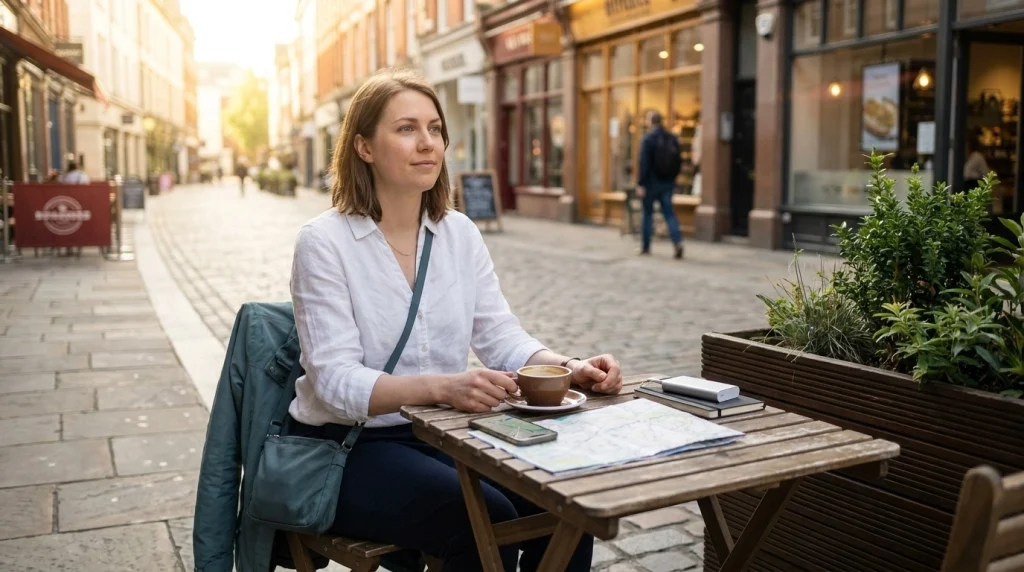
Set reasonable safety habits, follow them consistently, and allow yourself to enjoy the rest of your day. Awareness becomes exhausting when you feel responsible for predicting every possible problem.
Use a simple daily safety routine
A short morning check can cover the essentials without becoming a lengthy ritual. Review your route, transport, weather, and expected return time.
Here’s a practical daily checklist:
- Charge your phone and carry a suitable power bank if needed.
- Save your destination and return route.
- Check relevant local updates and transport changes.
- Carry necessary identification and accessible emergency funds.
- Tell your trusted contact about major itinerary changes when appropriate.
Once those tasks are complete, return your attention to the trip. You don’t need to repeatedly review the same information without a reason.
Recognize when safety habits become excessive
Protective habits should support your independence rather than gradually eliminate it. If you avoid every social interaction, ordinary street, or planned activity despite reasonable precautions, anxiety may be limiting your experience.
Ask yourself whether a specific new fact has changed your risk assessment. If not, consider whether you’re seeking useful information or temporary reassurance.
You can also adjust the activity rather than canceling everything. Joining a reputable daytime group tour may feel easier than exploring an unfamiliar area independently.
Replace worst-case thinking with practical options
Fear often asks, “What if something goes wrong?” Preparation offers a more productive question: “What would I do if this plan changed?”
| Fear-based thought | Practical alternative |
|---|---|
| “What if I get lost?” | “I have an offline map and can ask staff for directions.” |
| “What if I meet the wrong person?” | “I’ll meet people publicly and keep my boundaries.” |
| “What if my transport fails?” | “I’ll check a backup service and keep money available.” |
| “What if my plans change?” | “I can revise the itinerary and choose a safer option.” |
This mindset doesn’t promise that nothing difficult will happen. It reminds you that uncertainty does not automatically mean helplessness.
Make room for positive experiences
Don’t let safety research become the only lens through which you see a destination. Notice the welcoming café staff, useful conversations, interesting museums, and small moments of kindness.
Seek reliable information from established travel resources such as Lonely Planet, while checking official sources for current safety matters. Travel stories can provide ideas, but individual experiences cannot guarantee yours will be identical.
You can enjoy a sunset without photographing every possible exit. You can laugh with other travelers while still keeping your belongings and boundaries in mind.
Know when to seek additional support
If persistent anxiety disrupts your sleep, health, or ability to enjoy daily life, consider discussing it with a qualified mental health professional. Seeking support is compatible with being an independent traveler.
Fear doesn’t have to become your identity. You can develop confidence gradually and choose travel experiences that fit your needs.
**Section Takeaway:** Good travel safety habits give you more freedom, not less. Prepare carefully, stay flexible, and leave room for curiosity and joy.
Frequently Asked Questions
Should a solo female traveler always trust her gut feeling?
A solo female traveler should take gut feelings seriously without assuming they’re always accurate. Look for observable behavior, consider the situation, and choose a proportionate safety response. If danger seems immediate, move to safety rather than waiting to confirm every detail.
How do I know if I’m being cautious or paranoid while traveling alone?
Caution usually leads to practical actions, such as checking transport details or avoiding a specific unsafe situation. Excessive fear may lead you to avoid ordinary activities without clear evidence. If worry repeatedly disrupts your plans, reassess your information and consider seeking support.
Can I be friendly to strangers and still travel safely?
Yes. Being friendly doesn’t require revealing personal information or accepting invitations. Enjoy conversations in public places, maintain your boundaries, and keep control of your transportation. Notice whether people respect your decisions, especially when you decline an offer or request.
What should I do if I feel unsafe but cannot explain why?
Start with a low-risk precaution, such as moving toward a staffed public place or checking your route. You don’t need a perfect explanation to create distance. If you notice threatening behavior or immediate danger, seek local emergency assistance promptly.
How can I reduce anxiety before my first solo trip?
Choose a manageable destination, plan your arrival transport, verify accommodation details, and arrange a trusted contact. Practice small solo outings before departure. Avoid consuming endless alarming stories, and focus on concrete tasks that increase your ability to handle common travel situations.
Is it safer to join a group tour instead of exploring alone?
A reputable group tour may offer useful structure, local guidance, and companionship, especially in an unfamiliar area. However, group participation doesn’t remove every risk. Check the operator, understand the itinerary, and maintain personal boundaries. Mixing guided and independent activities can work well.
What if my instincts tell me to cancel a planned activity?
Check whether your concern reflects new information, a specific warning sign, or general nervousness. If the risk is credible, change or cancel the activity. If the concern comes mainly from uncertainty, consider a smaller or more structured alternative rather than forcing yourself or abandoning the entire day.
Final Thoughts: Trust Yourself Without Traveling in Fear
Learning to trust your instincts as a solo female traveler isn’t about becoming suspicious of the world. It’s about building the judgment to notice concerns, protect your boundaries, and make decisions you can live with.
You don’t need to be fearless to travel alone. You need preparation, awareness, flexibility, and permission to choose what feels right for your circumstances.
Some days, confidence means taking a new train route or starting a conversation. On other days, it means leaving early, changing accommodation, or deciding that a particular experience isn’t worth the risk.
Both choices can reflect strength. Your goal isn’t to prove that nothing scares you; it’s to explore with enough confidence to enjoy the journey while taking care of yourself.
Before your next solo adventure, choose three safety habits you’ll practice consistently. Then give yourself permission to experience the destination beyond your fears.