How Can a Solo Female Traveler Stay Safe at an ATM?
Quick Answer
How can a solo female traveler stay safe at an ATM? Choose a machine inside a reputable bank or another secure, staffed location. Visit during daylight, check the card reader, cover your PIN, and put away your cash before leaving. Never accept help from strangers. Follow the FDIC’s ATM security advice to lower your risk of card fraud.
Six essential ATM safety tips
- Choose secure locations: Favor indoor bank ATMs with staff nearby.
- Withdraw during daylight: Avoid isolated streets and unfamiliar areas after dark.
- Inspect the machine: Watch for loose card readers, unusual keypads, and suspicious attachments.
- Protect your PIN: Shield the keypad with your free hand.
- Keep cash private: Put your money away before walking off.
- Prepare a backup: Carry a second payment method somewhere separate.
One rule to remember
- Trust your judgment: If someone is watching, following, or pressuring you, leave and find a safer location.
Using an ATM alone in a new country can feel uncomfortable, especially when you don’t know the neighborhood. Solo female travel ATM safety starts with choosing the right place and staying aware.
I prefer to plan cash withdrawals like any other travel task. This guide explains how to avoid common scams, protect your card, and respond when something goes wrong.
In This Guide
- Where Is the Safest Place to Use an ATM Alone?
- What Should You Check Before Withdrawing Cash?
- How Can You Stay Safe During an ATM Withdrawal?
- Which ATM Scams Should Solo Female Travelers Avoid?
- How Should You Plan Cash Withdrawals Abroad?
- What Should You Do If Something Goes Wrong?
- Frequently Asked Questions
Where Is the Safest Place to Use an ATM Alone?
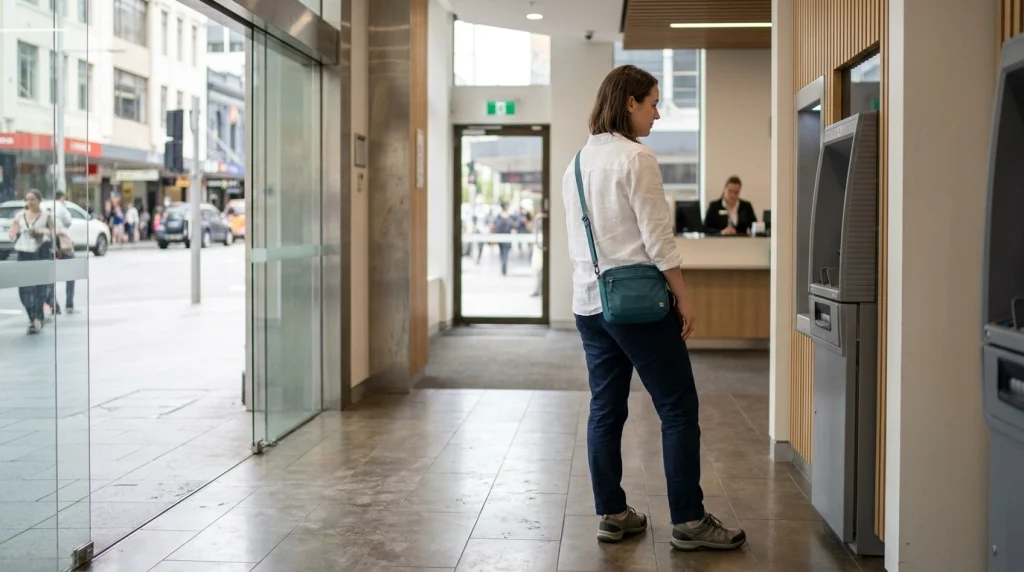
An ATM inside an established bank branch is usually a better choice than an isolated street machine. You can often find staff nearby, and the surrounding area may offer more security.
Still, no ATM is completely risk-free. A well-known bank name does not guarantee that a machine is free from tampering.
Choose a bank branch or secure indoor location
I look for an ATM with a clear entrance, good lighting, and an easy exit. I also prefer locations where I can contact actual bank employees if my card gets stuck.
My preferred ATM locations include:
- Indoor bank branches: A strong first choice when open and staffed.
- Bank-operated ATM vestibules: Convenient when access and visibility are good.
- Established shopping centers: A practical alternative when the ATM belongs to a reputable financial institution.
- Airport banking areas: Useful when you need cash upon arrival, although charges may vary.
I avoid assuming that a crowded location is automatically safe. Pickpockets, distractions, and people watching your PIN can still create problems.
Is it safe to withdraw money at night?
Daytime is generally the better option when traveling alone. Darkness makes it harder to assess unfamiliar streets, nearby people, and possible escape routes.
If I arrive late, I would rather arrange transport to my accommodation than search for cash immediately. A small reserve of local currency can help with that.
When an evening withdrawal is unavoidable, I would:
- Choose a secure, well-lit location with people and staff nearby.
- Avoid remote streets, dark parking lots, and isolated standalone machines.
- Plan a direct route back to my accommodation.
- Leave immediately if the surroundings feel threatening.
Bank ATM vs. street ATM vs. hotel ATM
These comparisons are general guidelines, not guaranteed safety ratings. Local conditions, staffing, and ATM maintenance matter more than the label alone.
| ATM location | Main advantage | Main concern | My recommendation |
|---|---|---|---|
| Staffed bank branch | Staff available for help | Limited opening hours | Preferred option |
| Shopping center | Lighting and nearby businesses | Crowds and shoulder surfing | Good alternative |
| Hotel lobby | Convenient access | Operator and fees may vary | Check the operator first |
| Isolated street ATM | Quick access | Greater exposure to tampering or confrontation | Avoid when possible |
Section takeaway: Choose the location before you need cash. A staffed bank during daylight is a sensible default.
What Should You Check Before Withdrawing Cash?
Before inserting your card, inspect the ATM and the surrounding area. A short visual check can help you spot obvious tampering or unwanted attention.
Look for possible card skimming devices
ATM skimming is a form of card fraud that uses hidden equipment to steal payment card information. Criminals may attach a false card reader, keypad cover, or concealed camera.
The FBI’s skimming guidance explains common warning signs. Some devices are difficult to detect, so visual inspection cannot guarantee safety.
Watch for these possible signs:
- A card reader that looks loose, crooked, or unusually bulky.
- A keypad that appears raised or does not fit properly.
- Unexpected adhesive residue, scratches, or extra attachments.
- Unusual objects positioned near the keypad.
- Damage around the card slot or machine housing.
Don’t try to dismantle suspicious equipment. Walk away and report the machine to its operator.
Check the people around you
A safe-looking machine can still be uncomfortable if someone stands too close. Before starting, I would scan the immediate area without drawing attention to myself.
Consider these questions:
- Is anyone watching the keypad or your hands?
- Can another person see your PIN from the queue?
- Is someone repeatedly approaching without a clear reason?
- Do you have a clear path to leave?
You don’t need to prove that another person has bad intentions. If something feels wrong, choosing another ATM is reasonable.
Get your card and bag ready
Keep your card accessible before approaching the machine. Searching through an open purse can distract you from what’s happening nearby.
I recommend a zippered crossbody bag that stays against your body. Keep your phone accessible, but avoid placing it on the ATM ledge.
Section takeaway: Inspect the machine and the environment. Leave if either raises concerns.
How Can You Stay Safe During an ATM Withdrawal?
Protect your PIN, keep the transaction short, and stay focused. The goal is to complete your withdrawal without displaying account details or exposing cash.
Use this simple withdrawal routine
- Stand close to the machine. Position your body to limit other people’s view.
- Shield the keypad. Use your free hand to block cameras and people watching.
- Enter your PIN privately. Never share it, even with someone claiming to help.
- Review the amount. Confirm the intended withdrawal and any displayed fees.
- Collect everything. Take your cash, card, and receipt if one prints.
- Put cash away. Close your bag before moving away from the ATM.
Covering your PIN helps block shoulder surfing and some hidden cameras. It does not protect against every type of compromised keypad.
Should you count your money at the ATM?
I prefer not to display or count cash in public. If the machine gives the expected amount, I put it straight into my bag.
If you suspect an error, record the ATM location and transaction details somewhere secure. Contact your bank from a safe place.
How should you respond to unwanted help?
Never allow a stranger to handle your card or enter your PIN. Scammers sometimes create distractions or pretend that an ATM needs special assistance.
If someone insists on helping, use a short response such as, “No, thank you. I’ll contact my bank.”
Do not argue if the interaction becomes threatening. Prioritize getting to a staffed location, and seek emergency help if necessary.
Which ATM Scams Should Solo Female Travelers Avoid?
Common ATM scams include card skimming, PIN theft, cash trapping, and distraction tactics. Understanding these methods helps you recognize unusual situations sooner.
Card skimming and PIN theft
A skimmer may copy card information while a camera or fake keypad captures your PIN. The stolen details can then support unauthorized transactions.
Use trusted machines, inspect visible components, and regularly review account activity. Report unexpected charges to your card issuer promptly.
Cash trapping and card trapping
Some ATM fraud involves devices that prevent cash or cards from coming out normally. A nearby person may then offer assistance or try to retrieve the trapped item.
If an ATM keeps your card:
- Do not accept help from unknown bystanders.
- Do not repeatedly enter your PIN on request.
- Lock or freeze the card using your bank’s official app if possible.
- Contact the card issuer through a verified number.
- Notify bank staff if the branch is open.
Don’t leave an unsafe location merely to stay beside the machine. Card security can be handled once you’re somewhere safer.
Distraction and theft after withdrawal
One person may distract a customer while another targets a bag or cash. Distractions can involve conversation, spilled items, or requests for assistance.
Stay aware of your belongings until you leave the area. If someone follows you, head toward a staffed business rather than your accommodation.
Fake fees and currency conversion prompts
Some overseas ATMs offer to charge your home currency instead of the local currency. This is called dynamic currency conversion, and the exchange rate may be less favorable.
When offered a clear choice, paying or withdrawing in local currency is often better. Check your bank’s rates and fees rather than assuming every machine uses the same terms.
ATM operator charges and your own bank’s foreign withdrawal fees are separate possibilities. Review the displayed charge before accepting the transaction.
Section takeaway: Be cautious of unexpected equipment, unsolicited help, and unclear charges. Protect both your physical safety and account information.
How Should You Plan Cash Withdrawals Abroad?
A good money plan reduces unnecessary ATM visits. It also keeps you from relying on one card when traveling alone.
Prepare your cards before leaving home
Before an international trip, I recommend checking your bank’s withdrawal policies. Some banks require travel notifications, while others use automatic fraud monitoring.
Complete this checklist before departure:
- Check international access: Confirm your card works in your destination.
- Review withdrawal limits: Ask about daily limits and international cash fees.
- Save support details: Store your bank’s official international contact number.
- Activate alerts: Turn on transaction notifications where available.
- Prepare another card: Keep it separate from your primary wallet.
- Check account access: Make sure you can securely sign in abroad.
The U.S. State Department’s international banking guidance recommends checking bank policies and understanding foreign fees. These simple checks can prevent expensive surprises.
How much cash should you withdraw?
There is no single safe withdrawal amount for every destination. Your spending needs, ATM fees, and accommodation security all matter.
For example, if you expect to spend $20 daily in cash, $60 covers approximately three days. That’s a planning example, not a recommended amount for every country.
Consider these factors when choosing your amount:
- How often local businesses accept payment cards.
- Whether your accommodation has secure storage.
- The distance to your next reliable ATM.
- Your bank’s withdrawal and foreign transaction fees.
- How comfortable you feel carrying the cash.
Making repeated tiny withdrawals may increase fees. Carrying excessive cash can increase the consequences of theft.
Separate emergency money from daily spending
I like the idea of keeping daily cash in one accessible wallet and emergency funds somewhere separate. This creates a backup if a bag goes missing.
Never hide cash or cards in a place that compromises your personal safety. Use secure accommodation storage where appropriate.
A practical backup plan might include:
- A small amount of local cash for immediate expenses.
- A second debit or credit card stored separately.
- Secure access to your bank’s mobile app.
- A trusted contact who knows how to reach you.
- An emergency plan if both your phone and wallet disappear.
Before visiting remote regions, research local cash availability. A village with limited banking services may require more advance planning than a major city.
Pro tip: Check the U.S. State Department’s women travelers guidance and your destination’s official travel advisory for current security concerns.
Section takeaway: Plan withdrawals around your itinerary, not emergencies. Two separate payment options can give you more flexibility.
What Should You Do If Something Goes Wrong at an ATM?
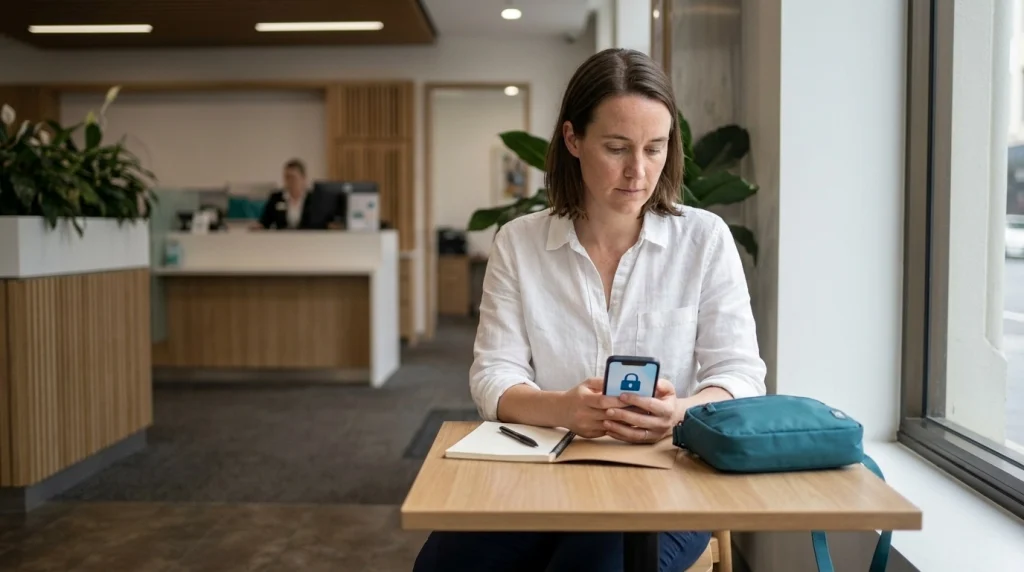
If an ATM incident occurs, protect your physical safety first. Then secure your accounts and preserve the transaction details.
If the ATM keeps your card
Don’t accept instructions from strangers who claim they can retrieve it. Contact your card issuer using its official app or verified phone number.
- Move to a safe location if the machine or surroundings seem suspicious.
- Freeze or lock the card when that feature is available.
- Call your bank and explain what happened.
- Record the ATM address, operator, and approximate transaction time.
- Ask about replacement options or emergency cash access.
Do not rely on an unverified phone number pasted onto the machine. Use contact details from your banking app or the card issuer’s official website.
If money leaves your account but no cash comes out
Check your banking app when you are somewhere secure. Sometimes the transaction may show as pending before the bank resolves it.
Contact your bank if the charge remains or your balance is incorrect. Keep any transaction receipt and the ATM identification number if available.
If you notice unauthorized withdrawals
Report suspicious activity immediately through your bank’s official channels. Request a card block or replacement and ask how to dispute the transactions.
Keep a record of:
- The date and time you noticed the transaction.
- The amount and currency involved.
- The transaction reference shown by your bank.
- Your fraud report or case number.
- Any follow-up instructions from the card issuer.
Dispute rules, protections, and deadlines depend on your card issuer and applicable laws. Ask your bank which rules apply to your account.
If someone threatens or follows you
Do not risk a confrontation to protect cash. Move toward a staffed business or another safer public place when you can.
If you face immediate danger, contact local emergency services. Know the correct number for your destination before you need it.
For U.S. travelers abroad, an embassy or consulate may provide guidance after serious incidents. Other nationalities should contact their own consular representatives.
Section takeaway: Your safety matters more than completing a withdrawal. Secure your card and contact the proper authorities once you are safe.
Frequently Asked Questions
Is it safe for a woman to use an ATM alone in another country?
Yes, many women use ATMs independently while traveling abroad. Choose reputable, well-lit locations, preferably inside staffed banks during daylight. Inspect the machine, protect your PIN, and leave if anyone behaves suspiciously. Local conditions still matter, so check official destination safety guidance.
Should I use an ATM inside a bank or on the street?
A staffed bank branch is generally the preferable option because assistance is available nearby. Street ATMs can be convenient, but isolated machines may expose you to more risks. Whichever you choose, inspect the card reader and assess your surroundings before withdrawing money.
What is the safest time to withdraw cash while traveling solo?
Daylight hours are usually the most practical choice, especially in unfamiliar locations. Try to withdraw cash during normal banking hours. If you need money after dark, use a secure, well-lit location and avoid isolated routes or machines.
How can I tell whether an ATM has a skimmer?
Look for loose or unusually bulky card readers, crooked keypads, strange attachments, and unexplained damage. However, some skimming equipment is difficult to detect. Use reputable bank ATMs, shield your PIN, monitor transactions, and avoid machines that appear unusual.
Should I accept help from someone at an ATM abroad?
Do not accept unsolicited assistance from strangers. Never reveal your PIN or hand over your card to someone claiming to fix the machine. If you need help, cancel the transaction when possible and contact verified bank staff or your card issuer.
What should I do if my ATM card gets stolen while traveling?
Immediately lock or freeze your card using your banking app or contact your issuer. Review recent transactions and report anything unauthorized. Ask about card replacement and emergency access to funds. If the theft involved threats or violence, contact local authorities when safe.
Is it better to carry cash or use ATMs during solo travel?
A combination usually provides greater flexibility. Carry enough cash for short-term needs while keeping a separate payment method available. Use reputable ATMs for additional withdrawals, but avoid carrying large amounts or depending entirely on a single card.
Final Thoughts: Stay Confident and Prepared
Learning how to stay safe at an ATM is part of building confidence as a solo female traveler. The goal isn’t to fear every machine or every unfamiliar street.
It’s to make careful choices that become natural with practice. Choose secure locations, protect your PIN, manage your cash discreetly, and prepare a backup payment method.
Before your next solo trip, save your bank’s emergency contact information and research ATM options near your accommodation. A few minutes of preparation can make everyday money tasks feel much easier.
My final travel tip: Never feel pressured to finish a withdrawal when something seems wrong. Walking away is always an option.