What Should a Woman Do If She Encounters Wildlife While Hiking Alone?
Quick Answer
If you encounter wildlife while hiking alone, stay calm, keep your distance, and never approach or feed the animal. Your next move depends on the species: never run from a bear or mountain lion, but seek cover or run if a moose charges. Check the National Park Service wildlife safety guidance before your hike.
Your First Safety Steps
- Stop and assess: Identify the animal from a safe distance without moving closer.
- Give it space: Never block its escape route or approach its young.
- Avoid sudden movements: Follow the correct response for that species.
- Protect your route: Turn back if the animal blocks your trail.
- Get help: Report dangerous encounters and request emergency help for injuries.
Important Reminder
- No universal response: Running, standing your ground, and fighting back are appropriate in different situations. Learn the local wildlife rules before starting.
What should a woman do if she encounters wildlife while hiking alone? It’s a question worth answering before you ever reach the trailhead.
Solo hiking can be peaceful and empowering, but meeting an unexpected animal changes everything. I want to show you how to prepare, respond safely, and make smart decisions without letting fear control your adventures.
In This Guide
- What Should You Do Immediately When You See Wildlife?
- How Should You React to Different Wild Animals?
- How Can Women Prevent Dangerous Wildlife Encounters?
- What Safety Gear Should a Woman Carry Hiking Alone?
- What If Wildlife Attacks or You Cannot Get Help?
- How Can You Feel More Confident Hiking Alone?
- Frequently Asked Questions
What Should You Do Immediately When You See Wildlife?
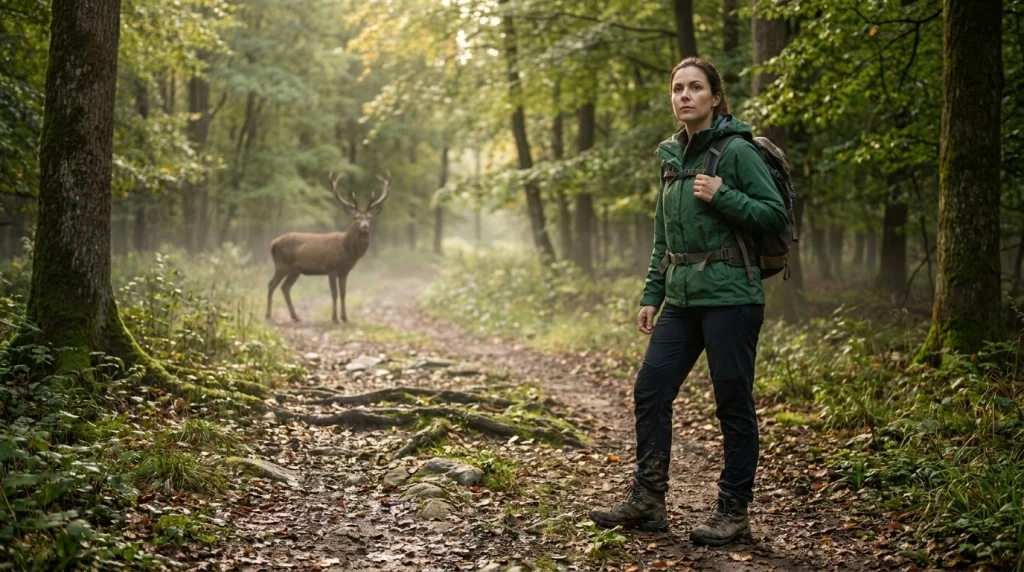
When you notice a wild animal, stop before making any sudden movement. Observe its location, behavior, and possible escape routes.
A wildlife encounter means coming across a wild animal within a distance where your actions might affect its behavior. Not every encounter is dangerous, but every animal deserves space.
Stay Calm and Assess the Situation
Your first reaction might be to run. That instinct can be dangerous around bears and large predators.
Instead, take a moment to evaluate what you’re seeing. A distant deer crossing a hillside needs a different response from a bear approaching your trail.
- Identify the animal if you can do so safely.
- Notice whether it has young nearby.
- Look for warning signs, including charging or defensive behavior.
- Check whether you have a clear route away.
- Keep watching the animal without moving closer.
If the animal has not noticed you, avoiding its attention may be safest. Quietly increase the distance when appropriate.
Never Approach Wildlife for Photos
One common mistake is treating a wildlife sighting like a photo opportunity. An animal that looks relaxed can react quickly when someone approaches.
Use binoculars or a camera’s zoom rather than stepping closer. Never try to take a selfie beside a wild animal.
Distance recommendations vary by park and species. For example, Yellowstone requires visitors to stay at least 100 yards from bears and wolves, and 25 yards from bison and elk.
Other parks have different rules. Always follow the distance posted where you’re hiking.
Know When to Turn Around
Imagine finding a large animal standing directly across a narrow forest path. You don’t need to pass it to prove you can handle hiking alone.
Turning around is often the smartest decision. Wait at a safe distance or retrace your route without approaching the animal.
- Never squeeze between an animal and its young.
- Avoid walking toward dens, nests, or carcasses.
- Don’t leave the marked trail to push past dangerous wildlife.
- Choose another route only when it is safe and permitted.
Section Takeaway: Your first job is to prevent the encounter from escalating. Distance and good judgment matter more than bravery.
How Should You React to Different Wild Animals?
Different wildlife species require different responses. The most important lesson is that there isn’t one rule for every animal.
Before traveling, learn which animals live along your route. This is especially important when hiking in unfamiliar national parks or overseas destinations.
What Should You Do If You Encounter a Bear?
Never run from a bear. Stay calm, speak in a steady voice, and slowly increase your distance when the animal allows you to leave.
The National Park Service explains that bear behavior matters greatly. A frightened, defensive bear needs a different response from one deliberately investigating a person.
- Unaware bear: Quietly leave without attracting attention.
- Bear that notices you: Speak calmly and identify yourself as human.
- Bear approaching: Stand your ground and prepare accessible bear spray, if appropriate.
- Defensive behavior: Avoid shouting or making threatening movements.
- Persistent, non-defensive approach: Act assertively and follow local ranger guidance.
Don’t drop your backpack or offer food to distract the bear. Your pack may help protect you if physical contact occurs.
If a defensive grizzly or brown bear attack makes contact, park guidance may recommend playing dead while protecting your head and neck. If a black bear attacks, or any bear behaves predatorily, fight back.
Those distinctions are critical. Learn local instructions because bear species, behavior, and regional guidance vary.
What Should You Do If You See a Mountain Lion?
Face the mountain lion, stand tall, and avoid running. Make yourself look larger while giving it room to escape.
Mountain lions, also called cougars or pumas, are generally elusive. Still, an encounter deserves your full attention.
- Maintain awareness of the animal without turning your back.
- Raise your arms or open your jacket to look larger.
- Speak firmly and loudly if the animal approaches.
- Back away slowly when possible.
- Never crouch, bend down, or pretend to be dead.
- Fight back forcefully if attacked.
If the animal becomes aggressive, throw reachable objects without bending over. Keep facing it and try to remain standing.
What Should You Do If You Encounter a Moose?
Give moose plenty of room and move away if they seem disturbed. Unlike bears, a charging moose is an animal you should run from.
Moose can become defensive around calves or when people invade their space. They may look peaceful until they feel threatened.
Watch for ears pinned backward, raised hair, or a lowered head. These can indicate growing agitation.
- Move away slowly before the situation escalates.
- Never stand between a mother and her calf.
- Run toward safety if a moose charges.
- Put a large tree, vehicle, or solid barrier between you and the animal.
- If knocked down, curl up and protect your head until it leaves.
What Should You Do If a Snake Blocks Your Trail?
Stop, locate the snake, and give it space. Never touch, provoke, capture, or attempt to move it.
Snakes often remain hidden among rocks, leaves, and grass. That’s why watching where you step matters as much as looking ahead.
- Wait for the snake to move away naturally.
- Don’t jump over it or step close to its body.
- Keep your hands away from unseen crevices.
- Turn around if the trail remains blocked.
- Seek urgent medical help after a suspected venomous bite.
Never assume a snake is harmless based only on its color or head shape. Identification can be difficult without local expertise.
What About Bison, Elk, Wild Boars, and Other Large Animals?
Keep your distance from large herbivores. They can cause serious injuries even though they don’t hunt people.
Bison and elk may charge when threatened, while wild boars can become defensive when cornered. Avoid blocking their movement and use sturdy barriers for protection when necessary.
For bison and elk, Yellowstone specifically advises getting away and seeking cover if they charge. For wild boars, follow the guidance from local wildlife authorities.
Wildlife Encounter Response Comparison
Use this table as a quick reminder. It does not replace species-specific training or local park instructions.
| Animal | First Response | Avoid | If It Charges or Attacks |
|---|---|---|---|
| Bear | Stay calm; identify yourself; back away when safe | Running or offering food | Use appropriate bear spray; contact response depends on behavior and species |
| Mountain lion | Face it and appear larger | Running or crouching | Act aggressively; fight back if attacked |
| Moose | Give space and move away | Approaching calves | Run and seek solid cover |
| Snake | Stop and move away | Touching or stepping over it | Get emergency care if bitten |
| Bison or elk | Retreat and maintain distance | Approaching for photos | Get away and seek sturdy cover |
Section Takeaway: Never apply bear advice automatically to a moose or bison. Learn the correct response for every major species in your hiking area.
How Can Women Prevent Dangerous Wildlife Encounters?
The safest wildlife encounter is often the one you avoid. Good preparation lowers your chances of surprising an animal.
When hiking alone, you don’t have a companion to spot movement or share decisions. This makes route research and awareness especially valuable.
Research Wildlife Before Choosing a Trail
Before each hike, I recommend checking the park’s official website and recent trail notices. This can reveal warnings that ordinary travel blogs miss.
In 2026, park notices remain more useful than assuming an old trail review describes current conditions. Wildlife activity and trail restrictions can change.
- Check whether bears, mountain lions, snakes, or large herbivores live nearby.
- Look for recent wildlife sightings or temporary trail closures.
- Ask rangers about areas with active wildlife.
- Confirm local bear spray rules and transportation restrictions.
- Choose a route suited to your experience and preparation.
For a first solo hike in serious bear country, consider joining a guided group. Some parks specifically discourage hiking alone because group travel lowers certain wildlife risks.
Pro tip: Check official park wildlife notices before departure, particularly in destinations with bears or mountain lions.
Choose Your Hiking Time Carefully
Daylight makes it easier to notice wildlife and navigate safely. It also gives you more time to leave a trail if conditions change.
Some predators are especially active around dawn or dusk. Local wildlife patterns differ, so check the destination’s guidance instead of relying only on general advice.
- Choose a daytime route with enough time to finish before dark.
- Avoid rushing through thick brush or blind corners.
- Pay close attention beside streams that hide nearby sounds.
- Watch for tracks, droppings, and recently disturbed ground.
- Turn back when conditions make wildlife difficult to detect.
Make Your Presence Known in Bear Country
Surprising a bear at close range can create a dangerous defensive encounter. Speaking regularly in areas with poor visibility helps animals detect you.
Don’t rely on a bear bell as your only precaution. Use your voice and follow park guidance.
Avoid wearing headphones that block surrounding sounds. You need to hear movement, warning noises, and other hikers.
Keep Food and Wildlife Separate
Wildlife can become dangerous when it learns to associate hikers with food. Even small animals may approach people after repeated feeding.
- Never feed wildlife, including squirrels and birds.
- Keep snacks and wrappers packed away.
- Follow required bear-resistant food storage rules.
- Never leave food unattended at rest stops.
- Carry your trash out of the park.
Avoid stopping near animal carcasses or obvious feeding areas. Predators may return to those locations.
Section Takeaway: Research your destination, stay alert, and avoid surprising or feeding animals. Prevention gives you more control than reacting after wildlife approaches.
What Safety Gear Should a Woman Carry Hiking Alone?
Solo hiking safety gear should help you navigate, communicate, and manage emergencies. No single item can make a wildlife encounter harmless.
I prefer packing gear around actual trail risks rather than buying everything marketed as an outdoor survival tool. Each item should have a clear purpose.
Essential Solo Hiking Safety Checklist
Your exact kit depends on the climate, route, terrain, and local wildlife. Start with these practical essentials.
- Offline map: Download your hiking route before leaving mobile coverage.
- Navigation backup: Carry a suitable paper map and compass, and know how to use them.
- Charged phone: Save emergency numbers and conserve battery power.
- Emergency communication: Consider a satellite messenger for remote trails without reliable reception.
- First-aid kit: Pack supplies appropriate for the route and your training.
- Headlamp: Prepare for unexpected delays after sunset.
- Water and food: Carry adequate supplies plus a reasonable emergency reserve.
- Weather protection: Bring layers and protection suited to local conditions.
- Whistle: Use it to attract rescuers if you’re lost or injured.
- Bear spray: Carry it where recommended and legally permitted, with proper training.
Keep important tools where you can reach them. Emergency gear buried under spare clothes may be difficult to retrieve quickly.
Should Women Carry Bear Spray?
Bear spray can be an important protective tool in bear country. However, it works only when you carry an appropriate product and understand how to deploy it.
Park rules differ, and some countries restrict pepper-based sprays. Check local regulations before buying or transporting anything.
- Choose a product intended specifically for bear defense.
- Learn the manufacturer’s instructions and effective range.
- Keep it accessible rather than inside a packed compartment.
- Understand wind direction and deployment limitations.
- Never spray clothing or camping equipment as a preventive measure.
Bear spray is not a replacement for maintaining distance. It is an emergency tool, not permission to approach an animal.
Share Your Hiking Plan Before Leaving
One of the simplest solo safety habits costs nothing. Tell a trusted person exactly where you’re going.
Imagine planning a three-hour forest hike and losing reception halfway through. A clear check-in arrangement means someone knows when to raise concern.
- Share the trail name and planned route.
- Give your expected start and finish times.
- Set a specific check-in deadline.
- Explain whom to contact if you miss that deadline.
- Tell your contact when you return safely.
Don’t assume a phone’s location sharing will work deep in the wilderness. Battery life and satellite coverage matter.
What If Wildlife Attacks or You Cannot Get Help?
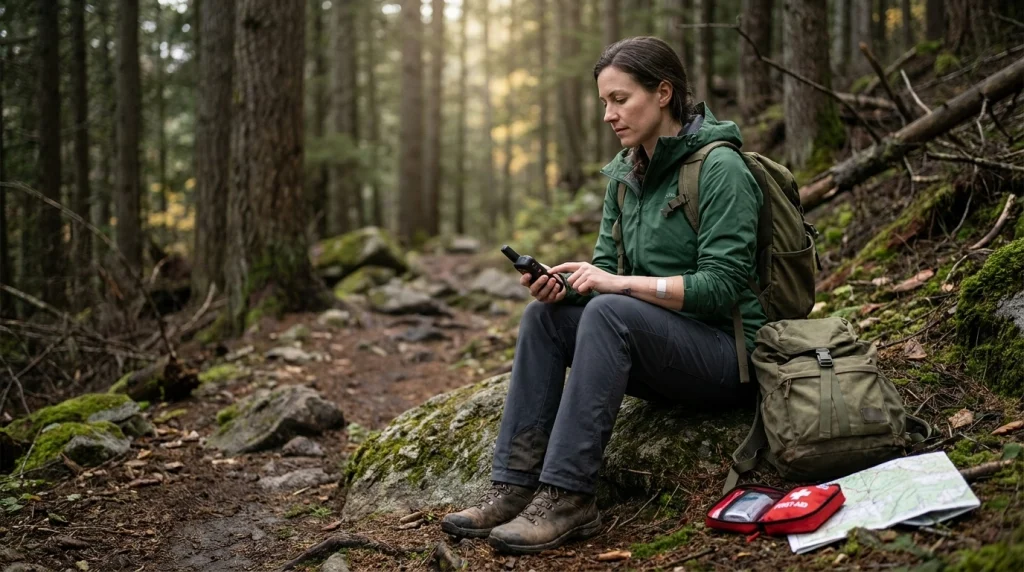
If an animal attacks, your immediate response depends on the species and behavior. Once you reach safety, treat serious injuries as an emergency.
The goal is to avoid further contact and obtain appropriate medical assistance. Don’t delay care because an injury looks small.
What Should You Do After an Animal Bite?
Move away from the animal without creating another dangerous encounter. Call the local emergency number or activate an emergency communication device.
- Reach a safer position before attempting treatment.
- Request emergency help and share your location.
- Control major bleeding with firm direct pressure when appropriate.
- Follow dispatcher instructions for serious injuries.
- Seek medical evaluation for bites and scratches.
- Report the incident to local wildlife authorities.
Animal bites can cause infection and may require assessment for rabies, tetanus, or other complications. Medical treatment should be guided by a qualified professional.
What If a Venomous Snake Bites You?
Treat a suspected venomous snakebite as a medical emergency. Don’t wait for severe symptoms before asking for help.
- Move away from the snake.
- Call emergency services immediately.
- Stay as still and calm as practical.
- Remove rings or tight jewelry before swelling begins.
- Follow local emergency medical instructions.
- Arrange evacuation rather than attempting a long hike out alone.
Never cut the wound, suck out venom, or apply a tourniquet. Don’t try to capture the snake for identification.
What If You Have No Phone Signal?
Limited reception makes emergency planning especially important. A satellite emergency communication device may allow an SOS request when ordinary mobile service fails.
If you’re injured, assess whether movement could make your condition worse. Staying in a reasonably safe, identifiable location may be better than wandering without direction.
- Try your device’s supported emergency SOS function.
- Use a satellite messenger if you have one.
- Record or communicate your last known trail position.
- Use a whistle to signal nearby people or rescuers.
- Keep warm, conserve energy, and follow your emergency plan.
If the animal remains nearby, prioritize getting out of its immediate danger zone. Shelter and signaling decisions must account for the surrounding wildlife.
Should You Report the Encounter?
Report aggressive behavior, attacks, and threatening wildlife encounters to park staff. Your information may help rangers warn future visitors.
Share the animal type, approximate location, time, and observed behavior. Don’t return toward the animal to collect photos or better details.
Section Takeaway: Know the correct species-specific defense response, then get medical help when needed. Emergency communication and a shared hiking plan can make rescue easier.
How Can You Feel More Confident Hiking Alone?
Confidence comes from preparation and practiced decisions, not ignoring danger. You don’t need to prove anything by taking unnecessary risks.
I think the most useful mindset is simple: choose trails you can manage and always leave yourself options. Solo hiking should feel rewarding, not like a test of courage.
Start With Lower-Risk Trails
For beginners, a short, maintained trail near a staffed visitor center can be a sensible first choice. It offers a chance to practice navigating and following trail notices.
Build experience before tackling remote backcountry routes. Wildlife risk is only one part of choosing an appropriate hike.
- Start with a familiar, marked trail.
- Check recent trail conditions.
- Choose reasonable elevation and distance.
- Learn local wildlife response rules.
- Practice navigation before losing reception.
- Turn around when circumstances exceed your comfort or preparation.
Practice Wildlife Responses Before Your Trip
Knowing instructions in advance is different from trying to remember them while frightened. Reviewing a simple response chart can help you make quicker decisions.
For example, rehearse the distinction between a mountain lion and a moose. One requires you to face it and avoid running, while the other may require immediate escape.
You can also attend a ranger talk or join a guided wildlife-safety walk. These options provide local knowledge that generic online advice cannot fully replace.
Know When Solo Hiking Is Not the Best Option
Some remote trails carry risks that make group hiking the better choice. This is particularly relevant in areas with active bears, difficult terrain, or limited rescue access.
A local guide can help with unfamiliar conditions and wildlife behavior. Choosing company for a difficult hike doesn’t take away your independence as a traveler.
Ultimately, preparation gives you freedom to make safer choices. There will always be another trail.
Frequently Asked Questions
Is it safe for a woman to hike alone in areas with wildlife?
It depends on the wildlife, trail conditions, and your preparation. Some routes are suitable for experienced solo hikers, while others are better attempted with a group or guide. Follow local park recommendations, especially where authorities discourage solo hiking.
Should you run if a wild animal approaches you?
Not automatically. Never run from a bear or mountain lion because it may provoke pursuit. However, running toward cover is appropriate if a moose or bison charges. The correct decision depends on the animal and its behavior.
Can loud noises scare away dangerous wildlife?
Sometimes, but noise is not a universal solution. Speaking firmly can help during a mountain lion encounter, while sudden shouting may worsen a defensive bear encounter. Learn local guidance instead of relying on screaming, whistles, or loud music.
What should you do if you see baby animals on a trail?
Keep your distance and avoid approaching, touching, or photographing them closely. A parent may be nearby and respond defensively. Never position yourself between an adult animal and its young. Turn around if you cannot continue without approaching them.
Is bear spray necessary for every solo hike?
No. Its usefulness depends on the destination, wildlife, and local regulations. In areas with significant bear activity, authorities may strongly recommend carrying it. Learn how to use it properly and check whether the product is permitted where you’re traveling.
What is the safest time of day to hike alone?
Daylight is generally helpful for navigation and noticing wildlife. However, animal activity varies by species and location. Check park guidance before selecting your start time, and allow enough daylight to finish the route without rushing.
What should you do if you encounter wildlife while hiking alone without cell service?
Keep a safe distance and use the appropriate animal-specific response. If an emergency develops, activate a satellite SOS device when available. Avoid wandering blindly, use your navigation tools, and follow the emergency plan you shared before leaving.
Final Thoughts: Stay Prepared, Not Afraid
Encountering wildlife while hiking alone doesn’t automatically mean you’re in danger. Your safety depends on recognizing the situation, respecting animals, and responding correctly.
Remember the key distinction: don’t run from bears or mountain lions, but seek cover if a moose charges. Give every wild animal the space it needs.
Before your next hike, research the local wildlife, check official park notices, and share your route with someone you trust. Choose a group hike when conditions make solo travel unwise.
Most importantly, give yourself permission to change plans. A safe return is always more valuable than reaching a summit.