What Should a Solo Female Traveler Do If Someone Follows Her?
Quick Answer
If someone appears to be following you while traveling alone, do not go back to your hotel, rental, parked car, or another isolated place. Move toward a busy, staffed location, tell a specific person you need help, and contact local emergency services if you feel threatened. The U.S. State Department’s safety advice for women travelers also recommends planning for unsafe situations and knowing where nearby emergency services are located.
What to do immediately
- Stay in public: Walk into a staffed hotel, restaurant, shop, pharmacy, transit station, or similar busy place.
- Protect your lodging: Avoid leading the person directly to where you are staying if another safe place is available.
- Ask directly: Tell an employee, security officer, or another specific person that you believe someone is following you.
- Call for help: Use the destination’s local emergency number if the person approaches, threatens, blocks, chases, or continues following you.
- Do not confront: You do not need to challenge the person or prove that your suspicion is correct.
One rule to remember
- Your goal is not to confirm whether someone is following you. Your goal is to reach a safer environment.
If you’re wondering what should a solo female traveler do if someone follows her, the safest response is usually simple: move toward people, staff, light, and help. Don’t let embarrassment or uncertainty persuade you to keep walking toward somewhere private.
My rule for solo travel is that I never use my accommodation as a test. If something feels wrong, I treat the next safe public place as my destination instead.
In This Guide
- What should you do first if someone follows you?
- Where should you go if you think you’re being followed?
- How do you get help without escalating the situation?
- What if you’re followed in a taxi, rideshare, car, or public transit?
- What should you do after you’re safe, and how can you prepare?
- Frequently asked questions
- Closing takeaway
What Should You Do First If Someone Follows You?
Move toward a safer environment before trying to work out the person’s intentions. You do not need proof that someone is following you before changing your route or asking for help.
Practical definition: Being followed means a person or vehicle keeps matching your movements closely enough to create a reasonable safety concern. It is not a legal definition, and you don’t need to diagnose the person’s motive.
One matching turn can be coincidence. Repeated matching movements, waiting when you wait, or following you into several locations deserves more caution.
Do not go somewhere isolated to test your suspicion
A common instinct is to turn down another street or take a quiet shortcut to see whether the person follows. That can leave you with fewer witnesses and fewer exits.
Choose a route that becomes busier, brighter, and more staffed. A slightly longer route is worthwhile if it gives you more options.
- Keep moving toward people. Do not enter an alley, empty park, stairwell, parking structure, or quiet side street.
- Keep your phone accessible. You may need to call someone or use emergency services quickly.
- Remove headphones. You want to hear footsteps, vehicles, announcements, and people around you.
- Avoid displaying valuables. Focus on getting somewhere secure instead of handling your wallet or luggage.
- Trust a reasonable concern. You can always change your plan even if the situation later turns out to be harmless.
I think of this as changing the environment rather than confronting the person. More people, staff, cameras, entrances, and exits usually give me better choices.
Pro tip: Before visiting a destination, check its current government travel advisory and save the correct local emergency number. Emergency numbers vary by country.
Where Should You Go If You Think You’re Being Followed?
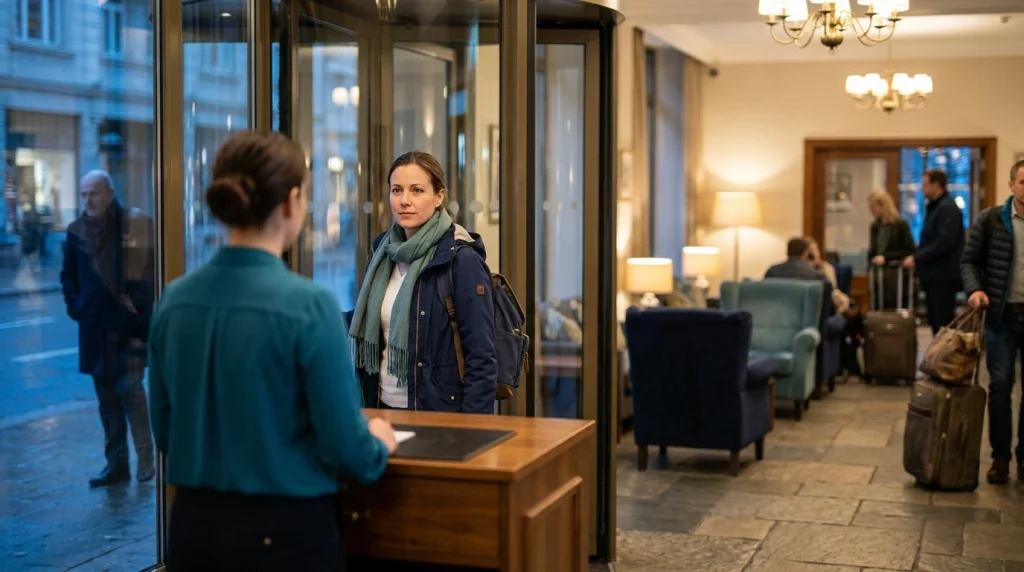
Go somewhere staffed where you can remain inside and clearly ask for assistance. The ideal place has employees, other customers, lighting, and more than one way to seek help.
Your hotel can be appropriate if it is immediately available and clearly the safest option. However, avoid revealing your accommodation to a suspicious person when a different staffed location is close by.
| Situation | Better move | What to avoid |
|---|---|---|
| Walking in a commercial area | Enter a staffed restaurant, hotel lobby, pharmacy, supermarket, or large shop | Quiet shortcuts and empty side streets |
| Near public transportation | Move toward an attendant, ticket desk, security point, or busy platform area | Getting off alone at a deserted stop |
| Close to your accommodation | Use another safe business if practical, or enter reception and immediately alert staff | Walking directly to your room or rental entrance |
| Person becomes aggressive | Create distance, attract attention, and contact local emergency services | Stopping to argue or demand an explanation |
Stay inside once you reach safety
Don’t automatically leave after five minutes because the person disappears from view. Tell staff what happened and ask whether they can help you check the area or arrange safer transportation.
If necessary, ask security or police for assistance. Avoid going outside alone to look for the person yourself.
How Do You Get Help Without Escalating the Situation?
Be specific when asking for help. A direct request is easier for another person to act on than a vague comment that someone is making you uncomfortable.
You might say that you believe a person is following you and you do not feel safe leaving alone. Ask the employee to stay with you, contact security, or call emergency services if necessary.
Choose one person and speak clearly
Instead of announcing your problem to an entire crowd, approach a cashier, receptionist, guard, transit worker, or another clearly identifiable person. This gives someone responsibility for responding.
- Describe the person: Note clothing, approximate height, distinctive features, bags, or other obvious details.
- Explain the pattern: Mention where you first noticed them and how long they have been following you.
- State what you need: Ask to remain inside, call security, contact police, or arrange safe transportation.
- Contact someone you trust: Tell them where you are and what is happening.
If you are in immediate danger, speaking loudly can attract attention. The State Department specifically notes that drawing attention to an unsafe situation can sometimes discourage unwanted behavior.
For persistent stalking or harassment, RAINN’s stalking safety-planning guidance recommends involving trusted people, preparing ways to reach help, and adjusting predictable routines.
Document only when it does not increase your risk
A photograph, vehicle plate, or video can sometimes help later. It is never worth moving closer to the person or openly filming them if doing so may provoke confrontation.
Your memory can also be useful. Write down the time, street, direction of travel, description, vehicle details, and what occurred once you’re secure.
What If You’re Followed in a Taxi, Rideshare, Car, or Public Transit?
The same rule applies: do not let the situation guide you toward an isolated destination. Move toward staff, populated areas, and help whenever you safely can.
If you’re driving
- Keep your doors locked and windows closed.
- Do not drive to your accommodation or another private address.
- Head toward a staffed police facility, fire station, hospital entrance, or busy open business when appropriate.
- Call local emergency services hands-free if the situation becomes threatening.
- Avoid stopping somewhere quiet to confront the other driver.
If a vehicle is aggressively chasing, blocking, or threatening you, prioritize emergency assistance. Don’t turn the situation into a complicated driving test.
If you’re in a rideshare or taxi
If someone outside the vehicle appears to be following you, tell the driver and consider changing your destination to a secure public location. Use in-app trip sharing or safety tools when available.
If the driver is the person making you feel unsafe, ask to exit in a busy public area if you can do so safely. Contact emergency services when there is immediate danger.
The State Department advises travelers to research reputable transport providers and notes that app-based rides can create a record of the vehicle and driver. RAINN also recommends using verified transportation in its travel safety guidance.
If you’re on public transportation
Move closer to the driver, conductor, station staff, security, or a larger group of passengers. Do not leave at an empty stop simply because it was your planned stop.
At a staffed station, tell an employee what is happening before changing platforms, lines, or vehicles. The goal is to break the pattern without isolating yourself.
What Should You Do After You’re Safe, and How Can You Prepare?
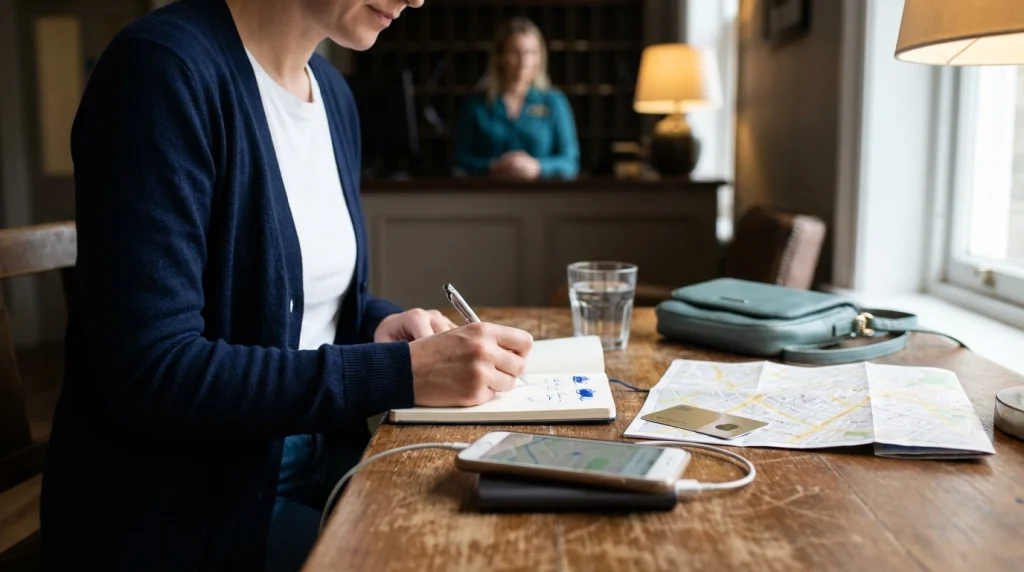
Once the immediate situation ends, record what happened while the details are fresh. Repeated contact may matter even if each incident seems minor by itself.
- Write down details: Record the date, time, location, route, description, words spoken, and any vehicle information.
- Save evidence: Keep relevant messages, screenshots, ride records, photographs, or call logs.
- Tell your accommodation: Ask staff not to reveal your room number or confirm that you are staying there.
- Adjust your routine: Change predictable routes or departure times if the same person could appear again.
- Review digital exposure: Stop posting your location in real time and check who can see shared-location information.
- Consider reporting: Contact local authorities when the behavior is threatening, repeated, or criminal.
Prepare before the next solo outing
I build a small safety routine into every day out alone because it is easier to make decisions before adrenaline takes over. It takes only a few minutes.
- Save the local emergency number before leaving your accommodation.
- Keep your phone charged and carry a power bank when practical.
- Download an offline map for unfamiliar areas.
- Know one or two staffed places near your route.
- Share your general plans with someone you trust.
- Avoid publicly posting your exact location until after you’ve left.
- Keep enough money or payment access for an unplanned ride.
As of 2026, the U.S. State Department’s travel resources continue to advise travelers to plan for unsafe situations, know how to reach local help, and keep trusted contacts informed. U.S. citizens can also use the free Smart Traveler Enrollment Program for embassy and consulate security alerts.
If an American traveler needs urgent consular assistance abroad, the State Department’s emergencies abroad guidance explains how to reach the nearest embassy or consulate. Travelers of other nationalities should identify their own government’s equivalent consular service before departure.
Pro tip: Government travel advisories, embassy websites, and local authorities should be your source for destination-specific emergency numbers and current security conditions.
Frequently Asked Questions
Should I confront someone who is following me?
Usually, no. Confrontation can escalate an uncertain situation, especially when you’re alone in an unfamiliar place. Move toward a staffed public area, alert someone nearby, and contact local authorities if the person’s behavior becomes threatening.
Should I go back to my hotel if I think someone is following me?
Avoid revealing where you’re staying when another safe public location is nearby. If your hotel is clearly the safest immediate option, enter the staffed reception area, tell employees what happened, and do not go directly to your room.
What if I’m not sure the person is really following me?
You don’t need certainty before taking a precaution. Choose a safer route or enter a public business without confronting the person. If they were simply traveling in the same direction, you have lost little by being cautious.
Should I call the police if someone follows me?
Call local emergency services if you face immediate danger, threats, aggressive pursuit, physical contact, or an attempt to block your movement. For less urgent repeated behavior, ask local police or your accommodation staff about the appropriate reporting process.
Can I photograph someone who is following me?
Only if you can do so without increasing your danger and local law permits it. Don’t move closer, stop in an isolated place, or openly provoke the person for a better photograph. Your safety matters more than collecting evidence.
What if someone follows me on public transportation?
Stay aboard until you can reach a busy or staffed stop when safe to do so. Move near the driver, conductor, security staff, or other passengers and explain what is happening rather than getting off alone at an isolated location.
What should I do if the same person appears again later?
Treat repeated contact more seriously. Save details of each incident, tell trusted people and your accommodation, vary predictable routines, and consider contacting local authorities. Persistent unwanted following may require a more formal safety plan.
Closing Takeaway
If someone follows you while you’re traveling alone, you do not have to determine why before protecting yourself. Move toward people and staff, keep your accommodation private when possible, ask directly for help, and use local emergency services when danger feels immediate.
Solo female travel safety is not about assuming everyone is dangerous. It is about giving yourself permission to change plans quickly when something does not feel right.
Before your next solo day out, save the local emergency number, identify a few staffed places, charge your phone, and tell someone your general plans. Those small preparations can give you much better options when you need them.