How Can a Woman Get Back to Her Hotel Safely at Night?
Quick Answer
A woman can get back to her hotel safely at night by planning the return before going out, choosing active and well-lit routes, and switching to reputable transportation when walking no longer feels sensible. I also recommend reviewing current official guidance for women travelers before an international trip because nighttime risks differ by destination.
My nighttime return checklist
- Plan before leaving: Decide how you will return while you still have good transport options.
- Save the hotel: Keep its address, map location, and reception number on your phone.
- Protect your battery: Leave enough charge for navigation, calls, and a backup ride.
- Verify every ride: Match the driver, vehicle, and registration details before getting inside.
- Change plans early: If a street, station, driver, or situation feels wrong, choose another route.
One rule worth remembering
- You never need to finish a walk or ride just because it was your original plan.
If you’re wondering how a woman can get back to her hotel safely at night, the answer starts before darkness falls. Safe nighttime travel is less about one perfect transportation method and more about keeping several realistic options open.
My own rule for solo female travel safety is simple: I never let the cheapest or most convenient return option become my only option. I want enough battery, money, information, and flexibility to change plans immediately.
In This Guide
- What Is the Safest Way to Get Back to a Hotel at Night?
- Should You Walk, Take Transit, or Book a Ride?
- What Should You Prepare Before Going Out?
- How Can You Make a Nighttime Rideshare Safer?
- What Should You Do If Something Feels Wrong?
- Which Small Decisions Make the Biggest Difference?
- Frequently Asked Questions
Night-return safety means planning how you will move from an evening activity back to secure accommodation while keeping practical alternatives available if conditions change.
What Is the Safest Way to Get Back to a Hotel at Night?
The safest option is usually the one you can verify, control, and change quickly. That might mean walking in one city and booking a licensed car in another.
There is no universal rule saying a solo woman should never be outside after dark. The exact neighborhood, transport system, local conditions, distance, and time matter more than sunset alone.
Decide on your return before you leave
I prefer to make one primary plan and one backup plan before dinner or an evening event. That removes a surprising amount of stress later.
- Primary plan: Walk, take official transit, use a reputable ride app, or arrange hotel transportation.
- Backup plan: Keep enough money and battery for another ride or an earlier return.
- Hotel details: Save the full address in the local language when possible.
- Navigation: Download an offline map if mobile service may be unreliable.
- Check-in: Tell someone you trust your general evening plan when circumstances justify it.
As of 2026, I still check the destination’s current official travel advisory before relying on broad statements that a city is “safe.” Conditions can change faster than old travel articles.
Pro tip: Check an official government travel advisory for your exact destination before deciding whether nighttime walking or public transportation is sensible.
Should You Walk, Take Transit, or Book a Ride?
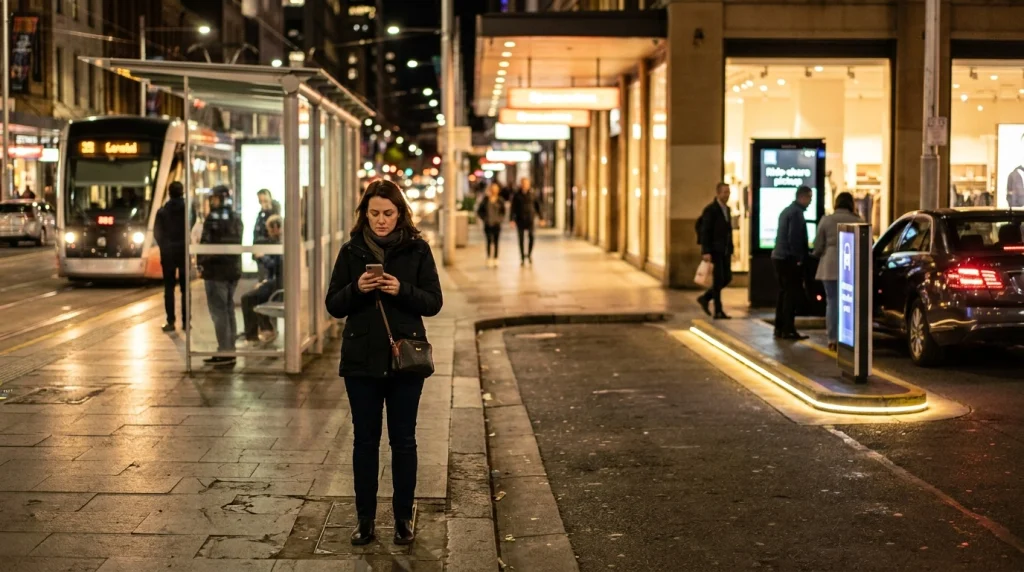
Choose based on the specific route rather than having one rule for every trip. A short walk through a busy restaurant district is different from a longer walk through empty streets.
I use roughly 10 to 15 minutes as a personal decision point, not a universal safety limit. If the route is unfamiliar or quiet, I often choose transport sooner.
| Return option | When I consider it | Main check before using it |
|---|---|---|
| Walking | Short, familiar, active, well-lit route | Check the entire route, not just the distance |
| Public transit | Service is still frequent and stations or stops remain active | Confirm the last service and hotel-side stop |
| App-based ride | I want door-to-door transport and can verify the vehicle | Match driver, photo, vehicle, and registration details |
| Hotel-arranged car | Late arrival, unfamiliar city, or limited reliable transport | Confirm pickup details directly with the property |
Price still matters, but I do not save a few dollars by accepting a transport option I cannot properly identify. I would rather change the evening budget than remove my easiest route back.
What Should You Prepare Before Going Out?
Prepare while you’re rested and connected to hotel Wi-Fi. Five minutes of planning can prevent difficult decisions when you’re tired later.
Save the information you would need without internet
- Hotel name and address: Save a screenshot and local-language version when useful.
- Reception number: Store it separately from your booking app.
- Map pin: Confirm it points to the correct entrance.
- Emergency number: Learn the local police, ambulance, or general emergency number.
- Backup payment: Keep another card or enough local currency separate from your main wallet.
Your accommodation also affects the return journey. The U.S. State Department’s lodging safety guidance recommends considering properties near transportation and useful services, plus features such as staffed reception or security.
I also avoid giving strangers my hotel room number. If someone needs to meet me, a public hotel lobby is a better default than my room or floor.
Protect enough phone battery for the return
I treat the final 25% to 30% of my battery as transportation capacity on nights out. Navigation, ride booking, translation, and phone calls all become harder when the phone dies.
A small power bank helps, but it does not replace planning. I still save key information offline before leaving.
How Can You Make a Nighttime Rideshare Safer?
Verify the vehicle before opening the door. Never rely only on a driver saying your name or asking whether you’re their passenger.
The State Department notes that app-based transportation can create a digital ride record and may let passengers share trip information. That makes verification features especially useful for a solo return.
Use a repeatable pickup routine
- Wait inside the restaurant, hotel, shop, or another active place until the vehicle is close.
- Match the registration plate and vehicle description in your app.
- Check the driver’s name and photo where the service provides them.
- Ask who the driver is picking up rather than volunteering your name first.
- Confirm the destination shown in the app before the vehicle moves.
- Share the trip with a trusted person when you want another layer of accountability.
Some services also offer PIN verification. Uber’s confirmed Verify Your Trip feature, for example, can require a four-digit PIN before a matched trip starts.
Features vary by country and app version, so check what is available at your destination before depending on it.
What Should You Do If Something Feels Wrong?
Change the plan early. You do not need proof that something dangerous is happening before moving toward a safer setting.
I would rather leave a station, cancel a ride, or walk back into a restaurant unnecessarily than stay somewhere because I felt embarrassed about changing my mind.
If you’re walking
- Move toward an open hotel, restaurant, shop, staffed station, or other active location.
- Do not continue down a quiet route simply because navigation says it is shorter.
- Avoid displaying your phone continuously while walking in places where phone theft is a concern.
- Call your hotel and ask for transportation guidance if you become unsure of the route.
If you’re already in a vehicle
- Follow the route on your own map when practical.
- Ask about an unexpected route change rather than ignoring it.
- Use the app’s safety or emergency tools if the situation warrants them.
- Request to stop in a busy, suitable public place if doing so is safer.
- Contact local emergency services immediately if you believe you face an urgent threat.
Official guidance for women travelers also emphasizes that personal safety matters more than politeness. Being firm, attracting attention, or refusing an uncomfortable situation can be appropriate when you need help.
Pro tip: Before traveling, use your government’s travel advice or the UK’s foreign travel advice directory to confirm local emergency information and current security issues.
Which Small Decisions Make the Biggest Difference?
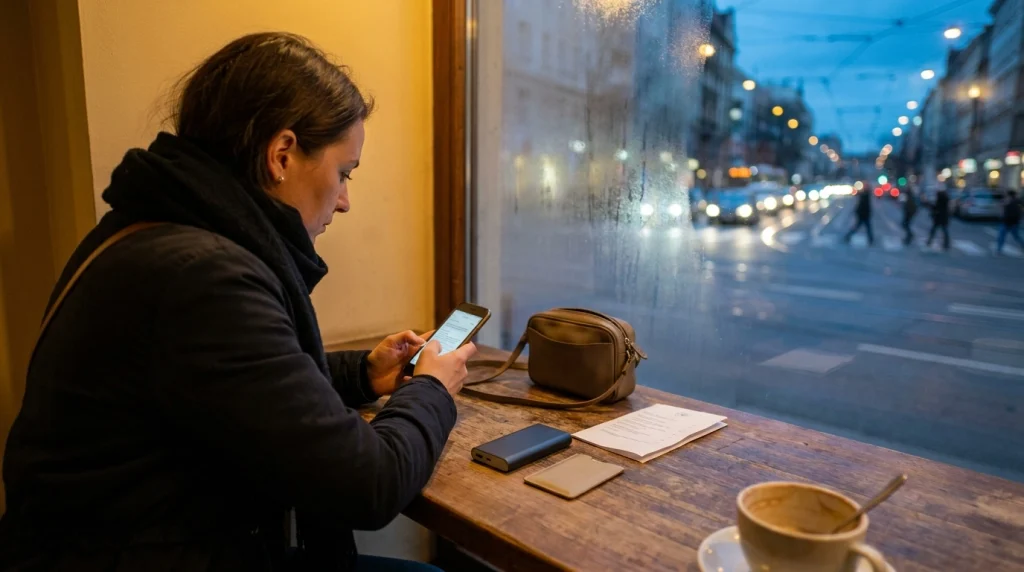
Fatigue, alcohol, a dying phone, and an unfamiliar route can turn an easy journey into a confusing one. I plan around those factors instead of treating them as separate issues.
Set a return point before you get tired
I do not use a universal curfew. Instead, I decide when transport starts thinning out or when I will no longer want to solve unexpected problems alone.
If the last convenient train leaves around midnight, for example, I might aim to leave the venue at 11:15 rather than planning around the final possible departure.
Keep alcohol from making the transportation decision
If I plan to drink, I arrange the return route first. That removes the need to compare drivers, routes, and unfamiliar streets when my judgment is less sharp.
- Keep your drink where you can see it.
- Do not accept an opened drink from someone you do not trust.
- Know how you will leave without depending on a new acquaintance.
- Return earlier if you feel unwell, unusually tired, or disoriented.
It also helps to carry the hotel name somewhere besides your phone. A small paper card in your bag can be useful if the battery dies or the device is lost.
Section Takeaway: Build your evening around an easy exit. The best nighttime plan is one you can change without needing another person’s permission or help.
Frequently Asked Questions
Is it safe for a woman to walk back to her hotel alone at night?
It depends on the destination, neighborhood, route, and current conditions. A short walk through a busy central area can be different from an isolated route, so check local advice and switch to reputable transport when the walk does not feel sensible.
What time should a solo female traveler return to her hotel?
There is no universally safe return time. Base your decision on transport frequency, neighborhood activity, distance, current security conditions, your energy level, and how easily you could change plans if your preferred transport stopped running.
Is rideshare safer than walking at night?
Neither option is automatically safer everywhere. An app-based ride offers vehicle and trip information, while walking avoids entering a stranger’s vehicle, so compare the exact route and verify whichever option you choose.
Should I share my live location when traveling alone?
Sharing a ride or location with a trusted contact can add useful accountability, especially during an unfamiliar nighttime journey. You do not need to broadcast your location publicly, and you should choose someone you trust with that information.
What should I do if my phone dies while I’m out at night?
Move to a staffed public place and ask for practical assistance rather than wandering while trying to remember the route. Keeping your hotel’s address, phone number, and some backup money on paper gives you another way to arrange transportation.
What should I do if a taxi or rideshare driver makes me uncomfortable?
Use the service’s safety tools when available and move toward a safe public location if you can do so safely. If you believe you are in immediate danger, contact local emergency services rather than waiting to see whether the situation improves.
My final rule: plan your hotel return while the evening still feels easy. Save the address, protect your phone battery, keep a backup ride budget, and give yourself permission to change plans the moment an option stops feeling sensible.
Solo travel does not require eliminating every possible risk. Good planning gives you more control, more choices, and a faster way out when circumstances change.