How Can a Woman Avoid Unwanted Attention While Traveling Alone?
Quick Answer
A woman can reduce unwanted attention while traveling alone by protecting personal information, using confident body language, setting firm boundaries, choosing reputable transportation, and avoiding situations where a stranger can isolate her. No method can prevent harassment completely, so I also recommend reviewing the U.S. State Department guidance for women travelers before an international trip.
Five habits that make the biggest difference
- Limit personal details: Don’t give strangers your hotel name, room number, itinerary, or information about being completely alone.
- Look purposeful: Know your route before stepping into the street and avoid appearing distracted by your phone.
- Say no clearly: Use a firm voice and short language instead of long explanations when someone ignores your boundaries.
- Stay in control: Keep your own transportation, phone, money, and accommodation access available.
- Leave early: Move toward staff, families, security, or a busy public place as soon as an interaction starts feeling wrong.
One rule worth remembering
- You do not owe a stranger friendliness, personal information, or an explanation for leaving.
If you’re wondering how can a woman avoid unwanted attention while traveling alone, start with boundaries rather than trying to become invisible. Solo female travel safety is often about controlling information, location, and your ability to leave.
I use a simple rule when I travel independently: strangers don’t need enough information to predict where I’ll be next. That habit protects my privacy without making every conversation feel suspicious.
In This Guide
What Counts as Unwanted Attention While Traveling Alone?
Unwanted attention is any interaction that continues after you show that you do not want it. It can include persistent conversation, sexual comments, staring, following, touching, repeated invitations, invasive questions, or attempts to separate you from a public area.
Definition: Unwanted attention while traveling is repeated or intrusive contact that makes you uncomfortable, pressures you to engage, ignores your boundaries, or interferes with your ability to move freely.
Not every stranger who speaks to you presents a threat. Friendly conversation, helpful directions, and ordinary curiosity are normal parts of travel.
The important difference is what happens after you disengage. A respectful person normally accepts a short answer, a refusal, or your decision to walk away.
Pay attention to behavior, not just friendliness
Some uncomfortable interactions begin politely. That is why I pay more attention to whether someone respects a boundary than to how charming or helpful they initially appear.
- Low concern: Someone asks a question and accepts your short reply.
- Increasing concern: The person keeps asking where you’re staying, whether you’re alone, or what you’re doing later.
- Higher concern: They follow you, block your movement, touch you, pressure you to enter another location, or become angry when you say no.
- Urgent concern: They threaten you, attempt to restrain you, enter your transport or accommodation without permission, or prevent you from leaving.
You do not need proof that someone has bad intentions before changing seats, crossing a street, entering a shop, or ending a conversation. Discomfort is enough reason to create distance.
The UK Foreign, Commonwealth & Development Office recommends researching whether women have reported unwanted attention at your destination and reviewing local safety conditions before departure. Its guidance for women travelling abroad also notes that women traveling alone can face additional risks in some places.
Pro tip: Check current government travel advice shortly before departure. Conditions, local laws, demonstrations, transportation risks, and neighborhood concerns can change after you book.
Section Takeaway: Unwanted attention becomes a safety issue when someone ignores your boundaries or limits your choices. Judge the behavior by whether you can disengage freely, not by whether the person initially seems friendly.
How Can You Look Less Approachable Without Looking Afraid?
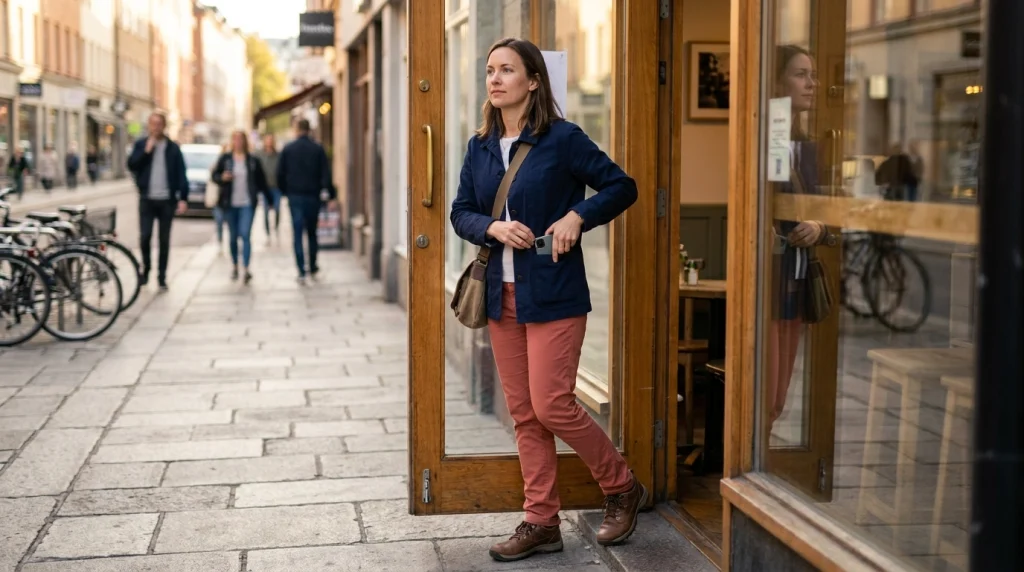
You can appear less available for random interaction by moving with purpose, limiting eye contact when appropriate, and avoiding body language that suggests you’re waiting for someone to approach. The goal is confidence, not fear.
Know where you’re going before you start walking
I try to check my route while I’m still inside a hotel lobby, café, station, or shop. Standing alone on a sidewalk while repeatedly rotating a map can advertise that you’re unfamiliar with the area.
- Save your destination before leaving Wi-Fi.
- Download an offline map when practical.
- Know the first two or three turns.
- Keep your phone close instead of holding it visibly for the entire walk.
- Step inside a business if you need several minutes to reorganize your route.
Walking confidently does not mean pretending you know everything. It means solving navigation problems from a place where you feel comfortable.
Use short responses instead of explanations
A long explanation can accidentally turn a refusal into a negotiation. Short language creates a clearer boundary.
| Situation | Less Effective Response | Clearer Response |
|---|---|---|
| Persistent invitation | “Maybe later, I’m not sure.” | “No, thank you.” |
| Asking where you stay | Explaining your hotel area | “I have plans nearby.” |
| Someone following you | Ignoring them indefinitely | Enter a busy place and ask staff for help |
| Physical boundary crossed | Trying to stay polite | “Stop. Don’t touch me.” |
Learn a firm “no” in the local language
A few local words can be more useful than a perfect travel phrasebook. Learn how to say “no,” “stop,” “leave me alone,” “help,” and “police” if those phrases are appropriate for your destination.
Australia’s Smartraveller solo travel guidance specifically recommends learning how to say “no” firmly and understanding the local nonverbal gesture for refusal. Its solo traveler safety guidance also recommends moving toward public areas when a stranger makes you uncomfortable.
Adapt to local social signals
Eye contact, smiling, seating choices, and casual conversation do not carry identical meanings everywhere. Research how women and men usually interact in the places you’re visiting.
The same applies to clothing. Dressing according to local norms can help you blend in, but clothing never makes a traveler responsible for harassment.
- Check expectations at religious sites.
- Notice what local women wear in ordinary public spaces.
- Carry a light scarf or layer when useful.
- Avoid assuming resort areas and conservative neighborhoods follow the same norms.
Section Takeaway: Confident movement, short responses, local awareness, and clear boundaries can reduce opportunities for persistent interaction. You do not need to look aggressive; you need to look difficult to isolate or pressure.
How Do You Protect Your Privacy Around Strangers?
Protect your privacy by treating your hotel, room number, daily schedule, relationship status, and solo-travel plans as need-to-know information. Friendly strangers rarely need those details.
This is one of my strongest solo travel habits. I separate being sociable from being identifiable.
Don’t advertise exactly where you’re staying
Your accommodation is your private fallback point. Avoid giving its exact name or room number to taxi drivers, casual acquaintances, people you just met, or someone chatting with you in a bar.
- Don’t say your room number aloud in public.
- Avoid leaving hotel key sleeves visible.
- Remove resort wristbands when possible before exploring independently.
- Don’t allow a new acquaintance to walk you directly to your room.
- Ask reception for help if someone appears to be waiting for you.
You don’t have to confirm that you’re alone
If a stranger asks whether you’re traveling alone, you can answer without giving a complete personal history. A neutral response such as “I’m meeting people later” usually ends the question.
You also don’t need to invent an elaborate story. The less detail you provide, the easier it is to stay consistent and move on.
Delay social media location updates
Real-time posting can reveal more than you intend. A photo may identify your hotel, café, beach, tour group, or current walking route.
- Post location-specific photos after leaving.
- Check whether backgrounds reveal a room number or property name.
- Review who can see stories and location tags.
- Avoid publicly sharing tomorrow’s exact itinerary.
- Turn off unnecessary location sharing in social apps.
Sharing your location privately with someone you trust is different. A family member or close friend can know far more than a stranger or public social media audience.
Create a simple check-in system
Tell one trusted person your broad plans, accommodation information, and major transport details. You don’t need to send updates every hour.
For U.S. travelers, the Smart Traveler Enrollment Program can also provide embassy or consulate alerts about security issues, demonstrations, health events, severe weather, and travel-advisory changes.
Pro tip: Save your accommodation phone number, local emergency number, insurer’s assistance line, and diplomatic contact details offline before you need them.
Section Takeaway: Privacy reduces predictability. Keep your accommodation and itinerary private from strangers while making sure one trusted person knows enough to help if your plans suddenly change.
Which Travel Choices Can Reduce Unwanted Attention?
Your transportation, accommodation, timing, and social plans can affect how exposed you feel. Good choices keep you around other people and preserve your ability to leave.
Choose transport you can verify
Whenever practical, arrange your airport or station transfer before arrival. This is especially useful when you land late, you’re tired, or you don’t yet understand local taxi practices.
- Use licensed taxis or established ride services.
- Check the vehicle and driver details before entering.
- Sit where you feel most comfortable and can exit easily.
- Share ride details privately when the app supports it.
- Keep enough battery to change your route or call for help.
Official women-traveler guidance from Smartraveller also recommends arranging airport transfers, using reputable taxis, and considering how transportation choices affect women’s exposure to harassment or unwanted physical contact.
Choose accommodation for location, not just price
A cheap room can become expensive if you need private rides every evening. I would rather pay slightly more for a useful location than repeatedly solve a difficult late-night journey.
- Look for active streets with shops or restaurants nearby.
- Check how reception works after dark.
- Read recent reviews for comments about the surrounding area.
- Confirm the entrance can be secured.
- Know how you will return after dinner.
Plan evenings before you leave your room
Night does not automatically make solo travel unsafe. It does change visibility, transportation frequency, crowd patterns, and your available options.
Decide how you will return before you go out. That removes one important decision when you’re tired.
- Choose active areas rather than isolated streets.
- Keep a backup ride option.
- Carry a second payment method.
- Protect your phone battery.
- Leave before an area empties if you feel uneasy.
Socialize without giving up your exit plan
Meeting people is one of the best parts of solo travel. The important part is keeping control over how you leave.
- Meet new people in public places.
- Keep your own way back to your accommodation.
- Watch your drink from preparation to finish.
- Don’t leave food or drinks unattended.
- Avoid going somewhere private with a person you’ve just met if you feel uncertain.
- Tell someone you trust if your plans change significantly.
Having fun and protecting yourself are not opposites. Good safety planning should give you more freedom, not trap you inside your room.
Section Takeaway: The strongest travel choices preserve options. Verified transportation, a practical hotel location, a return plan, and control of your phone and money make it easier to exit unwanted interactions quickly.
What Should You Do When Unwanted Attention Escalates?
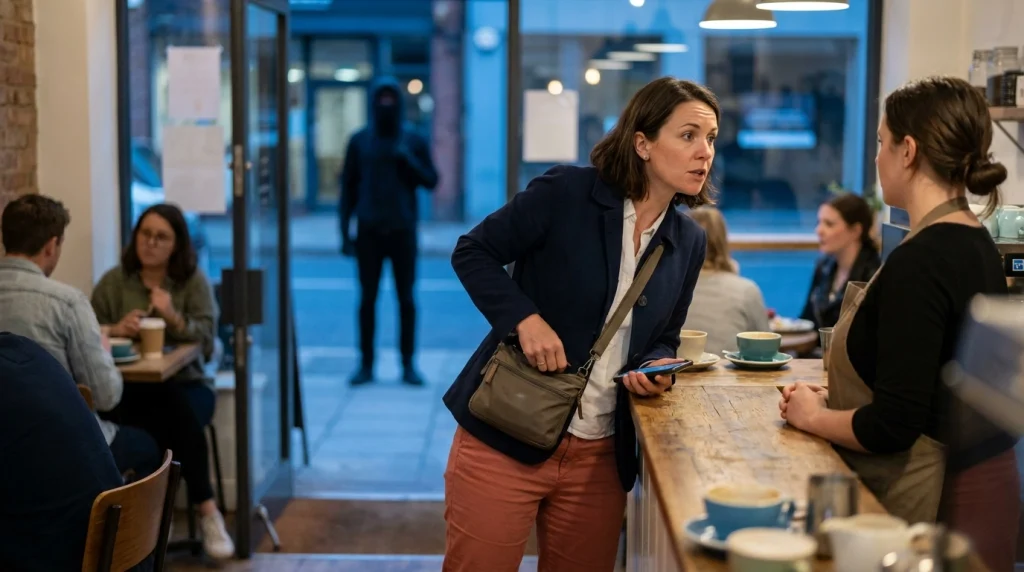
If someone ignores your refusal, follows you, touches you, blocks your movement, or makes you feel threatened, stop treating the interaction as ordinary conversation. Create distance and involve other people as quickly as you can.
Move toward people, not simply toward your hotel
If you believe someone is following you, don’t automatically lead them to your accommodation. Enter a busy shop, restaurant, hotel lobby, station office, pharmacy, or other staffed location.
- Tell an employee clearly that someone is following or bothering you.
- Stay inside until you feel safe.
- Ask staff to contact security or local police when necessary.
- Change transportation if you think the person knows your route.
- Do not leave simply because you feel embarrassed about asking for help.
Use your voice when quiet avoidance stops working
A firm voice can make your boundary obvious to both the person and nearby witnesses. The U.S. State Department advises women travelers that speaking loudly may help draw attention during an unsafe situation.
- “No.”
- “Stop.”
- “Don’t touch me.”
- “Leave me alone.”
- “I need help.”
You do not need to sound friendly at this stage. Safety matters more than protecting a stranger from embarrassment.
If someone follows you in a vehicle
Avoid traveling directly to your accommodation if you can do so safely. Ask your driver to continue toward a police station, staffed hotel, busy transport hub, or another secure public location.
If you are driving yourself, keep doors locked and avoid stopping in an isolated area. Contact local emergency services when the situation appears threatening.
Know when unwanted attention becomes an emergency
Treat threats, forced physical contact, attempts to restrain you, forced entry, sexual assault, stalking, or attempts to take you somewhere against your wishes as serious safety situations. Contact local emergency services when you can safely do so.
If an assault occurs, getting somewhere safe and obtaining appropriate medical or emergency assistance should come first. Your embassy or consulate may also be able to explain local support options for its citizens.
No traveler can guarantee that harassment or assault will never happen. Safety habits can reduce exposure and improve your options, but responsibility for abusive behavior always belongs to the person choosing to commit it.
Section Takeaway: Escalate your response when the other person’s behavior escalates. Create distance, move toward witnesses, use your voice, involve staff or authorities, and never prioritize politeness over getting to safety.
Frequently Asked Questions
Should a woman pretend she is not traveling alone?
You do not have to disclose that you’re traveling alone. A simple answer such as “I’m meeting friends later” can protect your privacy without creating a detailed story that you have to remember.
Does wearing a wedding ring stop unwanted attention?
Some solo travelers use a simple ring because they feel it discourages certain questions, but it cannot guarantee that someone will leave you alone. Clear boundaries, privacy, public surroundings, and control over your transport are more dependable strategies.
Should women dress differently when traveling alone?
Research local clothing expectations and dress requirements, especially around religious or conservative locations. Adapting to local norms may help you blend in, but harassment is never justified by a traveler’s clothing.
What should I say if a man keeps trying to talk to me?
Start with a short response such as “No, thank you” or “I need to go.” If he continues, become more direct, move toward other people, and ask staff or security for help rather than continuing the conversation.
What should I do if someone follows me while traveling alone?
Enter a busy staffed place instead of automatically returning to your hotel. Tell an employee what is happening, remain there if necessary, and contact security or local emergency services if you feel threatened.
Is it safer to use headphones to discourage conversation?
Headphones may reduce casual interaction, but they can also reduce awareness of traffic, footsteps, announcements, or activity around you. If you use them, consider keeping the volume low or leaving one ear uncovered in unfamiliar public areas.
Can solo female travelers still talk to strangers safely?
Yes. Meeting people can be a rewarding part of traveling alone, and avoiding every conversation is neither necessary nor realistic.
Keep early interactions in public, protect sensitive information, maintain your own transport options, and notice how a person reacts when you set a small boundary.
Learning how to avoid unwanted attention while traveling alone is not about becoming invisible or suspicious of everyone. It is about making yourself harder to pressure, track, isolate, or manipulate while still enjoying the freedom that makes solo travel worthwhile.
Prepare your routes, protect your private information, practice a firm “no,” and leave early when something feels wrong. Those small habits can make a solo trip feel much more manageable.