How Can a Solo Female Traveler Plan a Trip Without a Car?
Quick Answer
A solo female traveler can plan a trip without a car by choosing a walkable, transit-friendly destination, staying near reliable transportation, and planning the airport or station arrival before booking. I also check how late trains and buses run, save backup ride options, and avoid building an itinerary that depends on difficult transfers. If you’re choosing between destinations, this guide to big cities versus small towns for a first solo trip can help you compare the logistics.
Plan a Car-Free Solo Trip in Six Steps
- Choose easy transport: Look for a destination with useful trains, metros, buses, trams, ferries, or safe ride services.
- Stay strategically: Book accommodation near a station or central area rather than saving money far outside town.
- Plan your arrival: Know exactly how you’ll get from the airport, train station, or bus terminal to your accommodation.
- Check operating hours: Make sure transportation still runs when your flight, train, tour, or evening activity ends.
- Build backups: Save a licensed taxi or ride-hailing option in case your preferred route fails.
- Keep days compact: Group attractions by neighborhood so you don’t spend the trip constantly crossing the city.
One Rule I Always Use
- If reaching an attraction requires unreliable transportation and I have no sensible backup, I don’t build the entire day around it.
Planning a solo trip without a car can be easier than planning a driving trip. The key is choosing a destination where transportation works with your itinerary instead of against it.
I’ve learned to research train stations, bus stops, walking distances, and late-night options before I get excited about attractions. That small change makes car-free solo female travel far calmer.
Definition: A car-free solo trip is a journey where you rely on walking, public transportation, rail, ferries, organized transfers, taxis, or ride-hailing services instead of driving or renting a car.
In This Guide
- How Do You Choose a Destination That Works Without a Car?
- How Should You Research Transportation Before Booking?
- Where Should a Solo Female Traveler Stay Without a Car?
- How Do You Plan a Safe Arrival Without a Car?
- How Do You Build a Car-Free Daily Itinerary?
- How Much Should You Budget for Transportation and Backups?
- Car-Free Solo Female Travel FAQ
How Do You Choose a Destination That Works Without a Car?
The best car-free destinations let you reach your accommodation, food, attractions, and day trips without depending on one difficult transportation option. A famous destination isn’t automatically a practical one.
I start by checking the transportation map before researching restaurants or Instagram spots. If the basic logistics look exhausting, I keep searching.
Look for several ways to get around
A strong car-free destination usually gives you more than one useful transportation method. That matters when a train is delayed or a bus stops running earlier than expected.
- Walkability: Essential services and major sights sit within reasonable walking distance.
- Urban transit: Metros, buses, trams, or suburban trains connect useful neighborhoods.
- Intercity rail: Trains make nearby cities or day trips accessible.
- Airport connections: You can reach central areas without renting a car.
- Backup rides: Licensed taxis or reputable ride-hailing services operate when transit isn’t practical.
A large city can often be easier for this reason. More transportation choices mean one problem doesn’t automatically ruin the day.
If you’re new to traveling alone, my guide on planning a first solo weekend trip explains why simple logistics matter so much at the beginning.
Check the last mile, not just the main route
A train may take you 200 miles easily while the final three miles become a headache. I always research that last section.
- How far is the station from the hotel?
- Is the walk comfortable with luggage?
- Does local transit connect with the train?
- Will that transit operate when I arrive?
- Is there a reliable taxi alternative?
This matters even more for beaches, national parks, countryside stays, and small towns. Getting to the general area isn’t enough.
Be careful with destinations built around driving
Some places technically have public transportation but still work poorly without a car. Long gaps between buses can turn a simple sightseeing day into hours of waiting.
I would rather choose a slightly less famous place where I can move independently. Convenience becomes part of safety when you’re traveling alone.
Section Takeaway: Choose the destination by its transportation network, not just its attractions. A good car-free destination gives you several practical ways to reach the places that matter.
How Should You Research Transportation Before Booking?
Research transportation before paying for accommodation or nonrefundable activities. You need to know whether your itinerary works in real life, not just on a map.
I normally build the transportation skeleton first. Then I add sightseeing around it.
Start with the official transportation provider
Search for the official metro, bus, rail, or ferry authority serving your destination. Official sources are usually better for fares, schedules, service alerts, and accessibility details.
- Check the first and last service of the day.
- Find out whether schedules change on weekends.
- Confirm whether tickets require an app or local card.
- Check whether cash is accepted.
- Look for planned maintenance during your dates.
- Save information about night buses or late services.
For comparing different transportation methods between cities, I also use broad route-planning tools such as Rome2Rio. I still verify the final schedule with the actual operator.
Calculate total travel time
A 25-minute train ride may require a 15-minute walk, a 12-minute wait, and another bus afterward. Those extra pieces change the day.
For each important journey, write down the complete route.
- Walk from accommodation to station.
- Wait or transfer.
- Take the main bus, train, tram, or ferry.
- Complete the final walk or local connection.
- Add a realistic delay buffer.
If the total journey becomes unreasonable, adjust the accommodation or itinerary. Don’t assume you’ll somehow make it work after arrival.
Save routes for offline use
Mobile data can fail at exactly the wrong moment. I save the important details before I leave Wi-Fi.
- Accommodation address
- Main station name
- Airport transfer route
- Platform or stop information when available
- Offline map area
- Screenshot of the return route
- Taxi or ride-hailing backup
This also makes me less conspicuous. I don’t need to stand on a sidewalk repeatedly checking directions.
Practice if transportation makes you anxious
If navigating alone feels intimidating, practice before the main trip. Take an unfamiliar bus or train route at home and handle the journey yourself.
My guide on how to practice solo travel before a longer trip gives you a gradual way to build that confidence.
Section Takeaway: Transportation research should answer four questions: how you’ll get there, how long it takes, when service stops, and what you’ll do if the first option fails.
Where Should a Solo Female Traveler Stay Without a Car?
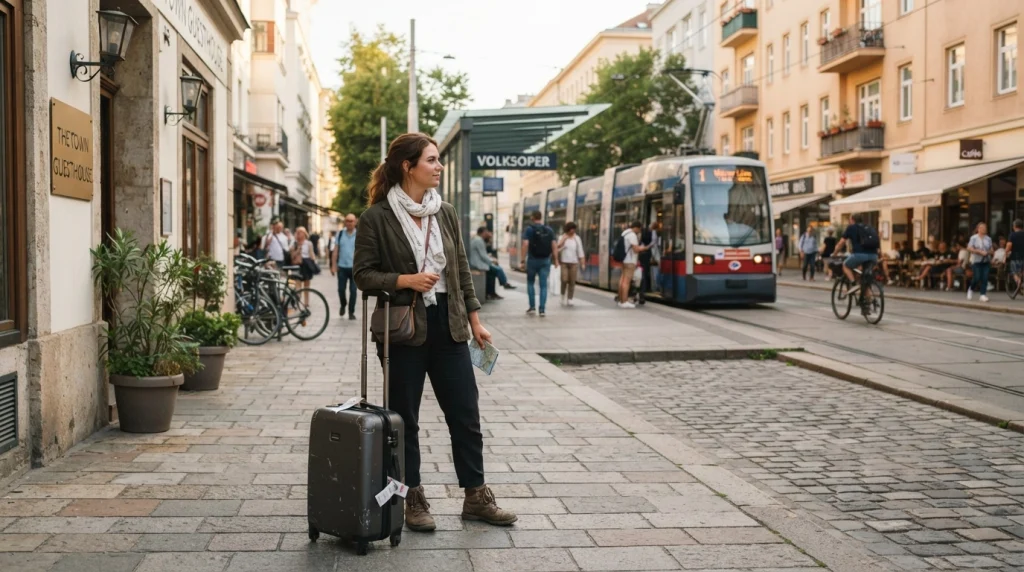
Location matters more when you don’t have a car. Saving $30 on a hotel can be a false economy if you spend the difference on taxis.
I compare accommodation by total trip convenience, not nightly price alone.
Prioritize transportation access
A useful location usually sits within a comfortable walk of a major transit stop or in an area where several routes overlap. Central doesn’t always mean best, but disconnected usually creates problems.
| Accommodation Location | Car-Free Advantage | Possible Drawback | Best For |
|---|---|---|---|
| Central downtown | Many attractions are walkable | Higher room prices | Short first trips |
| Near major station | Easy airport and day-trip connections | Some station areas feel hectic | Multi-city trips |
| Residential transit neighborhood | Often quieter and less expensive | Longer rides to attractions | Longer stays |
| Outer suburb | Potentially cheaper accommodation | More dependence on limited transit | Trips with proven frequent connections |
Test the evening journey
Look at the route back to your accommodation at 9 or 10 p.m., not just at noon. Transportation frequency can change dramatically later.
- Does the same train still operate?
- Does the bus become hourly?
- Is the final walk well traveled?
- Is another transit route available?
- Could you reasonably pay for a taxi?
I don’t plan every evening around staying out late. I just want to know that I have choices.
Check recent reviews for location clues
Reviews can reveal details a map doesn’t show. Look for comments about station access, steep hills, isolated walks, noise, or difficulty finding transportation.
Read recent reviews rather than relying on one dramatic comment. Patterns matter more than isolated experiences.
If social anxiety affects your accommodation decisions, my guide for a shy woman preparing for her first solo trip covers ways to make the experience less overwhelming.
Section Takeaway: Pay for location when location reduces complexity. A slightly more expensive room near useful transit can lower both transportation costs and daily stress.
How Do You Plan a Safe Arrival Without a Car?
Your arrival deserves more planning than almost any ordinary sightseeing trip. You’ll be carrying luggage, possibly tired, and unfamiliar with the area.
I want the first journey to my accommodation to feel almost boring. That’s a good thing.
Know your route before you land
Write down your preferred airport or station route before departure. Don’t depend on figuring it out after a long travel day.
- Arrival terminal or station
- Transit line or airport bus
- Ticket purchase method
- Transfer station
- Final stop
- Walking route to accommodation
- Backup licensed taxi or ride service
The U.S. State Department’s guidance for women travelers recommends researching safe transportation and reputable taxi or ride services before travel.
Pro tip: For international trips, check destination-specific government travel guidance shortly before departure because transportation conditions and safety advice can change.
Consider arrival time when booking
A cheap flight isn’t always cheap if it lands after the last airport train. Check transportation before selecting the flight.
I usually value a straightforward arrival more than squeezing a few extra sightseeing hours from the first day.
Have enough money for Plan B
Your budget should cover an unexpected taxi from the airport or station. You may never use it, but having that option matters.
I keep one backup payment method separate from my main wallet. That helps if a card stops working or something gets lost.
Share essential details privately
I send a trusted person my accommodation and basic itinerary. I don’t publicly post my exact real-time location while traveling alone.
- Accommodation name and address
- Arrival time
- Flight or train details
- Expected check-in window
- Simple communication plan
For first-time international travel, you may also find my guide to a first solo international trip useful for documents, money, and arrival planning.
Section Takeaway: Plan the first two hours in more detail than the rest of the vacation. A predictable arrival removes one of the biggest sources of unnecessary solo-travel stress.
How Do You Build a Car-Free Daily Itinerary?
Build each day around geography. Group nearby attractions instead of zigzagging across the destination for individual must-see spots.
This saves time, money, and energy.
Create neighborhood days
I divide a city into small zones. Each day gets one main area rather than five unrelated stops.
- Morning: One main attraction or activity.
- Lunch: Eat in the same neighborhood.
- Afternoon: Walk to one or two nearby places.
- Evening: Return along a route I already understand.
This approach also gives you flexibility. If one attraction disappoints you, there are usually other nearby options.
Limit complicated day trips
Day trips without a car can be excellent when transportation is simple. Direct trains and frequent buses are my favorites.
I become cautious when a day trip requires several low-frequency connections.
- One direct train: usually easy.
- Train plus frequent city bus: often manageable.
- Train plus hourly rural bus: needs careful timing.
- Multiple transfers with the last return early: higher risk of disruption.
- No public return option: not suitable without a verified alternative.
Organized tours can fill some of these gaps. Compare the tour cost with the cost and difficulty of getting there independently.
Leave transportation buffer time
I don’t book two nonrefundable activities with a tight transit connection between them. Small delays happen.
Leave enough room to miss one bus or take the wrong station exit without ruining the next reservation.
Keep your trip length manageable
Changing accommodation frequently is more tiring when you carry everything through stations. Fewer bases can make a car-free itinerary much easier.
If you’re deciding how long to travel, see my guide on how many days a first solo trip should be.
Section Takeaway: A good car-free itinerary minimizes unnecessary movement. Group sights by area, favor simple day trips, and protect enough buffer time that one delayed bus doesn’t control your day.
How Much Should You Budget for Transportation and Backups?

Car-free travel isn’t automatically cheap. Calculate public transportation, airport transfers, intercity trains, taxis, and day-trip transport before deciding whether the itinerary fits your budget.
I also keep an emergency transportation reserve separate from ordinary daily spending.
Build a simple transportation budget
| Expense | Example Planning Range | What to Check |
|---|---|---|
| Airport transfer | $5–$40 each way | Train, express bus, shared shuttle |
| Local transit | $5–$15 per day | Single fares versus daily passes |
| Intercity rail or bus | $15–$100+ per journey | Advance fares and reservation rules |
| Backup taxi | $25–$75 reserve | Typical airport or late-night cost |
| Day trips | $15–$80+ each | Return ticket, local bus, reservations |
These are planning examples rather than universal prices. Transportation costs vary widely by country, distance, season, booking time, and city.
Compare accommodation savings with transport costs
Suppose a hotel outside the center saves $25 per night. That looks attractive.
If you spend $18 daily on extra transportation and lose 90 minutes commuting, the cheaper room may not improve the trip.
Prepare for service disruptions
A backup plan doesn’t need to be complicated. It needs to give you a safe second option.
- Save a second transit route.
- Keep money for a taxi.
- Carry a charged power bank.
- Save your accommodation address offline.
- Know the last useful train or bus.
- Avoid using the day’s final possible connection when another option exists.
As of 2026, I still check schedules again shortly before each travel day. Construction, strikes, weather, and seasonal timetables can change an otherwise perfect route.
Pro tip: Use official transit operators and destination authorities for current schedules rather than relying entirely on an old blog post or screenshot.
Section Takeaway: Budget for independence, not just the cheapest possible route. A transportation reserve, backup payment method, and flexible itinerary give you choices when plans change.
Car-Free Solo Female Travel FAQ
Is it difficult to travel solo without a car?
Not necessarily. It can be easier than driving when you choose a destination with reliable public transportation and stay near useful routes. The difficulty usually comes from poor destination choice, inconvenient accommodation, or expecting rural attractions to work like a well-connected city.
What destinations are easiest for a solo traveler without a car?
Look for compact cities and regions with frequent trains, metros, buses, trams, or ferries. The best choice is one where your accommodation, major attractions, airport or station, and backup transportation can all be reached without complicated transfers.
Should I stay near a train station when traveling without a car?
Often, yes. Staying near a useful station can simplify airport transfers, sightseeing, and day trips. However, research the specific neighborhood rather than assuming every main-station area is equally convenient or comfortable.
How should a solo woman handle public transportation at night?
Research evening service before going out, stay aware of your surroundings, and keep a backup transportation option. For international travel, check official destination guidance because local transit conditions vary. The U.S. State Department also provides transportation advice for women traveling abroad.
Are day trips possible without renting a car?
Yes. Direct rail routes, regional buses, ferries, and organized tours make many day trips practical. Check the full return journey first, including the final local connection. Avoid an itinerary where missing one infrequent bus could leave you stranded.
Should I use taxis or ride-hailing apps when traveling solo?
They can be useful as a backup when reputable services operate at your destination. Research licensed local options before arrival, confirm vehicle and driver details when applicable, and avoid depending on an unfamiliar informal transportation service you have not verified.
What should I do if public transportation stops running?
Use the backup you planned before the trip. That might mean a licensed taxi, reputable ride service, an earlier return, or changing the activity. Keep your phone charged, save your accommodation address offline, and maintain enough money for unexpected transportation.
The Bottom Line
You don’t need a car to build a confident solo trip. You need a destination whose transportation system supports the type of trip you want to take.
Choose your location carefully, stay near useful routes, plan your arrival, and keep a realistic backup. Then let public transportation become part of the adventure rather than something you’re constantly fighting.
When I plan this way, traveling without a car often feels more freeing. I can watch the scenery, walk more neighborhoods, and focus on the destination instead of parking, traffic, or unfamiliar roads.
Start with the transport map before the sightseeing map. That one habit can make your next car-free solo trip far easier to manage.
men Travelers guidance — current guidance covers public transportation, reputable taxis/ride services, accommodation precautions, and destination-specific travel advice.