How Can a Woman Choose a Destination When She Is Nervous About Traveling Alone?
Quick Answer
If you’re nervous about traveling alone, choose a destination that feels easy to navigate rather than simply exciting. Look for straightforward transportation, well-reviewed accommodation, manageable travel time, reliable mobile service, and activities you would feel comfortable doing alone. Before booking, review the official guidance for women travelers and current information for the destination.
Use these six filters
- Easy arrival: You should understand how you’ll get from the airport or station to your accommodation before leaving home.
- Simple transportation: Favor destinations where you won’t need to solve complicated transport problems every day.
- Comfortable accommodation: Choose a location with recent reviews, clear check-in instructions, and useful services nearby.
- Manageable distance: A shorter flight or weekend trip can make a first solo experience feel less overwhelming.
- Current information: Check official safety, health, entry, and local-law information instead of relying only on social media.
- Personal comfort: Pick the place where you can imagine handling an ordinary problem without panicking.
One rule I use
- Your first solo destination does not need to prove how adventurous you are. It needs to help you practice traveling independently.
If you’re wondering how a woman can choose a destination when she is nervous about traveling alone, start by making the trip smaller in your mind. You don’t need to choose the most impressive destination.
You need somewhere that feels manageable enough for you to arrive, settle in, explore, and solve small problems without feeling constantly overwhelmed.
I think of destination choice as the first piece of solo female travel safety. A place can look beautiful online yet still be the wrong first trip if its transport, arrival process, cost, or cultural expectations make you anxious.
In This Guide
- What Makes a Destination Easier for a Nervous Solo Traveler?
- How Should You Check Whether a Destination Feels Safe Enough?
- How Can You Compare Several Destinations Without Overthinking?
- Which Destination Choices Can Reduce Solo Travel Anxiety?
- Should You Practice Traveling Alone Before an International Trip?
- What Is the Final Test Before You Book?
- Frequently Asked Questions
What Makes a Destination Easier for a Nervous Solo Traveler?
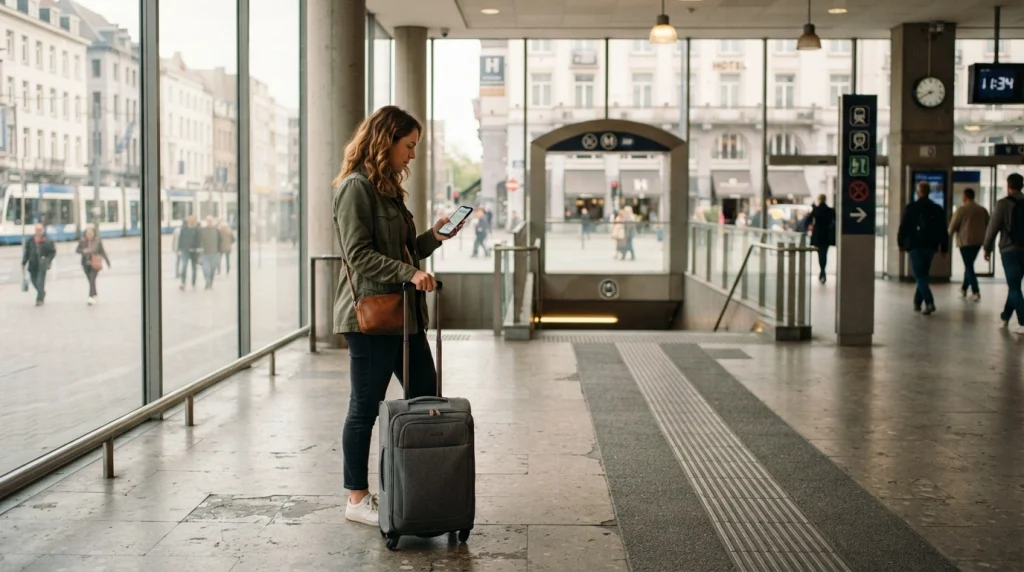
An easier first solo destination is one where the everyday logistics are understandable. You should be able to picture how you will arrive, move around, eat, communicate, and return to your accommodation.
I call this a low-friction destination. It doesn’t mean nothing can go wrong; it means ordinary travel tasks require fewer complicated decisions.
Start with the arrival, not the attractions
When I’m unsure about a destination, I mentally walk through the first two hours after landing. That usually tells me more than another hour of looking at beautiful hotel photos.
Ask yourself:
- What time would my flight or train arrive?
- How would I reach my accommodation?
- Would I need several transport changes?
- Could I use an official taxi, train, bus, or established ride service?
- Would I be comfortable making that journey after a delay?
- Could I find food and basic supplies near my accommodation?
If the arrival already feels stressful on paper, look for an easier route, a different arrival time, or another destination.
Choose a trip that matches your current confidence
Your first solo trip doesn’t have to be two weeks overseas. A two-night city break can teach you plenty about navigating, eating alone, managing money, and making decisions without a companion.
For a nervous first trip, I often prefer these formats:
- Two or three nights: Enough time to practice without feeling trapped by a long itinerary.
- One main base: You unpack once and learn one neighborhood.
- One simple transport system: Fewer transfers mean fewer decisions under pressure.
- One planned activity each day: You have structure without turning the trip into a checklist.
- Daytime arrival: You can learn your surroundings before evening.
Think about communication
A language difference doesn’t automatically make a destination unsuitable. However, it can add stress if you’re already nervous about solving problems alone.
Check whether you can realistically handle transport signs, menus, hotel communication, ticket machines, and emergency instructions. Offline translation tools can help, but they shouldn’t be your only plan.
Section Takeaway: The easiest first solo destination is usually the one where you understand the ordinary logistics before you arrive.
How Should You Check Whether a Destination Feels Safe Enough?
Don’t look for a destination that someone simply labels “safe for women.” Look for current information about the specific risks, local laws, neighborhoods, transport, and situations you may encounter.
Safety also changes by location and circumstance. A destination-wide label cannot tell you what a late arrival, isolated accommodation, protest, transport strike, or unfamiliar neighborhood will feel like.
Check official information first
I start with government travel information before reading blogs or watching videos. Official sources won’t answer every lifestyle question, but they can flag important security, legal, health, and regional concerns.
For international travel, check:
- Current travel advisories
- Regional warnings within the country
- Local laws and customs
- Entry and exit requirements
- Transportation guidance
- Health recommendations
- Embassy or consular information relevant to your nationality
Women can face destination-specific legal, cultural, or security issues, so I also check guidance written specifically for female travelers.
Pro tip: Safety information can change after an article is published. Recheck your government’s current destination advisory shortly before booking and again before departure.
Then research the neighborhood level
A good destination can become a frustrating trip if you stay in the wrong part of town. I would rather pay a little more for a convenient base than save money somewhere that makes every evening complicated.
Research these details around any accommodation:
- Distance to public transportation
- Recent guest reviews mentioning the surrounding area
- Restaurants or shops within easy walking distance
- Street activity after dark
- Reception or check-in arrangements
- Airport or station access
Check health information separately
Security and health are different questions. Before international travel, I check the CDC destination health pages for destination-specific recommendations and current travel health information.
This matters even for destinations that feel easy from a transportation or tourism perspective.
Pro tip: Health requirements and outbreaks can change. Use official public-health guidance rather than an old packing list or social media post.
Section Takeaway: Treat safety as a research process, not a label. Check current official guidance, then investigate the exact neighborhood and transportation situations you’ll use.
How Can You Compare Several Destinations Without Overthinking?
If you have three or four possible destinations, turn the decision into a simple scorecard. This keeps one beautiful Instagram video from overpowering every practical consideration.
Give each destination 1 to 5 points for each factor. A score of 5 means the factor feels especially easy for you.
| Factor | 1 Point | 3 Points | 5 Points |
|---|---|---|---|
| Arrival | Several confusing transfers | Manageable with planning | Simple direct route |
| Local transport | Hard to understand | Some learning needed | Clear and convenient |
| Accommodation | Limited suitable choices | Several workable options | Many suitable options |
| Communication | Likely difficult for you | Manageable with tools | Feels straightforward |
| Trip length | Feels like a commitment | Slight stretch | Feels manageable |
| Personal excitement | Going mainly because others recommend it | Interested | Genuinely excited |
Don’t treat the final number as scientific. The exercise works because it forces you to notice what is creating your anxiety.
Pay attention to the lowest score
Suppose one destination scores well overall but gets one point for arrival. You don’t necessarily need to reject it.
You might fix that weakness by:
- Booking a daytime flight
- Using an official airport transfer
- Choosing accommodation closer to the arrival point
- Staying one night near the airport
- Selecting a direct route instead of a cheaper connection
The goal isn’t to eliminate every challenge. It’s to stop several difficult factors from piling up at once.
Which Destination Choices Can Reduce Solo Travel Anxiety?
Nervousness often grows when too many things are uncertain at the same time. You can lower that mental load by choosing a destination that removes some unknowns.
Choose one base instead of constant movement
Changing hotels every night sounds efficient on paper. For a nervous solo traveler, it can mean repeated packing, navigation, check-ins, and transport decisions.
I prefer one comfortable base for a first trip. Once I know the walk to breakfast, the nearest station, and the route home, my brain has far less to solve.
Pick somewhere with things you enjoy doing alone
Don’t choose a destination where every activity depends on making friends immediately. Social opportunities are great, but they shouldn’t determine whether your trip works.
Look for solo-friendly activities such as:
- Museums and galleries
- Food markets
- Walking tours
- Cooking classes
- Cafés
- Historic districts
- Parks and gardens
- Day tours with established operators
Lonely Planet’s solo travel advice for women also emphasizes easing into independent travel rather than forcing yourself far outside your comfort zone immediately.
Don’t build the trip around proving something
You don’t earn extra solo-traveler points for choosing somewhere difficult. Your first trip is practice, not an exam.
I would rather return from three comfortable solo days wanting another trip than survive ten stressful days and decide solo travel isn’t for me.
Give yourself an exit option
Anxiety often becomes easier when you know you have choices. Before booking, understand what changing your plans would involve.
Check:
- Cancellation rules
- Alternative transport
- Nearby accommodation options
- Access to backup money
- Travel insurance terms
- How you would contact someone at home
U.S. citizens traveling internationally can also use the Smart Traveler Enrollment Program to receive relevant embassy or consulate alerts for destinations abroad.
Section Takeaway: Reduce anxiety by reducing the number of difficult decisions you must make at once. One base, simple transport, familiar activities, and backup options can make a big difference.
Should You Practice Traveling Alone Before an International Trip?
Yes, especially if the idea of being alone feels harder than the destination itself. Small solo experiences can show you which parts of travel make you nervous.
You don’t need a passport stamp to practice independence.
Try a solo afternoon first
Take yourself somewhere you don’t normally visit. Use public transportation, eat alone, navigate without asking a friend to lead, and spend several hours making your own decisions.
Notice what bothers you most.
- Are you uncomfortable eating alone?
- Does navigating create stress?
- Do you worry about getting lost?
- Does silence make you lonely?
- Do you dislike being out after dark?
- Do unfamiliar transport systems worry you?
Those answers should influence your destination choice more than someone else’s list of “best places for solo women.”
Try one night away
A hotel night in another city can teach you how it feels to check in, eat, sleep, and start the next morning alone. That is useful information.
If one night feels manageable, try a weekend. Confidence often grows through repetition instead of one huge leap.
Separate fear from useful caution
Some nervousness simply comes from doing something unfamiliar. Other concerns point to a practical problem you should solve.
For example:
- “I’ve never eaten alone.” Practice at home before traveling.
- “My flight lands at midnight and I don’t understand the transport.” Change the arrival plan.
- “I’m worried about communicating.” Prepare offline translations and choose an easier first destination.
- “Current official guidance warns against the area I wanted to visit.” Reconsider the route or destination.
Confidence should never mean ignoring current information. It means preparing well enough to make thoughtful decisions.
What Is the Final Test Before You Book?
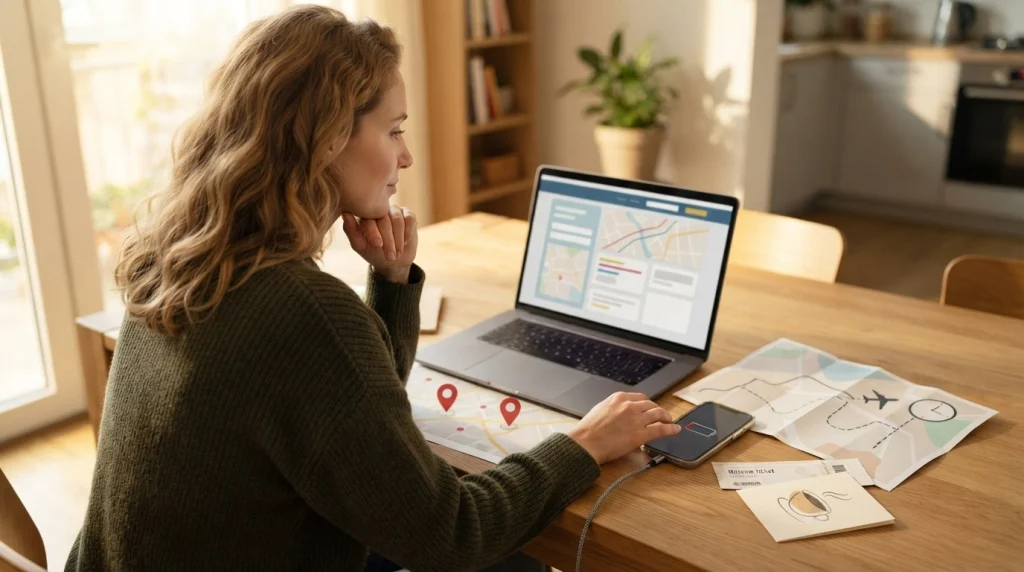
Before paying, imagine a slightly imperfect day rather than a perfect vacation. Your destination should still feel manageable if something small goes wrong.
I use five scenarios.
- Your flight arrives two hours late. Can you still reach your accommodation?
- Your phone battery drops to 10%. Do you have the address and basic route saved offline?
- You don’t like the first restaurant you enter. Can you comfortably find another option?
- You miss a train or bus. Is there a reasonable backup?
- You wake up tired and don’t want your planned activity. Can you enjoy a slower day nearby?
If those scenarios feel solvable, the destination is probably becoming more concrete in your mind. If every scenario feels frightening, simplify the trip.
Ask yourself one final question
“Am I nervous because this is new, or because this particular trip is too complicated for me right now?”
Those are different problems. Newness often gets easier with preparation, while an overly complicated itinerary may need changing.
As of 2026, destination information can change quickly because of local events, health notices, weather, transportation disruptions, or entry rules. Recheck official information before you leave, even if you researched carefully when booking.
Pro tip: Save important addresses, reservations, emergency contacts, insurance details, and transport information offline before departure.
Section Takeaway: Choose the destination where an imperfect day still feels manageable. That is a stronger first-trip test than choosing the place that looks most impressive online.
Frequently Asked Questions
What type of destination is best for a woman’s first solo trip?
A good first destination usually has straightforward transportation, convenient accommodation, activities that work well alone, and an arrival process you understand. The best choice depends on your own comfort, budget, language skills, trip length, and current destination conditions.
Should my first solo trip be domestic or international?
Either can work, but a domestic trip may remove concerns about immigration, currency, language, and international flights. If those issues make you nervous, starting with a nearby city can be a useful way to practice traveling independently.
How long should a nervous first-time solo traveler go away?
Two to four nights can be enough to practice the important parts of solo travel without committing to a long trip. If you already travel independently for work or other reasons, you may feel comfortable starting with a longer stay.
Is it better to stay in a hotel or hostel when traveling alone?
Choose the accommodation style that helps you feel comfortable. A hotel may offer privacy and predictable service, while a well-run hostel can provide communal spaces and social opportunities. Location, recent reviews, security arrangements, and check-in procedures matter more than the label.
What if I’m nervous about eating alone?
Practice before your trip. Start with a café, food hall, casual restaurant, or lunch rather than making your first solo meal an elaborate dinner abroad. After a few experiences, eating alone often starts feeling like an ordinary part of traveling.
Should I avoid destinations where I don’t speak the language?
Not automatically. Consider how much communication you will need for transport, accommodation, food, and emergencies. Translation apps, offline maps, and written addresses help, but a destination with easier communication may reduce stress on your first solo trip.
How do I know whether I’m ready to book?
You don’t need to feel completely fearless. You should understand your arrival, accommodation, transportation, basic safety research, budget, communication plan, and backup options well enough that ordinary travel problems feel solvable.
Choose the Trip That Helps You Want a Second Solo Trip
Your first solo destination doesn’t need to transform you overnight. It only needs to give you enough space to discover that you can make decisions, change plans, solve small problems, and enjoy your own company.
Start with a destination that fits the confidence you have today. You can make the next trip longer, farther away, or more adventurous once the unfamiliar parts stop feeling so unfamiliar.
Choose manageable over impressive. A first solo trip that leaves you thinking, “I could do that again,” is a strong beginning.