How Can a Solo Female Traveler Choose a Destination for Her First International Trip?
Quick Answer
A solo female traveler should choose her first international destination by comparing safety, transportation, accommodation, language, culture, cost, entry rules, and how easy the first 24 hours will be. Start with places where you can picture yourself arriving tired and still managing the basics without stress, then verify your shortlist using official international travel guidance before booking.
Choose in this order
- Check current safety: Research the country, city, neighborhood, common scams, local laws, and conditions after dark.
- Test the logistics: Make sure airport transfers, local transport, and accommodation are straightforward.
- Match your comfort: Consider language barriers, cultural expectations, crowds, climate, and how much independence the trip requires.
- Price the whole trip: Include lodging, food, transport, mobile data, insurance, attractions, and a backup-money buffer.
- Check entry and health: Verify passport, visa, medication, vaccine, and other destination-specific requirements.
- Keep it simple: For a first trip, one well-connected base often works better than several cities and complicated transfers.
My beginner rule
- Choose the destination you understand best, not the destination that looks most impressive online.
Choosing my first international destination alone felt more complicated than booking the flight. I wasn’t just asking where I wanted to go; I was asking where I could realistically navigate, sleep, eat, solve problems, and still enjoy myself.
If you’re wondering how a solo female traveler can choose a destination for her first international trip, this guide gives you a practical system. We’ll compare safety, transport, cost, culture, accommodation, health planning, and the first-day experience.
In This Guide
- What Makes a Good First International Solo Destination?
- How Should a Solo Female Traveler Evaluate Safety?
- How Important Are Transportation and Arrival Logistics?
- How Should You Compare Cost and Accommodation?
- How Do Culture and Language Affect Your Choice?
- How Can You Compare Your Final Destination Shortlist?
- Frequently Asked Questions
- Final Takeaway
What Makes a Good First International Solo Destination?
A good first international solo destination is a place where the everyday parts of travel feel manageable. You should be able to understand how you’ll arrive, move around, eat, communicate, and get help before you book.
Solo female travel means traveling without a companion who shares responsibility for your transport, accommodation, itinerary, money, and day-to-day decisions. It doesn’t mean spending every minute alone.
Start with low-friction destinations
I like to think about travel “friction.” Every unfamiliar transfer, confusing transport system, late arrival, hotel change, and language problem adds another decision.
Your first international solo trip doesn’t need zero challenges. It should simply avoid stacking five challenges on top of each other.
- Simple airport arrival: You can identify a clear train, bus, licensed taxi, hotel transfer, or reputable ride service before landing.
- Central accommodation: Food, public transport, and several activities are reasonably close.
- Easy daily transport: You have more than one practical way to return to your accommodation.
- Manageable itinerary: You can spend several nights in one base instead of moving constantly.
- Reliable communication: Mobile data, Wi-Fi, maps, and translation tools are realistically available.
- Enough tourist infrastructure: There are established accommodation choices, tours, visitor information, and transportation options.
Picture an ordinary Tuesday, not an Instagram highlight
Beautiful photos don’t tell me whether I’ll enjoy traveling somewhere alone. I want to understand what happens between the famous attractions.
I mentally rehearse a normal day before choosing a destination.
- How will I get breakfast?
- Can I navigate to my first activity without a complicated transfer?
- What happens if my phone battery dies?
- Can I find another way back if a train stops running?
- Will I feel comfortable going to dinner alone?
- Can I reach a pharmacy or supermarket easily?
- What would I do if I disliked my accommodation?
If those questions have clear answers, the destination usually starts feeling more realistic.
Choose your first trip for learning, not proving something
My first trips taught me that independence grows through ordinary decisions. Finding a train platform or changing dinner plans may build more confidence than completing an ambitious five-country route.
A first international trip can be successful with one city, one room, and four or five thoughtful days. You can make the next trip more complicated.
Section Takeaway: The strongest first destination is usually the place that combines genuine excitement with simple everyday logistics.
How Should a Solo Female Traveler Evaluate Safety?
Don’t ask only whether a country is “safe for women.” Look at current conditions, neighborhoods, transportation, local customs, common problems, and what changes after dark.
Safety is specific. A country’s overall reputation won’t tell you what the street around your hotel feels like at 9 p.m.
Start with official destination information
As of 2026, travel conditions can change after an article or social media post was published. I always want a current official source in my research mix.
The U.S. Department of State provides destination guidance covering travel advisories, local laws, entry requirements, and other practical issues. Its Women Travelers guidance also highlights how laws, customs, clothing expectations, and risks can differ by destination.
I’m not looking for a source to make the decision for me. I use it to identify questions that need deeper research.
Research the neighborhood separately from the city
A hotel can have beautiful rooms and still sit somewhere inconvenient for a first solo trip. Location affects my decision almost as much as price.
- Transport access: Check the walk to the nearest useful station or stop.
- Food nearby: Look for several dinner choices you can reach comfortably.
- Street activity: See whether the area remains active during the hours you’ll return.
- Recent reviews: Read comments mentioning location, reception, locks, noise, and the walk after dark.
- Backup transport: Know how you would return if you didn’t want to walk.
Research gender-specific cultural expectations
Local expectations around clothing, alcohol, dating, public behavior, photography, and interaction between men and women can differ widely. Understanding them before arrival lowers uncertainty.
I don’t assume a stricter dress norm automatically makes a destination unsuitable. I ask whether I’m comfortable following the expectations that apply there.
Look at common scams and transportation issues
The useful question isn’t, “Does crime happen here?” Crime can happen anywhere.
I want to know what travelers are repeatedly warned about so I can plan around predictable situations.
- Unofficial airport taxis
- Pickpocketing around busy transport hubs
- Card or ATM scams
- Overcharging or fake ticket sellers
- Distraction theft
- Tourist-area harassment
- Transportation that becomes limited late at night
Pro tip: Recheck the official travel advisory and local government guidance shortly before departure. Current conditions matter more than a destination’s long-term reputation.
Section Takeaway: Judge safety by current, specific conditions rather than broad labels such as “safe country” or “dangerous city.”
How Important Are Transportation and Arrival Logistics?
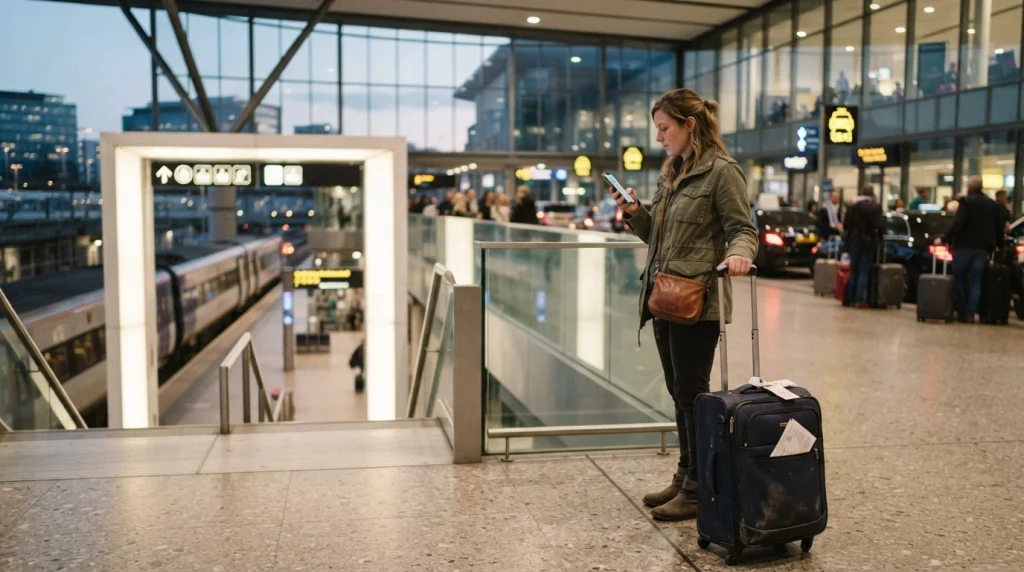
Transportation is one of my biggest filters for a first solo destination. A city becomes much easier when I understand how to get from the airport to bed and from dinner back to my room.
The first 24 hours deserve extra attention because you’ll probably be tired, carrying luggage, handling money, and making decisions in an unfamiliar place.
Plan the airport-to-accommodation journey before booking
I don’t want to land and start comparing six unfamiliar transport options while strangers offer me rides. I want the route saved before departure.
- Find the official options: Check airport trains, buses, licensed taxi ranks, transfers, and recognized ride services.
- Check operating hours: A direct train isn’t useful if it stops before your flight lands.
- Estimate the journey: Know the general travel time and number of transfers.
- Save the address: Keep the accommodation name and address offline and in the local language when useful.
- Prepare payment: Know whether the route accepts a card, transport pass, app payment, or local cash.
Give yourself two ways home
I feel much better in a destination when my evening transportation doesn’t depend on one fragile option. A metro plus licensed taxis, for example, gives me more flexibility.
If the last train leaves early, I want to know that before I choose the neighborhood.
| Transport Question | Lower-Friction Sign | Research Further If… |
|---|---|---|
| Airport transfer | One clear direct route or organized taxi system | Several transfers are required |
| Daily transport | Frequent transit plus a backup option | Most trips require private vehicles |
| Evening return | Transport operates during your expected return time | Service ends early or becomes infrequent |
| Walking | Key places are close to your base | You depend on long isolated walks |
Prefer a calm arrival time when possible
I prefer landing during daylight or early evening on a first visit. Transportation is easier to understand, accommodation staff are more likely to be available, and I can see my surroundings.
That doesn’t mean a late flight is automatically unsafe. It means I would plan that arrival more carefully and might arrange a transfer in advance.
Don’t turn the first day into a sightseeing marathon
My first day has one job: get settled. I don’t need a museum reservation 40 minutes after hotel check-in.
- Check in and secure valuables.
- Confirm mobile data and maps.
- Locate food, water, and basic services.
- Walk the immediate neighborhood if comfortable.
- Confirm the next day’s transport.
- Message a trusted contact if that’s part of your plan.
- Sleep before making complicated decisions.
Section Takeaway: If you can’t clearly explain how you’ll get from the airport to your accommodation and back from an evening out, keep researching before booking.
How Should You Compare Cost and Accommodation?
Don’t choose your first destination by airfare alone. Compare what the whole trip costs after accommodation, transportation, food, insurance, mobile data, and flexibility money are included.
A slightly more expensive destination can sometimes be easier if you can afford a central room and use simple public transport.
Build a realistic trip budget
I start with the costs I can’t avoid. Then I add the costs that make solo travel easier.
- Round-trip international transportation
- Accommodation
- Airport transfers
- Local transportation
- Meals and drinking water
- Attractions or tours
- Mobile data or eSIM
- Travel or medical insurance
- Visa or entry fees when applicable
- A separate emergency or flexibility buffer
The flexibility buffer matters to me. I want enough room to take a taxi, change accommodation, replace something important, or abandon a prepaid activity without ruining the trip budget.
Choose the neighborhood before the hotel
A low nightly price can be misleading if the accommodation sits far from everything you’ll do. I would rather compare total convenience than room price alone.
For a first international solo trip, I usually look for food, useful transportation, and normal daytime activity close to my base.
Compare accommodation styles honestly
- Hotel: Useful when you value private space, reception staff, and a predictable check-in process.
- Private hostel room: Can offer privacy with access to social common areas and organized activities.
- Hostel dorm: Often affordable and social, but check locker arrangements and recent security reviews.
- Serviced apartment: Can work well for longer stays, though assistance may be less immediate.
- Guesthouse: May feel personal and welcoming, but check reception and late-arrival arrangements.
Don’t spend your full budget before departure
I never want to reach a destination with every dollar already assigned. Travel gets easier when changing a plan is financially possible.
If one unexpected taxi or room change would cause a serious money problem, I would either reduce the trip length or reconsider the destination.
Section Takeaway: Compare the cost of a comfortable version of the trip, not the cheapest theoretically possible version.
How Do Culture and Language Affect Your Choice?
Language and cultural differences don’t automatically make a destination difficult. What matters is how many unfamiliar systems you’re comfortable learning at the same time.
For my first visit somewhere, I look for enough predictability that cultural discovery still feels interesting instead of exhausting.
Ask how much language support you need
You don’t need fluent English everywhere, and you don’t need to speak the local language perfectly. Translation apps, saved addresses, and a few learned phrases can solve many ordinary problems.
Still, language affects how comfortable you may feel handling disruptions alone.
- Are airport and train signs understandable?
- Can accommodation staff communicate in a language you share?
- Can you buy tickets without a long conversation?
- Will your translation app work offline?
- Can you show your hotel address rather than pronounce it?
Research the rules behind everyday behavior
Clothing norms are only one part of cultural preparation. Local laws can affect alcohol, prescription medication, photography, public affection, religious sites, and online behavior.
I would rather learn an awkward rule at home than accidentally discover it through a confrontation abroad.
Think about your personal travel style
The easiest destination on paper may not be the easiest destination for you. Someone who loves busy cities can feel energized by crowds that another traveler finds draining.
Use your own habits as part of the decision.
- If crowds overwhelm you: Consider a smaller city or a quieter season.
- If you hate driving: Prioritize destinations with usable public transport.
- If you need social contact: Look for walking tours, classes, hostels, or other structured activities.
- If you value quiet: Choose accommodation where social interaction stays optional.
- If heat drains you: Research season and climate before buying the cheapest fare.
- If navigation worries you: Favor one compact base over a multi-city itinerary.
Check health considerations before committing
Health planning can change whether a destination makes sense for your timeline. The CDC provides destination-specific Travelers’ Health information covering health risks and preparation.
If destination-specific vaccines, medicines, or health precautions apply, give yourself enough time to deal with them before departure.
Pro tip: Use official destination health guidance for current vaccine, medication, outbreak, and other health information. Don’t rely on an old packing article for medical requirements.
Section Takeaway: Choose cultural and logistical differences that excite you without creating more uncertainty than you want on a first trip.
How Can You Compare Your Final Destination Shortlist?
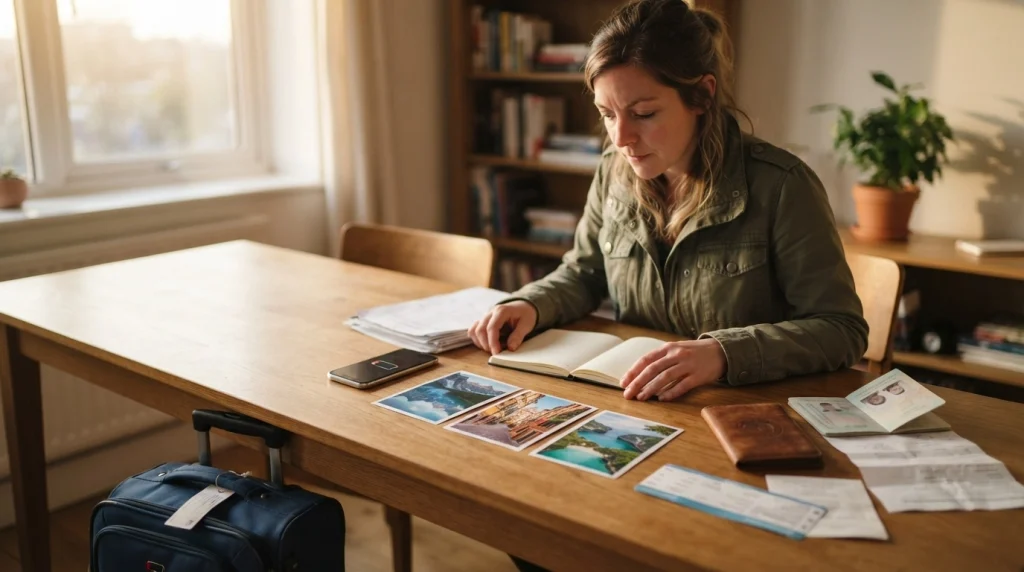
Once I have three possible destinations, I compare them using the same questions. This prevents me from choosing whichever place has the most attractive photos that day.
You don’t need a scientific score. You need a consistent way to notice which destination creates the fewest unresolved problems.
| Factor | Beginner-Friendly Sign | Question to Ask |
|---|---|---|
| Current safety | Risks and precautions are clear enough to plan around | Do I understand the current issues? |
| Airport arrival | Direct public transport or clear licensed transport | Could I handle arrival while tired? |
| Accommodation | Central choices within budget | Can I afford the area I actually want? |
| Local transport | Simple system with a backup option | How do I get home after dinner? |
| Language | Essential tasks seem manageable | Could I solve a small problem alone? |
| Culture | You understand major norms and laws | Am I comfortable adapting? |
| Budget | Comfortable trip plus emergency buffer is affordable | Can I change plans without financial panic? |
| Health preparation | Requirements fit your timeline | Have I checked official health guidance? |
Run the tired-arrival test
This is the test I trust most. Imagine your flight arrives two hours late, you’re hungry, and your phone has 18% battery.
Now answer these questions.
- Do I know how to reach my accommodation?
- Can I check in if I’m late?
- Do I have the address saved offline?
- Do I have a backup payment method?
- Can I buy food or water nearby?
- Do I have another transport option if the first one fails?
A destination that still feels manageable under that scenario deserves serious consideration.
Run the bad-day test too
Solo travel isn’t difficult because you’re alone every second. It can feel difficult because you’re the only person available to solve a problem.
Before booking, imagine one ordinary disruption.
- Your accommodation isn’t what you expected.
- Your train is canceled.
- You lose your bank card.
- You feel unwell.
- You become overwhelmed and want a quiet day.
- You decide you don’t want to take the planned evening route.
If you can picture reasonable alternatives, the trip has resilience. That matters more to me than having the perfect itinerary.
Book the destination with the fewest important unknowns
You will never research every possibility. That’s not the goal.
The goal is knowing enough about safety, transport, accommodation, money, culture, communication, and health that ordinary surprises don’t become emergencies.
Section Takeaway: Your first international solo destination should leave you curious about the experience, not confused about the basic logistics.
Frequently Asked Questions
What is the best type of destination for a first-time solo female traveler?
A well-connected city or compact region with straightforward transportation, central accommodation, reliable communication, and plenty of daytime activities is often easier for a first trip. The destination should also match your budget, cultural comfort, nationality, health needs, and current travel experience.
Should my first solo international trip be somewhere English is widely spoken?
Not necessarily. You can travel successfully without sharing a language with everyone. However, a destination where essential transport, accommodation, and emergency tasks are easy to navigate may reduce stress while you’re learning how you handle international travel alone.
How long should a first international solo trip be?
There is no universal ideal length, but a short trip with one main base keeps the logistics manageable. I would rather spend several comfortable days learning one city than use the same time rushing through several destinations and repeatedly changing accommodation.
Should I choose the safest destination possible?
Don’t rely on a single “safest countries” list. Compare current official guidance, neighborhood conditions, transportation, local laws, cultural expectations, and your own comfort. A destination is a better fit when you understand its specific risks and how you’ll manage them.
Is a hostel or hotel better for a first solo female trip?
Both can work. A hotel may offer more privacy and predictable support, while a hostel can provide social spaces and organized activities. Check the exact location, recent reviews, secure storage, reception hours, and room setup instead of choosing by accommodation type alone.
How much should I plan before my first international solo trip?
Plan the high-stakes details first: entry requirements, accommodation, airport arrival, important transport, communication, money, health needs, and emergency options. Leave some meals and activities flexible so the trip doesn’t become exhausting or impossible to change.
What should I check again shortly before departure?
Recheck your destination’s current travel guidance, entry rules, health information, transportation schedules, weather, accommodation instructions, and important reservations. Conditions can change between the day you book and the day you fly.
Choose a Destination That Lets You Enjoy Being Independent
Your first international solo trip doesn’t need to prove how brave or adventurous you are. It needs to give you enough independence to grow without turning every basic task into a struggle.
Start with a shortlist, then compare each destination using the same practical questions.
- What are the current safety conditions?
- Which neighborhood would I stay in?
- How would I get there from the airport?
- How would I move around each day?
- Could I afford comfortable accommodation plus backup money?
- Do I understand important cultural and legal expectations?
- Can I stay connected?
- Have I checked official health and entry information?
- What would I do if my original plan stopped working?
I would choose the place that makes those answers clearest. Once the boring logistics feel manageable, you have much more mental space for the part that matters: experiencing somewhere new on your own terms.
Make the first trip easier than you think it needs to be. There will be plenty of time to make the second one more adventurous.