Is a Backpack a Carry On or Personal Item Find Out Now
Wondering is a backpack a carry on or personal item? This guide breaks down airline rules, size limits, and packing tips to help you decide. Learn how to choose the right backpack size and avoid baggage hassles on your next flight.
Key Takeaways
- Carry-on vs Personal Item: Airlines typically allow one carry-on bag and one personal item per passenger.
- Backpack Size Matters: Your backpack can be either a carry-on or personal item depending on its dimensions.
- Check Airline Policies: Each airline has specific size limits and rules for carry-ons and personal items.
- Pack Smart: Organize essentials in your backpack to maximize space and meet airline requirements.
- Personal Item Benefits: Carrying a backpack as a personal item often means easier access and less hassle.
- Overpacking Risks: Oversized backpacks may be forced into checked baggage, costing extra fees.
- Travel Tips: Use lightweight, compact backpacks designed for air travel to avoid surprises.
Is a Backpack a Carry On or Personal Item? Find Out Now
Traveling with a backpack can be super convenient and stylish, but it often raises the question: is a backpack a carry on or personal item? Understanding how airlines classify backpacks can save you from unexpected fees and stress at the airport. In this guide, you’ll learn how to determine if your backpack counts as a carry-on or a personal item, what size limits to follow, and practical tips on packing smart.
Understanding Airline Baggage Rules
Before packing your backpack, it’s important to know how airlines define carry-on bags and personal items.
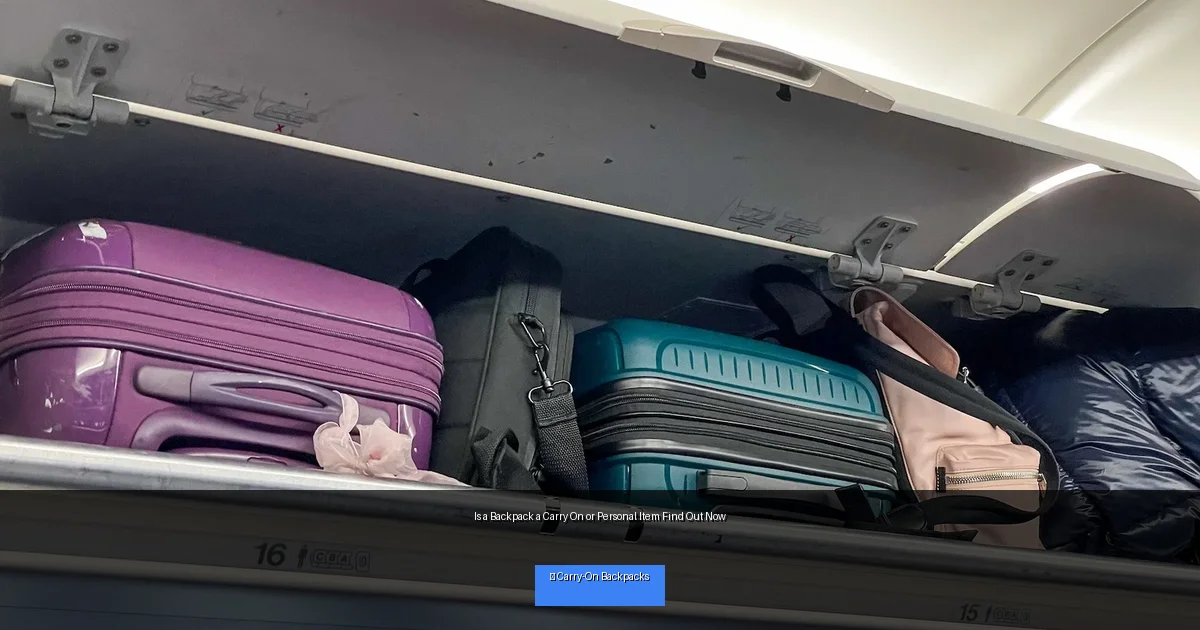
Visual guide about Is a Backpack a Carry On or Personal Item Find Out Now
Image source: thepointsguy.global.ssl.fastly.net
What Is a Carry-On Bag?
A carry-on bag is the larger bag you bring into the cabin and store in the overhead bin. It must meet the airline’s size and weight restrictions, which usually range around 22 x 14 x 9 inches (56 x 36 x 23 cm).
What Is a Personal Item?
A personal item is smaller and fits under the seat in front of you. Common personal items include purses, laptop bags, or smaller backpacks. Typical size limits are around 18 x 14 x 8 inches (45 x 35 x 20 cm).
Step 1: Measure Your Backpack
To figure out if your backpack is a carry-on or personal item, start by measuring it.
How to Measure Correctly
- Use a tape measure to find the height, width, and depth of your backpack.
- Include any external pockets or wheels in your measurements.
- Measure the backpack when it’s fully packed, as airlines consider the size when loaded.
Example
If your backpack measures 20 x 13 x 7 inches, it’s likely small enough to be a personal item on most airlines. But if it’s 22 x 14 x 9 inches, it usually qualifies as a carry-on.
Step 2: Check the Airline’s Size Limits
Different airlines have different rules. Always check the airline’s official website before you pack.
Common Size Limits
- Carry-On: Around 22 x 14 x 9 inches
- Personal Item: Around 18 x 14 x 8 inches
Some budget airlines have stricter limits. For example, Southwest allows a personal item up to 18.5 x 13.5 x 8.5 inches and a carry-on up to 24 x 16 x 10 inches.
Tip:
Print or save the baggage policy page on your phone for quick reference at the airport.
Step 3: Decide How You Want to Use Your Backpack
Your backpack can serve as either your carry-on or your personal item, depending on its size and what else you’re bringing.
Using Your Backpack as a Carry-On
- Choose a larger backpack that fits the carry-on size limits.
- Use the backpack to store clothes, shoes, and other essentials.
- Bring a smaller personal item like a purse or laptop bag separately.
Using Your Backpack as a Personal Item
- If you have a separate carry-on suitcase or duffel bag, use your backpack as your personal item.
- Keep your backpack stocked with important items like your laptop, documents, snacks, and a change of clothes.
- Make sure the backpack fits under the seat in front of you.
Step 4: Pack Smartly to Avoid Problems
Packing efficiently can make the difference between your backpack being accepted as carry-on or personal item.
Organize by Weight and Size
- Place heavier items close to your back for comfort.
- Use packing cubes to compress clothes and save space.
- Keep liquids in a clear quart-sized bag for TSA compliance.
Practical Example
If your backpack is borderline in size, avoid overstuffing it. Overpacked backpacks may be rejected at the gate or require you to check them.
Step 5: What to Do If Your Backpack Is Too Big
If your backpack exceeds size limits, you have a few options.
Option 1: Downsize or Compress
- Remove unnecessary items.
- Use compression bags to reduce volume.
Option 2: Check Your Bag
- Be prepared to check your backpack at the gate or check-in counter.
- Know that this may incur fees or baggage claim waits.
Option 3: Use the Backpack as Your Carry-On and Skip a Personal Item
- Some airlines allow one carry-on only, with no personal item.
- Confirm this policy before traveling.
Troubleshooting Common Issues
My Backpack Was Rejected at the Gate—What Now?
Ask the gate agent if you can gate-check the backpack. This usually means it will be placed in the cargo hold but returned at the gate upon arrival.
Can I Carry Both a Backpack and a Small Bag?
Most airlines allow one carry-on and one personal item. If your backpack is your carry-on, you can usually bring a small purse or laptop bag as your personal item.
What About Budget Airlines?
Budget airlines often have stricter size and weight limits. Double-check their policies and consider a smaller backpack or an additional fee for larger bags.
Conclusion
So, is a backpack a carry on or personal item? It depends on its size and the airline’s rules. By measuring your backpack, checking airline policies, and packing smart, you can easily use your backpack as either a carry-on or a personal item. Planning ahead keeps your travel smooth and hassle-free. Ready to pack your backpack for your next flight? Follow these tips and fly stress-free!