How to Carry a Hiking Backpack Safely While Traveling with Ease
Carrying a hiking backpack safely while traveling is essential for comfort and injury prevention. This guide covers practical steps and tips to help you pack, adjust, and wear your backpack with ease, so you can focus on enjoying your hiking trips without strain or discomfort.
Key Takeaways
- Proper fit is crucial: Adjust your hiking backpack to match your body size for balanced weight distribution.
- Pack smartly: Place heavier items close to your back and center to reduce strain.
- Use all straps: Secure shoulder, chest, and hip straps for stability and comfort.
- Lift correctly: Use your legs, not your back, when lifting your backpack.
- Take breaks often: Rest to prevent fatigue and avoid injury.
- Maintain good posture: Stand tall and avoid leaning forward or backward excessively.
- Regularly check adjustments: Re-tighten straps as needed during your hike.
How to Carry a Hiking Backpack Safely While Traveling with Ease
Carrying a hiking backpack safely while traveling is a key skill for any outdoor enthusiast. A well-fitted backpack can make your hike more enjoyable and prevent aches, pains, and injuries. In this guide, you will learn how to prepare, pack, and wear your hiking backpack properly. Following these steps will help you carry your gear comfortably and confidently on any trail.
Step 1: Choose the Right Hiking Backpack
Before you start packing, make sure your hiking backpack suits your body and trip needs. Backpacks come in different sizes and designs, so picking one that fits your torso length and hip size is important.
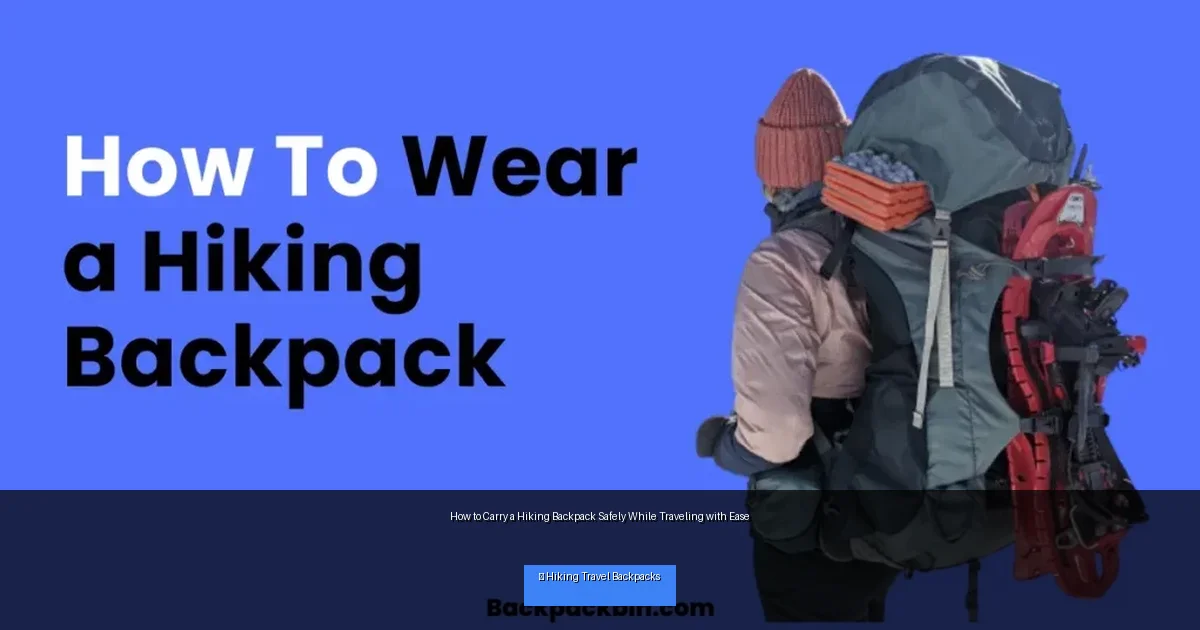
Visual guide about How to Carry a Hiking Backpack Safely While Traveling with Ease
Image source: backpackbin.com
Measure Your Torso Length
- Stand straight and find the bony bump at the base of your neck (C7 vertebra).
- Measure down to the top of your hip bones (iliac crest).
- This length helps you choose the right backpack size.
Consider Capacity
- Day hikes: 20-35 liters
- Overnight trips: 35-50 liters
- Multi-day treks: 50+ liters
A properly sized backpack will sit comfortably on your hips and shoulders, distributing the weight evenly.
Step 2: Pack Your Hiking Backpack Smartly
Packing your backpack the right way greatly affects how comfortable it feels. How and where you place your items changes the load balance.
Place Heavy Items Close to Your Back
- Put heavy gear like water, food, and cooking equipment near the middle of your back.
- This keeps the center of gravity stable and reduces strain.
Distribute Weight Evenly
- Keep medium-weight items around heavy ones.
- Light items like clothes and sleeping bags can go near the top and outer pockets.
Keep Frequently Used Items Accessible
- Store essentials like maps, snacks, or rain gear in side or top pockets for quick access.
Step 3: Adjust Your Backpack for a Perfect Fit
Wearing a hiking backpack without proper adjustment can cause discomfort or injury. Here’s how to get the best fit.
Loosen All Straps Before Wearing
- Start with all straps loose to make it easier to put on the backpack.
Put on the Backpack Correctly
- Lift the backpack using your legs, not your back, to avoid strain.
- Place the hip belt over your hip bones and fasten it snugly.
- The hip belt should carry most of the weight.
Tighten Shoulder Straps
- Pull down and back on the shoulder straps to snug the pack to your body.
- There should be no gaps between your shoulders and the straps.
Fasten the Chest Strap
- Clip and adjust the chest strap to keep shoulder straps from slipping.
- This adds extra stability.
Adjust Load Lifters
- Load lifters are small straps near the top of the shoulder straps.
- Tighten them to pull the pack closer to your upper back for better balance.
Step 4: Practice Safe Lifting and Carrying Techniques
Carrying a hiking backpack safely means using good body mechanics to protect your back and shoulders.
Lift with Your Legs
- Bend your knees, not your back, when picking up your backpack.
- Keep your back straight and lift by straightening your legs.
Maintain Good Posture
- Stand tall while walking, keeping your head up and shoulders back.
- Avoid leaning forward or arching your back excessively.
Take Short Breaks
- Rest every 30-60 minutes to relieve pressure on your back and shoulders.
- Use breaks to adjust straps if needed.
Step 5: Troubleshooting Common Backpack Issues
Even with proper fitting, sometimes discomfort or problems arise. Here’s how to handle common issues.
Backpack Feels Too Heavy
- Reassess your packing. Remove non-essential items.
- Ensure the hip belt is supporting most of the weight.
Straps Dig Into Shoulders
- Tighten the hip belt more to transfer weight from shoulders to hips.
- Loosen shoulder straps slightly for relief.
Backpack Sways While Walking
- Check all straps and tighten them to secure the load.
- Use the chest strap to reduce movement.
Feeling Off-Balance
- Repack to balance weight evenly on both sides.
- Use load lifters to bring the pack closer to your body.
Practical Tips for Carrying Hiking Backpacks Safely
- Wear suitable clothing: Avoid bulky clothes that interfere with strap adjustments.
- Use padded straps: For extra comfort during long hikes.
- Stay hydrated: Carry water within easy reach to avoid stopping frequently.
- Train with your pack: Practice carrying your loaded backpack on short walks before your trip.
Conclusion
Carrying a hiking backpack safely while traveling doesn’t have to be difficult. By choosing the right backpack, packing it smartly, adjusting it properly, and using good carrying techniques, you can hike comfortably and avoid injuries. Remember to take breaks and listen to your body. With these tips, your hiking adventures will be easier and more enjoyable. So, get out there and explore with confidence!
🎥 Related Video: New to Hiking? Don't Go Anywhere Without These Essentials!
📺 BackpackingTV
Looking to hit the trails for a day hike? In this video, we’ll go over the essentials you need to bring along for a safe and enjoyable …