How Can a Solo Female Traveler Handle Luggage During a Train Transfer?
Quick Answer
A solo female traveler can handle luggage during a train transfer by packing light, keeping valuables in a secure personal bag, checking platform changes ahead of time, and allowing enough time to reach the connecting train. Choose luggage you can lift and move independently, and ask uniformed railway staff about official assistance when needed. For a smoother journey, review these light-packing strategies for solo travel before departure.
Your train-transfer essentials
- Pack strategically: Use one manageable suitcase or backpack and a small personal bag.
- Protect valuables: Keep your phone, wallet, identification, tickets, and essential medication with you.
- Check platforms: Confirm your connecting train’s platform, departure time, and carriage location.
- Allow extra time: Build a comfortable buffer for stairs, crowded platforms, and unexpected changes.
- Use verified help: Ask railway staff about luggage trolleys, elevators, accessible routes, or available assistance.
- Plan a backup: Know what to do if your train is delayed or you miss your connection.
One important rule
- Never leave your bags unattended or hand them to an unverified stranger, even when you’re in a hurry.
Traveling alone by train can be a wonderful way to explore a new country, but changing trains with luggage requires a little extra thought.
When you’re traveling independently, you are responsible for your bags, tickets, directions, and timing. A sensible luggage plan helps you move through unfamiliar stations without unnecessary stress.
In this guide, I’ll explain how to prepare for a train transfer, protect your belongings, choose manageable luggage, and handle unexpected problems. These practical strategies work across many rail networks, although station facilities and luggage rules vary by country and operator.
In This Guide
- Why does luggage planning matter during a train transfer?
- What luggage works best for solo train travel?
- How do you handle luggage during a train transfer step by step?
- How can you keep your luggage safe at a train station?
- What should you do when a train transfer goes wrong?
- What should you check before leaving for the station?
- Frequently asked questions
Why Does Luggage Planning Matter During a Train Transfer?
Luggage planning means choosing, organizing, and securing your belongings so you can change trains independently without compromising your safety or missing your connection. It includes packing decisions, station navigation, transfer timing, and backup arrangements.
For solo female travelers, the goal isn’t to avoid every inconvenience. It’s to make sure your luggage never becomes so difficult to manage that you lose control of your belongings or feel pressured into unsafe decisions.
What makes train transfers challenging?
A station transfer can involve more than walking from one platform to another. You might need to use stairs, cross a large concourse, locate an elevator, pass through ticket barriers, or navigate a station where announcements aren’t in a language you understand.
Common challenges include:
- Short connections: A tight schedule can make a heavy suitcase difficult to move quickly.
- Crowded platforms: Large crowds can make it harder to maneuver luggage and monitor your surroundings.
- Unexpected stairs: An elevator may be unavailable, distant, or unsuitable for your route.
- Changing information: A platform change can force you to alter your route at the last minute.
- Physical fatigue: Carrying heavy bags for several hours can leave you tired before you reach your destination.
How does traveling alone change the plan?
When you’re traveling with someone else, you may be able to divide responsibilities. One person can check the departure board while the other watches the luggage, provided the bags remain supervised and both people agree on the plan.
When traveling alone, you need a setup that lets you manage everything yourself. I recommend choosing luggage you can lift, pull, secure, and keep within sight without relying on a stranger.
For additional planning advice, see this guide to choosing destinations for solo train travel.
Section takeaway: The easiest transfer starts before you reach the station. Manageable luggage, realistic connection times, and a clear route reduce the pressure to rush.
What Luggage Works Best for Solo Train Travel?
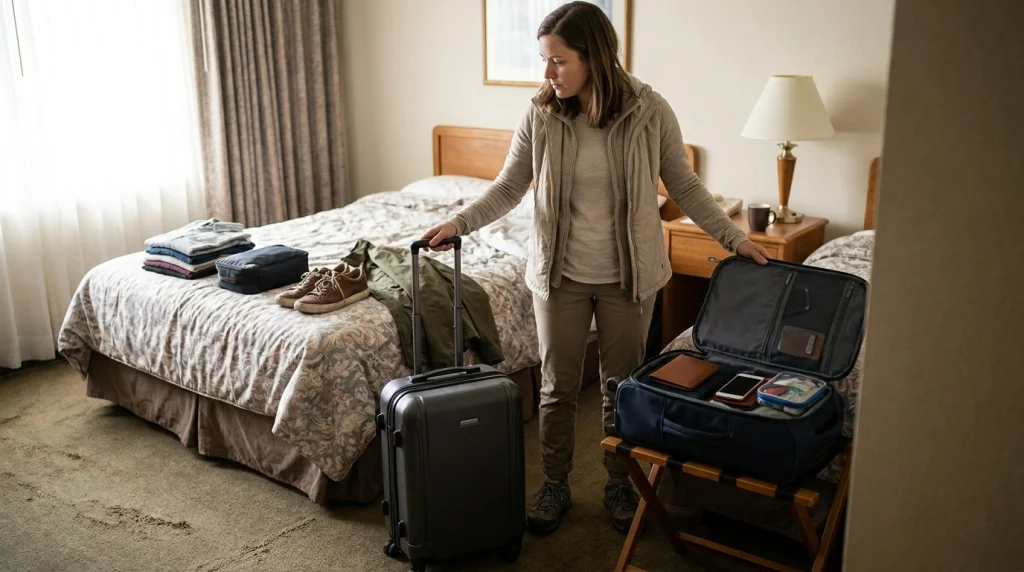
The best luggage for a solo train transfer is a bag you can move independently through crowds, stairs, platform changes, and train entrances. For most journeys, one medium or carry-on-sized suitcase paired with a small personal bag is easier to manage than several separate pieces.
Your ideal setup depends on the trip length, terrain, train design, accommodation, and your ability to lift and carry the bag.
Should you choose a suitcase or a backpack?
Both can work well, but they offer different advantages. Think about the stations and routes you’ll encounter rather than choosing based on appearance alone.
| Luggage type | Best suited for | Main limitation |
|---|---|---|
| Small wheeled suitcase | Paved stations, city breaks, and organized packing | Stairs, cobblestones, and uneven surfaces |
| Travel backpack | Stair-heavy stations and routes involving walking | Shoulder strain, back strain, and harder access to packed items |
| Large suitcase | Longer trips with more clothing or specialized equipment | More difficult lifting, storage, and maneuvering |
| Multiple separate bags | Trips requiring distinct equipment or supplies | More items to monitor and carry during transfers |
A wheeled suitcase is convenient when stations have smooth floors and working elevators. A backpack can be more practical when your route includes stairs, but it should fit comfortably and not exceed what you can carry safely.
How much luggage should you bring?
Pack for the actual trip rather than every situation you can imagine. A weekend journey may require only a compact bag, while a longer trip can still be manageable with a small clothing rotation and planned laundry stops.
Use these principles when deciding what to bring:
- Choose versatile clothing: Pack pieces that work together in different combinations.
- Limit extra shoes: Wear comfortable walking shoes and pack another pair only when needed.
- Reduce duplicate items: Avoid carrying several products that serve the same purpose.
- Keep some space available: An overfilled suitcase can be harder to close and reorganize during a transfer.
- Test the packed bag: Lift it, pull it, and walk with it before departure.
If you cannot comfortably manage your packed luggage at home, a busy station is unlikely to make it easier. Repack before leaving rather than depending on last-minute help.
What should go in your personal bag?
Your personal bag should contain the items you cannot afford to lose access to during a transfer. Keep it small enough to remain securely attached to you or comfortably within your control.
- Passport or other required identification.
- Wallet, payment cards, and a backup payment method.
- Phone, charging cable, and a power bank where permitted.
- Tickets, reservations, and essential travel documents.
- Necessary medication and a small selection of personal essentials.
- Accommodation details and emergency contact information.
Keep these essentials separate from your main suitcase. If the larger bag is delayed, misplaced, or stored elsewhere on the train, you can still access what you need.
Section takeaway: Choose the fewest bags that meet your needs comfortably. The best setup is the one you can handle independently, even when the station is crowded or the route includes stairs.
How Do You Handle Luggage During a Train Transfer Step by Step?
Handle a train transfer by preparing your route, keeping your belongings together, checking the departure information, and moving directly toward the correct platform. A simple sequence helps you stay organized when you’re unfamiliar with the station.
Step 1: Research the transfer before departure
Check whether your connection involves changing platforms, changing stations, passing through ticket barriers, or using another form of transportation. Look at the station map and official railway information where available.
Before leaving, confirm:
- The scheduled arrival and departure times.
- The station name and connecting train number.
- Whether you need to change platforms or stations.
- Whether your ticket remains valid if the first train is delayed.
- Whether elevators, escalators, or luggage trolleys are available.
Don’t assume a short connection is easy simply because the timetable allows it. Station size, accessibility, crowd levels, and luggage weight all affect how quickly you can move.
Step 2: Keep your luggage organized before the train arrives
Gather your belongings before the train reaches your transfer station, especially if you need to retrieve a bag from an overhead rack or designated luggage area. Keep smaller items inside your main bag instead of carrying loose accessories in your hands.
Put your phone and ticket somewhere secure and easy to reach. You don’t want to unpack your suitcase while passengers are moving around you.
Step 3: Check the platform information again
Once you arrive, check the station’s departure boards or official announcements for your connecting service. Platform assignments can change, so verify the information instead of relying entirely on a screenshot taken earlier.
If you are unsure where to go, ask a uniformed railway employee or use an official information desk. Confirm the train number and destination before following directions.
Step 4: Move at a controlled pace
Walk at a pace that lets you control your bags and notice your surroundings. Don’t run with a heavy suitcase simply because you see other passengers hurrying.
- Keep your suitcase close enough to control it in crowds.
- Use designated accessible routes when needed.
- Hold the handrail when carrying luggage on stairs, if safe to do so.
- Keep your personal bag secured and your hands available for balance.
- Pause in a safe place if you need to check directions.
If you are running out of time, ask railway staff for guidance rather than attempting a dangerous shortcut. Missing a train is inconvenient, but an injury or lost bag can cause much bigger problems.
Step 5: Board the connecting train and secure your bags
Check your coach and seat information before boarding when the service uses assigned seating. Follow the operator’s instructions for luggage storage, and avoid blocking doors, aisles, exits, or spaces reserved for passengers who need them.
Keep essential valuables with you. Place larger bags in permitted storage areas where you can reasonably monitor them, while recognizing that storage arrangements vary between trains.
Step 6: Recheck your belongings after boarding
Once you’re settled, make sure you have your personal bag, phone, ticket, and any other essential items. If you moved your suitcase into a separate luggage area, confirm its location and keep any identifying details available.
This final check is especially useful after a crowded transfer. It gives you time to notice a missing item before the train departs.
Section takeaway: Follow the same sequence at every connection: verify, gather, navigate, board, and recheck. A repeatable routine is easier to follow when you’re tired or distracted.
How Can You Keep Your Luggage Safe at a Train Station?
Keep your luggage safe by maintaining control of your bags, protecting valuables, avoiding unattended belongings, and using official railway facilities. Personal safety also means knowing when to ask for help and when to decline assistance that you cannot verify.
Keep your valuables close
Busy stations can create distractions, particularly when passengers are boarding, checking departure boards, or rushing between platforms. Keep your phone, wallet, identification, and essential documents in secure pockets or a bag that stays with you.
These habits can help:
- Close all luggage compartments before entering a crowded area.
- Keep your personal bag in front of you when practical in dense crowds.
- Avoid placing your phone or wallet on public counters or seats.
- Store backup payment methods separately from your main wallet.
- Keep luggage tags discreet and avoid displaying your home address unnecessarily.
- Use a luggage lock where appropriate, without treating it as a substitute for supervision.
A lock can deter casual access, but it does not make a bag theft-proof. Keep important documents and valuables with you rather than relying on a locked suitcase.
Should you accept help from strangers with your bags?
You can accept reasonable assistance when you can verify who is helping you and understand the arrangement. However, you don’t need to hand your luggage to an unfamiliar person simply because they offer help.
If you need assistance, use these steps:
- Look for uniformed railway staff or an official information desk.
- Ask whether the station provides porters or luggage assistance.
- Confirm any service fee before agreeing to paid help.
- Keep your personal bag and valuables with you.
- Follow official procedures for any luggage handling service.
Be particularly careful if someone pressures you to follow them away from the main station area, demands unexpected payment, or insists on taking your bag before explaining the service.
For example, if someone offers to carry your suitcase to another platform, politely decline until you can verify that the person is authorized. You can still ask an employee to direct you toward legitimate assistance.
What if you need physical assistance?
If lifting or carrying luggage is difficult, investigate available assistance before traveling. Depending on the railway operator, you may be able to arrange help with platform changes, boarding, alighting, or moving between trains.
In the United Kingdom, National Rail’s Passenger Assist service allows eligible passengers to request journey assistance, including help with luggage under applicable conditions. The exact arrangements differ by operator and passenger needs.
For other countries, contact the relevant railway operator directly. Don’t assume that every station offers the same services, that assistance is automatically available, or that a booking can be made at the last minute.
How should you handle luggage on overnight trains?
Overnight journeys require particular attention because you may be sleeping while your bags remain in a shared or designated storage area. Check the train’s luggage arrangements and cabin configuration before booking.
- Keep your phone, wallet, identification, and necessary medication close.
- Use the designated luggage area or storage provided for your accommodation type.
- Secure your bag appropriately when the train’s facilities permit it.
- Avoid leaving essential items in luggage that you cannot easily access.
- Check your belongings before leaving the train at your destination.
Don’t assume that every overnight service has lockable storage or that your bag will remain beside your seat. Check the specific train’s facilities before departure.
Pro tip: Review your railway operator’s luggage rules and official destination travel advice before departure. Policies, station facilities, and local security conditions can change.
Section takeaway: Stay in control of your valuables and verify any assistance before accepting it. Good luggage security combines sensible packing, awareness, and the correct use of official services.
What Should You Do When a Train Transfer Goes Wrong?
If your train is delayed, your platform changes, or you miss a connection, stop somewhere safe and check your options before making a new plan. Keep your luggage with you and use official railway information to understand what happens next.
What if your first train is delayed?
A delay can reduce your transfer time or make your original connection impossible. Check the railway operator’s current information and ask staff whether your ticket permits another service or requires a new reservation.
- Confirm the expected arrival time.
- Check the connecting train’s departure status.
- Ask about alternative trains and ticket validity.
- Check whether you need to notify your accommodation about a late arrival.
- Keep receipts and booking information if you need to request assistance or compensation.
Ticket protections vary by country, operator, and booking arrangement. Don’t assume you can board any later train without checking the applicable rules.
What if you miss your connecting train?
Missing a connection can feel stressful when you’re alone with heavy luggage, but it doesn’t mean you should rush into the first alternative offered by a stranger. Start with the official ticket office, customer-service desk, help point, or railway app.
Ask about the next available service, whether your existing ticket remains valid, and any additional charges. If you need to stay overnight, choose accommodation and transport through providers you can verify.
What if an elevator is broken or the route changes?
If an elevator is unavailable, don’t attempt to carry a heavy suitcase down stairs beyond your physical ability. Ask railway staff whether another accessible route or assistance option is available.
When an alternative route takes longer, contact the connecting operator if possible. A safe, manageable route is more important than attempting a shortcut that puts you or your belongings at risk.
What if a bag goes missing?
If you discover that a suitcase or personal item is missing, notify railway staff promptly and follow the operator’s lost-property or security procedure. Provide the train number, carriage or seat details, route, and a description of the bag.
Take these steps:
- Check the immediate area without leaving your remaining luggage unattended.
- Report suspected theft to railway security or the appropriate local authorities.
- Contact your bank promptly if payment cards are missing.
- Use your phone’s device-location or account-security features if a device is lost.
- Contact your travel insurer if the loss falls within your policy’s coverage.
If your passport is missing abroad, contact your country’s embassy or consulate for instructions. Keep copies of important documents separately so you can provide relevant information.
For wider journey planning, the guide to planning a solo trip around public transportation can help you consider alternatives before problems occur.
Section takeaway: When a transfer fails, pause, secure your belongings, and verify your options with the railway operator. Avoid rushed decisions that create additional safety or financial problems.
What Should You Check Before Leaving for the Station?
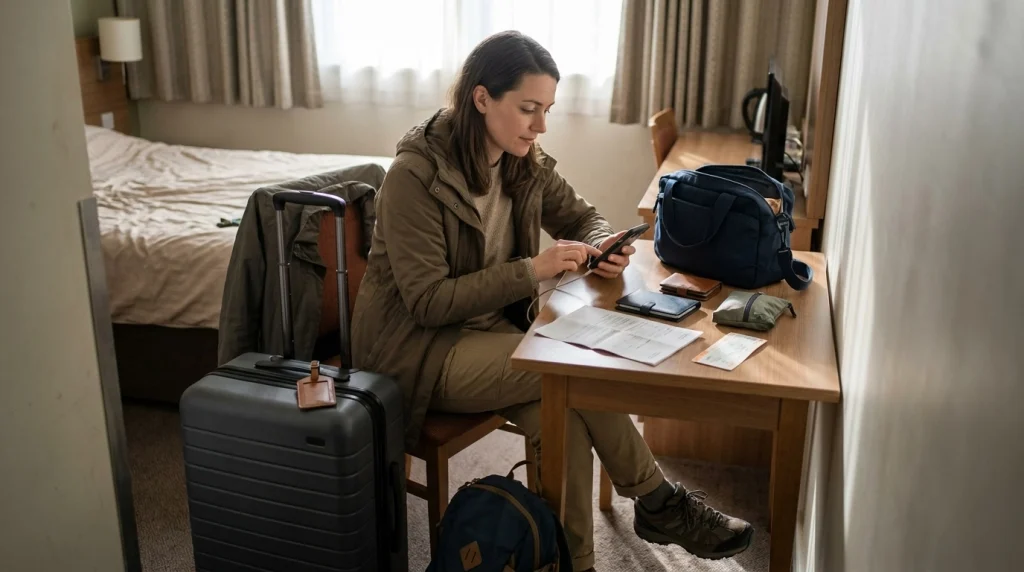
A short pre-departure checklist can prevent many luggage-related problems during a train transfer. Complete it before leaving your accommodation, when you have enough time to repack or adjust your route.
Your luggage checklist
- My main bag is packed within a manageable weight.
- My suitcase, backpack, and personal bag are easy to identify.
- My phone, wallet, identification, and medication are accessible.
- My valuables are not packed in the main suitcase.
- All compartments are closed, and luggage tags are attached.
- I have removed unnecessary items that make the bags heavier.
Your transfer checklist
- I know my departure station, connecting station, and train numbers.
- I have checked the scheduled departure and arrival times.
- I have allowed enough time for the transfer and possible platform changes.
- I know where to check official departure information.
- I have checked ticket validity and reservation requirements.
- I know how to reach railway staff or customer service.
- I have saved my accommodation details and important bookings.
Your personal safety checklist
- My phone has sufficient battery, and I have charging equipment.
- I have a backup payment method stored separately.
- Someone I trust knows my general itinerary when appropriate.
- I know what to do if I miss a connection or lose my bag.
- I have checked official travel advice for my destination.
If your journey includes an unfamiliar international destination, review the U.S. Department of State travel information where relevant, or consult your own government’s official travel advice. For trips involving the United States, you can also check the department’s guidance for women travelers.
Section takeaway: A few minutes of preparation can make the entire transfer easier. Confirm your route, keep essentials accessible, and know where to get reliable help before you leave.
Frequently Asked Questions
1. How much time should a solo female traveler allow for a train transfer?
Allow enough time to leave the arriving train, navigate the station, check the next platform, and board with your luggage. The right buffer depends on station size, accessibility, ticket requirements, and whether you must change stations. For unfamiliar or complicated transfers, choose a longer connection rather than the minimum possible interval.
2. Is a backpack or suitcase better for changing trains alone?
A small wheeled suitcase works well on smooth station floors, while a comfortable backpack can be useful when stairs or uneven surfaces are unavoidable. Neither is universally better. Choose the option you can move independently and comfortably, considering your luggage weight, physical needs, train storage, and route.
3. Should I keep my suitcase with me on the train?
Follow the train operator’s luggage rules and use the designated storage areas provided for your service. Keep essential documents, money, medication, and your phone with you. If larger luggage must be stored separately, know its location and follow the operator’s guidance on securing and monitoring it.
4. Is it safe to ask someone to carry my luggage between platforms?
You can seek help when needed, but verify that the person is authorized to provide the service. Ask uniformed railway staff or an official information desk about available assistance and fees. Keep your valuables with you, and decline offers that involve unexplained charges, pressure, or moving away from the official station area.
5. What should I do if my connecting train leaves before I reach the platform?
Move to a safe place, secure your bags, and contact the railway operator through an official help point, ticket office, app, or customer-service channel. Ask about ticket validity, alternative services, and possible additional charges. If you will arrive late, contact your accommodation and arrange a verified onward transfer.
6. How can I protect my belongings in a crowded station?
Keep your personal bag secure, close your luggage compartments, and avoid leaving bags unattended while checking signs or tickets. Keep important items in separate secure locations and remain aware of your surroundings. If you suspect theft, contact railway security or local authorities and follow their instructions.
7. Can I get help with luggage if I have limited mobility?
Many railway systems offer assistance with station navigation, boarding, or transfers for eligible passengers, but services and booking requirements vary. Contact the railway operator before traveling to confirm availability, accessibility arrangements, and luggage-handling rules. If you need assistance at short notice, ask station staff what options are available.
Make Your Next Train Transfer Easier
Handling luggage during a train transfer becomes much easier when you prepare for the station, rather than just the train journey. Pack light, keep your valuables close, allow enough time, and check official information whenever your route changes.
Most importantly, choose a travel setup that works for you. You don’t need to carry less than you’re comfortable with or move faster than is safe; you need a realistic plan that allows you to manage your belongings independently.
Before your next solo trip, review your luggage, confirm your transfer arrangements, and save the railway operator’s contact information. A little preparation can help you travel with greater confidence, flexibility, and peace of mind.