What Should a Woman Do If She Boards the Wrong Train Alone?
Quick Answer
If you board the wrong train alone, stay calm, remain inside the train while it is moving, and check the next stop using the onboard display or official railway app. Tell a conductor or railway employee what happened and ask for the safest way to return to your intended route. If you feel threatened, move toward staff or a busier passenger area and contact local emergency services when necessary. For broader preparation, review these official travel safety resources.
Your immediate priorities
- Stay onboard: Never jump off a moving train, force a door, or enter railway tracks.
- Check your location: Identify the next station, train direction, and service number.
- Contact staff: Ask the conductor, onboard attendant, or station employee for help.
- Protect your belongings: Keep your phone, tickets, identification, and luggage secure.
- Update someone: Share your current station and revised arrival estimate with a trusted contact.
- Confirm before changing trains: Use official departure boards and staff instructions to avoid another mistake.
Remember
- You do not need to solve everything immediately. Find a safe stopping point, get reliable information, and make one decision at a time.
Realizing you’ve boarded the wrong train can feel frightening when you’re traveling alone, especially in an unfamiliar country where you don’t speak the local language. The good news is that a wrong train usually means a change of plans, not a crisis.
In this guide, I’ll explain what to do during the journey, how to get back on track safely, what to do if your ticket no longer matches your route, and how to handle the situation when you’re worried about your personal safety. These steps apply broadly, although railway procedures vary by country and operator.
In This Guide
- What should you do first after boarding the wrong train?
- How can you get back on the correct route safely?
- How can a woman stay safe on the wrong train alone?
- What happens if your ticket is for the wrong train?
- What if you’re on an express train or traveling at night?
- How can you avoid boarding the wrong train again?
- Frequently asked questions
What Should You Do First After Boarding the Wrong Train?
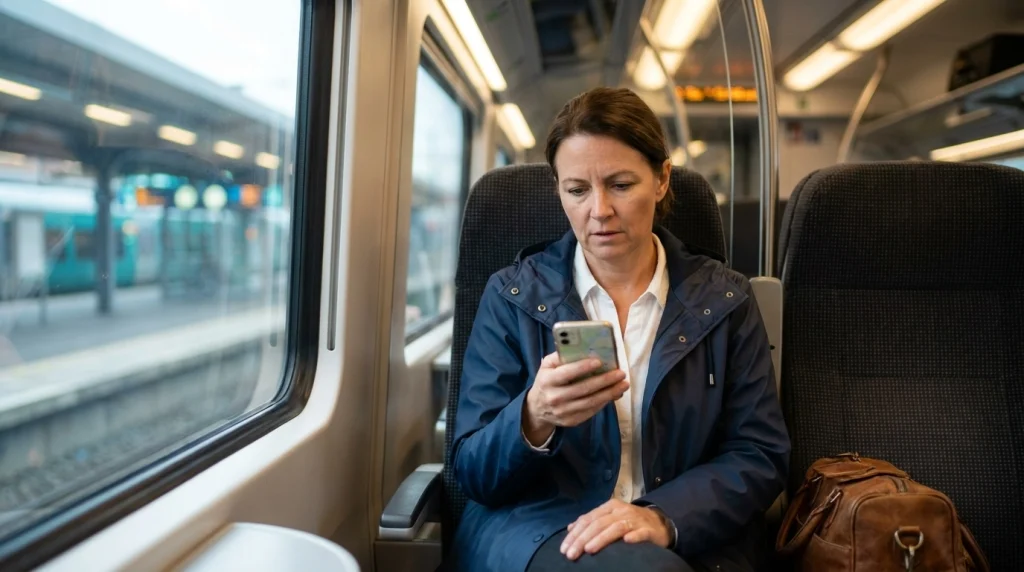
If you discover that you’re on the wrong train, stay calm and establish where you are before making your next move. Your first priority is to remain physically safe while identifying the next practical opportunity to correct your journey.
1. Don’t panic or try to get off immediately
First, take a breath and keep your belongings with you. Never attempt to leave a moving train, open a locked door, or step onto railway tracks.
If the train is moving, wait until it reaches a designated station. If you’re unsure whether the train is safe, move toward an occupied carriage or a staff member when you can do so safely.
2. Check the train’s destination and next stop
Look at the electronic display, listen to announcements, or open the official railway operator’s app. Check the train number, destination, next station, and direction of travel against your ticket.
A train can pass through your intended station without stopping, or it might follow a different route entirely. Confirm the actual service rather than relying on a familiar station name alone.
3. Tell a railway employee as early as possible
Approach the conductor, onboard attendant, or another authorized employee when it’s safe and practical. Explain that you boarded the wrong service and ask where you should get off to correct your journey.
You can say, “I’m traveling alone and accidentally boarded the wrong train. Could you tell me the safest way to get to my destination?” Keep the explanation simple and show your ticket if needed.
4. Keep your travel information accessible
Have your ticket, booking confirmation, and destination details ready. If your mobile connection is unreliable, a saved screenshot of your itinerary can help you explain the problem.
- Write down the intended destination and station name.
- Keep the train number and departure details visible.
- Check your remaining phone battery and enable battery-saving mode if needed.
- Send a brief update to someone you trust if the change affects your arrival time.
Section takeaway: Identify your current service, stay onboard until a safe stop, and ask railway staff for the next step. You don’t have to work out the entire journey alone.
How Can You Get Back on the Correct Route Safely?
The safest way to correct a wrong-train mistake is to follow verified railway information and make changes at an official station. The right solution depends on the route, the type of train, and whether your service stops at a useful interchange.
Identify the best station to change direction
Your nearest station isn’t necessarily the best place to get off. A larger interchange may offer more frequent services, staffed ticket offices, better lighting, and clearer connections.
Ask railway staff whether you should get off at the next stop or continue to a later station. Avoid choosing a station solely because it looks closer on a map.
Use official journey-planning tools
Once you know your current location, compare your options using the railway operator’s app, departure boards, or an official station information desk. Independent journey planners can help, but verify important changes with the operator.
Check the following before boarding another train:
- Destination: Confirm the exact station name, including similarly named stations in nearby towns.
- Direction: Check whether the train travels toward or away from your destination.
- Departure time: Confirm the date and local time, especially after midnight.
- Platform: Verify the platform on the current departure board before entering the carriage.
- Service type: Check whether the train is local, express, reserved-seat, or restricted to certain ticket types.
Compare your safest recovery options
Depending on the railway network, you may have several ways to recover from the mistake. Use this comparison as a starting point, not a substitute for current service information.
| Option | Best when | What to check |
|---|---|---|
| Get off at the next station | It is a designated stop with a safe connection. | Staff availability and onward departures. |
| Continue to a major interchange | The next stop has limited services or facilities. | Travel time, operating hours, and connections. |
| Return on a train going the opposite way | A verified reverse-direction service is available. | Platform, ticket validity, and departure time. |
| Ask about an alternative connection | Disruption or missed connections affect your route. | Authorized rerouting and any additional fare. |
| Arrange another mode of transport | Rail options are unavailable or impractical. | Official taxi ranks, licensed providers, and total cost. |
What if the train skips your intended station?
Don’t assume you’ll be able to get off at the next platform you see. Express and intercity trains may stop only at designated stations, so ask staff where you can safely change services.
If you end up farther from your destination than expected, reassess the route using current information. A longer journey through a staffed interchange can be a better choice than a rushed transfer at an unfamiliar station.
Section takeaway: Choose a safe, verified connection rather than the fastest-looking route. Confirm the destination, platform, and ticket conditions before boarding again.
How Can a Woman Stay Safe on the Wrong Train Alone?
When you’re traveling alone, personal safety matters just as much as getting back on schedule. Boarding the wrong train doesn’t automatically make you vulnerable, but unfamiliar surroundings and uncertainty can make it harder to assess your options.
Stay in a comfortable, visible area
If you feel uneasy, move toward a staffed carriage area or a busier section with other passengers, provided you can do so safely. On some trains, a conductor’s compartment or help point may be available.
Choose a seat where you can keep your belongings close and notice station announcements. Avoid moving into isolated areas simply to escape an awkward interaction.
Tell someone where you are
Send a trusted contact your current station, train number, and revised arrival estimate. If you can share your live location securely, do so while keeping your phone and other personal information private from strangers.
Keep the message factual. For example: “I boarded the wrong train and am heading to Central Station to change services. I’ll message you when I’ve confirmed the next train.”
Recognize when you need urgent help
If someone threatens you, follows you persistently, touches you without consent, or prevents you from leaving, seek assistance from railway staff or local police. Use the train’s designated emergency communication system if there is an immediate threat and that is the safest available option.
For a wrong-train mistake alone, don’t activate an emergency alarm unnecessarily. Emergency equipment is intended for genuine emergencies, and railway procedures differ by operator.
Protect your phone, passport, and luggage
Keep valuables within reach and avoid displaying your passport, wallet, or accommodation details unnecessarily. If you need help with directions, show the relevant station name or route rather than handing your unlocked phone to an unfamiliar person.
These habits are useful throughout solo travel, not just when a journey goes wrong. The British Transport Police’s rail safety guidance also emphasizes protecting belongings and following railway safety instructions.
Use a simple personal-safety check
- Can you identify the next station and find railway staff?
- Is your phone charged enough to contact someone or access your ticket?
- Do you have your bag, identification, and payment method?
- Have you told someone trustworthy about a significant change in your route?
- Do you feel safe remaining on this service until the next designated stop?
If you answer no to the last question because of an immediate threat, prioritize getting help rather than simply following the original itinerary.
Section takeaway: Stay visible, keep your belongings secure, and contact staff or emergency services when necessary. Your safety comes before saving time or avoiding embarrassment.
*Pro tip: Before international travel, check the destination’s official emergency information and your government’s current travel advice. In the United States, the U.S. Department of State provides country-specific guidance; travelers elsewhere should consult their own government’s equivalent.*
What Happens If Your Ticket Is for the Wrong Train?
Boarding the wrong train can affect your ticket, reservation, or fare, but the consequences depend on the railway operator and ticket conditions. Tell staff what happened before purchasing another ticket or assuming your existing one remains valid.
Check whether your ticket is flexible or restricted
Some railway tickets allow travel on multiple eligible services, while others apply only to a specific departure, route, or seat. A mistake doesn’t automatically cancel every ticket, so check the conditions before spending more money.
Look for details such as:
- Advance or train-specific tickets: These may restrict you to a particular service.
- Flexible tickets: These may allow other eligible trains within specified conditions.
- Seat reservations: Your ticket may remain valid while your reserved seat applies only to the original service.
- Regional passes: These may cover certain routes or operators but exclude others.
- International tickets: Separate conditions may apply to high-speed services, reservations, and cross-border journeys.
Ask about extra fares before continuing
Explain the mistake and ask whether you can continue, return to your route, or change your ticket. If an additional fare applies, request the official amount and payment method before agreeing to a new arrangement.
Don’t assume that an honest mistake guarantees a free correction. Equally, don’t purchase a replacement ticket without checking whether staff can authorize a suitable alternative.
Keep evidence of your original booking
Save your original ticket, payment receipt, booking email, and any relevant service-disruption notices. These records can help staff understand what happened and support a later refund or customer-service request if the operator’s rules allow it.
If you are traveling in Bangladesh, consult Bangladesh Railway’s official website for available service information and contact details. Procedures and passenger rights differ between countries, so avoid applying one country’s ticket rules to another.
Section takeaway: Ask staff to confirm your ticket’s validity and any extra charges before changing services. Keep your booking evidence until your journey is complete.
What If You’re on an Express Train or Traveling at Night?
Some wrong-train situations require more planning because your options may be limited by distance, operating hours, or the type of service. The same basic rule applies: remain safe, verify your location, and get reliable instructions before changing your plan.
If you’re on an express or long-distance train
An express train may skip several stations, while a long-distance service may have limited departures later in the day. Ask onboard staff for the next designated stop where you can make a practical connection.
If the next useful station is far away, let your accommodation or trusted contact know that your arrival will be delayed. Don’t try to get off at an unauthorized location to save time.
If you’ve boarded the wrong train late at night
Night travel can mean fewer departures, reduced station staffing, and limited transport options. Before leaving the train, confirm that your intended station has a safe onward connection or a practical place to wait.
Use these precautions when planning your next move:
- Check the last available trains and the first morning departure.
- Look for official station staff, designated waiting areas, and available passenger assistance.
- Confirm accommodation check-in times if your arrival changes significantly.
- Use an official taxi rank or a reputable transport provider if rail travel is no longer practical.
- Avoid walking long distances through unfamiliar areas at night merely to reach a cheaper connection.
If you don’t speak the local language
You can still ask for help without speaking fluently. Save your destination in the local script when possible, and use a translation app to communicate essential details.
A short written message can be useful: “I boarded the wrong train. Where should I get off to return to [destination]?” Show it to a railway employee rather than relying on a stranger who approaches you unsolicited.
Download offline maps and translation resources before traveling where mobile data may be unreliable. These small preparations can make an unexpected change much easier to handle.
If your phone battery is nearly empty
Preserve enough battery for your ticket, directions, and essential calls. Reduce screen brightness, close unnecessary apps, and ask official staff for route information while your phone still works.
If you cannot access your ticket digitally, explain the problem to the ticket inspector or station employee. The operator may have a way to verify your booking, but the available procedure varies.
Section takeaway: Night travel, express services, and language barriers can limit your choices, so confirm your next safe stopping point before acting. If necessary, prioritize a secure waiting place over an immediate connection.
How Can You Avoid Boarding the Wrong Train Again?
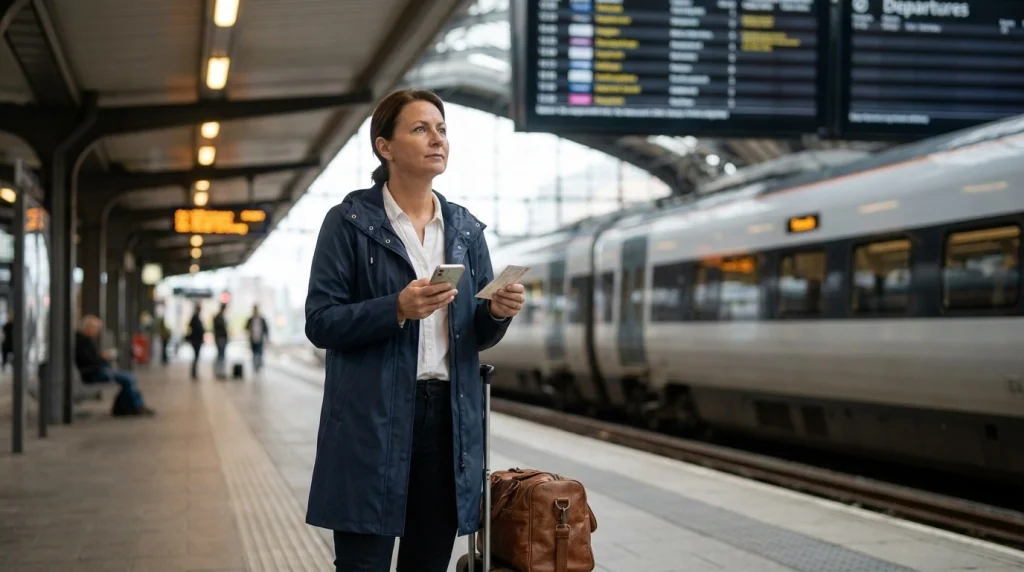
A quick check before boarding can prevent many train mistakes, especially at busy stations where several services leave from nearby platforms. I recommend checking the train number and final destination rather than relying on the platform number alone.
Use a three-point boarding check
Before stepping onto the train, compare these three details with your ticket or official journey planner:
- Train number: Make sure the service matches your booking where a number is provided.
- Destination and direction: Confirm that the train travels along your intended route.
- Departure time: Check the date and time, including any changes announced at the station.
Platform assignments can change, and different trains may serve the same platform at different times. Recheck the departure board shortly before boarding.
Prepare your journey before leaving your accommodation
Spend a few minutes reviewing your route, particularly if you’re changing trains in an unfamiliar city. A small amount of preparation can reduce stress when station announcements are difficult to understand.
- Save your complete itinerary and ticket offline.
- Identify the main interchange stations on your route.
- Check the scheduled arrival time and your accommodation’s check-in arrangements.
- Save the railway operator’s official website or app.
- Keep your destination written down in a form local staff can recognize.
Allow time for connections
A tight transfer can leave little room to check a platform change or ask for directions. When booking a complicated journey, allow a reasonable connection time based on the station layout, luggage, accessibility needs, and whether you must pass through ticket gates or border controls.
There’s no single transfer time that works everywhere. A small station with frequent local services is different from a sprawling international interchange.
Build confidence instead of expecting perfection
Solo travel means making decisions independently, but it doesn’t mean you must know every answer. Asking an official employee to confirm a platform or route is sensible preparation, not a failure.
Even experienced travelers can misread a departure board, miss an announcement, or board a service that shares part of their intended route. What matters is recognizing the mistake early and responding safely.
Section takeaway: Check the train number, destination, and departure time before boarding. Keep your itinerary accessible and leave enough time to verify connections without rushing.
Frequently Asked Questions
Should I get off at the next station if I board the wrong train?
Not automatically. Stay onboard until the next designated stop and ask railway staff whether getting off there is the safest and most practical choice. Some stations have limited onward services, so a later interchange may offer a better connection.
Can I stay on the wrong train until it reaches my destination?
Only if the train actually serves your destination and your ticket permits the journey, or railway staff authorize the arrangement. If the train follows another route, ask for advice rather than assuming you can remain onboard or continue without additional payment.
What should I do if I feel unsafe on the train?
Move toward railway staff or a busier passenger area if you can do so safely. Contact local emergency services if someone threatens you or there is an immediate danger. Keep your phone and belongings secure, and don’t leave the train between designated stops.
Will I have to pay for another ticket?
Possibly, but it depends on the railway operator, the ticket type, and the circumstances. Explain the mistake to an authorized employee and ask whether your existing ticket can be accepted or changed. Confirm any additional fare before purchasing another ticket.
What if I miss my stop because I am distracted?
Check your current location and the next station, then ask staff about returning to your intended destination. Don’t attempt to get off at an unapproved stopping point. If you have a reserved connection, contact the operator to check your options.
What if the last train has already left?
Check official transport information for the next departure and ask station staff about safe waiting areas or authorized alternatives. If you need accommodation, contact your existing hotel or a verified provider. Avoid accepting unexpected transport offers from strangers in an unfamiliar station.
How can I explain the mistake if I don’t speak the local language?
Show railway staff your ticket and a translated message containing your destination and current station. A translation app or saved itinerary can help you communicate clearly. Use official staff and station information rather than relying entirely on an unfamiliar person’s directions.
Final Takeaway: You Can Correct a Wrong-Train Mistake Safely
Boarding the wrong train alone can be unsettling, but you can usually manage the situation by slowing down and following a clear plan. Stay onboard while the train is moving, establish your location, and ask railway staff how to correct your route.
Keep your ticket and valuables secure, tell a trusted person if your plans change, and verify any new connection before boarding. If your personal safety is at risk, seek help immediately rather than worrying about your schedule.
Most importantly, don’t let one travel mistake convince you that solo travel is beyond your abilities. Every journey offers opportunities to become more confident, prepared, and comfortable navigating unfamiliar places.