
Salomon Thundercross Women’s Review: Grip, Fit & Comfort
The Salomon Thundercross women’s is a cushioned trail-running shoe designed for off-road running across mixed, muddy, and uneven terrain. It is particularly suited to women who want aggressive traction, a secure fit, and responsive cushioning for challenging trails rather than a road-running shoe.
Developed for runners who encounter loose dirt, rocky paths, and technical singletrack, the Thundercross occupies a performance-focused position in Salomon’s trail footwear range. Its deep lugs and low heel-to-toe drop make it a distinctive option for buyers who prioritize off-road grip.
Enhanced Quick Verdict
🏆 My Quick Verdict
💡 Best For: Women trail runners seeking cushioned off-road footwear with aggressive traction for muddy tracks, loose ground, and uneven paths.
⚡ Key Specs:
4 mm heel-to-toe drop, 5 mm lugs, Energy Foam midsole, All Terrain Contagrip outsole, Quicklace closure, and approximately 256 g per shoe.
✅ Bottom Line: The Thundercross combines substantial cushioning with deep, trail-focused lugs and a close-fitting design. Its low drop and aggressive outsole will appeal most to off-road runners, while road-focused users and buyers needing waterproof protection should consider their requirements carefully.
Product Image 1
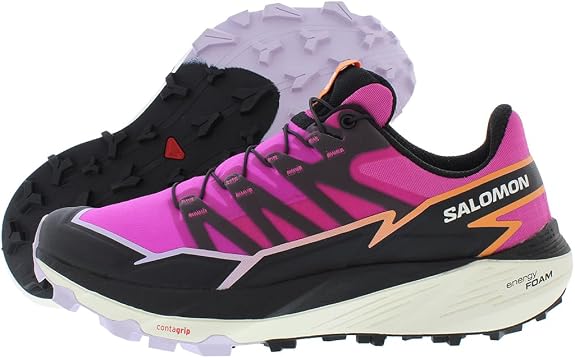
At a Glance
- The 5 mm lugs are designed to provide traction on loose dirt, mud, and uneven trails.
- Energy Foam cushioning is intended to soften landings while retaining a responsive running feel.
- The 4 mm heel-to-toe drop creates a lower-drop platform than many conventional running shoes.
- All Terrain Contagrip rubber supports grip across varied off-road surfaces.
- Quicklace enables one-pull tightening and simplifies shoe removal.
- The standard model should not be assumed to have the waterproof membrane available on the separate GORE-TEX version.
Premium Specifications Table
| Specification | Verified details |
|---|---|
| Product category | Women’s trail-running shoe |
| Upper | Synthetic and textile |
| Midsole | Energy Foam |
| Outsole | All Terrain Contagrip rubber |
| Lug depth | 5 mm |
| Heel-to-toe drop | 4 mm |
| Listed weight | Approximately 256 g per shoe; varies by size and version |
| Closure | Quicklace |
| Waterproof membrane | Not assumed on the standard model |
These specifications describe the standard Thundercross configuration, not every shoe in the wider collection. Confirm the exact product variant and size-specific details before ordering.
Design & Build Quality
The Thundercross uses a synthetic-and-textile upper paired with a substantial trail-oriented outsole. Its construction emphasizes foothold, cushioning, and traction instead of the smooth, relatively shallow outsole used by many road-running shoes.
Salomon’s Sensifit construction is designed to help the upper hold the foot securely. That close-fitting approach can be useful on uneven ground, although the actual fit depends on individual foot shape and preferred sock thickness.
The low-cut silhouette allows natural ankle movement without the extra coverage of a hiking boot. Runners who need ankle coverage for demanding hikes should assess whether a dedicated hiking shoe or boot is more appropriate.
Setup, Installation & Ease of Use
- Inspect the shoes on arrival for damaged stitching, outsole separation, and visible manufacturing defects.
- Check the size label and confirm that the listing matches the standard or waterproof version you intend to purchase.
- Try the shoes indoors with your usual running socks before committing to a long outing.
- Tighten the Quicklace gradually until the foot feels secure without uncomfortable pressure across the top.
- Check toe clearance while standing and walking, allowing enough room for natural movement on descents.
- After muddy runs, remove loose debris before cleaning the upper and outsole.
- Allow the shoes to air-dry naturally and store them in a cool, ventilated place.
Core Performance & Feature Breakdown
The Thundercross is built around three practical priorities: traction, cushioning, and secure foothold. Those characteristics make it most relevant to runners whose routes include loose surfaces, muddy sections, and changing trail conditions.
The 5 mm lugs provide pronounced outsole engagement with softer ground. They are useful for trail grip, but no lug pattern guarantees traction on slick rock, wet roots, or every type of terrain.
Energy Foam is designed to provide cushioning with a responsive feel. That combination can appeal to runners who want underfoot comfort without choosing a shoe intended primarily for easy road miles.
The 4 mm drop creates a relatively low heel-to-toe offset. Runners accustomed to higher-drop footwear should transition according to comfort rather than assuming the geometry will suit every running style.
Expert Insight
Deep lugs are most valuable when the surface allows them to engage, such as loose soil and mud. On extended pavement sections, the same aggressive outsole is less purpose-built, so choose this model according to the proportion of your route that is genuinely off-road.
Product Image 2
Key Features Explained
1. Aggressive 5 mm Lugs
The outsole uses deep lugs intended to bite into loose dirt and softer trail surfaces. They are a sensible choice for muddy routes, although they cannot eliminate slipping on smooth, wet rock.
2. Energy Foam Midsole
The foam midsole is designed to cushion impact while preserving a lively ride. Individual comfort depends on body weight, pace, running technique, and personal cushioning preferences.
3. Sensifit Foot Hold
Sensifit construction helps create a secure fit around the foot during movement. Runners with wider feet or pressure-sensitive areas should check comfort carefully rather than assuming a snug fit will suit them.
4. Quicklace Closure
The Quicklace system tightens through a single-pull mechanism and reduces the need to tie conventional laces. Adjust tension carefully, since a quick closure still needs to distribute pressure comfortably.
Real-World Usability & Maintenance
For regular trail use, the main ownership task is removing grit and mud before they accumulate around the outsole and upper. A soft brush and gentle cleaning are usually a sensible starting point; follow any care instructions supplied with the specific pair.
Drying matters after wet runs. Remove loose dirt, loosen the closure, and let the shoes air-dry away from radiators or direct high heat, which can affect footwear materials and adhesives.
The standard shoe’s ventilation and weather protection should be judged separately from the waterproof GORE-TEX version. In warm or humid conditions, a non-waterproof upper may feel more suitable, while persistent rain may justify comparing the waterproof model.
Premium Pros & Cons Cards
Pros
- Deep 5 mm lugs are designed for traction on loose and muddy trails.
- Energy Foam offers cushioning with a responsive running feel.
- The 4 mm drop suits runners who prefer a lower-drop platform.
- Quicklace makes tightening and removal straightforward.
Cons
- The aggressive outsole is less suited to runners who mainly use paved roads.
- The standard version should not be treated as waterproof footwear.
- The close-fitting design may not suit every foot shape.
Common Issues & Fixes
1. Pressure Across the Top of the Foot
A tight feeling can develop if the closure is pulled too firmly. Loosen the Quicklace slightly and reassess the fit before increasing the distance of your runs.
2. Slipping on Wet Rock
Even aggressive trail lugs can lose grip on smooth, wet surfaces. Shorten your stride, place your feet carefully, and choose footwear appropriate to the terrain.
3. Persistent Mud and Odor
Trapped dirt and damp storage can contribute to unpleasant smells. Clean away debris and let the shoes dry fully in a ventilated area before storing them.
What to Know Before You Buy
Confirm whether the listing is for the standard Thundercross or the separate Thundercross GORE-TEX model. Waterproofing, fit details, and the intended use can differ between versions, so do not rely on product-family names alone.
Check the seller’s size chart and return conditions before ordering online. A shoe that feels secure around the midfoot must still leave comfortable toe room, particularly for descents and longer runs.
Consider the terrain you run most often. If your weekly routes combine extensive pavement with occasional easy trails, a less aggressive all-round running shoe may be more practical.
Who Should Buy It / Who Should Skip It
✅ Who Should Buy It
- Women who regularly run on muddy tracks and loose ground.
- Trail runners who value cushioning and an aggressive outsole.
- Runners who prefer a 4 mm drop and secure foothold.
- Outdoor enthusiasts who want a running shoe rather than a tall hiking boot.
✗ Who Should Skip It
- Runners who spend most of their time on roads and pavement.
- Buyers who require waterproof protection but are considering the standard version.
- People who need a roomy fit that this model cannot comfortably provide.
- Hikers who specifically require ankle coverage from a higher-cut boot.
Alternatives to Consider
Two Salomon alternatives offer different balances of grip, drop, and trail support. Compare the exact versions and your preferred running feel before choosing.
Salomon Speedcross 6 Women’s
Best For: Runners who prioritize traction on soft, muddy, and rugged terrain.
Main Advantage: A Mud Contagrip outsole with 5 mm lugs and a design intended to shed mud quickly.
Trade-off: Its 10 mm drop differs substantially from the Thundercross’s 4 mm platform.
Key Spec: 5 mm lug depth and 10 mm heel-to-toe drop.
Salomon Genesis 2 Women’s
Best For: Runners who tackle mixed, rocky, and technical trails and want a stability-focused design.
Main Advantage: Its activeCHASSIS guidance system and optiFOAM cushioning target stability and a protective ride.
Trade-off: The 8 mm drop and 4 mm lugs offer a different ride and outsole profile.
Key Spec: 8 mm heel-to-toe drop and 4 mm lug depth.
Is It Worth It?
The Thundercross makes the most sense when trail traction and cushioned off-road running are regular needs rather than occasional extras. Its feature set is focused, with deep lugs, a low-drop platform, and a closure system designed for practical adjustment.
Its value depends on fit, the terrain you cover, and the price available in your size. A less aggressive shoe may be a better purchase for mixed road running, while buyers who frequently face wet weather should compare the waterproof version carefully.
Final Verdict
The Salomon Thundercross women’s is a strong candidate for runners seeking cushioning and aggressive grip on demanding off-road routes. Choose it if its 4 mm drop and close-fitting design suit you, and verify the exact version before purchasing.
Product Image 3
Frequently Asked Questions
1. Is the Salomon Thundercross women’s waterproof?
The standard Thundercross should not be assumed to be waterproof. Salomon also sells a separate GORE-TEX version, so check the exact model name and product details before ordering.
2. How should I choose the right size?
Use the current size chart and confirm fit with your intended running socks. Check toe clearance and midfoot comfort, and review the retailer’s return policy if you are uncertain between sizes.
3. Can I use the Thundercross on roads?
It can handle short road sections, but it is designed primarily for trails. Its deep lugs are more specialized than the outsole of a road-running shoe.
4. Is it suitable for hiking?
It can suit trail walks and day hikes where a low-cut running shoe is appropriate. It does not provide the ankle coverage of a mid-height hiking boot, so match footwear to your route and load.
5. How should I clean and maintain it?
Brush away dirt, clean gently when needed, and air-dry naturally. Avoid high direct heat and inspect the upper, closure, and outsole regularly for wear.
6. What warranty does it include?
Warranty coverage depends on the applicable region and seller. Check the manufacturer’s regional warranty terms and retain proof of purchase in case you need to make a claim.
Affiliate disclosure: Women’s Solo Travelers earns a small commission when you purchase through links on this page — at no extra cost to you. Our editorial process is independent: affiliate relationships never influence which products we recommend or how we rank them.
