
What Should a Solo Female Traveler Do If She Misses the Last Bus?
Quick Answer
If you miss the last bus while traveling alone, move to a well-lit, staffed location, confirm whether another official transport option exists, and contact your accommodation or a trusted person. If getting home safely means booking a nearby room or waiting inside a secure public place until morning, prioritize safety over saving money. Never accept an unsolicited ride from a stranger simply because you’re stranded.
Your immediate safety checklist
- Find a safer place: Move into an open hotel lobby, staffed station, official transport office, or busy business where staff can help.
- Check alternatives: Verify official taxis, licensed ride-hailing services, replacement buses, or other public transport.
- Contact someone: Share your location, intended destination, and next travel plan with a trusted person.
- Protect your phone: Preserve battery power, use offline maps, and keep emergency contacts accessible.
- Consider staying overnight: Choose reputable accommodation with confirmed availability and secure access if onward travel isn’t practical.
- Get emergency help: Contact local emergency services or police if someone threatens you, follows you, or prevents you from leaving.
Remember
- You don’t have to reach your original destination tonight if doing so would put you at unnecessary risk.
Missing the last bus can turn an enjoyable solo trip into a stressful situation, especially when you’re unfamiliar with the area and daylight is fading. If you’re wondering what a solo female traveler should do after missing the last bus, the answer is to secure a safe place first and solve the transport problem second.
As a travel-planning principle, I recommend treating late-night transport as a backup-planning issue rather than a test of independence. This guide explains how to assess your options, choose safer transport, manage unexpected costs, and decide when staying overnight is the better choice.
In This Guide
- What should you do immediately after missing the last bus?
- What are the safest alternatives to the last bus?
- Which backup transport option should you choose?
- Should you stay overnight instead of traveling?
- How can you stay safe while stranded at night?
- How can you prevent this from happening again?
- Frequently asked questions
What should you do immediately after missing the last bus?
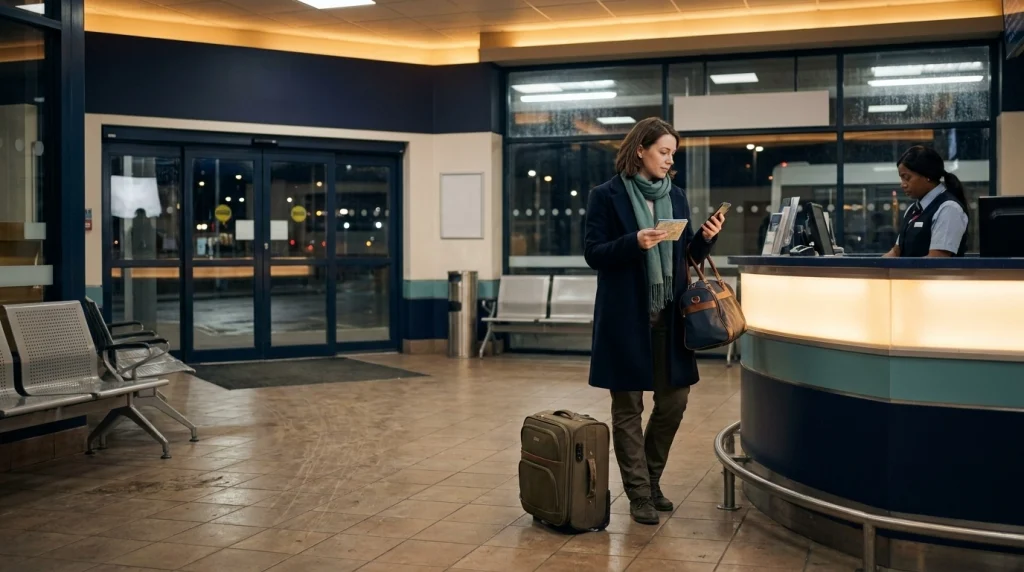
If you’ve missed the last bus, stop and assess your surroundings before deciding how to continue. Your first goal is to get somewhere safe, not to find the fastest route home.
1. Move to a safer location
Look for a staffed transport station, an open hotel reception, a reputable business that is still operating, or another busy, well-lit public location. If you’re already inside a secure station, ask staff whether you can remain there and where to find assistance.
A deserted bus stop, isolated car park, or unfamiliar side street is a poor place to research alternatives. Avoid walking somewhere unfamiliar just because your phone suggests it is the shortest route.
2. Confirm that the service has ended
Check the operator’s official website, app, service alerts, or station information before assuming there are no remaining buses. Some routes have different weekday and weekend schedules, while delays or service changes may affect the final departure.
- Confirm the route number and direction.
- Check whether a replacement service or nearby departure point exists.
- Ask official staff about the next available service and any overnight waiting arrangements.
- Check the departure time in the local time zone if you’ve crossed time zones during your trip.
Don’t rely entirely on an old search result or a stranger’s claim about a secret alternative. Verify the details with the transport operator whenever possible.
3. Tell someone what has happened
Contact a trusted friend, family member, travel companion, or accommodation host. Send your current location, the name of the bus stop or station, and your intended destination.
If you arrange a taxi or ride-hailing trip, share its details and estimated arrival time. You can also arrange a check-in message when you reach your destination.
4. Check your battery and money
Keep enough phone battery for navigation, calls, transport verification, and emergencies. If your battery is low, reduce screen brightness, close unnecessary apps, and ask staff at a legitimate business whether you can charge your phone safely.
Check your available payment methods before booking anything. Having a backup card or a modest emergency cash reserve can prevent a missed bus from becoming a more difficult problem.
Pro tip
Save your accommodation address, a trusted contact’s number, and the local emergency number offline before traveling. If you feel threatened, seek help from staff or police instead of trying to manage the situation alone.
Section takeaway: Get to a safer location, verify the transport situation, and tell someone you trust where you are. Those three actions give you a better foundation for choosing your next step.
What are the safest alternatives to the last bus?
The safest alternative depends on your location, local transport standards, the time of night, and whether you can reach another option without crossing an isolated area. Compare verified services rather than automatically choosing the cheapest or quickest ride.
Use a licensed taxi or verified ride-hailing service
A licensed taxi or reputable ride-hailing service may be a practical choice when public transport has stopped. Use an official taxi rank, a recognized booking channel, or the provider’s verified app rather than accepting a ride from someone approaching you at the stop.
Before entering the vehicle, check the registration plate, vehicle model, and driver information against your booking. Confirm the destination through the app or with the driver, and sit in the back if that arrangement feels more comfortable.
Share the trip details with someone you trust and follow the journey on your phone when possible. If the vehicle or driver doesn’t match your booking, don’t get in.
Look for another official public transport service
A train, metro, airport shuttle, or night bus may still operate after your particular bus route ends. Check the official operator’s schedule and the location of the nearest open station before moving.
Pay attention to the entire journey, not just the main transport leg. A train that reaches your destination area may still leave you with a long, poorly lit walk to your accommodation.
Ask your accommodation for help
Contact your hotel, hostel, guesthouse, or host and explain that you’ve missed the final bus. Staff may be able to recommend a legitimate taxi service, confirm whether late check-in is possible, or suggest nearby accommodation.
If you’re arriving after reception hours, get explicit confirmation that someone can let you in. A non-refundable reservation won’t help if you can’t access the property that night.
Consider a short, safe walk only when conditions support it
Walking may work if the distance is manageable, the route is well-lit and busy, the pavement is suitable, and you can navigate confidently. Check the full route rather than trusting the distance alone.
For example, a 10-minute walk along a populated main street may be more practical than a 10-minute route through a dark park or isolated industrial area. If you feel uneasy or cannot verify the route, choose another option.
Ask for help without surrendering control
Transport staff, hotel employees, and official tourist-information workers may be able to help you find a safe solution. You can ask someone to call a taxi or explain the available transport options without agreeing to travel with that person.
Be cautious of unsolicited offers from strangers, particularly anyone pressuring you to leave your current location immediately. You can decline politely, move closer to staff, and contact someone you trust.
Section takeaway: Prefer verified transport and reputable accommodation. A route is only a good alternative when both the ride and the journey to and from it make sense for your safety.
Which backup transport option should you choose?
The best backup option balances personal safety, availability, cost, and the conditions around your current location. No single transport method is automatically safest in every country or city.
Use this comparison to narrow your choices, then verify local services and conditions before committing.
| Option | Best suited for | Main concern |
|---|---|---|
| Licensed taxi or verified ride-hailing | Reaching accommodation directly | Driver verification, price, and route |
| Train, metro, or night bus | Routes with confirmed late services | Last departure and onward connection |
| Nearby hotel or guesthouse | Late arrivals or unsafe onward journeys | Availability, price, and secure access |
| Walking | Short, familiar, well-lit routes | Isolation, road conditions, and navigation |
| Staffed station or secure waiting area | Waiting for morning transport | Opening hours and overnight access |
How much should you expect to pay?
There isn’t a reliable universal price for a late-night taxi or an emergency hotel room. Fares depend on the destination, distance, local rates, surge pricing, and the time of day.
Instead of relying on generic estimates, check the actual price before confirming a booking. Compare the total cost, including booking fees, tolls, luggage charges, or late check-in fees where applicable.
When comparing two options, consider these questions:
- Can I verify the driver or transport operator?
- Will the service take me close to my accommodation entrance?
- Can I pay using a method I have available?
- Will I need to wait outside or walk alone after arriving?
- Would an overnight stay cost less than the combined transport and safety risks?
A more expensive verified ride can be worth the cost when it avoids an isolated transfer or a long nighttime walk. However, if the available rides seem questionable, a secure overnight stay may be the more sensible decision.
Section takeaway: Compare the complete journey rather than the fare alone. The best option is one you can verify, afford, and use without creating another safety problem.
Should you stay overnight instead of traveling?
Yes, staying overnight can be the better decision when the available transport is unreliable, the route is isolated, or you cannot confidently verify a ride. Missing the last bus does not mean you must reach your original destination that same night.
When is staying put the better choice?
Consider postponing your journey if any of these conditions apply:
- Every remaining transport option involves an unfamiliar or isolated pickup point.
- Your phone is nearly dead, and you cannot safely arrange or monitor a journey.
- The route requires walking through poorly lit streets or unfamiliar areas.
- You feel pressured by a driver or stranger to accept an unverified ride.
- You are exhausted, unwell, or unable to make a clear decision.
- A nearby, reputable accommodation option has confirmed availability.
These are practical reasons to change plans, not signs that you’ve failed at solo travel. Flexibility is one of the most useful skills a solo traveler can develop.
How do you find a suitable place to stay?
Start with accommodation near your current safe location or an official transport hub. Choose a property with recent reviews, clear contact information, secure entry, and a confirmed check-in arrangement.
Before booking, verify:
- The exact address and whether the property is open for your arrival.
- The total price, including taxes and any late check-in charges.
- Whether reception is staffed or the entry procedure is clearly explained.
- Whether you can reach the entrance using verified transport.
- Whether your existing booking can be changed instead of paying for another room.
If you are staying in a hostel, ask about a private room or a female-only dorm if either would make you more comfortable. Confirm the entry arrangements and whether you can safely arrive after normal check-in hours.
What if you cannot afford another hotel room?
Having a limited budget makes the decision harder, but it doesn’t make an unsafe ride a good bargain. First, contact your existing accommodation and ask about a late-arrival exception, a transfer, or a change to your reservation.
You can also ask official station staff about a supervised waiting area or the first morning departure. Never assume a station, airport, or bus terminal allows overnight stays; confirm its opening hours and security arrangements.
If you have travel insurance, review whether your policy covers missed connections, additional accommodation, or transport expenses. Coverage depends on the policy wording and the circumstances, so don’t assume a missed bus automatically qualifies for reimbursement.
Section takeaway: Staying overnight is a valid travel decision when onward transport isn’t suitable. Confirm the room, entry arrangements, and cost before leaving your current safe location.
How can you stay safe while stranded at night?
When traveling alone, your safety plan should reduce unnecessary exposure and keep you connected to reliable help. Focus on visible, staffed places, verified services, and control over your own movements.
Choose your waiting location carefully
Stay where staff or other members of the public are present, when possible. At a station, ask an employee where to wait rather than moving to an isolated platform or an unstaffed entrance.
Keep your bags close and avoid displaying large amounts of cash, expensive jewelry, or your phone unnecessarily. Be aware of who is around you without feeling that you need to confront anyone behaving suspiciously.
Use your phone strategically
Your phone is both a navigation tool and a way to reach help, so protect its remaining battery. Save important information before traveling and avoid unnecessary video calls, streaming, or repeated map searches when power is limited.
- Keep your accommodation address and booking details available offline.
- Share your live location when the service is reliable and appropriate.
- Keep emergency contacts and the local emergency number accessible.
- Use official transport apps or booking channels to verify rides.
- Carry a power bank when possible, especially on long day trips.
Location sharing is useful, but it does not replace telling someone where you are going. Send a direct message if your plans change or you decide to stay overnight.
Know when to refuse a ride or ask for help
You don’t owe a stranger an explanation for refusing a lift. If someone pressures you, insists that you get into a vehicle, or follows you after you’ve declined, move toward staff or a busy public place.
If you believe you’re in immediate danger, contact local emergency services or police as soon as you can do so safely. If a station has a security desk or emergency help point, use it when appropriate.
For destination-specific guidance, consult the relevant government’s travel advice. The Australian government’s solo-traveler safety recommendations cover transport choices, accommodation, and precautions for traveling independently.
What if you feel anxious or embarrassed?
Missing a bus can trigger panic, especially during your first solo trip. Take a moment to slow down, move somewhere safer, and handle one decision at a time.
You don’t need to explain yourself to other travelers or prove you can solve everything without help. Asking a receptionist, transport employee, or trusted contact for assistance is a sensible response to an unexpected problem.
For further preparation, the U.S. Department of State’s travel checklist is a useful starting point for reviewing travel documents, contacts, and preparations before an international trip. Travelers of other nationalities should also check their own government’s guidance.
Safety reminder
A stranger’s offer of help may be well-intentioned, but you cannot verify that from friendliness alone. Keep control of your transport arrangements and ask staff or official services for assistance when possible.
Pro tip: Before traveling internationally, check your destination’s official travel advisory and local emergency contacts. Emergency numbers and transport safety conditions vary by country.
Section takeaway: Stay visible, connected, and in control of your choices. If a situation feels unsafe, change locations or seek official help rather than waiting for it to improve.
How can you prevent missing the last bus on a solo trip?
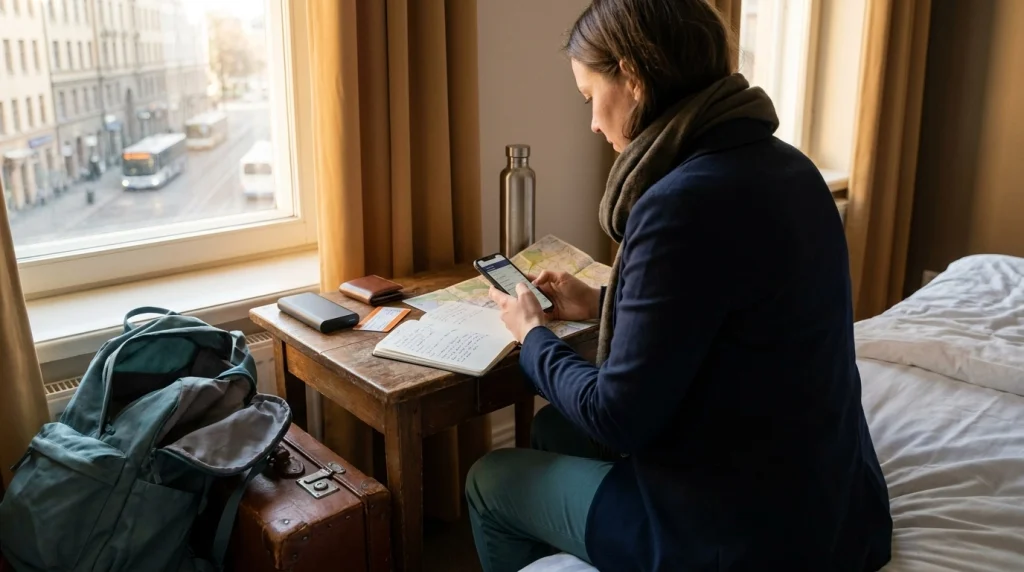
The easiest way to handle a missed bus is to plan for the possibility before you leave. You don’t need an elaborate itinerary, but you should know when the last service runs and what you’ll do if you miss it.
Check the final departure before planning your day
Use the transport operator’s official timetable to confirm the last departure, including weekend and holiday schedules. Save a screenshot because mobile service may be unreliable when you’re traveling through rural areas or unfamiliar destinations.
Build a buffer into your itinerary rather than planning to arrive at the stop one minute before departure. Allow extra time for traffic, ticket queues, confusing station layouts, and unexpected delays.
Prepare a simple backup plan
Before leaving your accommodation, identify at least one realistic alternative for getting back. This doesn’t mean booking an expensive taxi in advance for every journey; it means knowing what you can do if public transport stops running.
- Primary plan: Your intended bus route and the final departure time.
- Backup transport: A verified taxi service or another confirmed public transport option.
- Overnight option: A reputable hotel or guesthouse you can contact if necessary.
- Emergency plan: Your trusted contact, local emergency number, and nearest staffed public location.
If you’re visiting a remote attraction, beach, hiking trail, or small town, pay special attention to return transport. Some locations have limited services, and a taxi may not be readily available after dark.
Keep an emergency travel budget
Set aside money for an unexpected ride, one night of accommodation, food, and essential communication. Keep a backup payment method separate from your main wallet when practical.
The amount you need depends on the destination, so research local taxi fares and accommodation prices before the trip. Your reserve should reflect realistic local costs rather than a universal dollar amount.
Choose accommodation with transport in mind
When booking accommodation, consider how you’ll return after evening activities. A slightly more central location may save money and stress if it reduces your dependence on the last bus.
Read recent reviews from women traveling alone and check the neighborhood, reception hours, entrance arrangements, and available transport. The goal is to make the end of your day as straightforward as the beginning.
For additional planning ideas, consult a reputable guide to travel preparation and destination research, then confirm transport details directly with local operators.
Review what happened without blaming yourself
If you do miss the bus, consider what caused the problem once you’re safe. Perhaps the timetable was outdated, your activity ran late, or you underestimated the time needed to reach the stop.
Use that information to improve your next itinerary. Solo travel involves making decisions independently, and adjusting your plans is part of the process.
Section takeaway: Check schedules, leave a time buffer, and prepare a realistic backup before heading out. A little planning can make unexpected transport problems easier to manage.
Frequently asked questions
1. Is it safe to wait at a bus stop alone at night?
It depends on the location, local conditions, and whether staff or other people are nearby. If the stop is isolated or you feel uncomfortable, move to a staffed, well-lit public location where you can arrange verified transport or wait for assistance.
2. Should I accept a ride from a stranger if I’ve missed the last bus?
It’s safer to avoid unsolicited rides from strangers, particularly when you’re alone at night. Use a licensed taxi, a verified ride-hailing service, or transport recommended through a reputable official source, and share your journey details with someone you trust.
3. What if I have no money for a taxi or hotel?
Contact your existing accommodation, ask transport staff about the next departure, and look for a supervised waiting area that is confirmed to remain open. Tell a trusted person what has happened and ask about practical support. If you’re threatened or in immediate danger, seek emergency assistance.
4. Is it better to walk back to my hotel or wait until morning?
Walking may be reasonable if the route is short, familiar, well-lit, and busy, with safe pedestrian access. If the route is isolated, confusing, or unsafe, waiting in a secure location or staying overnight is generally the more sensible choice.
5. What should I do if my phone battery is almost dead?
Move to a safer staffed location and ask whether you can charge your phone. Preserve power for essential calls and navigation, use saved offline maps, and write down important addresses if necessary. If you cannot arrange transport safely, ask staff for assistance rather than wandering around without navigation.
6. Will travel insurance cover a missed last bus?
Not necessarily. Coverage depends on your policy, the reason you missed the bus, and any applicable exclusions or documentation requirements. Check your policy’s missed-connection, transport-disruption, and additional-accommodation provisions, and contact your insurer before assuming an expense will be reimbursed.
7. How can I avoid missing the last bus when traveling alone?
Check the official timetable, confirm the final departure, and leave a time buffer for reaching the stop. Save the schedule offline, identify a backup transport option, and keep emergency funds available for an unexpected ride or overnight stay.
Final thoughts: Put your safety before your schedule
Missing the last bus while traveling alone can feel overwhelming, but you still have choices. Start by finding a safer place, checking verified transport alternatives, and contacting someone you trust.
If no suitable ride is available, consider a secure overnight stay or waiting for morning transport in a confirmed safe location. Spending extra money or changing your itinerary is far better than taking an unnecessary risk to stay on schedule.
Before your next solo outing, save the last departure time, your accommodation details, and a backup transport plan. Those small preparations can help you travel with greater confidence, even when things don’t go as expected.
