How Can a Woman Plan Her First Solo Road Trip?
Quick Answer
A woman planning her first solo road trip should start with a short, manageable route, reserve safe accommodation, prepare the car, and create simple backup plans. Before departure, check weather and road conditions, share your route with someone you trust, and review the NHTSA road-trip safety guidance.
Plan Your First Solo Road Trip in Six Steps
- Choose an easy route: Keep your first trip short enough that driving never becomes the entire vacation.
- Book key stops: Reserve your first accommodation and any place where availability could become a problem.
- Prepare your car: Check tires, lights, fluids, wipers, fuel, charging cables, and roadside equipment.
- Create a safety plan: Share your route, accommodation, expected arrival times, and check-in plan with a trusted person.
- Pack for delays: Carry water, food, medication, a first-aid kit, charging options, and weather-appropriate layers.
- Leave breathing room: Build enough flexibility into each day to stop early when tired, weather changes, or plans simply stop feeling right.
If you’re wondering how a woman can plan her first solo road trip, focus on making the trip manageable rather than impressive. A simple route with dependable stops can build far more confidence than an exhausting multi-state marathon.
I approach first solo trips by planning the boring parts before the exciting ones. Once I know where I’ll sleep, refuel, park, and ask for help, the scenic stops become much easier to enjoy.
Definition: A solo road trip is a journey where you travel primarily by car without a companion responsible for navigation, driving, accommodation, budgeting, safety decisions, or daily planning.
In This Guide
- How Do You Choose the Right Route for Your First Solo Road Trip?
- What Should You Book Before Leaving?
- How Do You Prepare Your Car and Safety Plan?
- What Should a Woman Pack for Her First Solo Road Trip?
- How Should You Budget and Plan Each Driving Day?
- What Should You Do If Something Goes Wrong?
- First Solo Road Trip FAQ
How Do You Choose the Right Route for Your First Solo Road Trip?
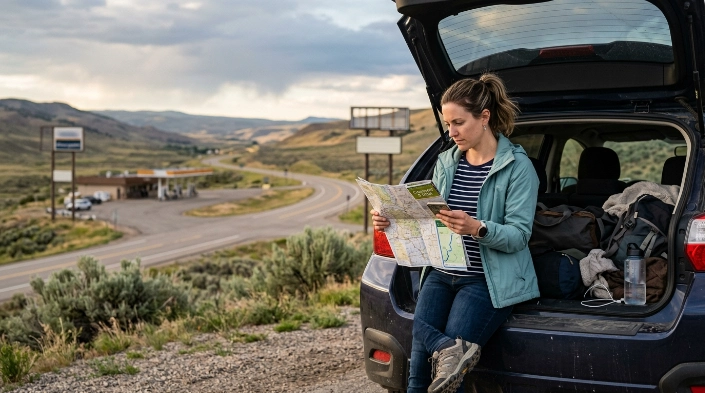
The best first solo road-trip route is interesting but logistically simple. I would rather plan three relaxed days in one region than spend three days racing between distant landmarks.
Start by deciding how much driving you genuinely enjoy. Driving six hours because a map says it is possible feels different from driving six hours alone after sightseeing, finding meals, checking into hotels, and making every decision yourself.
How long should a first solo road trip be?
For many beginners, a three-to-five-day trip is a practical starting point. It gives you enough time to experience independent travel without committing to a long journey before you know your comfort level.
Your first route also does not need to cross several states or regions. A loop near home can teach you almost everything important about solo-trip pacing.
| Trip Style | Sample Length | Typical Structure | Best For |
|---|---|---|---|
| Practice getaway | 2 nights | One destination, same hotel | Testing solo travel close to home |
| Easy regional loop | 3–4 nights | Two bases with short travel days | Most first-time road trippers |
| Longer first adventure | 5–7 nights | Two or three planned bases | Women already comfortable traveling alone |
Choose roads with reliable services
A spectacular remote highway can wait for a later trip. For your first experience, favor routes with regular fuel stations, food, accommodation, phone coverage, and alternative roads when possible.
- Fuel access: Identify longer stretches without obvious service stations.
- Accommodation: Know where you could stop early if you become tired.
- Phone coverage: Download offline navigation before entering weak-signal areas.
- Weather exposure: Check whether mountains, deserts, coastlines, or flood-prone areas create seasonal hazards.
- Backup routes: Save at least one alternative when closures would otherwise leave you stuck.
Check the forecast before departure and again each morning. The National Weather Service safety resources cover hazards such as flooding, fog, heat, thunderstorms, wildfire, wind, and winter weather.
My route-planning rule is simple: avoid creating a day where one delay ruins everything. A two-hour weather delay should be inconvenient, not catastrophic.
Section Takeaway: Make your first route forgiving. Shorter driving days, reliable services, and backup options create more freedom rather than less adventure.
What Should You Book Before Leaving?
Book the parts of your trip that would create stress if they disappeared. Leave flexible anything that is easy to change on the road.
For a first solo road trip, I normally prioritize accommodation over a packed activity schedule. Knowing where I am sleeping removes one of the biggest late-day decisions.
Book your first night before departure
Choose accommodation with clear check-in instructions, recent guest feedback, and parking arrangements you understand. Look at the surrounding streets on a map before paying.
When possible, plan to arrive during daylight. Finding entrances, parking areas, reception desks, and luggage routes usually feels easier when you can clearly see the area.
- Confirm parking: Check whether it is on-site, street parking, valet, or a separate garage.
- Check reception hours: Make sure a late arrival will not create a locked-door problem.
- Save the address: Keep it in your phone and an offline note.
- Read cancellation terms: Flexible reservations are useful when weather changes your route.
- Know your arrival plan: Decide where you will park before pulling into an unfamiliar area.
Do you need to book every night?
Not necessarily. However, I would pre-book most nights on a first trip if accommodation is limited, the destination is busy, or arriving without a reservation would make you anxious.
A good compromise is booking the first night and any high-demand stop. Keep one later reservation flexible when your route allows it.
What if your road trip crosses an international border?
International driving adds licensing, insurance, entry, vehicle, and local-law questions. Research the exact countries involved rather than assuming your home-country driving rules follow you across the border.
As of 2026, official travel information can change at any time. Review current U.S. State Department travel advisories when they are relevant to your destination and citizenship circumstances.
Pro tip: For an international route, verify entry rules, local driving requirements, insurance, health guidance, and emergency numbers through official government sources before departure.
Section Takeaway: Reserve what protects your peace of mind. Your first night’s accommodation, difficult-to-find lodging, and essential transport arrangements deserve priority over filling every hour.
How Do You Prepare Your Car and Safety Plan?
Your vehicle should be ready before your luggage goes inside it. A first solo road trip is not the ideal time to discover that a tire, battery, light, or windshield wiper has been neglected.
You do not need to become a mechanic. You do need to know the basics of the vehicle you are trusting.
What should you check on the car?
- Tires: Check condition and pressure according to the vehicle manufacturer’s guidance.
- Lights: Test headlights, brake lights, indicators, and hazard lights.
- Fluids: Review fuel, engine oil, coolant, and windshield-washer fluid as appropriate for your car.
- Wipers: Replace damaged blades before a trip where rain is possible.
- Battery: Address slow starts or known battery problems before leaving.
- Spare or repair kit: Know what your vehicle carries and how roadside assistance works.
- Charging: Test your phone charger and any vehicle charging ports you depend on.
If the car is due for service or has a warning light, deal with that before departure. A route should not become your diagnostic test.
Build a check-in plan without giving up your independence
Choose one trusted person who will know your basic route and where you expect to sleep. Agree on what kind of check-in is useful instead of promising to message constantly.
- Share your route: Send the main roads, destinations, and overnight stops.
- Share accommodation: Provide booking details to someone you trust.
- Set check-ins: A departure or evening-arrival message may be enough for a straightforward trip.
- Explain delays: Send a quick update when your arrival time changes significantly.
- Set an escalation plan: Agree in advance on what your contact should do if you miss an important check-in and cannot be reached.
Protect your location information
Sharing your location privately with a trusted person is different from broadcasting it publicly. I prefer posting photos after leaving a specific hotel, trailhead, restaurant, or isolated viewpoint.
You also do not owe strangers a detailed explanation of your itinerary. Keep your exact accommodation and next overnight stop private when there is no reason to share them.
Prepare for roadside problems
NHTSA recommends carrying emergency supplies because even a maintained vehicle can break down. Useful items include a phone and charger, first-aid supplies, flashlight, jumper cables, tire-pressure gauge, food, water, maps, and weather-appropriate blankets or clothing.
If your road trip is outside your home country, driving conditions and laws may differ sharply. The CDC road-safety guidance for travelers recommends learning local traffic rules, using seat belts, avoiding distracted driving, and taking extra care on unfamiliar roads.
Pro tip: Safety advice changes with location, weather, road conditions, and local law. Check official transportation, weather, and government travel sources for the exact route you will drive.
Section Takeaway: Good solo female travel safety is mostly preparation. A maintained car, private check-in plan, emergency supplies, and sensible information sharing give you options when plans change.
What Should a Woman Pack for Her First Solo Road Trip?
Pack for comfort, communication, and delays before packing for photographs. Your car gives you more space than a carry-on, but that does not mean every empty corner needs filling.
I separate road-trip packing into five small groups. That makes important items easier to find when I need them quickly.
Keep these road-trip essentials organized
- Driving essentials: License, vehicle documents, insurance information, toll method, sunglasses, and navigation backup.
- Communication: Phone, car charger, power bank, charging cables, and saved emergency contacts.
- Roadside supplies: Flashlight, first-aid kit, water, nonperishable snacks, basic emergency equipment, and weather protection.
- Personal items: Medication, toiletries, comfortable clothing, footwear, and menstrual products if needed.
- Trip documents: Accommodation confirmations, key addresses, reservation numbers, and offline copies of important information.
What should stay within reach?
Do not bury your water, charger, medication, or flashlight underneath a suitcase. Keep a small front-seat or easy-access bag for items you may need during stops.
Your vehicle should remain uncluttered enough that loose objects do not become a distraction. Put luggage away before driving rather than reorganizing it at traffic lights or on road shoulders.
Carry more than one way to pay
I prefer separating payment methods instead of storing everything in one wallet. For example, keep your main card accessible and a backup card or emergency cash somewhere separate and secure.
The goal is not carrying a large amount of cash. It is avoiding a situation where one lost wallet, declined card, or damaged phone removes every payment option at once.
Section Takeaway: Pack for the problems that could interrupt the trip first. Communication, medication, water, payment backups, and roadside supplies matter more than carrying extra outfits.
How Should You Budget and Plan Each Driving Day?
A realistic road-trip budget includes more than fuel and a hotel room. Parking, tolls, meals, attractions, snacks, and unexpected route changes can quietly push the total higher.
Before booking, I separate fixed expenses from flexible spending. Then I add a buffer instead of planning to spend every available dollar.
Build a simple solo road-trip budget
| Category | Example 4-Day Budget | What to Include |
|---|---|---|
| Accommodation | $300–$600 | Three nights, taxes, parking fees |
| Fuel or charging | $80–$180 | Distance, vehicle efficiency, local prices |
| Food | $120–$240 | Meals, drinks, road snacks |
| Activities | $40–$150 | Admission, tours, park fees |
| Tolls and parking | $30–$100 | Road tolls, garages, destination parking |
| Trip buffer | $100–$250+ | Route changes, extra fuel, replacement items |
These figures are planning examples, not universal prices. A four-day trip can cost much less or much more depending on location, season, vehicle, hotel style, and distance.
How many hours should you drive each day?
There is no perfect daily number for every driver. On a first solo trip, I would rather underestimate my driving tolerance than discover the limit on an unfamiliar highway after dark.
Remember that a four-hour route rarely consumes only four hours of your day. Fuel, food, photographs, restrooms, roadwork, traffic, and scenic stops all add time.
- Start rested: Do not use a road trip to compensate for a late night or exhausting workweek.
- Schedule breaks: Stop regularly before fatigue becomes difficult to ignore.
- Protect daylight: Give yourself extra time on unfamiliar or rural roads.
- Keep meals realistic: Hunger makes a long driving day less enjoyable.
- Stop when tired: An itinerary is never more important than driving safely.
Use one anchor activity per day
I like giving each day one main purpose. That could be a scenic drive, museum, hike, historic district, beach, food stop, or national-park visit.
Everything else can remain optional. This prevents the common mistake of turning a solo road trip into a race against your own itinerary.
A sample three-night schedule
- Day 1: Leave after a calm morning, drive to your first base, check in, and explore nearby.
- Day 2: Enjoy one main activity with little or no hotel changing.
- Day 3: Take your main scenic drive, then reach the second overnight stop with time to settle in.
- Day 4: Have an easy morning and drive home with enough buffer for traffic or breaks.
This rhythm may look less ambitious on paper. In practice, it leaves space for the moments that make road trips memorable.
Section Takeaway: Budget money and energy together. The safest itinerary is one you can afford without stress and drive without constantly racing the clock.
What Should You Do If Something Goes Wrong?
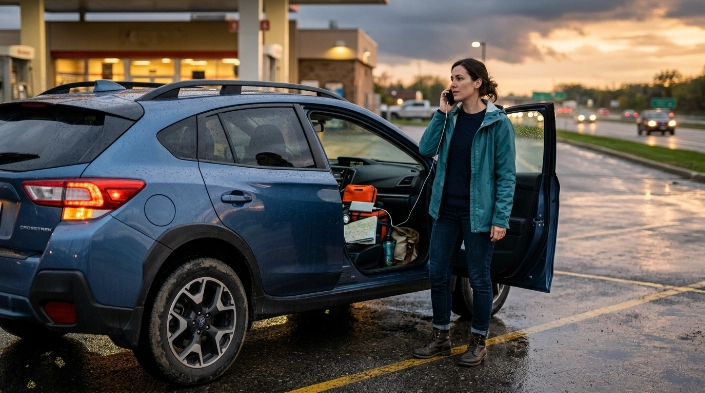
A backup plan does not mean expecting disaster. It means deciding simple actions while you are calm, before a stressful situation makes basic decisions harder.
Think through a few likely problems rather than imagining every possible emergency. Car trouble, bad weather, a lost phone, illness, a closed road, or uncomfortable accommodation cover many situations.
If the car breaks down
Move to a safe location when you can do so safely and follow local road rules. Use hazard lights as appropriate, call roadside assistance or emergency services when needed, and avoid attempting repairs you do not understand.
Keep your phone charged enough that navigation does not leave you without communication. Save your insurer, roadside-assistance provider, accommodation, and emergency contacts before departure.
If the weather changes
Do not let a prepaid hotel or planned attraction pressure you into unsafe driving conditions. Change the route, wait, or stop early when official guidance and conditions make that the sensible choice.
This is why flexible reservations and a budget buffer matter. They turn an unpleasant change into a solvable travel problem.
If a place or person makes you uncomfortable
You are allowed to leave without explaining yourself. Move toward a staffed, public, well-lit location and contact someone you trust when that helps.
If you believe you are in immediate danger, contact the appropriate local emergency service. Save destination-specific emergency numbers before traveling, especially when crossing borders.
If your phone stops working
Keep important addresses and contact details somewhere besides one app. Offline maps, written hotel information, and a charging backup reduce how much one dead or damaged phone can disrupt the trip.
I also memorize or write down at least one important contact number. Modern phones make it surprisingly easy to know everyone’s name and nobody’s number.
If you decide you want to go home
Going home early is not a failed solo trip. Sometimes weather deteriorates, the car develops a problem, you become ill, or you simply learn that the current plan is too ambitious.
Solo travel gives you permission to change the itinerary. Use that freedom.
Section Takeaway: Your backup plan should create choices. Keep enough money, battery, information, fuel, and schedule flexibility to change direction when circumstances change.
First Solo Road Trip FAQ
Is a solo road trip safe for a woman?
A solo road trip can be planned with sensible risk reduction, but no trip is completely risk-free. Prepare the vehicle, research the route, check weather and road conditions, protect personal information, share essential plans privately, and change course when a situation becomes uncomfortable or unsafe.
How far should I go on my first solo road trip?
Choose a distance that leaves energy for the destination itself. A short regional trip is often better for a first attempt because you can practice navigation, accommodation, meals, parking, and independent decision-making without adding several exhausting driving days.
Should I stay in hotels or camp on my first solo road trip?
Choose whichever matches your existing experience. If you have never camped alone, a staffed hotel or established accommodation may create fewer new variables, while an experienced camper may feel comfortable using busy, well-managed campgrounds with clear rules and services.
Should I share my live location with someone?
Private location sharing can be useful when you trust the recipient and are comfortable using it. It does not replace a basic itinerary or check-in plan, and you should avoid publicly posting your exact real-time accommodation or isolated location without a good reason.
What if I feel anxious before leaving?
Reduce the size of the challenge instead of cancelling the idea automatically. Try a day trip, one overnight stay, or a two-night destination close to home, then use what you learn to plan a longer solo road trip later.
Do I need roadside assistance for a solo road trip?
Roadside assistance is not mandatory everywhere, but knowing how you will get help is important. Check whether your insurance, vehicle manufacturer, credit card, rental company, or another service already provides coverage before purchasing anything additional.
What is the most important rule for a first solo road trip?
Keep enough flexibility to change your mind. A safer route, earlier stop, different hotel, cancelled activity, or trip home can be the correct decision when conditions change, even if it is not what you originally planned.
Your first solo road trip does not need to prove that you are fearless. It only needs to show you that you can make thoughtful decisions for yourself, one stop at a time.
Start with an easy route, prepare the practical details, and leave room for the unexpected. Once you finish that first drive, your next solo trip will be easier to plan because you will know exactly what independence on the road feels like for you.