Where Should a Solo Female Traveler Keep Her Passport While Sightseeing?
Quick Answer
A solo female traveler should keep her original passport in a secure hotel safe or locked luggage when local laws allow copies for identification. If she must carry the original while sightseeing, a concealed money belt, hidden travel pouch, or secure internal bag compartment is usually safer than an exposed pocket. Always check the destination’s official travel and identification guidance before deciding.
Best Passport Safety Practices
- Hotel safe: Leave the original inside a properly functioning safe when local rules permit.
- Hidden money belt: Carry your passport discreetly beneath clothing when you need the original.
- Internal zippered pocket: Use a compartment that strangers cannot easily reach.
- Passport photocopy: Carry a paper copy when it meets local identification requirements.
- Digital backup: Keep a protected passport scan accessible if the original disappears.
Important Safety Reminder
- Check local laws: Some destinations require travelers to carry original identification.
- Avoid easy-access pockets: Never place your passport in an open tote or loose back pocket.
- Separate valuables: Don’t keep your passport, cards, cash, and phone together.
One of my biggest solo travel planning questions is where to keep my passport while exploring a new city. I want it protected without worrying about it every time I stop for coffee or take a photograph.
The right choice depends on where you’re staying, what you’re doing, and whether local authorities require original identification. Here’s how I approach passport security for sightseeing, day trips, public transportation, and unexpected emergencies.
In This Guide
- Should You Carry Your Passport While Sightseeing?
- What Is the Safest Place to Keep Your Passport?
- How Do You Protect Your Passport in Crowded Places?
- Should You Carry a Passport Copy Instead?
- What Should You Do If Your Passport Is Lost or Stolen?
- What Passport Safety Routine Works Best?
- Frequently Asked Questions
Should You Carry Your Passport While Sightseeing?
Carry your original passport only when it’s legally required or genuinely necessary for your plans. Otherwise, leaving it securely at your accommodation can reduce the risk of losing it during ordinary sightseeing.
Your passport is your main international travel identification document. Replacing it abroad can interrupt reservations, transportation plans, and your journey home.
When Is Leaving Your Passport at the Hotel Better?
For a relaxed day exploring museums, cafés, parks, or local shops, secure hotel storage can make sense. The key is confirming that a copy or another accepted ID meets the destination’s rules.
I prefer reducing the number of times I handle important documents outside my room. Every unnecessary retrieval creates another chance to leave something behind.
- Check whether the accommodation provides a functioning in-room safe.
- Confirm whether local law permits a passport copy for routine identification.
- Store the original in a protective sleeve away from liquids.
- Keep a copy somewhere separate from your passport.
- Check the safe before leaving the hotel permanently.
Remember that a hotel safe isn’t theft-proof. A secure room, reliable property management, and controlled access also matter.
When Should You Carry the Original Passport?
Sometimes the original must travel with you. A photocopy cannot replace it for every official or travel-related purpose.
These situations may require your original passport:
- Crossing international borders or passing through immigration.
- Taking transportation where your ticket requires original identification.
- Completing an identity check where copies aren’t accepted.
- Visiting offices that specifically request your passport.
- Following destination-specific identification laws.
Requirements vary by country and activity. Don’t assume that a photocopy accepted at one attraction will satisfy the police or transportation authorities.
Pro tip: Check the destination page on the UK government’s foreign travel advice service or your own government’s equivalent before departure.
What About Hostel Stays and Shared Accommodation?
Hostels introduce a different storage challenge because several travelers may share one room. I wouldn’t leave my passport unsecured in a backpack beside a shared bed.
A personal locker can be useful when it is sturdy, properly secured, and inaccessible to other guests.
- Use a reliable padlock on an assigned locker.
- Avoid leaving passports in unattended communal areas.
- Check whether reception offers secure document storage.
- Don’t hide your passport under a mattress or pillow.
- Use a concealed pouch if secure storage isn’t available and you must keep it with you.
The goal isn’t to assume that everyone around you poses a threat. It’s to avoid easy opportunities for loss or theft.
What Is the Safest Place to Keep Your Passport?
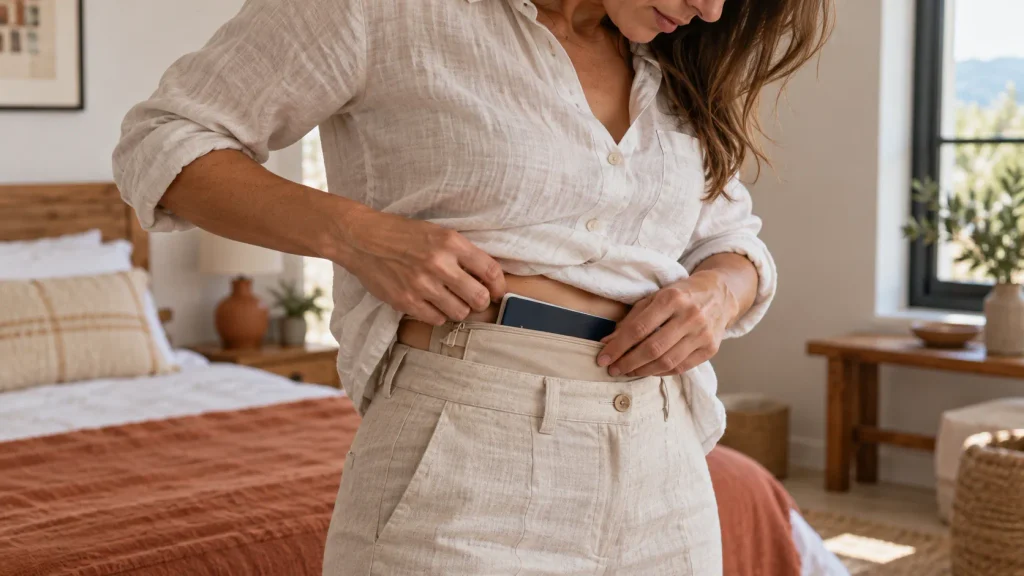
A discreet money belt or concealed pouch is usually a strong choice when you need to carry your original passport. If you don’t need the original, a well-secured accommodation safe may be more practical.
Different storage options solve different problems. Some prevent opportunistic theft, while others prioritize comfort and convenience.
Passport Storage Options Compared
| Storage Method | Best Use | Main Limitation |
|---|---|---|
| Hotel safe | Day sightseeing when original ID isn’t required | Not completely theft-proof |
| Hidden money belt | Crowded streets and public transportation | Can become uncomfortable |
| Neck pouch under clothing | Travel days requiring frequent identification | May show under lightweight clothing |
| Zippered crossbody bag | Ordinary sightseeing and short walks | Bag theft or snatching remains possible |
| Locked hostel locker | Shared accommodation | Security depends on locker construction |
| Regular clothing pocket | Not recommended for passports | Easy to lose or access |
This comparison reflects practical security tradeoffs, not measured theft-prevention ratings. No storage method guarantees complete protection.
Are Money Belts Safe for Solo Female Travelers?
A money belt is a slim pouch worn beneath clothing. It can hold important documents without advertising their location.
For sightseeing in busy places, I like the idea of keeping valuable documents separate from everyday spending money. That way, I don’t need to expose my passport whenever I buy something.
- Choose a pouch large enough to hold your passport without folding it.
- Wear the pouch underneath your clothing.
- Check that the zipper closes completely.
- Keep it away from direct skin moisture when possible.
- Avoid opening it repeatedly in public.
Comfort matters more than many beginners expect. A belt that rubs against your waist all day may encourage you to remove it.
Is a Crossbody Bag Safe Enough?
A crossbody bag can work for passport storage, especially when it has concealed interior compartments. However, a bag alone isn’t guaranteed protection against theft.
Choose one that rests close to your body and doesn’t need constant adjustment. Keep its zipper closed and position the opening where you can monitor it.
Don’t leave the bag hanging from a restaurant chair. I would rather keep it against my body or securely in my lap.
Should You Buy an RFID Passport Holder?
RFID means radio-frequency identification, a technology that allows compatible devices to communicate wirelessly. Some passport holders advertise RFID-blocking materials.
These materials address a different concern from ordinary pickpocketing. They don’t stop someone from physically taking your bag or losing your passport.
I’d prioritize comfortable wear, a secure closure, and concealed storage before treating RFID blocking as essential.
Section Takeaway: Choose passport storage based on whether you need immediate access, secure accommodation storage, and protection from ordinary loss or theft.
How Do You Protect Your Passport in Crowded Places?
Keep your passport concealed, avoid handling it unnecessarily, and stay aware of anyone accessing your personal space. Crowded tourist areas make it especially important to secure bags and valuables.
Public transport, markets, and attractions can involve distractions. You may be looking at signs, navigating directions, or trying to find the correct entrance.
On Public Transportation
When riding a busy train or bus, keep a passport pouch inside your clothing or in a securely closed compartment. Don’t place it in an outside backpack pocket.
My suggested routine is simple:
- Secure the passport before entering the station.
- Keep your everyday ticket or transit card separately accessible.
- Move backpacks toward the front when the carriage becomes crowded.
- Avoid checking your passport pouch in front of strangers.
- Check your belongings discreetly after leaving the vehicle.
At Outdoor Markets and Tourist Attractions
Busy sightseeing stops can pull your attention in several directions. A passport should remain in its designated secure location while you browse or take pictures.
Never place it on a counter while organizing purchases. If an attraction requires identification, retrieve it carefully and return it immediately.
- Keep bags zipped before entering crowds.
- Avoid placing passports in shopping bags.
- Use a separate compartment for small cash purchases.
- Watch your belongings when strangers approach or distract you.
- Check that your pouch or bag closes after each access.
At Beaches, Pools, and Outdoor Adventures
Water activities create a different risk: passport damage. Moisture, sand, and heat can affect important travel documents.
If the original isn’t needed, secure accommodation storage is often preferable. Never assume a waterproof pouch offers complete protection without testing its seal.
For day tours that require original identification, ask the operator about secure storage before booking. Avoid handing over your passport as a deposit when another accepted option exists.
When Walking Alone After Dark
Evening sightseeing needs a straightforward valuables plan. Keep identification tucked away rather than opening your bag repeatedly on poorly lit streets.
Before leaving a restaurant or attraction, organize your route and belongings in a well-lit place. That reduces unnecessary stops while navigating.
Consider sharing your general plans with someone you trust. You can do this without publishing your real-time location publicly.
Section Takeaway: The safest passport routine is usually the one that minimizes public handling and keeps your valuables securely separated.
Should You Carry a Passport Copy Instead of the Original?
Yes, carrying a passport photocopy can be useful when the destination accepts it for routine identification. However, a copy isn’t a substitute for the original when official rules require your actual passport.
I recommend preparing copies before an international trip. They can help with identification details and replacement paperwork if something goes wrong.
How Many Passport Copies Should You Make?
A practical backup plan includes two paper copies plus one protected digital copy. These are sensible planning quantities, not mandatory legal requirements.
- Copy one: Keep it in your sightseeing bag when local rules permit.
- Copy two: Store it separately from the original passport.
- Digital copy: Save a protected scan in a secure location you can access.
- Trusted contact: Consider leaving another copy with someone at home.
Copy the passport’s identification page clearly. If necessary, keep separate copies of your visa or residence documents.
The U.S. State Department’s international travel checklist recommends multiple copies, including a separate set and photos of travel documents.
Is a Photo of Your Passport Enough?
A passport photo can help you recover document details, but it isn’t automatically valid identification. Businesses, police, airlines, and immigration authorities may require an original document.
Store digital copies carefully because passports contain sensitive personal information.
- Use a strong password or protected storage app.
- Enable multifactor authentication where available.
- Avoid sharing passport images through public messaging groups.
- Don’t leave unprotected scans on shared computers.
- Remove unnecessary copies from devices you no longer use.
Do Different Countries Have Different ID Rules?
Yes. Identification requirements differ between countries, and some places distinguish between carrying identification and carrying the original passport.
Italy, Japan, Thailand, and other popular destinations shouldn’t be treated as having one universal rule. Check current destination-specific instructions, especially before relying solely on a photograph.
As of 2026, I recommend verifying these requirements before every trip rather than reusing advice from an older itinerary.
Pro tip: Read the relevant country information through the U.S. State Department or your nationality’s official consular service, and check local authorities for identification requirements.
What Should You Do If Your Passport Is Lost or Stolen While Traveling Alone?
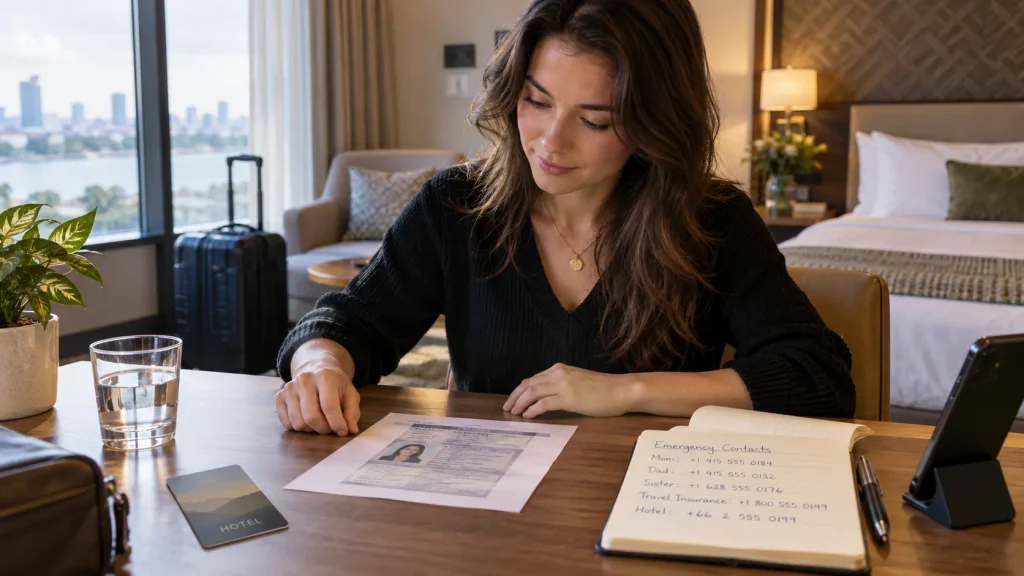
First, move somewhere safe and check whether the passport was misplaced. If it remains missing, contact your embassy or consulate and follow its instructions for reporting and replacement.
A missing passport can feel especially stressful when you’re traveling alone. Having a clear response plan helps you focus on the next practical step.
Step 1: Confirm Whether It’s Missing
Check your secure storage locations, accommodation safe, and most recently used bag compartments. Contact the last hotel, restaurant, or transport operator where you might have handled it.
Don’t return alone to an unsafe location just to search. Personal safety matters more than recovering the document immediately.
Step 2: Contact Your Embassy or Consulate
Find the official consular contact for your nationality. Explain where you are, when the passport disappeared, and whether you have upcoming travel.
The consular team can explain the available replacement process. Depending on nationality and circumstances, an emergency travel document may be possible.
Step 3: Report the Loss When Required
Ask whether a local police report is necessary for replacement, insurance, or your destination’s administrative rules. Keep the report reference if one is issued.
If the passport was stolen alongside bank cards, report those losses to your financial providers promptly.
Step 4: Prepare Replacement Information
Requirements vary, but useful items may include:
- A paper or digital copy of the missing passport.
- Another available identity document.
- Passport photographs, if requested.
- Local police documentation, when required.
- Your travel itinerary and accommodation details.
- A payment method for applicable replacement fees.
Don’t assume a replacement can be issued the same day. Processing time depends on nationality, location, available documentation, and consular services.
Step 5: Review Your Travel Plans
Contact airlines, accommodation providers, and insurers if the loss affects upcoming reservations. Ask your consulate whether the replacement document permits your planned route.
You may need to adjust a flight or obtain other entry permissions. Emergency travel documents don’t necessarily work for every destination or transit country.
Section Takeaway: Passport copies, consular contacts, and a small emergency fund can make replacement easier to manage, though they cannot guarantee immediate travel.
What Passport Safety Routine Works Best for a Solo Female Traveler?
The most useful routine is one you’ll follow consistently. I suggest using the same storage locations and checking essential documents whenever you change accommodation or transportation.
Simple habits can protect your passport without turning a sightseeing day into a constant security exercise.
Before Leaving Your Accommodation
Take two minutes to confirm your plans and storage decisions. This is especially helpful when you’re rushing to join a tour.
- Check whether today’s activities require your original passport.
- Place the original in secure storage if permitted.
- Confirm your paper or digital backup is accessible.
- Carry a small amount of cash separately from your documents.
- Save your accommodation address and emergency contact details.
- Close and test your bag’s zippers.
When Moving Between Hotels or Cities
Travel days are different because you often need your original passport at check-in or transportation checkpoints. Keep it in a location that’s secure but accessible without unpacking everything.
I recommend assigning the passport one designated compartment for the entire journey. Moving it between random pockets makes it easier to misplace.
- Keep the passport in your personal carry-on, not checked luggage.
- Use the same secured compartment after every identification check.
- Never leave the passport in a bag stored out of sight without a clear reason.
- Verify that you have it before leaving a hotel or transportation terminal.
Before Checking Out of a Hotel
A forgotten passport in a hotel safe can cause serious delays. Build a final document check into your checkout routine.
Check the safe, bedside area, desk drawers, locker, and document pouch. Then place the passport directly into its assigned travel compartment.
Build a Small Passport Emergency Plan
Before departure, I like having a short emergency note available offline. It should tell me where to find help without relying on a stable internet connection.
- Record your embassy or consulate’s contact details.
- Save your accommodation address.
- Keep access to your passport’s identification details.
- Identify how you would reach your embassy safely.
- Keep a backup payment method separate from your wallet.
- Share appropriate emergency contact information with someone trustworthy.
U.S. citizens can also consider enrolling in the Smart Traveler Enrollment Program for relevant embassy alerts and emergency communication support.
These precautions don’t mean expecting something bad to happen. They allow you to enjoy your plans with fewer avoidable worries.
Section Takeaway: Assign your passport one secure location, confirm local identification rules, and maintain accessible backups throughout your journey.
Frequently Asked Questions
Is It Better to Leave Your Passport in a Hotel Safe?
Usually, yes, if local rules allow you to carry a copy or alternative identification and the accommodation has reliable security. A hotel safe reduces everyday exposure, but isn’t completely theft-proof. Evaluate the property and safe before relying on it.
Can I Carry My Passport in My Handbag?
Yes, but use a secure internal zippered compartment. A handbag with an open top or easily accessible outside pocket is a poor choice. Keep the bag close to your body, especially in crowds and on public transportation.
Is a Money Belt Better Than a Neck Wallet?
Both can work when worn discreetly beneath clothing. A money belt may suit someone who prefers waist storage, while a neck wallet may be easier to access. Choose whichever fits securely, remains comfortable, and protects the document from moisture.
Can I Use a Passport Photo as Identification Abroad?
Sometimes a photo is useful for informal identification, but it doesn’t automatically meet legal requirements. Police, border officials, airlines, and businesses may ask for the original. Check the rules for your destination and activity before leaving the passport behind.
Should I Keep My Passport and Credit Cards Together?
It’s safer to separate important items. If one bag disappears, you don’t want to lose your passport, all payment cards, and emergency cash simultaneously. Use different secure locations while keeping everything accessible when necessary.
Where Should I Keep My Passport in a Hostel?
Use a well-secured personal locker or another trusted storage option when local law allows. Avoid leaving passports on beds, in unlocked backpacks, or inside shared bathrooms. When no safe storage exists, consider a concealed on-body pouch.
What Is the Safest Way to Carry a Passport at an Airport?
Keep your passport in a secure, easily reachable compartment of your personal carry-on. You’ll need it for identity checks and possibly immigration. Return it to the same compartment after every check, and never place it in checked luggage.
Final Takeaway: Keep Your Passport Secure Without Limiting Your Freedom
For most sightseeing days, secure accommodation storage is my preferred starting point when local rules permit. When the original must come along, I recommend discreet on-body storage and a separate backup copy.
Solo travel should feel freeing, not like a constant search for your valuables. A consistent passport routine helps you spend less time worrying and more time exploring.
Before your next adventure, check your destination’s ID rules, prepare passport copies, and choose a secure storage method. A few minutes of preparation can prevent a much bigger travel headache.