When to Use Hiking Boots vs Shoes for Your Outdoor Adventures
Choosing between hiking boots and hiking shoes can make or break your outdoor experience. This guide helps you understand when to opt for boots or shoes based on terrain, weather, and your hiking style, ensuring you stay comfortable and protected on the trail.
Key Takeaways
- Boots offer more ankle support: Ideal for rough, uneven terrain and heavy loads.
- Shoes are lighter and more breathable: Best for well-maintained trails and warm weather.
- Consider trail difficulty: Boots excel on rocky, steep, or muddy paths, while shoes suit easy to moderate hikes.
- Weather matters: Waterproof boots keep feet dry in wet conditions; shoes dry faster in dry climates.
- Fit and comfort are key: Proper fit reduces blisters and fatigue regardless of footwear type.
- Break in your footwear before trips: Avoid discomfort by wearing boots or shoes on practice walks.
- Choose based on your hiking goals: Day hikes, backpacking, or fastpacking each have ideal footwear options.
When to Use Hiking Boots vs Shoes for Your Outdoor Adventures
Deciding between hiking boots vs shoes can be confusing, especially if you’re new to hiking or exploring new trails. Both types of footwear have their strengths, and choosing the right one can improve your comfort, safety, and overall hiking experience. In this guide, you’ll learn how to pick the best footwear for your outdoor adventures by understanding the differences, benefits, and ideal conditions for each.
Understanding Hiking Boots and Hiking Shoes
Before diving into when to use each, it’s important to understand what hiking boots and hiking shoes are.
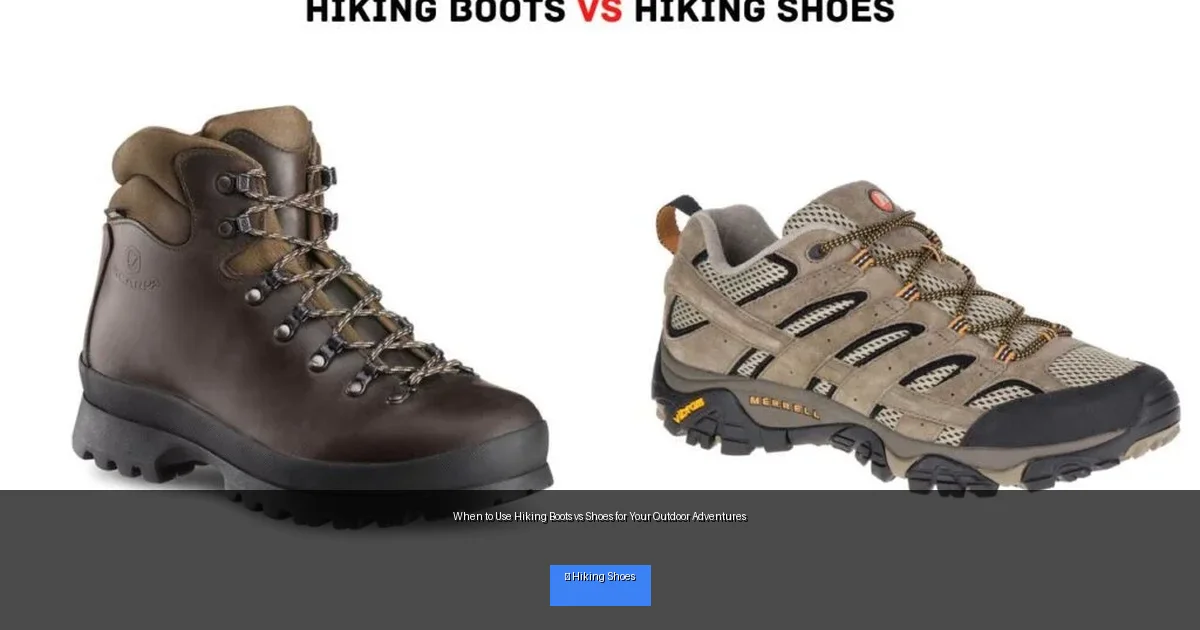
Visual guide about When to Use Hiking Boots vs Shoes for Your Outdoor Adventures
Image source: outdooradept.com
What Are Hiking Boots?
Hiking boots are sturdy footwear designed to protect your feet and ankles. They usually extend above the ankle for extra support. Boots are made with tough materials and often include waterproof membranes, thick soles with deep treads, and reinforced toe caps.
What Are Hiking Shoes?
Hiking shoes resemble regular sneakers but are built for outdoor use. They are lighter, lower-cut, and usually more breathable than boots. Hiking shoes prioritize comfort and flexibility, making them great for less demanding trails.
Step 1: Assess the Terrain
The first factor in choosing hiking boots vs shoes is the terrain you plan to tackle.
Rough and Rocky Trails
If you’re hiking on uneven ground with rocks, roots, or loose dirt, boots are your best bet. Their ankle support helps prevent sprains, and their aggressive soles provide better grip.
Well-Maintained or Flat Trails
On smooth, flat, or packed trails, hiking shoes are sufficient. Their lighter weight lets you move faster and reduces foot fatigue.
Step 2: Consider the Weather
Weather conditions can greatly affect your footwear choice.
Wet and Muddy Conditions
Waterproof hiking boots keep your feet dry and protect against mud and puddles. The higher cut also helps prevent debris from entering your shoes.
Hot and Dry Weather
Hiking shoes are often more breathable, allowing your feet to stay cool and dry in warm weather. This reduces sweating and the risk of blisters.
Step 3: Think About Your Hiking Style
Your hiking frequency and style influence the best footwear for you.
Backpacking and Heavy Loads
If you’re carrying a heavy pack on longer hikes, boots provide the support and durability needed to protect your feet and ankles.
Day Hiking and Fastpacking
For shorter hikes or fastpacking where speed and agility matter, hiking shoes are ideal. They reduce weight and increase comfort.
Step 4: Fit and Comfort Matter Most
No matter the type, poorly fitting boots or shoes will ruin your hike. Follow these tips for the perfect fit:
- Try shoes or boots on at the end of the day when your feet are swollen.
- Wear the socks you plan to hike in.
- Ensure there’s enough room to wiggle toes but not too much that your foot slides.
- Test walking on inclines or uneven surfaces in store if possible.
- Break in your footwear by wearing them on short practice hikes.
Step 5: Evaluate Durability and Maintenance
Boots generally last longer and handle rough conditions better but require more care. Shoes are easier to clean and dry faster but may wear out quicker on harsh terrain.
Maintaining Hiking Boots
Clean mud and dirt after hikes, treat leather with conditioner, and store them in a dry place.
Maintaining Hiking Shoes
Rinse off dirt and let them air dry. Replace worn insoles or laces as needed.
Practical Tips for Choosing Between Hiking Boots and Shoes
- Match footwear to your trip length: Boots for multi-day trips, shoes for day hikes.
- Consider trail elevation and exposure: Boots add protection on steep, rugged ascents.
- Account for personal comfort preferences: Some hikers prefer the feel of shoes even on tougher trails.
- Check trail regulations or recommendations: Some areas may require sturdy boots for safety reasons.
Troubleshooting Common Footwear Issues
Blisters and Hot Spots
Blisters often come from friction due to poor fit or wet feet. Use moisture-wicking socks, apply blister prevention tape, and ensure proper sizing.
Swelling and Discomfort
Feet swell during hikes. Choose boots or shoes with adjustable lacing to accommodate changes in foot size.
Slipping or Poor Traction
If your footwear slips on wet or loose surfaces, consider boots with deeper lugs or shoes with sticky rubber soles.
Conclusion
Choosing between hiking boots vs shoes depends on many factors like terrain, weather, hiking style, and personal comfort. Boots provide superior protection and support for challenging conditions, while shoes offer lightweight comfort for easier trails. By understanding these differences and considering your specific hiking needs, you can pick the right footwear that keeps you safe, comfortable, and ready to enjoy your outdoor adventures.