What Do Women Wish They Knew Before Their First Solo Trip?
Quick Answer
Most women I know wish they had understood one thing before their first solo trip: you don’t need to feel fearless before you leave. Good planning, a sensible safety routine, realistic expectations, and permission to change your plans matter far more than confidence on day one. Before traveling, I also recommend checking the official guidance for women travelers for your destination.
What first-time solo travelers should know
- You will feel nervous: Anxiety before or during the trip doesn’t mean you made a bad decision.
- Arrival matters: Your first few hours become easier when transport and accommodation are already arranged.
- Safety needs systems: Share your itinerary, protect your phone, and know how you will get back to your accommodation.
- Loneliness happens: A lonely evening is normal and doesn’t mean you’re bad at solo travel.
- Plans can change: You are allowed to leave a hostel, cancel an activity, or spend a quiet day inside.
- Less is often better: A slower itinerary and lighter bag can make your first solo trip much easier.
One rule I keep
- If something feels wrong, I leave first and analyze it later. I don’t stay uncomfortable simply because I already paid.
What do women wish they knew before their first solo trip? Usually, it’s not a secret packing trick or perfect itinerary.
It’s that solo female travel feels much more normal once you’re doing it. The anticipation can be harder than sitting alone in a café, finding your train platform, or checking into your room.
I’ve also learned that independence doesn’t mean doing everything without help. Some of my best travel decisions involved asking a hotel receptionist a question, joining a walking tour, or changing plans when I felt uncomfortable.
In This Guide
- What surprises women most about their first solo trip?
- How can a woman stay safer when traveling alone?
- How much should you plan before your first solo trip?
- What do first-time solo travelers get wrong about money and packing?
- What should you know about loneliness, confidence, and meeting people?
- First solo trip FAQ
- What should you remember before you leave?
What Surprises Women Most About Their First Solo Trip?
The biggest surprise is how quickly unusual situations become ordinary. Eating alone, navigating public transportation, and asking strangers for directions often feel intimidating only until you’ve done them once.
Solo female travel means traveling without a companion who shares responsibility for everyday decisions. You choose the route, accommodation, schedule, meals, budget, safety boundaries, and when to change plans.
You don’t magically become fearless
I used to imagine experienced solo travelers walking through airports without a flicker of uncertainty. That hasn’t matched my experience at all.
I still double-check platforms. I still wonder whether I’m walking toward the correct exit in an unfamiliar station.
The difference is simple: I trust myself to solve small problems.
- Missed the bus? Find the next one.
- Restaurant feels uncomfortable? Leave.
- Wrong street? Stop somewhere public and check the map.
- Too tired for sightseeing? Go back and rest.
Confidence usually comes after those decisions, not before them.
You may feel both free and overwhelmed
Having complete control sounds wonderful because it is. It can also create decision fatigue.
No one else decides when you eat or which museum gets skipped. After several days, even choosing dinner can feel strangely exhausting.
I now leave blank spaces in my itinerary on purpose. A free afternoon removes pressure and lets me follow my energy.
Being alone isn’t the same as being lonely
Some of my happiest solo travel moments have been quiet ones. I’ve spent long breakfasts watching a city wake up and evenings writing notes from the day.
Still, loneliness can arrive unexpectedly. It often hits during meals, after seeing couples or groups together, or when something wonderful happens and you want to share it immediately.
- Message someone at home.
- Join a walking or food tour.
- Sit in a social common area.
- Visit a busy café instead of staying in your room.
- Plan one small group activity for the following day.
Loneliness is a feeling, not evidence that the trip has failed.
Nobody cares that you’re eating alone
This worried me more before my early solo trips than I like to admit. Then I discovered most restaurant customers are far too busy with their own meals to study mine.
I usually bring a book or keep a small notebook nearby. After a few solo dinners, I stopped needing either as a shield.
Section Takeaway: You don’t need to arrive confident. You build confidence by handling ordinary travel moments one decision at a time.
How Can a Woman Stay Safer When Traveling Alone?
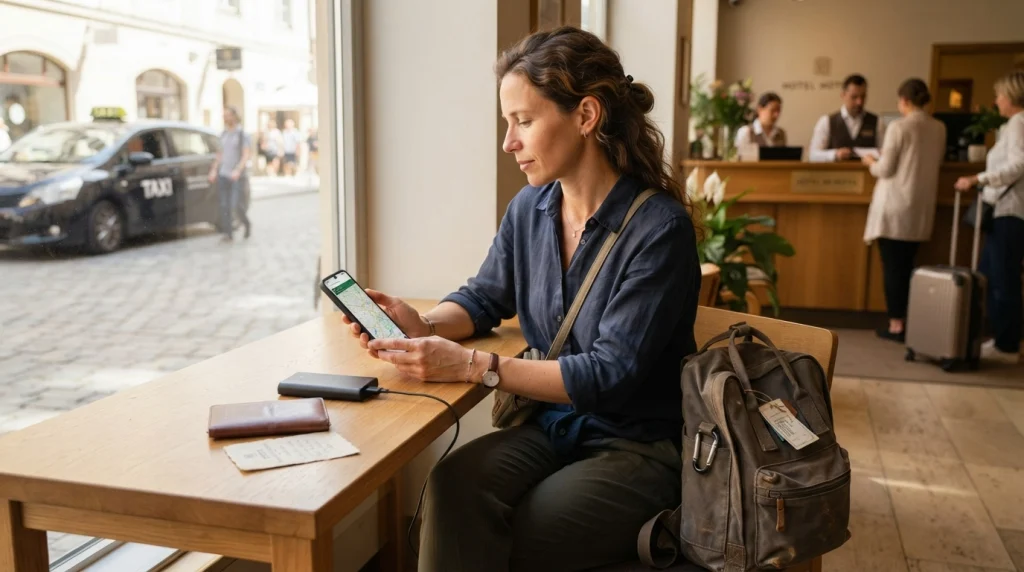
No destination or travel style is completely risk-free. The goal is not eliminating every possible risk but reducing avoidable ones while keeping enough flexibility to enjoy your trip.
I think of solo female travel safety as a system rather than a collection of scary warnings. My system starts before I leave home.
Research the destination, not just the attractions
I want to know more than which landmarks deserve a visit. I check local transportation, common scams, cultural expectations, neighborhoods, emergency numbers, and recent official travel guidance.
The U.S. State Department advises women travelers to research local customs because expectations around clothing, behavior, transportation, and women’s rights vary by country.
Pro tip: Before international travel, check your government’s current destination advisory and the CDC Travelers’ Health portal for relevant health guidance. Requirements and conditions can change.
Make arrival day boring
I don’t want my first hour in a new city to become an improvisation exercise. I prefer arriving while transport is running and the accommodation reception is open.
For my first night, I want the route from the airport or station to feel almost boring.
- Save the accommodation address offline.
- Know which transport method you’ll use.
- Download or screenshot the route.
- Keep enough battery for navigation and communication.
- Have a backup transport option.
If I’m arriving late, I’ll pay more for a simpler transfer rather than save a small amount and add unnecessary stress.
Don’t advertise where you’re staying
I don’t tell casual acquaintances my room number. I also avoid casually naming my accommodation to strangers when there’s no reason to share it.
The State Department similarly recommends being careful about revealing where you’re staying and researching lodging before arrival.
Share enough information with someone you trust
My family doesn’t need a minute-by-minute schedule. Someone should still know the basics.
- Flight or major transport details.
- Accommodation names and dates.
- Important itinerary changes.
- A copy of key travel documents.
- When they should expect your next check-in.
If I’m going somewhere remote, I become more specific. The less predictable the environment, the more useful a clear check-in plan becomes.
Protect your phone like travel equipment
My phone holds maps, bookings, translation tools, transport apps, banking access, and contact information. Losing it can turn a small inconvenience into several problems at once.
I keep important addresses and documents available separately. I also carry a power bank on long travel days.
Trust discomfort before politeness
Women are often taught to avoid embarrassing other people. Travel isn’t the place to prioritize a stranger’s feelings over your own safety.
You can move seats. You can decline an invitation.
You can walk into a hotel, shop, or café. You can leave a ride if the situation feels wrong and it’s safe to exit.
You do not need courtroom-level evidence before acting on discomfort.
| Situation | Lower-stress approach | Backup plan |
|---|---|---|
| Airport arrival | Pre-research licensed transport | Airport information desk or accommodation transfer |
| Late return | Use a reputable booked ride | Leave earlier or change plans |
| Phone dies | Carry a charged power bank | Keep key addresses written offline |
| Accommodation feels wrong | Speak to staff immediately | Move to a backup property |
| Unwanted attention | Create distance and move public | Seek staff, security, or local authorities |
Section Takeaway: Solo travel safety works best as a series of simple habits. Research, communication, reliable transport, and permission to leave uncomfortable situations reduce unnecessary risk.
How Much Should You Plan Before Your First Solo Trip?
Plan the parts that could create serious stress if they go wrong. Leave lower-stakes hours flexible.
This balance took me time to learn. On early trips, I sometimes planned every morning and afternoon before I had even seen the city.
Book your first night before you arrive
For a first solo trip, I strongly prefer having accommodation arranged. Landing somewhere unfamiliar and then hunting for a room adds a problem you don’t need.
I pay particular attention to location. A cheaper room can become poor value if getting there requires awkward transport every night.
Before booking, I check:
- Recent guest reviews.
- Location relative to public transport.
- Reception or check-in hours.
- Whether the route feels manageable after dark.
- Cancellation terms.
- Secure storage where relevant.
A hostel isn’t automatically better for solo travelers, and a hotel isn’t automatically safer. The property, area, management, and your comfort matter more than the category.
Don’t schedule every hour
A crowded itinerary can make you feel like you’re failing when you get tired. Solo travel becomes much nicer when your schedule can breathe.
For a five-day city trip, I might choose one main activity each morning and one optional idea later. That leaves space for weather, recommendations, long lunches, and simple exhaustion.
There’s no prize for maximizing attractions.
Practice being alone before departure
If eating alone makes you nervous at home, try it once before your flight. Do the same with a museum, train ride, or afternoon in another part of town.
You’re not training to become fearless. You’re making unfamiliar feelings less unfamiliar.
Lonely Planet’s experienced female travelers similarly recommend easing into solo travel rather than forcing yourself outside every comfort zone at once.
Make a first-day checklist
I keep arrival tasks short because jet lag and nerves make simple decisions harder.
- Reach the accommodation.
- Check in and secure valuables.
- Connect to reliable mobile data or Wi-Fi.
- Save the route back to the property.
- Buy water and any basic food you need.
- Take a short orientation walk in daylight if possible.
- Sleep before trying to conquer the destination.
A calm first day creates momentum. An overloaded first day often creates fatigue.
Keep one backup for important plans
You don’t need alternate versions of your entire itinerary. I do want alternatives for anything that could leave me stranded.
- A second payment method.
- Another way to reach the airport.
- Offline copies of reservations.
- An alternative accommodation option.
- Enough emergency money for an unexpected ride or room.
The U.S. State Department’s international travel checklist also recommends reviewing destination information, organizing documents, considering personal travel needs, and thinking about travel insurance before departure.
Section Takeaway: Plan high-consequence details carefully and low-consequence details loosely. Your first solo trip should have structure without becoming a schedule you feel trapped inside.
What Do First-Time Solo Travelers Get Wrong About Money and Packing?
Many first-time travelers prepare for unlikely scenarios and underestimate ordinary inconveniences. That can lead to a heavy bag, one overloaded wallet, and too many things to keep track of.
I prefer a simple rule: carry enough to solve common problems without carrying my whole life.
Don’t keep all your money together
I never want one lost wallet to end my access to funds. I separate payment methods when practical.
- Primary card in my everyday wallet.
- Backup card stored separately.
- A modest amount of local cash.
- Emergency funds that aren’t all in one place.
I also check international card fees before leaving. Small transaction costs become annoying when they repeat throughout a trip.
Your emergency budget matters
A cheap itinerary can still need an expensive solution. A missed train, unsafe-feeling accommodation, illness, or unexpected late-night ride can quickly change your spending.
That is why I don’t travel with a budget that leaves zero margin.
Your exact emergency amount depends on the destination. It should be enough to solve at least one meaningful travel problem without waiting for help from home.
Pack for the trip you’re taking
My first packing lists were full of imaginary situations. I brought items because I might need them once, then carried them through stations and staircases for weeks.
Now I ask a better question: Would forgetting this create a serious problem, or could I buy it locally?
For many trips, the essentials are fairly ordinary:
- Passport and required documents.
- Phone and charger.
- Power bank.
- Prescription medication.
- Payment methods.
- Weather-appropriate clothing.
- Comfortable walking shoes.
- Basic toiletries.
- Any destination-specific clothing needed for cultural or religious sites.
Everything else has to earn space in my bag.
A lighter bag can improve safety and confidence
This isn’t just about airline baggage fees. Mobility matters.
If I can carry my own bag up stairs, move quickly through a station, and keep it close on transport, I feel less dependent on strangers.
A compact bag also makes changing accommodation easier. That matters when you’re the only person responsible for moving everything.
Don’t build your wardrobe around photographs
I enjoy looking good while traveling, but clothes still need to survive the day. Shoes that hurt after 30 minutes are not useful because they looked perfect in one photo.
I choose pieces I can repeat. Nobody at your destination knows you wore the same trousers two days ago.
| First-trip instinct | What I do now | Why |
|---|---|---|
| Pack for every possibility | Pack for likely conditions | Less weight and fewer items to manage |
| Keep cards together | Separate a backup payment method | One lost wallet doesn’t remove every option |
| Spend every budgeted dollar | Keep an emergency buffer | Unexpected transport or lodging costs happen |
| Bring many shoes | Prioritize tested, comfortable pairs | Walking becomes easier and the bag stays lighter |
Section Takeaway: A first solo trip becomes easier when your money and luggage have backups without excess. Separate critical items, keep emergency spending room, and carry less than your anxious brain wants.
What Should You Know About Loneliness, Confidence, and Meeting People?
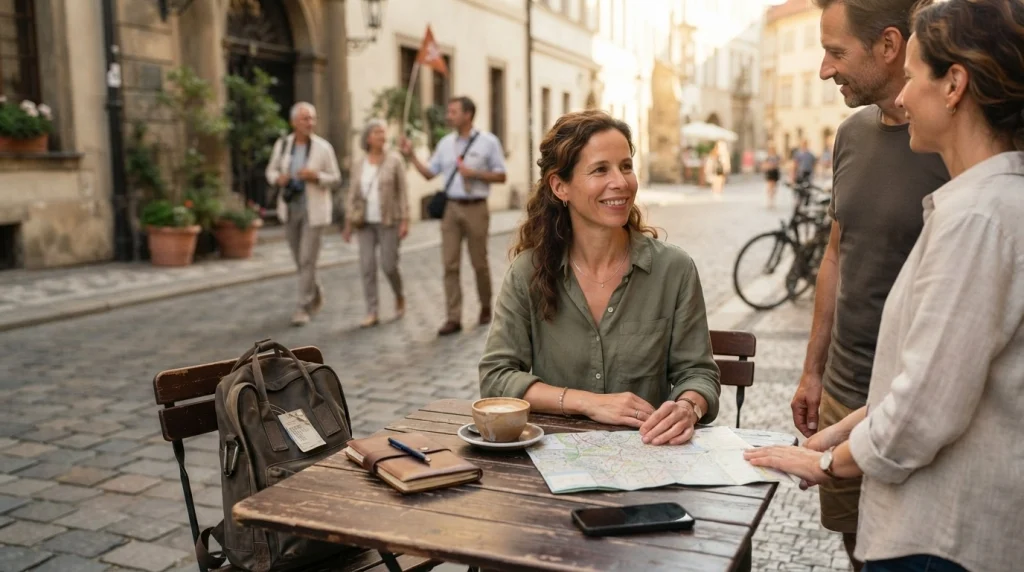
You can love solo travel and still have moments when you wish someone familiar were beside you. Both things can be true on the same afternoon.
This surprised me because travel photos often show either total independence or instant friendships. Real trips have quieter middle spaces.
You don’t have to make friends every day
Some travelers enjoy meeting people constantly. Others need hours alone before socializing feels fun again.
Neither style is more authentic.
I stopped judging successful solo travel by how many people I met. A peaceful day by myself can be as satisfying as dinner with six people from a hostel.
Structured activities make meeting people easier
Walking tours, food tours, cooking classes, day trips, and hostel events remove the hardest part of socializing. You already have a shared reason for being there.
Lonely Planet’s solo travel guidance also suggests group activities as an easy way to create social contact while traveling alone.
If I’m feeling isolated, I often choose one structured activity rather than hoping conversation appears spontaneously.
- Free or paid walking tour.
- Small-group day trip.
- Cooking class.
- Language exchange.
- Hostel social event.
- Local Meetup event where appropriate.
I still use normal judgment. Meeting another traveler doesn’t mean I automatically trust them with my belongings, accommodation details, or transport home.
Your confidence may disappear for an hour
You can navigate an entire city successfully and then feel helpless because a train platform changed. Travel confidence isn’t a permanent personality upgrade.
It rises and falls with sleep, hunger, crowds, language barriers, and stress.
When I feel overwhelmed, I shrink the problem.
- Stop moving.
- Find a safe public place.
- Drink water or eat something.
- Check one piece of information at a time.
- Ask staff or another appropriate person for help.
Ten calm minutes can fix what felt impossible during ten frantic seconds.
Homesickness doesn’t mean you should go home
A difficult evening can make tomorrow’s flight look tempting. I avoid making big trip decisions at my lowest-energy moment unless there’s an immediate safety issue.
I eat, sleep, and reassess in daylight.
If I still want to change the trip, I change it. Solo travel gives me that freedom too.
Your boundaries don’t need an explanation
You may meet kind people who invite you somewhere spontaneous. You may also get invitations you simply don’t want.
“No, thank you” is enough.
You don’t owe a detailed reason for declining a drink, ride, party, date, room change, or late-night outing. You can also change your mind after initially saying yes.
Section Takeaway: Solo travel is not a test of how independent or social you can be. Let yourself seek company, choose solitude, ask for help, and change your mind without treating any of those choices as failure.
First Solo Trip FAQ
Is it normal to be scared before your first solo trip?
Yes. Feeling nervous before traveling alone is common because you’re imagining many unfamiliar situations at once. Reduce the uncertainty by arranging your first accommodation, arrival transport, communication plan, and basic itinerary before departure.
How long should a first solo trip be?
There is no ideal length, but a short trip can make a good introduction. A long weekend or four-to-seven-day trip gives you enough time to practice solo travel without making the first attempt feel enormous.
Should my first solo trip be international?
No. A domestic city, nearby region, or familiar country can be a useful starting point. The best first destination is one where transport, accommodation, language, cost, and personal safety feel manageable to you.
Are hostels best for women traveling alone?
Hostels can make meeting people easier, but they aren’t automatically the best option. Some women prefer hotels, guesthouses, apartments, or female-only hostel dorms. Compare recent reviews, neighborhood location, security, transport access, and your preferred level of privacy.
How do I eat alone without feeling awkward?
Start with breakfast, lunch, cafés, or counter seating if dinner feels intimidating. Bring a book if it helps at first. After a few meals, you’ll probably notice that other diners are paying far less attention to you than you expected.
What if I hate traveling alone once I’m there?
You can change the trip. Add a group tour, move accommodation, shorten the journey, visit a friend, or return home if that’s the right decision. Finishing the original itinerary isn’t a requirement for a successful experience.
What is the most important safety tip for a first-time female solo traveler?
Build several small safety habits rather than relying on one trick. Research your destination, use reputable transport, keep communication available, share key plans with someone trusted, protect access to money, and leave situations that make you uncomfortable.
What Should You Remember Before You Leave?
I wish more women knew that the first solo trip doesn’t need to transform them. It doesn’t have to prove anything either.
You are allowed to be excited at breakfast and homesick after dinner. You can feel brave while asking someone for help.
You can love independence and still book a group tour.
The strongest lesson I’ve learned is that solo travel isn’t about doing everything alone. It’s about becoming comfortable making your own decisions.
Prepare the important details. Check current destination guidance through an official source such as the U.S. State Department travel-planning resources or the equivalent authority for your nationality.
Then leave room for the trip to surprise you.
Take the photo. Order the meal.
Ask for directions when you’re lost. Rest when you’re tired.
And if your first solo morning feels awkward, give yourself another morning before deciding what solo travel means to you.