What Period Supplies Should a Solo Female Traveler Pack?
Quick Answer
A solo female traveler should pack her usual period product for every expected day, plus enough for two or three extra days. I also recommend one backup product, spare underwear, small disposal bags, hand sanitizer, and any familiar comfort items you normally use. Follow good menstrual hygiene practices while traveling, especially when clean bathrooms are harder to find.
My basic solo-travel period kit
- Main product: Pack the pads, tampons, cup, disc, or period underwear you already know works for you.
- Extra supply: Add two or three days of products in case your cycle starts early or travel gets delayed.
- Backup option: Carry liners, pads, or another familiar product if your main option becomes inconvenient.
- Clothing backup: Keep one pair of underwear and lightweight bottoms in your personal bag.
- Cleanup kit: Pack tissues, hand sanitizer, and a few opaque zip-top or disposal bags.
- Comfort supplies: Bring only pain-relief or comfort products you already use safely at home.
One important rule
- Keep at least one complete period change in your personal item instead of putting everything in checked luggage.
If you’re wondering what period supplies should a solo female traveler pack, the best answer isn’t simply “bring pads or tampons.” A useful period kit should cover your normal cycle, an unexpected start, a delayed flight, limited bathrooms, and one lost bag without taking over your suitcase.
I treat period supplies as part of my basic solo female travel packing system. The goal is simple: I want enough options to manage my period privately without needing an emergency shopping trip in an unfamiliar place.
In This Guide
- What period supplies are essential for solo travel?
- How many period products should you pack?
- Which period product is easiest for travel?
- What should go in your day-bag period kit?
- What changes when traveling internationally?
- How do you prepare for an unexpected period while traveling alone?
- Frequently asked questions
Period travel kit: A small collection of menstrual products, hygiene supplies, backup clothing, and familiar comfort items that lets you manage your period independently while away from home.
What Period Supplies Are Essential for Solo Travel?
The essentials are your normal menstrual product, a backup method, cleanup supplies, and one change of underwear. Start with products your body already knows instead of experimenting during the trip.
That last point matters. A long travel day isn’t the ideal time to discover that a new cup shape, tampon brand, or period underwear style doesn’t suit you.
Start with your regular period product
Your normal routine should form the center of your kit. Depending on what you use at home, that may include:
- Pads: Regular, overnight, or heavy-flow sizes based on your normal cycle.
- Tampons: The absorbencies and applicator style you normally use.
- Menstrual cup: Your existing cup plus a suitable storage pouch.
- Menstrual disc: Reusable or disposable versions you already know how to use.
- Period underwear: Enough pairs for your planned washing schedule.
- Pantyliners: Useful for light days, spotting, or backup protection.
The NHS lists pads, tampons, menstrual cups, and period underwear among common period-product options. There’s no single travel product that’s automatically best for everyone.
Add supplies that solve travel-specific problems
Travel creates situations you may not face at home. You might have a five-hour bus ride, a bathroom without a bin, or a suitcase sitting in another airport.
- 2–4 small opaque disposal bags
- A few tissues
- Travel-size hand sanitizer
- One spare pair of underwear
- Lightweight dark shorts or leggings for long transit days
- A small stain-treatment product if you normally use one
- A reusable wet bag for washable underwear or reusable pads
CDC guidance recommends packing personal hygiene supplies in a travel health kit, including menstrual products. It also recommends keeping important health supplies accessible during the journey.
You can review the CDC’s broader travel health kit guidance when preparing for a longer international trip.
Section Takeaway: Build your travel kit around familiar products. Then add small backup items that help when bathrooms, luggage, or schedules don’t cooperate.
How Many Period Products Should You Pack?
Pack enough for your expected cycle plus at least two extra travel days. If you’re visiting a remote area or aren’t sure your preferred products will be available, carry a larger reserve.
I calculate the amount from my normal daily use rather than copying a generic packing list. That keeps the kit realistic without wasting luggage space.
Use this simple packing formula
- Estimate how many products you normally use per day.
- Multiply that number by your expected period length.
- Add enough products for another two or three days.
- Place one day’s supply somewhere separate from the main stash.
For example, someone who normally uses four pads daily during a five-day period would expect about 20 pads. Packing roughly 24–28 creates a reasonable cushion for heavier days or delays.
The exact number isn’t a medical recommendation. It’s simply a practical travel-planning buffer based on your own routine.
Increase the reserve in harder-to-shop destinations
I pack more when I’m staying somewhere rural, moving between cities quickly, or arriving late at night. I pack less when I’m spending a week in one city near supermarkets and pharmacies.
- City break: Normal quantity plus a small emergency reserve.
- Road trip: Add extra supplies because stops may be unpredictable.
- Remote trip: Carry the entire expected supply before leaving a major town.
- Long international trip: Research whether your preferred style or brand is commonly available.
- Unpredictable cycle: Keep a small emergency kit packed even if you don’t expect your period.
I also split my supplies. Most stay in my suitcase, while a smaller set goes into my personal item or day bag.
That small habit has a big advantage. Losing one bag doesn’t mean losing every period product at the same time.
Section Takeaway: Calculate supplies from your own usage, add two or three days of buffer, and split the supply between bags whenever possible.
Which Period Product Is Easiest for Travel?
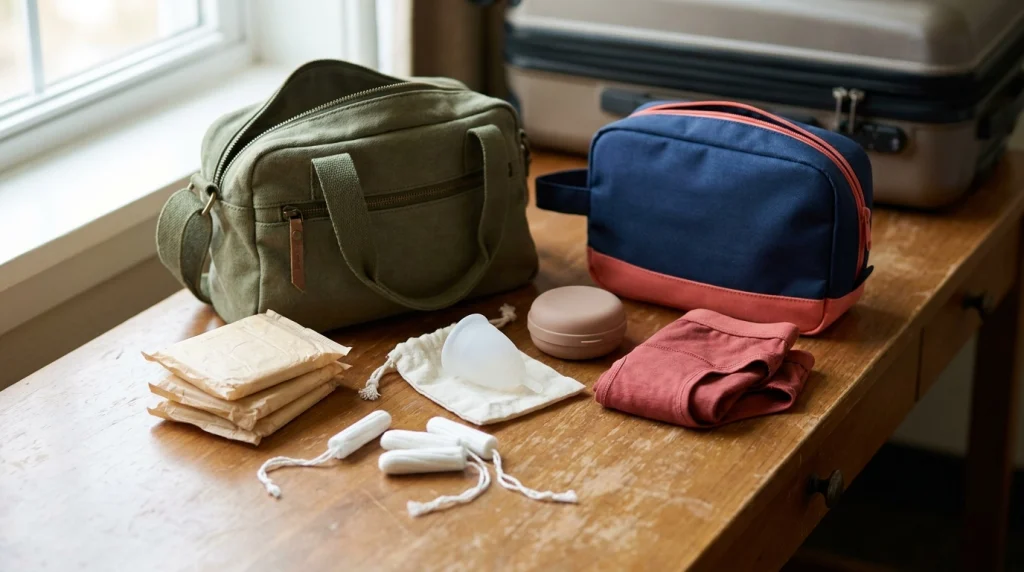
The easiest travel product is the one you’re already comfortable using. Cups can save luggage space, while disposable products may be simpler when clean water and private washing facilities are uncertain.
Period underwear works well for overnight protection and backup. The tradeoff is that you’ll need a practical washing and drying plan.
| Product | Packing Space | Best Travel Use | Main Travel Drawback |
|---|---|---|---|
| Pads | Medium to high | Simple changes and easy backup | Bulkier for long trips |
| Tampons | Low to medium | Active days and compact packing | Requires regular changes and proper disposal |
| Menstrual cup | Very low | Long trips with reliable washing access | Cleaning can be awkward in some bathrooms |
| Menstrual disc | Very low to low | Travelers already comfortable using one | Not ideal to learn during a trip |
| Period underwear | Medium to high | Sleep, flights, and backup protection | Needs washing and drying time |
Why I like a two-product system
For solo trips, I prefer planning around a main product plus a simple backup. That combination gives me flexibility without carrying every period product I own.
- Cup + pantyliners
- Tampons + thin pads
- Pads + period underwear
- Disc + period underwear
Someone using a cup might choose a pad for a day when the available bathroom has no private sink. A tampon user might prefer period underwear during an overnight flight.
The CDC advises changing menstrual products regularly and using each product according to its instructions. Disposable products should go into a trash bin rather than being flushed.
Section Takeaway: Familiarity matters more than saving a few inches of suitcase space. A main product plus one backup option gives most solo travelers enough flexibility.
What Should Go in Your Day-Bag Period Kit?
Your day-bag kit should cover at least one complete change away from your accommodation. Keep it small enough that you’ll carry it instead of leaving it behind.
Mine is closer to a compact emergency pouch than a full toiletry bag.
A practical one-day period pouch
- 2–4 of your normal disposable products, or your reusable product
- 1–2 pantyliners
- One spare pair of underwear
- A few tissues
- Small hand sanitizer
- 2 opaque disposal bags
- Any familiar personal medication you normally carry
I keep that pouch near the top of my personal bag during transit. I don’t bury it underneath packing cubes, chargers, and a jacket.
Accessibility matters when you’re dealing with an unexpected period in an airport bathroom or trying to change quickly before boarding a train.
Keep an emergency change separate
I also like having spare underwear in a different compartment. If the period pouch becomes wet or gets left behind, the second location still gives me a backup.
- Choose lightweight underwear that dries quickly.
- Use a small zip pouch to keep it clean.
- Add dark leggings or shorts on long transit days if leakage worries you.
- Return a replacement to the pouch after using the emergency pair.
This is especially useful on overnight buses, long flights, and travel days with early hotel checkout. Those are the days when you may go many hours without opening your main luggage.
Section Takeaway: Your day-bag kit doesn’t need to hold your whole period supply. It needs enough essentials to get you comfortably back to your accommodation or another reliable resupply point.
What Changes When Traveling Internationally?
International trips add three practical questions: Can you easily buy your preferred product, can you clean reusable products properly, and are any liquids or medications subject to travel rules?
I check these before departure instead of assuming every destination stocks the same products I use at home.
Airport security and liquid products
Pads, tampons, cups, discs, and dry period underwear aren’t the part of my kit I worry about most at security. Liquid or gel toiletries deserve more attention.
For travel through U.S. airport security, the TSA generally applies its 3-1-1 rule to standard carry-on liquids, gels, creams, aerosols, and pastes.
Review the official TSA travel tips before flying from a U.S. airport, and check the relevant aviation authority for departures in other countries.
Think about bathroom conditions
A reusable cup or disc can be excellent for long-term travel, but it works best when you already know your cleaning routine. Don’t build your entire plan around a bathroom setup you’ve never used before.
- Carry clean water when appropriate and allowed.
- Wash your hands before and after handling menstrual products.
- Follow the cleaning instructions supplied with your reusable product.
- Pack disposable backup products for difficult travel days.
- Bring a clean storage pouch rather than leaving reusable products loose in your bag.
Don’t assume your favorite products will be everywhere
Major cities often give travelers plenty of shopping choices, but product sizes, applicators, absorbencies, and brands vary. Rural areas may offer fewer choices.
If a particular product is difficult for you to replace, bring enough from home. This is one item where familiarity can be more valuable than packing ultra-light.
The NHS overview of periods and period products is also a useful general reference if you’re comparing pads, tampons, cups, and reusable options.
Section Takeaway: For international travel, think beyond quantity. Consider local availability, bathroom conditions, washing access, and transportation rules before choosing your kit.
How Do You Prepare for an Unexpected Period While Traveling Alone?
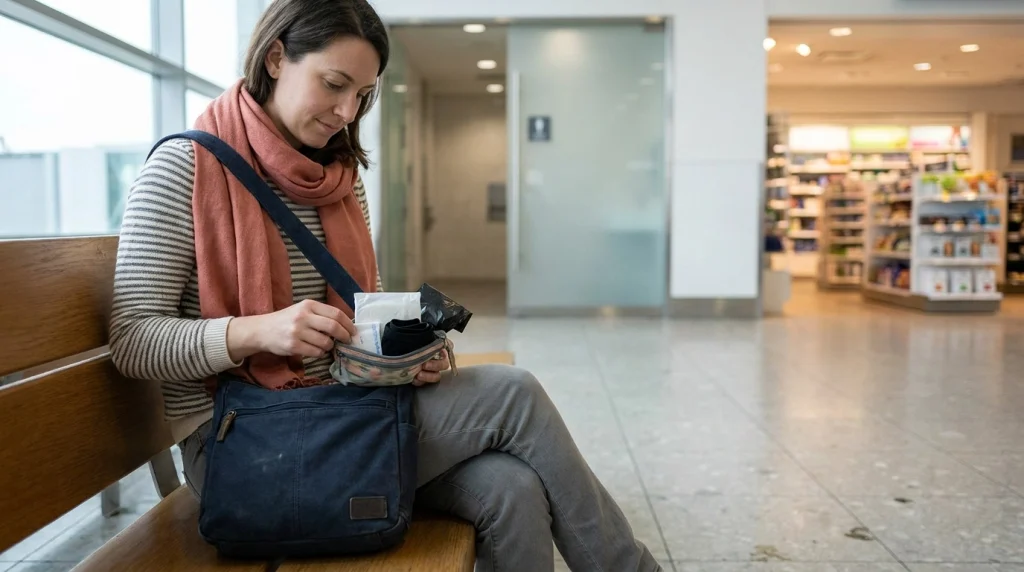
Carry a tiny emergency kit even when your period isn’t expected. Two period products, one liner, spare underwear, and a disposal bag can prevent a minor surprise from derailing your day.
This matters more to me when I’m traveling alone because there’s no travel companion automatically available to watch my belongings or find a pharmacy while I stay near a bathroom.
Make your first response simple
- Use the emergency product already in your day bag.
- Change into your spare underwear if needed.
- Locate the nearest pharmacy, supermarket, or convenience store.
- Restock before returning to sightseeing or transportation.
I prefer fixing the supply problem early. Waiting until the last product is used creates unnecessary stress later in the day.
Pack comfort items you already trust
If cramps or discomfort are normal for you, bring the same comfort items you safely use at home. Don’t use a solo trip as the moment to experiment with unfamiliar medications.
- Your usual approved over-the-counter medicine, when appropriate for you
- Any prescribed medication you need
- A compact reusable or disposable heat option if practical
- A refillable water bottle
- Comfortable underwear
- Loose clothing for longer transit days
Medication laws can differ across borders, so check official destination rules before traveling with prescription or restricted medicines. Keep important medication accessible rather than putting your only supply in checked luggage.
Know when the problem is bigger than your packing kit
A travel packing guide can’t diagnose unusual bleeding, severe pain, dizziness, or other concerning symptoms. Seek appropriate medical care if your symptoms are unusual for you or feel serious.
The goal of a period kit is convenience and preparedness. It isn’t a substitute for healthcare when you need it.
Section Takeaway: A small emergency kit gives you time and privacy to handle an unexpected period calmly. Restock early, and don’t rely on travel gear for symptoms that need medical attention.
Frequently Asked Questions About Period Supplies for Solo Travel
Should I pack pads or tampons when traveling alone?
Pack whichever product you already use comfortably. If luggage space allows, add a small amount of a second familiar product so you have another option during flights, overnight transportation, or bathrooms with limited facilities.
How many extra period products should I bring?
A practical starting point is enough for two or three additional days beyond your expected cycle. Carry more if your flow varies significantly, you’re visiting a remote area, or your preferred product may be difficult to buy locally.
Should I put period supplies in my carry-on?
Yes. Keep at least one day’s supply in your personal item or carry-on, even if the rest is in checked luggage. That protects you during delays, missed connections, early periods, or delayed baggage.
Is a menstrual cup good for solo travel?
A menstrual cup can be convenient because it’s compact and reusable. It’s best for travelers who already feel confident using and cleaning one, especially when the trip includes reliable access to appropriate washing facilities.
Should I pack period underwear for travel?
Period underwear can be useful for sleeping, long travel days, or backup protection. Consider how you’ll wash, carry, and fully dry it before relying on it for several days of a trip.
What should I do with used period products while traveling?
Wrap disposable products and place them in a trash bin rather than flushing them. Small opaque disposal bags are useful when a bathroom doesn’t provide a convenient bin or when you need to carry waste briefly.
What if I get my period unexpectedly in another country?
Use the emergency products in your day bag first, then restock at a pharmacy, supermarket, or convenience store. If you use a specific product that’s difficult to replace, carry a larger supply from home.
The Packing Rule I Use for Period Supplies
I don’t try to pack for every possible problem. I pack enough familiar supplies to handle my normal cycle, two or three unexpected days, one messy change, and one luggage problem.
- Your normal menstrual product
- A two-to-three-day reserve
- One familiar backup method
- A spare pair of underwear
- Hand-cleaning supplies
- Small disposal or wet bags
- Familiar comfort items
- A one-day emergency pouch in your personal bag
That approach keeps my luggage manageable while giving me independence. For solo travel, that balance matters more than building the biggest possible packing list.
Prepare the kit before departure, keep one portion accessible, and replenish it as soon as you use the emergency supply. Then your period becomes another routine travel detail rather than something that controls your itinerary.