How Can a Woman Use Local Buses in a New City Alone?
Quick Answer
A woman can use local buses in a new city alone by checking official routes, confirming fares and boarding points, planning her stop before departure, and choosing well-lit, populated waiting areas. Start with a short daytime journey, keep your belongings secure, and identify a backup way to reach your destination. Before travelling, review official advice on using public transport safely and check local guidance for your destination.
Your first solo bus journey: essential steps
- Plan the route: Confirm the bus number, direction, boarding stop, destination stop, and approximate journey time.
- Check the fare: Find out whether you need cash, a transit card, a mobile ticket, or contactless payment.
- Travel in daylight: Choose a straightforward daytime trip while learning the local bus system.
- Choose your position: Wait near other passengers and, when practical, sit closer to the driver.
- Track your stop: Follow the live map or route display and prepare to exit before reaching your stop.
- Keep a backup: Save an alternative route and a reputable taxi or ride-hailing option if available.
Before you board
- Save your accommodation address, the nearest useful landmark, and your destination stop offline.
- Share your route with someone you trust when appropriate, and keep your phone accessible without displaying it unnecessarily.
- If the stop, bus, or surrounding situation feels unsafe, wait for another service or choose a safer alternative.
Learning how to use local buses in a new city alone can make a solo trip cheaper, more flexible, and less dependent on taxis. It can also feel intimidating when you don’t know the language, fare rules, or where to get off.
I recommend treating your first ride as a short practice journey rather than trying to cross the entire city immediately. This guide covers route planning, boarding, payment, personal safety, common mistakes, and what to do when a journey doesn’t go as planned.
In This Guide
- How should you prepare before taking a local bus alone?
- How do you find the right bus and stop in an unfamiliar city?
- How do you board, pay, and get off a local bus?
- How can a woman stay safe on local buses alone?
- What if you don’t speak the language or take the wrong bus?
- Should you take a local bus, metro, or taxi?
- Frequently asked questions
How should you prepare before taking a local bus alone?

Prepare your route, payment method, destination details, and backup plan before leaving your accommodation. A little research makes the actual journey easier because you won’t need to solve every problem while standing at a busy roadside stop.
Understand how local buses work
Local buses are public vehicles that carry passengers along designated routes, usually with several stops between neighborhoods or districts. Depending on the city, they may run on fixed schedules, frequent intervals, or less predictable timetables.
The system matters. Some cities use numbered routes and marked stops, while others rely on route names, destination boards, conductors, or locally understood boarding points.
Before your first ride, find out:
- Whether buses stop only at designated bus stops.
- How route numbers and destination signs identify direction.
- Whether you board through the front door, another entrance, or either door.
- How fares work and whether transfers require another payment.
- When the last useful bus runs on your planned route.
Choose an easy first journey
For your first solo ride, choose a familiar destination on a direct route. A nearby shopping street, public museum, or busy central area is easier than a journey involving multiple transfers.
For example, imagine your accommodation is a 15-minute bus ride from a daytime attraction. Pick a service that leaves from a clearly marked stop, travels in one direction, and drops you within a short walk of the entrance.
Use this simple preparation checklist:
- Route: Save the bus number, direction, and stop names.
- Timing: Check the expected departure and journey duration.
- Payment: Prepare the correct ticket, card, or accepted cash.
- Navigation: Download an offline map or save screenshots.
- Return: Identify the stop for the journey back.
- Backup: Find another route or a reputable alternative if service changes.
Research local conditions before relying on buses
A bus network that works well in one city may not suit every destination, route, or time of day. Check current government travel advice and ask your accommodation host or another trusted local source about routes that visitors should avoid.
As of 2026, the Australian government’s public transportation safety guidance recommends researching local risks, using verified transport options, and knowing your route before travelling.
Consider the complete journey, too. A bus may be convenient during daylight but less practical if it leaves you far from your accommodation after dark.
Section takeaway: Start with a direct, daytime route and learn the local payment and boarding rules before attempting a complicated journey.
How do you find the right bus and stop in an unfamiliar city?
Use the local transport authority’s route planner or a reputable navigation app to confirm the bus number, direction, boarding stop, and destination stop. Then compare the information with the signs and displays you see on the street.
Use a route planner, not just a map
A map can show which road leads to your destination without confirming that a bus stops there. A transit-specific route planner is more useful because it can show available services, transfers, walking sections, and estimated departure times.
Start with the official city transit website or app when one is available. A general navigation app can provide a useful second check, but service changes and live arrival information may vary.
Enter your actual starting point and destination. Choose the departure time you expect to travel, because an evening route may differ from a daytime one.
Match the bus number and direction
Never board a bus based on its number alone. The same route may travel in opposite directions, use different terminal names, or have limited-stop versions.
Before boarding, compare these details:
- Route number or name: Does it match your planned service?
- Destination display: Is the bus travelling toward the correct end of the route?
- Boarding point: Are you standing at the correct stop and on the correct side of the road?
- Service type: Is it a local bus rather than an express or limited-stop service?
- Live updates: Is there a diversion, cancellation, or temporary stop change?
If the display is unclear, ask the driver or an official transit employee before boarding. Showing your destination on a map can help when you don’t share a language.
Save your stop before the bus arrives
Open your route in a navigation app and check where you need to get off. If live tracking is available, use it to follow your progress rather than waiting until the last moment to identify a street sign.
Keep a screenshot of the destination stop and one nearby landmark. This gives you a reference if your connection drops or the bus display uses unfamiliar spelling.
Leave enough time to recognize the stop and move toward the exit. You don’t need to stare at your phone for the entire ride.
Section takeaway: Verify the route, direction, and stop together; matching only the bus number is not enough.
How do you board, pay, and get off a local bus?
Follow the local boarding rules, pay using an accepted method, and confirm how passengers signal for stops. These procedures vary by city, so observe posted instructions and ask before boarding if anything is unclear.
Arrive early and wait in the right place
Reach the stop around 5–10 minutes before your expected departure when practical. This gives you time to read signs, check the direction, and move away from the curb if traffic is busy.
Wait in a visible, reasonably busy place. Stand where the driver can see you if local practice requires passengers to signal that they want the bus to stop.
When the bus arrives, let passengers exit first. Then board without rushing or stepping into moving traffic.
Know how to pay the fare
Bus payment systems differ widely, even between cities in the same country. Some services accept cash, while others require a transit card, a ticket purchased in advance, contactless payment, or a mobile ticket.
Use the transit operator’s current fare instructions rather than assuming your bank card will work. If cash is accepted, keep the expected fare accessible without displaying your entire wallet.
Check whether you must validate a ticket or tap a card when boarding, exiting, or transferring. Keep your ticket or payment card available until the journey ends.
Know when and how to get off
Some buses announce stops or display them on a screen. Others require passengers to watch their location and signal before reaching their destination.
Follow the system used on your route:
- Listen for stop announcements and watch any route display.
- Check your position on the map as you approach the destination.
- Press the stop button or signal according to local practice.
- Move toward the exit only when the bus is safely approaching or has stopped, following onboard instructions.
- Step onto the pavement and check traffic before moving away.
Don’t assume that every bus opens its doors automatically or stops at every marked location. If you miss your stop, stay calm and use the next safe stopping point to reassess your route.
Compare the time and cost before leaving
The cheapest fare isn’t always the most practical option. A slightly longer direct ride may be easier than a cheaper route with several transfers and a long walk through an unfamiliar area.
| Journey factor | Simpler choice | What to verify |
|---|---|---|
| Route | One direct bus | Correct direction and destination stop |
| Payment | A ready-to-use accepted ticket or card | Fare, validation, and transfer rules |
| Timing | A frequent daytime service | Live departures and service changes |
| Arrival | A stop near your destination | Walking distance and route to the entrance |
| Backup | Another practical route or reputable ride | Availability, cost, and pickup location |
Section takeaway: A smooth bus journey depends on knowing the payment rules and exit procedure before you board, not learning them under pressure.
How can a woman stay safe on local buses alone?
Choose reputable bus services, wait in visible areas, keep valuables secure, and stay aware of your surroundings throughout the journey. The safest choice depends on the city, route, time, and current local conditions.
Choose a sensible place to wait and sit
A bus stop’s location matters as much as the bus itself. Prefer a marked stop with good lighting, nearby businesses, and other passengers rather than an isolated roadside location.
When boarding, look for a seat near the driver or other passengers if one is available. On a crowded bus, move if someone makes you uncomfortable and another suitable place is available.
Use these practical precautions:
- Keep your bag closed and in front of you in crowded conditions.
- Place your phone and wallet somewhere difficult to access without your knowledge.
- Avoid displaying expensive jewelry, cash, or electronic devices unnecessarily.
- Keep headphones off or at a low volume so you can hear announcements and your surroundings.
- Know where the exits are and avoid becoming trapped in a position that makes leaving difficult.
These habits reduce opportunities for theft and help you notice changes around you. They don’t guarantee safety, so consider the broader local conditions before deciding to travel.
Should you take a local bus at night?
There isn’t one universal answer for every city. Some urban networks operate reliable evening services, while other locations have limited routes, poorly lit stops, or documented risks that make solo travel less advisable.
Check the destination-specific advice before deciding. The U.S. Department of State’s travel advisories can help you assess security conditions, although you should also consult local transport authorities for route-specific information.
For an unfamiliar city, consider these factors before travelling after dark:
- Route familiarity: Prefer a route you have already used successfully.
- Stop location: Check whether you can reach your destination without a long walk through an isolated area.
- Service reliability: Confirm the last departure and whether delays are common.
- Local advice: Ask your accommodation provider which transport options are appropriate at that time.
- Alternative transport: Identify a reputable, available option before leaving.
If official guidance advises against solo bus travel in your destination or conditions deteriorate, don’t force yourself to use the bus simply to save money. Choose a safer alternative or delay the journey when practical.
What should you do if another passenger makes you uncomfortable?
Take your discomfort seriously without feeling that you must confront anyone. You can move closer to the driver, change seats, approach an official employee, or leave at a suitable stop if doing so is safe.
If someone follows, threatens, touches, or harasses you, prioritize reaching a staffed or populated place. Contact local emergency services if you face immediate danger.
Consider sharing your route and expected arrival time with a trusted contact. If your phone supports location sharing, use it when appropriate, but don’t let sending updates distract you from immediate safety decisions.
Section takeaway: Choose transport based on current local conditions, not a blanket assumption that all buses are safe or unsafe. You can change your plan whenever the situation calls for it.
What if you don’t speak the language or take the wrong bus?
You can use local buses without speaking the local language fluently if you prepare destination names, route details, and a way to navigate offline. If you board the wrong bus, get off at a safe stop and check your options before continuing.
Prepare a few useful words and phrases
Learning a handful of transport-related words can make everyday interactions easier. You don’t need to become conversational before taking your first ride.
- Bus stop
- Ticket or fare
- This bus goes to…?
- Where should I get off?
- Please tell me when we reach this stop.
- Help, please.
Save these phrases in the local language, with a translation and pronunciation if possible. A screenshot of your destination name can also help you communicate without relying on spoken instructions.
When asking for help, approach the driver, an official employee, or another appropriate person in a visible public setting. Avoid handing your phone or valuables to a stranger simply because they offer assistance.
Use offline maps and saved screenshots
Mobile data may be unreliable, expensive, or unavailable during a journey. Prepare for that possibility before leaving your accommodation.
Save the following information:
- Your accommodation’s name and full address.
- The boarding stop and destination stop.
- The route number and direction.
- A map showing the destination and nearby landmarks.
- The next stop or landmark where you can safely reassess your route.
Offline maps can help with basic navigation, but they may not include live bus positions, service disruptions, or recent stop changes. Check current transit information whenever you have a connection.
What should you do if you miss your stop?
Missing a stop is a common navigation problem, not a disaster. Avoid jumping off a moving bus or getting out in the middle of traffic to recover your route.
- Stay calm: Check your current position and identify the next safe stop.
- Exit carefully: Get off where passengers can safely leave the bus.
- Recheck your location: Compare the map, street signs, and nearby landmarks.
- Find the next connection: Check whether another bus or a short walk will get you back on track.
- Change plans if necessary: Use a reputable alternative if the area or remaining journey makes you uncomfortable.
If you board a bus going in the wrong direction, follow the same approach. Don’t assume that every stop has a matching return service directly across the road.
Keep a backup plan for disruptions
A bus can be delayed, diverted, full, or cancelled. Your plan should still work if the original service becomes unavailable.
Before travelling, identify an alternative route and check whether a licensed taxi or reputable ride-hailing service operates locally. Save its official app or booking details in advance instead of searching hurriedly from an unfamiliar stop.
Section takeaway: Offline information and a simple recovery plan make language barriers, missed stops, and unexpected changes much easier to manage.
Should you take a local bus, metro, or taxi?
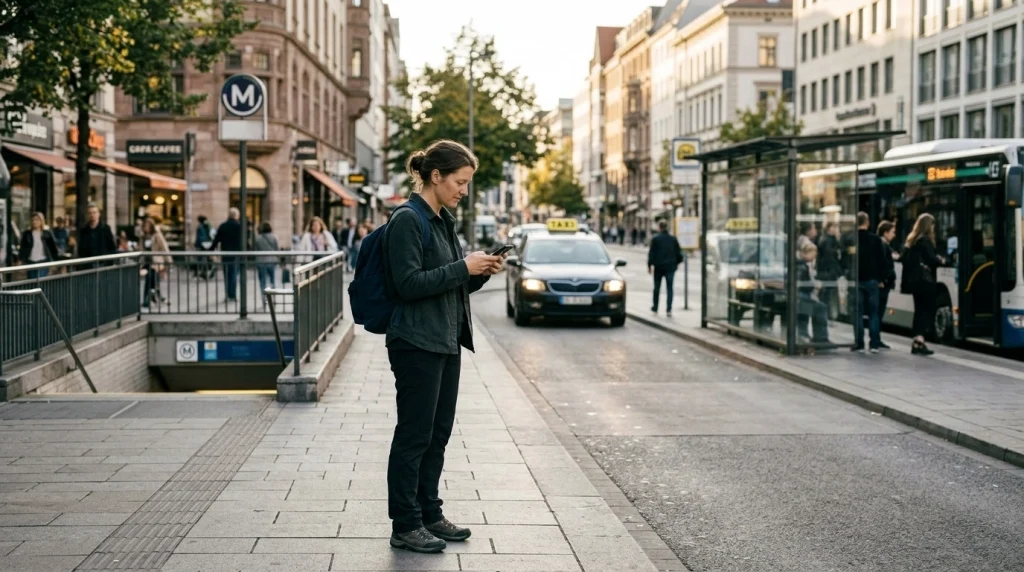
A local bus is often useful for affordable journeys between neighborhoods, but a metro or reputable taxi may suit some trips better. Compare the full journey, including waiting time, transfers, walking distance, cost, and local safety guidance.
The best option is the one that gets you to your destination reliably and comfortably under the conditions you expect to encounter.
| Transport option | Main advantage | Potential drawback | Best use |
|---|---|---|---|
| Local bus | Often economical and reaches many neighborhoods | Traffic, crowding, and less predictable arrival times | Short or medium daytime journeys on known routes |
| Metro or urban rail | Can avoid road congestion and provide clear station signage | Stations may be far from the final destination | Trips between connected urban districts |
| Licensed taxi or reputable ride-hailing service | Can offer direct door-to-door travel | Usually costs more; driver verification and local conditions matter | When bus routes are unsuitable or a safer alternative is needed |
| Walking | No fare and no waiting for a vehicle | Distance, weather, traffic, and the walking environment can be limiting | Short distances on suitable pedestrian routes |
These comparisons are general rather than guarantees. Actual fares, travel times, accessibility, and safety conditions vary by destination.
When is a bus the most practical choice?
Choose a bus when the route is straightforward, the stop is reasonably close to your destination, and the service suits your schedule. It can be particularly helpful when you want to explore beyond the immediate tourist center without paying for a private ride each time.
When should you choose another option?
Consider a different service if the bus requires several confusing transfers, stops running before your event finishes, or leaves you far from your accommodation in an unsuitable area. The same applies if current official advice recommends avoiding that route or mode of transport.
For international travel, the UK government’s foreign travel advice provides destination-specific information about security and transport risks. Check the guidance relevant to your destination and nationality, alongside local transit updates.
I also recommend using a door-to-door comparison rather than judging transport by the main ride alone. A 20-minute bus journey followed by a 25-minute walk may be less convenient than a direct alternative, especially with luggage or after a tiring day.
Section takeaway: Use the bus when its route, timing, and conditions suit your plans. Spending more on an alternative can be reasonable when it meaningfully improves your journey.
Frequently Asked Questions About Using Local Buses Alone
Is it safe for a woman to take a local bus alone?
It depends on the destination, route, time, and current security conditions. Research official travel advice, choose reputable services, wait in visible places, and keep valuables secure. If local authorities advise against solo bus travel or a route feels unsafe, choose a suitable alternative.
How can I know which bus to take in a city I have never visited?
Use the local transit authority’s route planner or a reputable navigation app. Check the route number, direction, boarding stop, destination stop, and departure time. Compare the app with actual signs, and ask an official employee or driver when the information is unclear.
Do I need to carry cash for local buses?
Not always. Some cities accept contactless bank cards or mobile tickets, while others require a transit card, prepaid ticket, or cash. Check the operator’s current payment rules before leaving, and prepare an accepted backup method if possible.
What should I do if I miss my bus stop while travelling alone?
Stay on the bus until the next safe stop, then check your location and find a return route or another connection. Avoid exiting into traffic or an isolated area just to save time. If the situation feels unsafe, consider a reputable alternative.
How can I use local buses if I don’t speak the language?
Save the route number, destination name, stop names, and accommodation address as screenshots. Learn a few basic transport phrases and use a translation app when available. Showing a saved destination on your phone can help you communicate without speaking fluently.
Should I take a local bus after dark when travelling alone?
Check current local guidance, service availability, stop locations, and the safety of the route before deciding. Some cities have practical evening bus services, while others present significant risks. If official advice discourages solo travel on that service, use a suitable alternative.
How much time should I allow for my first bus journey?
Allow extra time to locate the stop, confirm the route, pay the fare, and recognize your destination. Arriving around 5–10 minutes early is a useful starting point when schedules permit. Add more time for transfers, unfamiliar ticket systems, or busy traffic.
Make Your First Solo Bus Journey a Simple One
Learning to use local buses in a new city alone doesn’t require perfect navigation skills or complete confidence. It requires a workable route, a clear understanding of local payment rules, and a plan for handling changes.
Start with a short daytime ride, save your return journey, and give yourself time to learn how the system works. Each successful trip can make the next one feel more familiar.
Most importantly, stay flexible. A bus can be a practical way to explore a new destination, but you never need to prioritize saving money over your safety or comfort.
Pro tip: Before departure, check your destination’s official travel advisory and the local transport authority’s latest service information. Conditions can change, so verify important details close to your travel date.
Once you know the route and have a backup, you can spend less energy worrying about transportation and more time enjoying the city at your own pace.