How Can a Solo Female Traveler Travel Between Small Towns Without a Car?
Quick Answer
A solo female traveler can travel between small towns without a car by combining regional buses, local trains, public ferries, shared shuttles, and carefully vetted local transport. Choose routes with reliable schedules, book the first and last legs before departure, and arrange transport from each station to your accommodation. For international trips, check the latest official travel advisories alongside local transport information before committing to a route.
The best ways to get between small towns
- Regional buses: Often the most practical option for towns without railway stations.
- Local trains: Useful where rail connections run frequently and stations are near town centers.
- Shared shuttles: Helpful for rural destinations, tourist areas, and accommodation transfers.
- Public ferries: Worth checking in island regions and coastal destinations.
- Licensed taxis: A useful backup for short gaps, especially when booked through a trusted provider.
- Walking and cycling: Practical for short distances when routes, weather, luggage, and road conditions allow.
Before you leave
- Confirm the departure point, arrival stop, operating days, luggage rules, and final service of the day.
- Keep an offline map, a charged phone, backup payment, and your accommodation address available.
- Share your route and expected arrival time with someone you trust.
Traveling between small towns without a car can be rewarding, even when the connections take a little extra planning. I’ve found that a flexible itinerary, reliable local information, and a clear arrival plan matter more than trying to squeeze every destination into one trip.
This guide explains how to choose transport, compare costs and convenience, plan around limited schedules, and make each journey feel more manageable when you’re traveling alone.
In This Guide
- What are the best ways to travel between small towns without a car?
- How do you choose the right transport for your route?
- How can you plan routes when buses and trains are infrequent?
- How can a solo female traveler stay safe between towns?
- How much should you budget, and what luggage works best?
- How do you build a flexible car-free itinerary?
- Frequently asked questions
What Are the Best Ways to Travel Between Small Towns Without a Car?
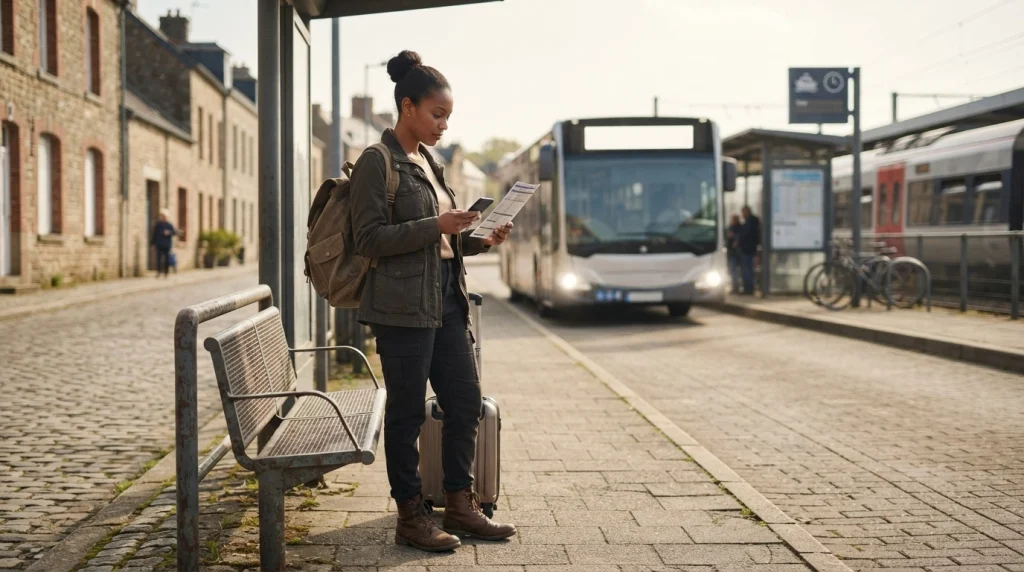
The best option depends on the region, distance, service frequency, and how close transport stops are to your accommodation. In many areas, regional buses and trains form the backbone of car-free travel, while shuttles and licensed taxis cover the gaps.
Regional and intercity buses
Buses are often the first option I would investigate when planning a route between smaller towns. They may reach places that rail networks bypass, including rural villages, market towns, and coastal communities.
Check whether the service runs daily or only on weekdays. A route that looks convenient online may have just one or two departures on Sundays or outside the tourist season.
- Best for: Budget-conscious travelers, rural routes, and towns without railway stations.
- Check before booking: The exact stop, luggage allowance, operating days, and whether tickets must be purchased in advance.
- Watch out for: Bus stops on the edge of town with limited onward transport.
Regional trains
Trains can be especially convenient when towns sit along an established railway line. They offer predictable station locations on many routes and can make longer journeys less tiring.
However, a railway station doesn’t guarantee a useful connection. Some rural stations have infrequent services, limited facilities, or no convenient connection to the historic center.
- Best for: Routes with frequent services, comfortable longer journeys, and walkable station areas.
- Check before booking: Transfer times, platform changes, service disruptions, and the last train of the day.
- Watch out for: Rail replacement buses or connections that leave too little time for a missed service.
Shared shuttles, ferries, and local transport
Smaller destinations sometimes rely on transport that doesn’t appear in major booking platforms. Tourist shuttles, community buses, seasonal ferries, and hotel transfers can connect places that otherwise look difficult to reach.
Ask your accommodation or the local visitor information office which services currently operate. Confirm the departure point and booking process directly, especially for seasonal routes.
- Shared shuttle: Useful between popular trailheads, villages, airports, and accommodation clusters.
- Public ferry: Useful for islands and coastal towns where a road journey would require a long detour.
- Local taxi: Useful for the final few miles when no practical public connection exists.
- Walking or cycling: Suitable for short, well-mapped distances with safe paths and manageable luggage.
Section takeaway: Start with scheduled public transport, then fill only the unavoidable gaps with a shuttle or trusted local transfer.
How Do You Choose the Right Transport for Your Route?
Compare the full journey, not just the advertised ticket price. A cheap bus can become inconvenient if it arrives miles from your accommodation or leaves you waiting hours for the next connection.
Compare the main transport options
This table gives a practical starting point for planning in 2026. It describes common trade-offs rather than promising that every destination offers these services.
| Transport | Typical cost level | Convenience | Main limitation |
|---|---|---|---|
| Regional bus | Low to moderate | Good for many rural routes | Limited departures |
| Regional train | Low to high | Often comfortable on rail corridors | Not every town has a station |
| Shared shuttle | Moderate | Can serve specific visitor routes | May require advance booking |
| Licensed taxi or private transfer | High | Flexible, direct pickup | Can be expensive over distance |
| Public ferry | Low to moderate | Useful in island and coastal regions | Weather and seasonal schedules |
| Walking or cycling | Low direct cost | Good for short distances | Weather, terrain, road safety, and luggage |
These cost levels are relative, not quoted fares. Prices vary by country, route length, booking date, luggage, and demand.
Look at the door-to-door journey
Imagine two small towns are 45 miles apart. A direct bus might take 90 minutes, while a train requiring a transfer could take two hours and involve a 40-minute wait.
Now add a 25-minute taxi ride from the destination station to your guesthouse. The apparently faster train may no longer be the most convenient choice.
Compare these five details for each route:
- Total travel time: Include transfers, waiting, and the final walk.
- Full cost: Add local buses, taxis, booking fees, and baggage charges.
- Arrival location: Check whether the stop is central and easy to navigate.
- Service reliability: Look for backup departures if a connection is delayed.
- Personal comfort: Consider daylight, luggage, accessibility, and your energy level.
Use route planners as a starting point
Tools such as Rome2Rio can help identify possible bus, train, ferry, and transfer combinations. Treat their results as a shortlist rather than proof that a particular service runs on your travel date.
Confirm schedules and fares with the transport operator or official booking service before paying. Local operators sometimes publish timetable changes or seasonal services that general journey planners miss.
Section takeaway: The best connection balances cost, arrival time, reliability, and the safety of the final leg.
How Can You Plan Routes When Buses and Trains Are Infrequent?
When public transport runs only a few times daily, plan around the timetable rather than choosing your sightseeing dates first. A realistic itinerary leaves room for delays and avoids depending on the last service of the day.
Build your route around transport hubs
A transport hub is a town or city with several useful connections. Staying overnight in one can make nearby villages accessible without forcing you to change accommodation every day.
For example, you could stay three nights in a regional town, visit two nearby villages on separate day trips, and then travel onward by train or coach. This approach reduces luggage handling and gives you more options if one connection changes.
When comparing potential bases, look for:
- A railway or bus station with several daily departures.
- Connections to smaller towns you genuinely want to visit.
- Accommodation within walking distance or a short, reliable transfer.
- Shops, cafes, and staffed public places near the main transport stops.
- A return service that leaves enough time to enjoy the destination.
Check the timetable for your exact travel date
Never assume a service operates every day simply because a journey planner displays it. Rural services may run differently on weekends, public holidays, school holidays, or during winter.
Use this checklist before confirming a ticket:
- Confirm the date. Open the operator’s timetable for your exact day of travel.
- Check the departure point. Verify the station, platform, street stop, or pickup location.
- Review connections. Leave a reasonable buffer between separate tickets, particularly when the first service can be delayed.
- Check the return journey. Identify the last practical departure and an alternative if you miss it.
- Save the details offline. Keep tickets, addresses, timetables, and booking references accessible without mobile data.
What if there is no direct connection?
Break the journey into manageable sections. A village without a direct bus may connect to a larger town, where you can change to another regional service.
Before booking, check whether the transfer requires changing stations or walking along unfamiliar roads. A connection that looks simple on a map can be awkward with luggage.
If no scheduled service reaches your destination, contact the accommodation or local visitor information office. Ask about community transport, licensed taxis, shared transfers, or seasonal shuttles, and verify the details independently where possible.
Have a backup plan for delays
I recommend identifying one realistic alternative before setting out, even for a short journey. Knowing where you could stay overnight or which operator to contact makes an unexpected cancellation less stressful.
Keep these details available:
- The next available departure or an alternative route.
- A reputable local taxi company or accommodation transfer contact.
- The address of your booked accommodation.
- Enough money for an unexpected meal, transport change, or overnight stay.
Section takeaway: Build your day around confirmed services, keep transfers manageable, and know what you will do if the final connection disappears.
How Can a Solo Female Traveler Stay Safe Between Towns?
Car-free travel can be a comfortable choice for women traveling alone when transport providers, arrival arrangements, and local conditions are carefully checked. The main goal is to reduce uncertainty, particularly during transfers and after dark.
Choose departures and arrivals thoughtfully
Whenever practical, choose a service that arrives during daylight or while reliable onward transport is available. This gives you more choices if the station is unfamiliar or your accommodation is farther away than expected.
For an isolated destination, I would rather take an earlier bus and spend an extra hour in town than arrive late with no confirmed way to reach my lodging. That is a planning preference, not a guarantee that daytime travel is always safer.
Before departure:
- Check the destination stop on a map and identify a sensible route to your accommodation.
- Ask your host whether the walk is practical with luggage and whether they recommend a transfer.
- Save the accommodation’s address and phone number in your phone.
- Share your planned route and approximate arrival time with someone you trust.
- Keep your phone charged and carry a small power bank if you have one.
How should you choose a taxi or shared ride?
Use a licensed taxi, a recognized booking platform where available, or a transfer arranged through a trusted accommodation provider. Confirm the vehicle and driver details through the relevant service before getting in.
For an unfamiliar pickup, follow these precautions:
- Check the registration plate and booking details against the information provided.
- Confirm the destination and fare arrangement before the trip begins.
- Share the trip details or live location with a trusted contact when practical.
- Avoid entering an unmarked vehicle simply because someone approaches you at a station.
- If the vehicle, driver, or situation feels wrong, decline the ride and return to a staffed public area.
For shared shuttles, confirm the operator, passenger pickup arrangements, and drop-off location. A shared service is not automatically safe just because several people use it.
Keep your belongings accessible but secure
Carry your essential items in a small bag that stays with you rather than placing everything in the luggage compartment. Keep valuables discreet and avoid leaving your passport, phone, cash, and payment cards together in one easy-to-lose pocket.
Keep these essentials within reach:
- Phone, charger, and offline maps.
- Identification and copies of important travel documents.
- Payment card and a separate cash reserve.
- Accommodation details and emergency contact information.
- Any medication or personal items you may need during the journey.
What should you do if a journey becomes uncomfortable?
Trust your judgment and prioritize reaching an appropriate staffed or public place. You do not need to remain in a vehicle, at a pickup point, or in a conversation that makes you feel unsafe.
If you face an immediate threat, contact local emergency services when possible. Learn the local emergency number before traveling, as it varies by country.
For international trips, consult the official destination travel advisories for country-specific risks and guidance. Travelers who are U.S. citizens can also review the State Department’s Smart Traveler Enrollment Program (STEP) for information about registering trips and receiving relevant updates.
Pro tip: Check your destination’s official travel guidance, local transport rules, and emergency contacts shortly before departure. Conditions and recommendations can change.
Section takeaway: Plan the arrival as carefully as the departure, use verifiable transport arrangements, and give yourself permission to change plans when something feels wrong.
How Much Should You Budget, and What Luggage Works Best?
Your transport budget should cover the entire trip between accommodation doors, not just the headline fare. A combination of inexpensive buses and occasional paid transfers can be more practical than relying on the cheapest possible service for every leg.
Build a realistic transport budget
There is no single reliable fare for traveling between small towns worldwide. A 20-mile journey in one country may cost far less than a similar trip in another, so use live operator prices rather than generic averages.
Use this sample planning worksheet for a single journey. The dollar figures below are illustrative budgeting allowances, not verified market prices or quoted fares.
| Expense | Illustrative allowance | What to verify |
|---|---|---|
| Main bus or train | $10–$25 | Actual fare and booking fees |
| Local onward transport | $5–$15 | Station-to-accommodation cost |
| Food and water | $8–$15 | Expected time in transit |
| Backup reserve | $10–$25 | Local fares and emergency options |
These example allowances total $33–$80 for one travel day. Replace each estimate with actual local prices, and budget separately for accommodation or an unexpected overnight stay.
When is paying more worth it?
A more expensive direct service may be worth the difference if it avoids a long wait, a complicated transfer, or an arrival after local transport has stopped running.
Compare the extra cost against the time saved and the alternative arrangements you would need. Paying for a trusted transfer can make sense when the final stretch is remote or difficult to navigate with luggage.
Pack for transfers, not just destinations
A manageable bag makes it easier to climb bus steps, use station stairs, board crowded trains, and walk from a stop to your accommodation. For a multi-town trip, I would prioritize a bag I can carry comfortably over extra outfits or bulky extras.
Choose luggage based on your actual route:
- Small backpack: Useful when stations have stairs, platforms are uneven, or you need both hands free.
- Compact wheeled suitcase: Convenient on smooth pavements and routes with elevators, but awkward on cobblestones or unpaved roads.
- Small day bag: Keeps your water, phone, documents, medication, and charging cable within reach.
- Light rain layer: Helps when a transfer requires waiting outside or walking between stops.
Before booking, check whether the operator has luggage limits, assigned storage, or extra charges. Smaller buses and shared shuttles may have less space than long-distance coaches.
Section takeaway: Price the full journey, keep an emergency reserve, and pack so you can manage transfers independently.
How Do You Build a Flexible Car-Free Itinerary?

The easiest car-free itinerary follows transport connections instead of trying to visit every town on a map. Choose a few well-connected bases, explore nearby places as day trips, and leave room for weather or timetable changes.
Start with two or three connected towns
For a first trip, plan a simple route with one main base and one or two destinations reachable by public transport. You can add more stops once you know how reliable the local network is.
For example, a four-day trip might look like this:
- Day 1: Arrive at a regional transport hub and stay overnight near the station or central area.
- Day 2: Take a morning bus to a nearby small town, explore, and return before the final service.
- Day 3: Travel to a second town by train or scheduled shuttle, with the onward transfer arranged in advance.
- Day 4: Return to the transport hub with enough time for your onward departure.
This is a planning template, not a claim that any particular region offers these connections. Check the real timetables before choosing your stops.
Stay longer instead of moving every day
Staying two or three nights in a well-connected town can reduce transport costs and make the trip less tiring. You can leave your main luggage at your accommodation and visit nearby places with a small day bag.
Look for guesthouses, hotels, or hostels that can answer practical questions about local buses and arrival arrangements. A friendly host may know about community services or seasonal shuttles that are hard to find online.
For solo travelers who enjoy meeting other people, a female-friendly hostel or a small guesthouse with organized day trips may also make rural exploring easier. Confirm the location and transport options before booking rather than choosing accommodation on atmosphere alone.
Make room for a plan B
Leave some flexibility between important travel legs. A tight schedule can unravel if a rural bus runs late or a ferry gets canceled due to weather.
Build resilience into your plan by:
- Keeping the first and last transport legs confirmed.
- Avoiding separate tickets with very short transfer windows.
- Checking weather and service updates before leaving.
- Identifying an alternative route or a safe place to stay overnight.
- Keeping one lighter day after a complicated travel connection.
Know when a destination is not practical without a car
Some places are difficult to reach independently, especially when roads have no pedestrian paths and public transport is extremely limited. In these cases, reconsider whether the destination fits your trip or arrange a verified tour or transfer.
You don’t need to prove that every location is accessible without a car. Choosing destinations with reliable transport can lead to a calmer, more enjoyable solo trip.
Section takeaway: A good car-free itinerary is built around dependable connections, comfortable bases, and enough flexibility to handle changes without panic.
Frequently Asked Questions
Can you travel between small towns without a car?
Yes. Regional buses, local trains, public ferries, shared shuttles, and licensed taxis can connect many small towns. The available options depend on the country, season, and route, so confirm schedules and onward transport before booking accommodation.
What is the cheapest way to travel between small towns?
Regional buses and local trains are often among the most affordable options, although fares vary by country and distance. Compare the total cost, including station transfers, booking fees, and luggage charges, rather than choosing a ticket based on its advertised price alone.
Is it safe for a woman to travel alone on regional buses?
Many women travel independently on regional buses, but safety depends on local conditions, the operator, the route, and the time of travel. Check official guidance, choose reputable services, keep essential belongings close, and arrange a clear plan for reaching your destination.
How do you reach villages that have no train station?
Check regional bus services, community transport, public ferries, and seasonal shuttles. If scheduled transport does not reach the village, ask a trusted accommodation provider or visitor information office about verified transfers. Confirm the fare, pickup point, and return arrangements before traveling.
Should you book bus and train tickets in advance?
Book ahead when seats are limited, the route has few daily departures, or your arrival depends on a specific connection. For frequent local services, buying on the day may be practical. Always check the operator’s ticket rules and cancellation policy.
What should you do if you miss the last bus?
Move to an appropriate staffed or public place, check official transport updates, and contact the operator or your accommodation. Use a licensed taxi or trusted transfer if available, or arrange a safe overnight stay. Avoid accepting unsolicited rides from strangers.
How can you find reliable public transport in a rural area?
Start with the official transport operator, local government transport pages, and visitor information offices. Journey planners can reveal possible connections, but confirm the timetable directly for your travel date, particularly when services are seasonal or infrequent.
Final Takeaway: Travel Between Towns at Your Own Pace
Traveling between small towns without a car is possible when you plan around reliable public transport and prepare for the last stretch of each journey. You can explore more independently by combining buses, trains, shuttles, and short local transfers instead of relying on one transport method.
Start with one straightforward route, verify every connection, and keep a backup plan. As your confidence grows, you can build longer itineraries and discover smaller destinations without the expense or responsibility of renting a car.
Most importantly, leave yourself enough time to enjoy the journey. A slower route with a comfortable arrival can be a better solo travel experience than a packed itinerary with too many connections.