What Sun Protection Should a Woman Pack for Solo Travel?
Quick Answer
For solo travel, pack broad-spectrum SPF 30 or higher sunscreen, SPF lip balm, UV-protective sunglasses, a wide-brimmed hat, and lightweight clothing that covers exposed skin. I also recommend choosing a water-resistant sunscreen that meets the American Academy of Dermatology sunscreen guidelines.
Your basic solo travel sun kit
- Body sunscreen: Choose broad-spectrum SPF 30 or higher with water resistance.
- Face sunscreen: Pack a comfortable formula you’ll willingly reapply.
- SPF lip balm: Keep it in your day bag for quick reapplication.
- Protective clothing: Bring a lightweight long-sleeved layer or UPF-rated shirt.
- Hat and sunglasses: Protect your face, ears, neck, and eyes.
- Portable backup: Carry a small sunscreen stick or travel-size lotion while sightseeing.
One smart solo-travel habit
- Keep your daily sunscreen in the bag that stays with you, rather than burying it inside your main luggage.
Knowing what sun protection a woman should pack for solo travel is about more than putting one sunscreen bottle in a suitcase. A good kit protects you during airport transfers, long walking days, beaches, outdoor tours, café afternoons, and unexpected changes of plan.
When you’re traveling alone, convenience matters too. I like a sun-protection system that works without requiring a return to the hotel whenever the sun gets stronger.
In This Guide
- What sun protection should you pack for solo travel?
- How much sunscreen should you bring?
- What type of sunscreen works best for travel?
- What clothing and accessories provide sun protection?
- Should your sun kit change by destination?
- How do you manage sun protection while traveling alone?
- Frequently asked questions
Solo-travel sun protection means combining sunscreen with clothing, shade, sunglasses, and smart timing so you reduce ultraviolet exposure throughout your trip.
What Sun Protection Should You Pack for Solo Travel?
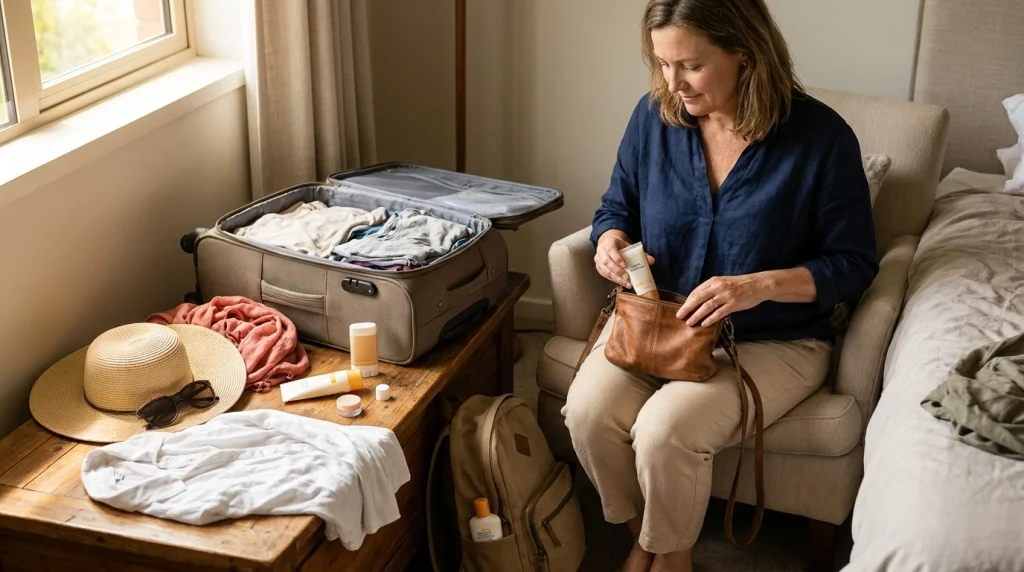
A woman traveling alone should pack several layers of sun protection instead of relying on sunscreen alone. Your core kit should protect your skin, lips, eyes, scalp, ears, and neck.
This matters because travel can increase your outdoor exposure without you noticing it. A ten-minute walk to breakfast can turn into three hours of sightseeing.
My practical sun-protection packing checklist
- Broad-spectrum body sunscreen: SPF 30 or higher is a strong everyday baseline.
- Face sunscreen: Choose a texture that works comfortably under makeup or skincare.
- Sunscreen stick: Useful for the nose, ears, cheekbones, shoulders, and quick touch-ups.
- SPF lip balm: Small enough to keep permanently in your crossbody bag.
- Wide-brimmed hat: Better coverage than a narrow baseball cap.
- UV-protective sunglasses: Choose glasses designed to block UVA and UVB radiation.
- Lightweight long-sleeved layer: Helpful when walking or waiting outdoors.
- UPF clothing: Worth considering for hiking, boating, beaches, and long outdoor days.
- Light scarf or wrap: Useful for covering shoulders, chest, or neck when plans change.
- Small day-bag sunscreen: Keep enough for reapplication without carrying the full bottle.
I think of these items as one system. Sunscreen covers exposed areas while clothing reduces how much skin needs repeated application.
That becomes especially useful when you’re navigating a city alone. You don’t want sun protection to become another complicated task during an already busy day.
Don’t forget the easily missed areas
The ears, hairline, neck, hands, and tops of the feet are easy to overlook. They’re also exposed during common travel activities.
- Apply sunscreen around your ears and hairline.
- Protect the back and sides of your neck.
- Cover the backs of your hands during long walks.
- Remember your feet when wearing sandals.
- Use a hat or scalp-appropriate sunscreen where your hair parts.
Section Takeaway: Build your kit around layers. Sunscreen, clothing, a hat, sunglasses, and shade work better together than relying on one product.
How Much Sunscreen Should You Bring?
Bring enough sunscreen for both your trip length and your likely outdoor time. A tiny travel tube may not last through several full sightseeing or beach days.
I would rather pack a realistic amount than start rationing sunscreen halfway through a trip. Solo travelers don’t always want to spend vacation time hunting for a replacement formula.
Match the amount to your travel style
| Travel situation | Main protection | Useful backup | Packing priority |
|---|---|---|---|
| Weekend city break | Face and body SPF 30+ | SPF lip balm | Small day-bag sizes |
| Week-long sightseeing trip | Larger body sunscreen | Stick for touch-ups | Enough for repeated use |
| Beach vacation | Water-resistant SPF 30+ | UPF cover-up | Frequent reapplication |
| Hiking or high altitude | SPF 30+ plus covered skin | Hat and neck coverage | Easy access while moving |
Remember airline liquid limits
If you’re flying through the United States with carry-on luggage, liquids, gels, and aerosols are generally limited to containers of 100 ml or 3.4 ounces at airport screening. The FAA includes sunscreen among personal toiletry items and explains the relevant baggage limits in its PackSafe guidance.
A larger sunscreen container can usually be more practical in checked luggage. Always check the rules for your departure country, airline, and connecting airports before flying.
Separate your main supply from your daily supply
Keep your larger sunscreen with your main toiletries. Transfer a smaller permitted container into your day bag when necessary.
This setup reduces bag weight. It also keeps sunscreen within reach during sightseeing.
- Main sunscreen supply in your hotel or accommodation.
- Small sunscreen in your everyday bag.
- Lip SPF in an easy-access pocket.
- Hat and sunglasses near the top of your bag.
Section Takeaway: Pack enough sunscreen to use generously, then keep a smaller portion accessible during the day. Check baggage rules before departure.
What Type of Sunscreen Works Best for Travel?
The best travel sunscreen is one you’ll use consistently. Look for broad-spectrum protection, SPF 30 or higher, and water resistance for active or humid trips.
Texture matters more than many travelers expect. A sunscreen that feels unpleasant often gets applied too sparingly.
Face sunscreen versus body sunscreen
You don’t have to carry separate formulas. One suitable sunscreen can protect both areas if you like how it feels.
Still, separate products can make sense if your facial skin is sensitive or acne-prone. A smaller facial sunscreen also fits easily inside a personal-item bag.
Mineral, chemical, or hybrid?
Mineral sunscreens typically use zinc oxide, titanium dioxide, or both. Chemical and hybrid sunscreens use different combinations of active filters.
The label features matter more for basic travel planning than the category. Prioritize broad-spectrum coverage, suitable SPF, water resistance, and a formula you can tolerate.
Consider tinted sunscreen for your face
Tinted sunscreen can be useful if you dislike the visible white cast some formulas leave. Some tinted products also contain iron oxide.
This can be especially attractive when you’re packing light and want one product that fits easily into a simple morning routine.
Add SPF lip protection
Lip balm takes almost no packing space. I consider it one of the easiest sun-protection items to overlook.
Keep it somewhere reachable rather than inside your toiletry case. That makes reapplication much more likely.
What Clothing and Accessories Provide Sun Protection?
Clothing is one of the most useful forms of travel sun protection because it doesn’t need constant reapplication. Covering more skin can simplify a long solo sightseeing day.
The World Health Organization recommends protective clothing, broad-brimmed hats, sunglasses, shade, and sunscreen as complementary ways to limit excessive UV exposure.
Pack one lightweight covering layer
A breathable long-sleeved shirt can work over a tank top, dress, or swimsuit. It also gives you flexibility around cultural dress expectations.
- Lightweight long-sleeved shirt
- Loose overshirt
- UPF-rated top
- Light scarf or wrap
- Beach cover-up
Darker, denser fabrics can often provide more protection than thin, loosely woven material. UPF-rated garments make their tested protection easier to understand.
Choose a hat that covers more than your forehead
A broad brim protects more of your ears, face, and neck. A baseball cap mainly shades the forehead and upper face.
For solo travel, I also value packability. A hat you can crush or fold is easier to keep with you.
Bring proper sunglasses
Sunglasses are more than a style accessory. Look for lenses designed to provide strong UVA and UVB protection.
A close-fitting or wraparound shape can give extra coverage during long outdoor activities. They’re especially useful around water, sand, and snow.
Should Your Sun Kit Change by Destination?
Yes. Your destination, season, altitude, and planned activities should affect how much protection you pack.
The CDC notes that travelers can face stronger UV exposure near the equator, at higher elevations, around reflective surfaces, and during long periods outdoors. Its traveler sun-exposure guidance also stresses protection even on cloudy or cooler days.
For tropical and beach trips
- Choose water-resistant sunscreen.
- Pack more body sunscreen than you would for a city trip.
- Bring a hat with good face and neck coverage.
- Use a lightweight cover-up between swims.
- Reapply after swimming or heavy sweating.
Sand and water can increase your overall exposure through reflected UV. Shade helps, but it doesn’t replace the rest of your protection.
For city sightseeing
City trips can create surprisingly long exposure because walking often fills most of the day. Cafés, queues, sightseeing buses, and open plazas add more time outside.
- Wear face sunscreen before leaving your accommodation.
- Carry a small body sunscreen.
- Keep sunglasses and a packable hat handy.
- Use a light overshirt when your shoulders or arms need coverage.
For mountains and high-altitude destinations
Don’t assume cooler air means weaker UV. Higher elevations can increase ultraviolet exposure.
Covering your skin becomes particularly useful on hikes because stopping frequently to manage sunscreen can be inconvenient.
For snowy destinations
Snow can reflect UV radiation, so winter doesn’t automatically mean sun protection can stay home. Pack face sunscreen, lip protection, and UV-protective eyewear for outdoor days.
This is easy to forget when you’re focused on coats and thermal layers. Your face may still remain exposed for hours.
Section Takeaway: Pack for UV exposure, not just temperature. Beaches, mountains, snow, cities, and cloudy weather can all require meaningful sun protection.
How Do You Manage Sun Protection While Traveling Alone?
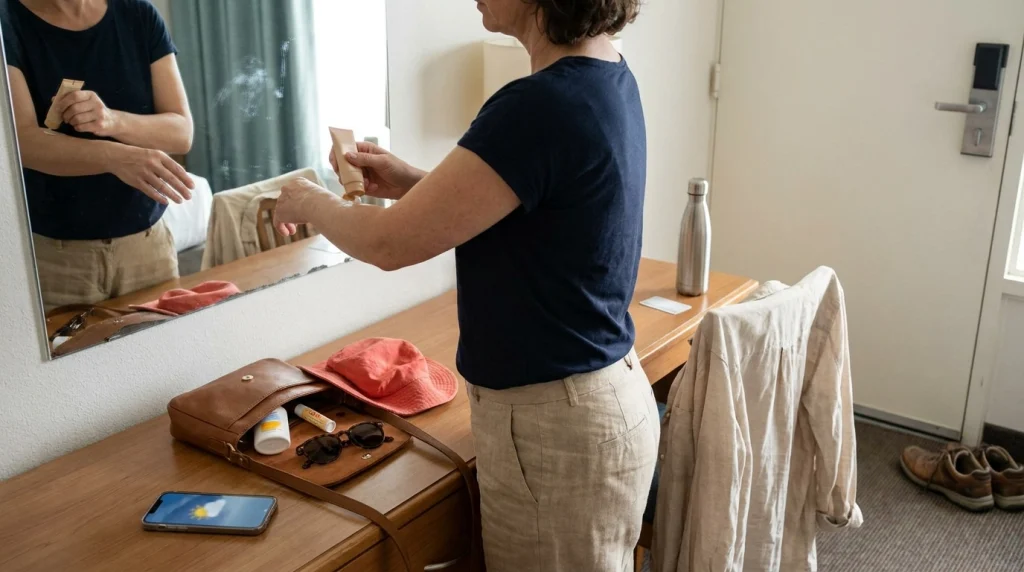
A simple routine is more useful than carrying a complicated collection of products. When I’m planning a solo-travel packing system, I make sun protection something that happens automatically before leaving the room.
That matters because you’re responsible for remembering everything yourself. There may be no travel companion reminding you that your shoulders are turning pink.
Use a five-minute morning routine
- Check which parts of your skin your outfit leaves exposed.
- Apply broad-spectrum sunscreen to those areas.
- Add SPF lip balm.
- Put your sunglasses and hat in your daily bag.
- Pack a small sunscreen for later application.
Apply sunscreen before spending extended time outdoors, following the directions on your product. Don’t wait until you’re already uncomfortable in strong sun.
Check the UV Index, not just the temperature
A cool day can still have meaningful ultraviolet radiation. Temperature and UV intensity are not the same thing.
The EPA UV Index scale recommends protective measures when UV levels reach moderate or higher levels. Checking the day’s UV forecast can help you decide when to add clothing, shade, or extra sunscreen.
Build reapplication into something you already do
A reminder works best when it’s connected to an existing habit. Reapply around a lunch break, café stop, museum exit, or before an afternoon walking tour.
Dermatology guidance commonly recommends reapplying sunscreen about every two hours outdoors. Swimming and heavy sweating can require earlier reapplication according to the product directions.
Don’t let solo travel make you stay in the sun unnecessarily
Solo travelers sometimes arrive early because they don’t want to risk missing transport or tours. That can mean sitting outside a station, pier, or meeting point longer than expected.
- Wait in shade when possible.
- Choose covered seats at cafés.
- Move outdoor sightseeing away from peak sun when practical.
- Carry water during long walking days.
- Keep your hat accessible instead of buried in your luggage.
These choices don’t make your trip less spontaneous. They simply reduce unnecessary exposure while keeping your plans flexible.
Section Takeaway: The easiest sun-protection routine is one you can repeat without thinking. Apply before leaving, carry a small backup, watch the UV Index, and use shade whenever it’s convenient.
Frequently Asked Questions
Is SPF 30 enough for solo travel?
SPF 30 or higher is a widely recommended baseline when combined with broad-spectrum protection and appropriate application. Higher SPF can also be used, but no sunscreen replaces shade, protective clothing, hats, or sunglasses.
Should I pack SPF 30 or SPF 50?
Either can fit a travel kit if it provides broad-spectrum protection and you use it correctly. Choose a product you’ll apply generously and reapply rather than picking a higher number you dislike wearing.
Do women with darker skin tones need sunscreen when traveling?
Yes. Darker skin has more natural protection from visible burning, but people of every skin tone can experience UV-related skin damage.
Choose a sunscreen you find comfortable. Tinted or clear-finish formulas may help if visible residue is a concern.
Do I need sunscreen on cloudy travel days?
Yes, UV radiation can still reach your skin through cloud cover. Outdoor time can also add up quickly when you’re walking, sightseeing, driving, or waiting for transport.
Should I pack spray sunscreen?
Spray sunscreen can be convenient, but you still need enough product and complete coverage. Aerosols may also have airline restrictions, so check baggage rules and protect the nozzle from accidental release.
What sun protection should I keep in my personal item?
Keep a small sunscreen, SPF lip balm, sunglasses, and a foldable hat within reach. A light overshirt or scarf is also useful if your personal item has enough space.
What should I do if sunscreen irritates my skin while traveling?
Stop using a product that causes a concerning reaction and switch to a formula you’ve previously tolerated if available. Travelers with sensitive skin may prefer testing sunscreen before departure instead of trying a new formula during the trip.
Pro tip: If you have a skin condition, photosensitivity, or take medication that may increase sun sensitivity, ask a qualified healthcare professional for personalized advice before traveling.
Your sun-protection kit doesn’t need to take over your suitcase. The goal is to pack a few dependable items that work together and stay easy to use throughout your trip.
For most solo travelers, that means SPF 30+ broad-spectrum sunscreen, SPF lip balm, protective clothing, sunglasses, a good hat, and a plan for shade and reapplication. Pack those before departure, and you’ll have one less problem to solve while you’re exploring on your own.