How Can a Solo Female Traveler Handle a Crowded Train Station?
Quick Answer
A solo female traveler can handle a crowded train station more confidently by planning her route, securing her belongings, identifying official staff, and keeping enough space from platform edges and rushing passengers. Arrive early, confirm your platform through official displays, and move toward staffed, well-lit areas if you feel uncomfortable. For additional guidance, review the official travel safety advice for women before your journey.
Your essential station safety checklist
- Plan ahead: Save your ticket, train number, departure time, and destination platform details.
- Secure valuables: Keep your phone, wallet, and passport in closed, accessible compartments.
- Choose your position: Wait in a well-lit area near official staff or designated help points.
- Manage your luggage: Keep bags close and avoid placing them where crowds can separate you from them.
- Trust your instincts: Move away from unwanted attention and seek help if someone makes you feel unsafe.
- Allow extra time: Avoid rushing through queues, stairways, ticket gates, and boarding areas.
A crowded railway station can feel overwhelming when you’re traveling alone, especially in an unfamiliar city where announcements, signs, and passenger queues seem confusing.
I’ve approached this guide from the perspective of practical solo-travel planning: the goal is to make each decision easier, from entering the station to boarding your train, without relying on assumptions about a destination’s safety.
In this guide, you’ll learn how to protect your belongings, manage unwanted attention, navigate busy platforms, and respond calmly when a station becomes too crowded.
In This Guide
1. How Should You Prepare Before Arriving at a Crowded Train Station?
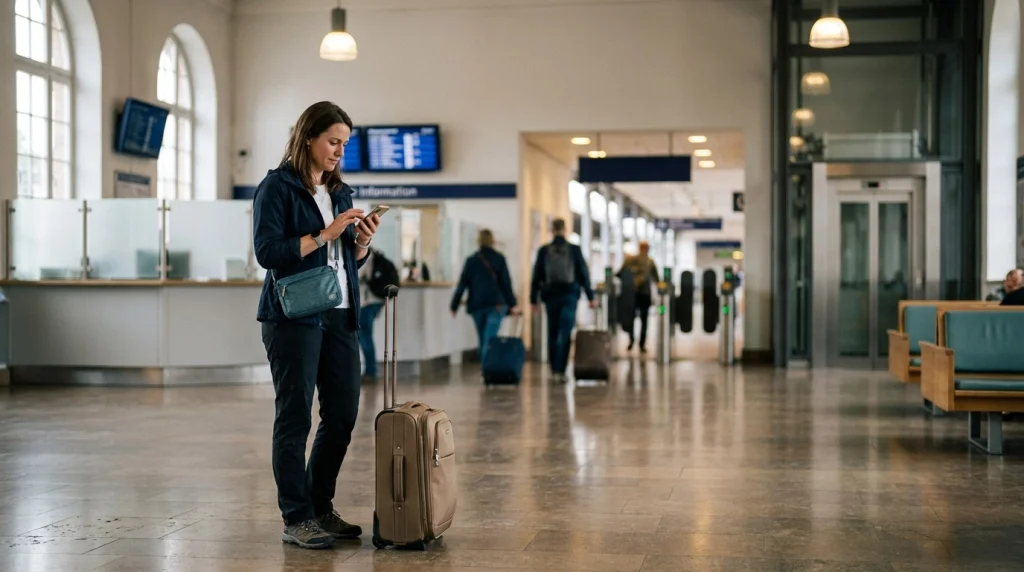
The easiest way to manage a crowded station is to reduce the number of decisions you must make after entering it. Save your journey details, understand the station layout when possible, and allow extra time for unexpected queues.
Save your travel information before leaving
Keep your ticket and essential journey details accessible without repeatedly searching through your luggage.
Before setting out, save these details on your phone:
- Your train number, departure time, and destination.
- Your ticket or booking confirmation, including any required identification.
- The station’s official name and your arrival station.
- Your accommodation address and onward transportation arrangements.
- Local emergency contacts and the railway operator’s customer-service details.
Take screenshots of your ticket and important directions if you expect unreliable internet access. Store copies of essential documents securely, separate from the originals.
Arrive early without arriving unnecessarily early
For an unfamiliar or busy station, consider arriving 30–45 minutes before departure, or earlier if the operator recommends it. Large terminals, international services, security checks, and unfamiliar ticketing systems may require additional time.
Check the railway operator’s boarding rules rather than treating this timing as a universal requirement. The aim is to give yourself enough time to find the correct platform without running.
Learn the station layout
Look for the main entrance, ticket gates, information desk, toilets, elevators, and designated waiting areas. If you need assistance, knowing where the staffed information counter is located can save valuable time.
Check official station maps and live departure information where available. A platform listed on your ticket may not always be the final platform assignment, so confirm the departure display before boarding.
Practical tip
Keep your phone charged and carry a small power bank if you have one. Downloading maps and saving tickets in advance reduces your dependence on mobile data in a crowded terminal.
Section takeaway: Prepare your route and documents before arrival so you can concentrate on your surroundings instead of searching for information under pressure.
2. How Can You Protect Your Belongings in a Crowded Train Station?
Protecting your belongings means making them difficult to access unnoticed while keeping essential items available when you need them. Crowded queues, ticket gates, and boarding areas deserve particular attention because people are moving close together.
Choose a practical bag arrangement
A comfortable crossbody bag or compact daypack with secure closures can make it easier to keep your belongings close. No bag guarantees protection against theft, so combine sensible storage with awareness.
- Phone: Keep it secured when you aren’t using it, especially near station entrances and roads.
- Wallet: Carry only the cash and payment cards you reasonably need that day.
- Passport: Store it in a secure compartment rather than an easily opened outer pocket.
- Large luggage: Use a comfortable handle or strap and maintain physical contact with your bag.
- Travel documents: Keep a digital backup separate from the original documents.
Avoid placing your phone or wallet in a back pocket. When using a backpack in a dense crowd, consider moving it to the front of your body if doing so helps you monitor its zippers and contents.
Stay alert during common distraction moments
Distraction can make it harder to notice what’s happening around you. Be particularly attentive when checking a ticket, withdrawing money, asking for directions, or moving through a congested gate.
Before stopping to check your phone, move to the side of the main passenger flow. You can then look at your map without blocking other travelers or becoming absorbed in your screen while walking.
Be careful with unsolicited assistance
Many travelers genuinely want to help, but you don’t have to accept assistance from someone who approaches unexpectedly, insists on handling your luggage, or pressures you to follow them away from the main station area.
If you need directions, ask an identifiable railway employee or approach the official information desk. Keep your luggage with you while receiving help.
Government travel guidance also recommends protecting valuables and checking local transportation risks before traveling. The U.S. Department of State’s crime-prevention guidance offers further general advice on reducing transportation-related risks.
What if you think something has been stolen?
Move to a safe place and contact station security, railway police, or the appropriate local authorities. If your phone is missing, use a trusted device to secure your accounts and contact your bank if payment cards may also be compromised.
Report the loss promptly and provide an accurate description of the missing item. Don’t pursue a suspected thief into an isolated area or put yourself at risk to recover a possession.
Section takeaway: Keep valuables secured, stay attentive during transitions, and seek assistance from official staff rather than strangers who pressure you.
3. How Do You Navigate Busy Platforms and Queues Safely?
On a crowded platform, your priorities are to maintain stable footing, stay clear of the platform edge, and board without pushing or rushing. If the crowd becomes too dense to move safely, step away from the boarding flow and ask staff for guidance.
Choose where to wait carefully
Follow platform markings and stand behind the designated safety line. Avoid gathering at the edge to look for an approaching train, and never try to board before passengers have finished exiting.
If the station offers staffed waiting areas, help points, or CCTV-covered sections, consider waiting there when appropriate. These features can make it easier to find assistance, although they don’t guarantee that an area is risk-free.
Manage queues without losing control of your luggage
Move with the queue rather than attempting to squeeze through gaps. Keep your bag close and avoid stretching a luggage handle across the walking path, where someone could trip over it.
When traveling with a suitcase, leave enough room to maneuver around other passengers. Use elevators where practical and follow station rules for escalators, stairs, and luggage.
Boarding a crowded train
Before boarding, confirm the train’s destination, service number, and carriage information. If the train is exceptionally crowded, wait for staff instructions instead of forcing your way through the doors.
Once aboard, move away from the doorway when possible so other passengers can enter and exit. Keep your luggage where permitted and avoid blocking aisles, emergency equipment, or designated accessible spaces.
Use this comparison to decide how to respond to different crowd conditions.
| Situation | Recommended action | Avoid |
|---|---|---|
| Busy entrance | Pause away from the flow and check your ticket. | Stopping suddenly in the middle of a queue. |
| Crowded platform | Stand behind the safety line and follow staff directions. | Standing at the edge or pushing forward. |
| Overcrowded carriage | Wait for another service if practical and safe. | Forcing yourself into closing doors. |
| Unclear platform announcement | Check official displays or ask station staff. | Following an unverified stranger’s directions. |
| Crowd surge or pushing | Follow emergency instructions and move away from danger when possible. | Fighting against a moving crowd or stopping in a bottleneck. |
Know when to choose a different train
Taking a later service may be the more sensible choice if the current train is dangerously overcrowded and another option is available. Consider the time of day, onward transport, accommodation arrangements, and whether waiting would leave you isolated.
For station-specific safety information, consult the relevant railway operator. Transport authorities such as Transport for NSW also provide practical guidance on platform safety, rushing, and maintaining awareness.
Section takeaway: Follow platform rules, board patiently, and never treat catching one particular train as more important than your immediate safety.
4. What Should You Do About Unwanted Attention in a Crowded Station?
If someone makes you uncomfortable, you can change your position, seek assistance, or leave the interaction without explaining yourself. You don’t need to prove that a person’s behavior is dangerous before taking a reasonable precaution.
Recognize when a situation needs attention
Unwanted attention can include persistent following, intrusive personal questions, repeated attempts to touch you, unwanted physical contact, or pressure to leave a public area with someone you don’t know.
A single accidental bump in a crowded station may be difficult to interpret, but repeated contact or behavior that continues after you’ve moved away deserves attention. Focus on the behavior rather than trying to guess someone’s intentions.
Move toward support rather than isolation
If you feel uncomfortable, head toward a staffed counter, security point, or other populated area where employees can assist. Avoid following someone who offers to take you to a quieter location unless you’ve independently confirmed that it’s an appropriate official service area.
You can use short, clear statements when necessary:
- “Please give me some space.”
- “I don’t need assistance, thank you.”
- “Please stop touching me.”
- “I need help. Could you contact station security?”
Speak firmly if it feels safe to do so, but don’t feel obliged to confront someone who may become aggressive. Creating distance and obtaining assistance are valid responses.
What if someone follows you?
Avoid heading toward a deserted corridor, isolated exit, or unfamiliar street simply to get away from the person. Instead, approach railway staff or security and explain what you’ve observed.
If you believe you’re in immediate danger, contact local emergency services. Share your location with a trusted person if doing so won’t distract you from reaching safety.
Plan for local customs and transport conditions
Solo female travel safety varies between destinations, and there is no single strategy that fits every station. Research local transport arrangements, station operating hours, available staff, and any relevant cultural or legal considerations before traveling.
The women travelers’ safety guidance from the U.S. Department of State recommends researching local conditions, identifying transportation risks, and making a plan for responding to unsafe situations.
Section takeaway: You can decline unwanted interaction, move toward official help, and prioritize your safety without worrying about appearing impolite.
5. What Should You Do When Crowds Become Overwhelming?
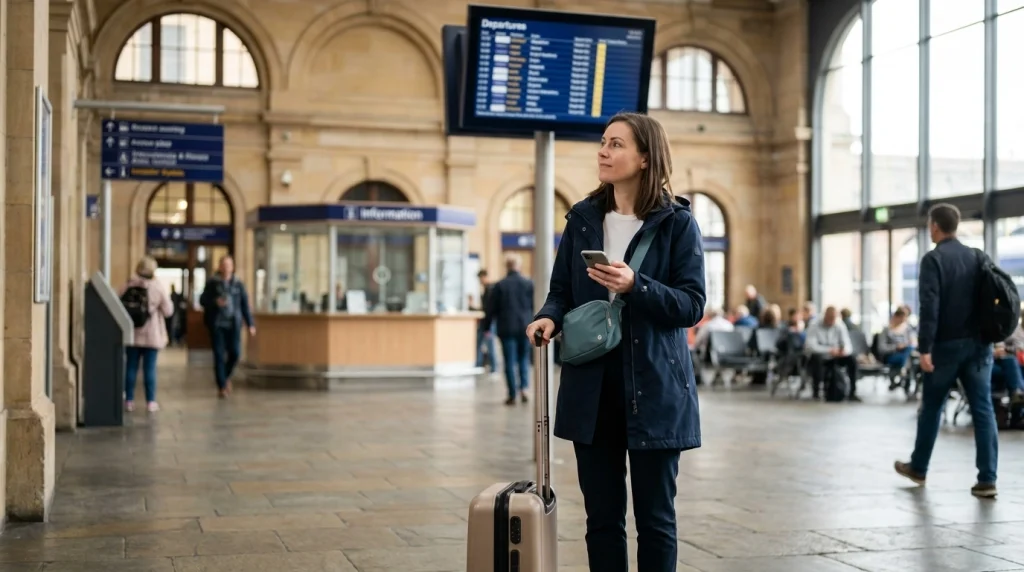
When a station feels overwhelming, pause your journey if the location allows you to do so safely. Regain your bearings, check reliable information, and decide whether to continue, wait, or seek help.
Use a simple reset routine
Try these steps when noise, movement, or uncertainty makes it difficult to think clearly:
- Find a safer position: Move away from the platform edge and congested entrances without entering an isolated area.
- Pause: Stop checking directions while walking and allow yourself a moment to settle.
- Orient yourself: Look for official signs, departure boards, and recognizable station landmarks.
- Confirm your next step: Check the platform or ask an employee before moving on.
- Contact someone if useful: Send a brief update to a trusted person if you want reassurance or assistance.
There’s no need to complete every step immediately. If you feel physically unwell, disoriented, or unable to move safely, seek assistance from station staff.
Choose a sensible time and route
Peak commuting periods, major events, public holidays, and service disruptions can increase crowding. When your schedule allows, check the operator’s service updates and consider a less congested departure.
However, a quieter time isn’t automatically safer in every location. A late-night arrival may mean fewer staff, less onward transportation, or longer waits in isolated areas, so weigh these factors together.
Prepare a backup plan for delays
A missed connection or cancelled train can become stressful when you’re traveling alone. Decide in advance how you’ll find another service, contact your accommodation, and arrange onward transport through a reputable provider.
Keep enough money for reasonable unexpected expenses and avoid sharing your accommodation details with strangers. If you must wait for a long period, choose an appropriate staffed or monitored area whenever available.
Before traveling internationally, check the relevant government’s current destination advice and the railway operator’s official updates. For U.S. travelers, the Smart Traveler Enrollment Program (STEP) is an official service for registering eligible trips and receiving relevant embassy or consulate updates.
A practical example: arriving at an unfamiliar terminal
Imagine arriving at a busy station with a suitcase, a backpack, and a train departure in 25 minutes. Instead of immediately following the crowd, step to a safe side area, confirm the service on the departure board, and identify the correct platform.
If the platform is congested, ask an official employee whether there is a safer boarding point or another suitable service. This small pause can help you avoid unnecessary rushing and make a more informed decision.
The important lesson is not that every crowded station is dangerous. It’s that having a clear next step makes an unfamiliar environment easier to manage.
Section takeaway: When crowding or anxiety affects your judgment, pause somewhere safe, confirm information through official channels, and use your backup plan rather than rushing.
6. Frequently Asked Questions
Is it safe for a woman to travel alone through a crowded train station?
Many women travel alone by train successfully, but conditions vary by station, time, and destination. Research local transport risks, keep valuables secure, follow platform safety rules, and identify where to find official assistance before you arrive.
Where should a solo female traveler wait on a train platform?
Choose a permitted waiting area away from the platform edge and congested boarding points. If available, consider a well-lit section near staff or an emergency help point. Follow local signage and station instructions rather than assuming one position is safest everywhere.
How can I avoid pickpockets in a busy railway station?
Keep your phone and wallet in secured compartments, close your bags, and remain attentive while passing through gates or boarding queues. Avoid displaying large amounts of cash and move aside before checking your phone or searching for travel documents.
What should I do if a stranger keeps following me at a station?
Move toward railway staff, security personnel, or another appropriate public area, and explain what is happening. Don’t lead the person to your accommodation or an isolated location. If you believe you’re in immediate danger, contact local emergency services.
Should I board an overcrowded train if I’m traveling alone?
Don’t force your way into a carriage or attempt to board while doors are closing. If the train appears dangerously overcrowded, follow staff instructions and consider another service if a practical, safe alternative exists. Check how waiting may affect your onward transportation.
How early should I arrive at a busy train station?
For an unfamiliar station, arriving 30–45 minutes before departure can provide a useful starting point. Allow more time for large terminals, security procedures, international services, or complex connections, and follow any arrival guidance issued by the railway operator.
What should I carry for a safer solo train journey?
Carry your ticket, required identification, a charged phone, payment method, essential medication, and any destination-specific travel documents. A secure day bag and a small power bank may also help. Pack according to the length of your trip and the railway operator’s luggage rules.
Final Takeaway: Make Your Next Station Journey More Manageable
Handling a crowded train station as a solo female traveler becomes easier when you plan ahead, keep your belongings secure, and know where to find assistance. You don’t have to move at the same pace as everyone else or board a train that doesn’t feel safe to enter.
Before your next journey, save your ticket and route, check official travel information, and decide how you’ll handle delays or unexpected attention. A little preparation gives you more flexibility when the station gets busy.
Solo travel is about making informed choices, not eliminating every uncertainty. Give yourself time, pay attention to your surroundings, and choose the next step that best supports your safety.
Pro tip: Safety conditions and local emergency procedures can change. Review your destination’s official government travel advice and the railway operator’s latest service notices before departure.