How Can a Solo Female Traveler Use a Subway System?

Quick Answer
A solo female traveler can use a subway system confidently by planning her route, understanding the ticketing process, identifying the correct platform, and staying aware of her surroundings. Before leaving, check the official transit map, service updates, operating hours, and station exits. Choose well-lit, populated waiting areas, keep valuables secure, and know how to contact transit staff if something feels wrong.
Essential steps for a smoother subway journey
- Plan your route: Identify your departure station, destination, transfers, and exit before setting out.
- Choose your ticket: Check whether the system uses contactless payments, travel cards, mobile tickets, or paper tickets.
- Follow station signs: Match the line color, direction, terminal, and platform information before boarding.
- Protect your belongings: Keep your bag zipped and close to your body, particularly in crowded stations.
- Stay aware: Use your phone when needed, but keep enough attention on nearby passengers and announcements.
- Prepare a backup: Save your destination address, an offline map, and the local transit authority’s emergency contact information.
One important safety reminder
- If you feel uncomfortable, move toward a staffed area or other passengers and contact transit personnel when appropriate. If you face immediate danger, use the local emergency service.
Learning how can a solo female traveler use a subway system is a practical step toward exploring a new city independently. Once you understand the signs, ticket gates, platforms, and transfer points, getting around often feels much less intimidating.
As Emma Collins, I want this guide to help you prepare for the journey rather than simply tell you to be confident. The right preparation makes a difference, especially when you’re arriving in an unfamiliar city, carrying luggage, or traveling after dark.
Below, you’ll learn how to plan a route, buy the correct ticket, board the train, manage personal safety, and handle unexpected situations without panicking.
In This Guide
- How do you plan a subway route before leaving?
- How do you buy tickets and pay for the subway?
- How do you find the correct platform and transfer?
- How can a solo female traveler stay safe on the subway?
- What should you do when something goes wrong?
- What should you prepare for your first subway ride?
- Frequently asked questions
How Do You Plan a Subway Route Before Leaving?
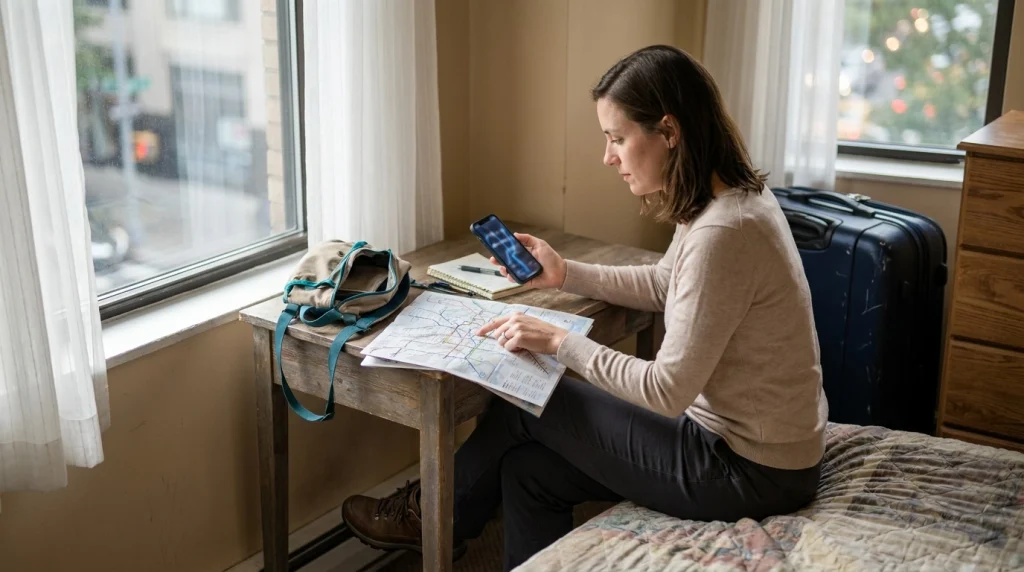
Plan your subway route before leaving your accommodation so you know where you’re going and what to do if you miss a train. A subway system is an urban rail network that carries passengers between stations along designated routes, usually underground but sometimes above ground.
For solo female travel, route planning means more than finding the shortest journey. You should also consider arrival time, station accessibility, transfer complexity, and how you’ll reach your final destination.
Start with the official subway map
Open the transit authority’s official website or app and locate your starting station and destination. Study the complete route rather than relying only on a suggested journey from a general mapping app.
- Starting station: Find the entrance closest to your accommodation or current location.
- Destination station: Confirm the station name and its spelling.
- Train direction: Identify the terminal or direction shown on the platform signs.
- Transfers: Count how many times you’ll need to change trains.
- Final exit: Check which station exit brings you closest to your destination.
Station exits matter more than many first-time riders expect. A large station may have several entrances leading to different streets, so the wrong exit can leave you facing a confusing intersection or an unfamiliar neighborhood.
Check service updates and operating hours
Look for planned maintenance, temporary closures, replacement buses, and changes to the normal schedule. This is particularly important on weekends, public holidays, and late evenings.
Save your route in advance and download an offline map if your phone supports it. Underground stations may have unreliable mobile reception, and you shouldn’t depend on a live connection for every navigation decision.
Choose a manageable first journey
If you’ve never used a subway before, begin with a short daytime trip that has few or no transfers. A journey of two to five stations can help you practice without having to manage a complicated itinerary.
For example, imagine traveling from a hotel to a museum three stations away. You can practice locating the entrance, purchasing a ticket, checking the platform direction, and finding the correct exit before tackling a longer journey.
Section Takeaway: Plan the complete journey, including your final walk, before entering the station. A simple route is often the best choice for your first ride.
How Do You Buy Tickets and Pay for the Subway?
You usually pay for a subway journey using a transit card, contactless bank card, mobile payment, or paper ticket, depending on the city. Always check the local system because payment methods and fare rules vary between networks.
Understand the available ticket options
Before purchasing anything, check the fare information on the official transit website. The cheapest option depends on how often you’ll travel, the length of your stay, and whether your journey crosses fare zones.
| Payment method | Best suited for | What to check |
|---|---|---|
| Single-journey ticket | Occasional rides | Validity, route limits, and transfer rules |
| Reloadable transit card | Several journeys during a visit | Card cost, minimum balance, and refund rules |
| Contactless bank card | Convenient pay-as-you-go travel | Bank fees, card compatibility, and fare caps |
| Mobile ticket or wallet | Travelers who prefer digital payment | Activation, battery life, and scanning requirements |
| Day or multi-day pass | Frequent rides during a short stay | Start time, included services, and break-even cost |
These are general ticket categories, not guarantees that every subway system offers them. Prices and conditions vary, so compare the options for your destination before buying.
Learn how the ticket gates work
At many stations, you tap a card or phone, scan a ticket, or insert a paper ticket at the entrance. Some systems also require you to tap or scan when exiting, so follow the posted instructions.
- Find the ticket machine, staffed counter, or approved digital payment option.
- Choose the appropriate fare or load enough credit onto your transit card.
- Read the payment instructions and check the displayed amount before confirming.
- Follow the gate instructions and keep your card or ticket accessible.
- Retain your ticket until the journey ends if the system requires it.
Don’t assume that tapping a bank card and tapping a transit card are interchangeable. Some systems require the same payment method for the whole journey, and certain fares apply only when you use a registered or compatible card.
Keep payment simple and secure
Prepare your fare before reaching the gate so you don’t need to open your wallet in a crowded queue. Keep your main payment card separate from a small amount of emergency cash.
If a machine rejects your payment, step aside and check the instructions. Ask a station employee for help rather than accepting assistance from a stranger who offers to handle your bank card or PIN.
Section Takeaway: Choose a payment method that fits your itinerary, and confirm the local fare rules before traveling. Keep your ticket or payment device secure and easy to reach.
How Do You Find the Correct Platform and Transfer?
Follow the line name, destination direction, and platform signs rather than relying on the train’s color alone. These details help you board the correct train and avoid accidentally traveling away from your destination.
Read the signs inside the station
Most subway stations display route maps, line names, platform numbers, and destination information. Some use colors and letters, while others rely on numbers or the names of terminal stations.
Look for signs directing you toward the correct platform. If the station serves multiple lines, check the line designation twice before passing through the gates or descending to the platform.
- Line name or number: Confirm that it matches your planned route.
- Direction: Check the terminal or destination displayed for your train.
- Platform number: Follow the signs to the correct boarding area.
- Arrival display: Verify the next train’s destination before boarding.
- Service announcements: Listen for delays, platform changes, and cancellations.
If you’re uncertain, ask a uniformed station employee a specific question, such as, “Does this platform go toward Central Station?” A short, direct question is often easier than explaining your entire itinerary.
Board the train without rushing
Stand behind the platform safety line and wait for the train to stop completely. Allow passengers to exit before boarding, and never run toward closing doors.
Once aboard, move away from the doorway when practical. Hold a rail or handhold if you’re standing, especially when the train starts or stops suddenly.
Make transfers with enough time
A transfer means changing from one train or subway line to another during a journey. Some stations have convenient connections within the same complex, while others require a longer walk through corridors or separate ticket gates.
When changing trains, follow the signs for your connecting line and destination direction. Don’t automatically follow a crowd because those passengers may be heading to another line or exit.
For your first few journeys, allow extra time for unfamiliar stations. A transfer that appears simple on a map may involve stairs, escalators, long corridors, or several changes of level.
Find the correct exit at your destination
Before leaving the train, check your destination station on the route map or navigation app. Once you arrive, follow the signs for your chosen street, landmark, or exit number.
Compare the street name outside with your saved destination. If you emerge on the wrong side of a large intersection, pause in a public place and check your route before walking onward.
For accessibility needs or heavy luggage, identify stations with working elevators before setting out. Not every station has step-free access, and elevator availability can change during maintenance.
Section Takeaway: Match the line, direction, and destination before boarding. At the other end, check the exit rather than assuming every station entrance leads to the same street.
How Can a Solo Female Traveler Stay Safe on the Subway?
A solo female traveler can reduce common subway risks by staying aware, keeping belongings secure, choosing sensible waiting areas, and knowing where to find assistance. These precautions help, but they cannot guarantee safety in every city or situation.
Safety depends on the particular transit system, neighborhood, time, crowd conditions, and local risks. Research your destination instead of assuming that every subway network operates under the same conditions.
Choose where you wait and sit
When possible, wait in a well-lit area near other passengers and visible station staff. Look for help points, information desks, or marked security locations when the station provides them.
On the platform, stay behind the safety line and away from the edge. Never stand close to the tracks simply to get a better view of an approaching train.
When boarding, choose a carriage that feels reasonably occupied and where you can move away if necessary. In systems with visible staff or a marked conductor’s position, you may prefer to wait nearby.
There isn’t one universally safest carriage on every subway. Follow the local transit authority’s guidance and make decisions based on the conditions you observe.
Protect your phone, wallet, and luggage
Crowded trains and ticket gates can create opportunities for pickpocketing. You can make your belongings harder to access without carrying specialized travel equipment.
- Keep your bag zipped and positioned in front of you in crowded areas.
- Use an inner or zipped pocket for your passport, bank cards, and emergency cash.
- Avoid leaving your phone on a seat or holding it loosely near an open train door.
- Keep your luggage within sight and within your control.
- Don’t display large amounts of cash while purchasing tickets.
- Keep your headphones at a volume that lets you hear announcements and nearby activity.
If you use a backpack, consider wearing it in front of you when the train becomes crowded. This makes it easier to monitor the zippers and keeps the bag from bumping into other passengers.
What should you do about unwanted attention or harassment?
If someone makes you uncomfortable, you don’t have to remain beside them or explain your reasons for moving. Create distance and head toward a busier area, station employee, or other appropriate source of assistance.
If you feel safe doing so, you can state a clear boundary, such as “Please leave me alone.” You don’t need to confront someone if doing so could escalate the situation.
If the behavior continues, consider these actions:
- Move away: Change seats or move toward a populated part of the carriage or platform.
- Seek assistance: Approach a transit employee or contact transit security using the local reporting method.
- Ask for support: If appropriate, ask another passenger or staff member to stay nearby while you get help.
- Report serious behavior: Provide the station, train line, direction, and other useful details when safe to do so.
For further practical advice, consult the LA Metro rider safety guide, which explains personal-property protection, reporting concerns, and options for responding to harassment. Its phone numbers and procedures apply to Los Angeles, so use your own transit authority’s contacts elsewhere.
Is it safe to use the subway at night alone?
It depends on the city, route, service conditions, and time. Some subway networks provide frequent service and staffed stations into the evening, while others have reduced service or require extra caution after dark.
Before taking a late-night train, check the final departure times and confirm how you’ll get from the station to your accommodation. A station may remain open even when your preferred connecting service has stopped running.
Consider these precautions for an evening journey:
- Choose a direct route when possible and avoid unnecessary transfers.
- Wait in a well-lit area with other passengers when one is available.
- Keep your accommodation address saved offline.
- Share your planned arrival time with someone you trust if that helps your travel arrangements.
- Arrange a reputable alternative if the station, route, or final walk feels unsuitable.
Remember that using a taxi or rideshare is not automatically safer in every destination. Check local guidance and use a legitimate, traceable service when you decide that an alternative is appropriate.
Pro tip: Review your destination’s official travel advisory and local transit authority’s safety guidance before traveling. The U.S. Department of State travel information website is one resource for destination-specific safety information; travelers from other countries can consult their own government’s advice as well.
Section Takeaway: Prioritize awareness, distance, and access to help instead of relying on one supposedly safest carriage or a particular time of day. Adjust your plans to the actual conditions in your destination.
What Should You Do When Something Goes Wrong?
When a subway journey goes wrong, pause somewhere safe, identify the problem, and use official information to decide your next move. Missing a stop or taking the wrong train is usually manageable when you avoid rushing.
If you board the wrong train
Check the next station and compare it with your planned route. If you are traveling in the wrong direction, exit at an appropriate station and follow the signs to the opposite platform or the correct connecting line.
Don’t attempt to cross tracks or enter restricted areas to save time. Use the normal passenger routes and ask station staff if you’re unsure how to change direction.
If you miss your stop
Stay calm and get off at the next suitable station. Consult the map and work out whether you need to reverse direction or take a connecting line.
Missing a stop may add time, but it doesn’t mean you’ve ruined your itinerary. If you are running late for a booking, update the relevant person or venue when practical.
If your phone battery dies or you lose internet access
Keep essential journey information available without relying entirely on your phone. An offline map, written destination address, and a basic understanding of your route can help you navigate when your connection disappears.
If you need assistance, approach a station employee or an official information desk. Avoid handing your unlocked phone or payment cards to strangers who offer to fix a ticket or navigation problem.
If the train is delayed or the service stops
Listen for announcements and check the transit authority’s official service updates. Follow staff instructions rather than entering closed areas or attempting an improvised route through restricted spaces.
If a replacement bus is available, confirm its destination and where it departs. If the disruption leaves you without a practical route, consider a reputable alternative and check the cost before committing.
If you feel threatened or need urgent help
Move toward a staffed location or other passengers when possible, and use the station’s emergency help point or train emergency intercom if appropriate. In immediate danger, contact the local emergency service.
Emergency numbers and reporting procedures vary by country. Save the correct number before your trip, and learn how the local transit authority handles urgent and non-urgent incidents.
Never enter the tracks to retrieve a dropped item. If you drop a phone, wallet, or bag onto the tracks, alert transit staff and follow their instructions.
Section Takeaway: Most navigation mistakes can be corrected at the next station. For disruptions or safety concerns, rely on official announcements and staff rather than taking risks to save a few minutes.
What Should You Prepare for Your First Subway Ride?
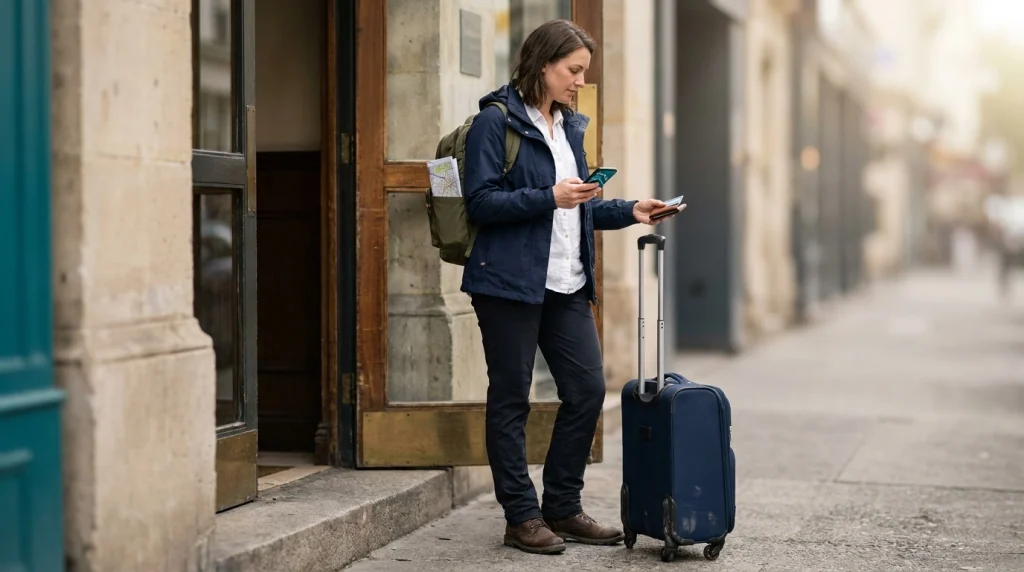
A short checklist helps you leave your accommodation prepared without overpacking or spending too much time worrying about every possible problem. For a first subway journey, focus on navigation, payment, communication, and a backup plan.
Your pre-journey checklist
- Route: Save the departure station, destination, line, direction, and transfer details.
- Payment: Check accepted ticket types and carry a working payment method.
- Operating hours: Verify the first and last trains if your plans depend on a particular departure.
- Phone: Charge your phone and download an offline map if available.
- Accommodation: Save the address and identify the correct destination exit.
- Emergency information: Store the local emergency number and transit authority contact details.
- Belongings: Secure your wallet, phone, passport, and luggage.
- Alternative transport: Identify a legitimate backup option for major disruptions or an uncomfortable late-night journey.
How much time should you allow?
For an unfamiliar station, arriving 10–15 minutes before your intended departure is a useful starting point. Allow more time if you need to purchase a ticket, navigate a large interchange, or manage heavy luggage.
These are planning estimates, not official requirements. During busy periods or service disruptions, you may need considerably longer.
Understand local customs and passenger rules
Subway etiquette differs between cities, so observe local signs and follow staff instructions. In some places, passengers stand on one side of escalators; elsewhere, the convention may differ.
Women-only carriages are available on certain transit networks, but they aren’t universal. For example, Bangladesh’s official metro operator, DMTCL, describes a designated women’s carriage at the front of each train on its metro service, alongside the option for women to use other carriages.
You can check the operator’s official DMTCL website for current service information. Always verify carriage arrangements, operating rules, and accessibility provisions for the particular system you’re using.
Section Takeaway: Prepare your route, payment, destination address, and backup options before leaving. A little planning can make your first subway journey much more manageable.
Frequently Asked Questions
1. Is it difficult for a solo female traveler to use a subway for the first time?
No, not necessarily. The process becomes easier when you understand the route map, ticketing system, platform directions, and station exits. Start with a short daytime journey and allow extra time to read signs without rushing.
2. How can I avoid getting lost in an unfamiliar subway system?
Save your route before leaving, confirm the train’s direction, and note your destination station and exit. Download an offline map when possible. If you get confused, stop in a safe public area and ask transit staff for directions.
3. Should I sit in a particular subway carriage when traveling alone?
Choose a carriage where you feel comfortable and can move away if necessary. If local guidance identifies a staffed or monitored area, consider using it. No carriage guarantees safety, so remain aware of your surroundings throughout the journey.
4. What should I do if someone follows me on the subway?
If you believe someone is following you, move toward other passengers or transit staff and avoid leaving for an isolated area. Contact transit security or local emergency services if needed. Don’t confront the person if doing so could increase the danger.
5. Is a subway cheaper than a taxi for solo travelers?
A subway is often less expensive than a private taxi for ordinary city journeys, but the actual cost depends on local fares, distance, transfers, and ticket type. Compare the full journey cost, including the final walk or connecting transport, before deciding.
6. Can I use a subway at night when traveling alone?
That depends on the city’s safety conditions, operating hours, and your route. Check the official timetable, choose a practical route, and plan how you’ll reach your accommodation after exiting. If conditions feel unsuitable, consider a reputable alternative.
7. What should I do if I lose my ticket or transit card?
Check the transit authority’s replacement and payment rules, then approach an official ticket counter or employee for help. Some systems support digital tickets or registered cards, while others require a new fare. Keep a backup payment method available.
Final Thoughts: Travel Independently, but Prepare Wisely
Learning how to use a subway system is one of the most useful skills you can develop as a solo female traveler. It can help you explore more of a city without depending on taxis or organizing every journey around someone else’s schedule.
Start small, learn the local system, and give yourself enough time to make decisions calmly. With practice, reading route maps, navigating transfers, and finding the correct exits can become a normal part of your travel routine.
Most importantly, remember that independence doesn’t mean ignoring your instincts or pushing ahead when a situation feels wrong. Plan carefully, stay aware, and choose the transport option that best suits your destination and circumstances.
Your first solo subway ride doesn’t have to be perfect. It just needs to be a safe, manageable step toward exploring the world on your own terms.