How Can a Solo Female Traveler Research Local Customs Before Visiting?
Quick Answer
A solo female traveler can research local customs before visiting by combining official travel guidance, local tourism information, recent traveler reports, and destination-specific cultural research. Start with official guidance for women travelers, then check dress expectations, religious etiquette, social behavior, photography rules, tipping, alcohol laws, public conduct, and norms that may affect women traveling alone.
Research These First
- Local laws: Check rules involving alcohol, medication, photography, public behavior, clothing, and restricted areas.
- Dress expectations: Learn what is normal on streets, at religious sites, and in more conservative neighborhoods.
- Social etiquette: Research greetings, personal space, eye contact, dining manners, and interactions with strangers.
- Women-specific norms: Look for current guidance about harassment, nightlife, transportation, and expectations for women traveling alone.
- Religious customs: Check holy days, prayer times, fasting periods, and rules for entering places of worship.
- Recent experiences: Compare official advice with recent reports from women who visited the same city or region.
One Important Rule
- Verify anything involving law, safety, health, or entry requirements with an official source close to your departure date.
If you’re wondering how can a solo female traveler research local customs before visiting, the goal isn’t to memorize an etiquette book. You need to know which cultural differences could affect your comfort, safety, clothing, transportation, and everyday interactions.
I find it more useful to research customs as practical travel information. That makes cultural preparation feel manageable instead of overwhelming.
In This Guide
- What Local Customs Should a Solo Female Traveler Research?
- Where Can You Find Reliable Information About Local Customs?
- How Do You Research Cultural Norms That Specifically Affect Women?
- How Do You Separate Local Law From Cultural Etiquette?
- How Can You Build a Simple Customs Checklist Before Your Trip?
- Frequently Asked Questions
- Final Takeaway
What Local Customs Should a Solo Female Traveler Research?
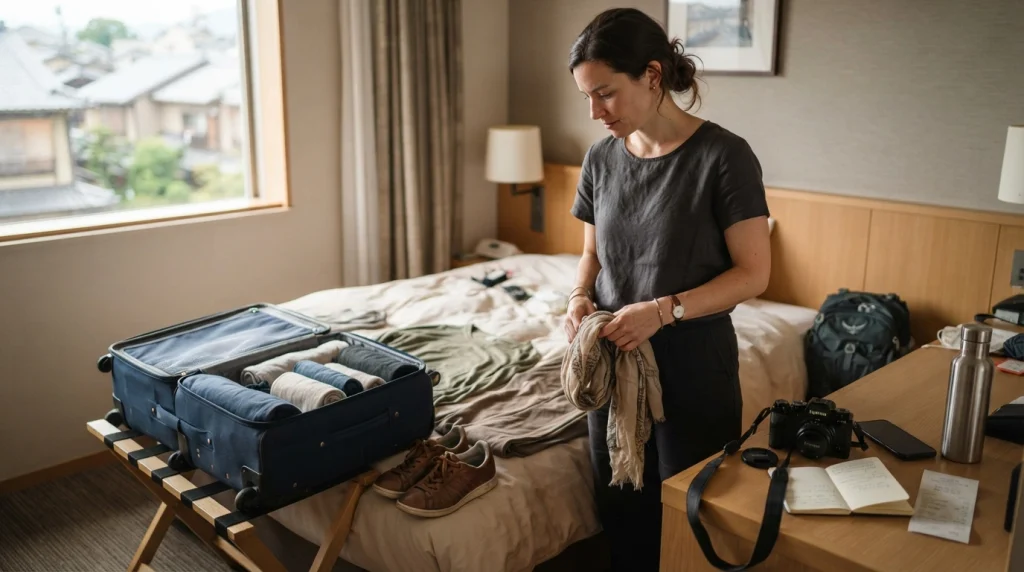
Start with customs that could change what you wear, say, photograph, eat, drink, or do in public. You don’t need to learn every tradition before boarding your flight.
Local customs are the shared social expectations, traditions, manners, and everyday behaviors considered normal or respectful within a community.
Research clothing and modesty expectations
Dress rules are one of the easiest cultural differences to research before a solo trip. They can also vary dramatically within one destination.
A beach resort may feel relaxed while a nearby temple, mosque, rural community, or government building expects much more coverage.
- Check whether shoulders or knees should be covered.
- Find out whether head coverings are expected at religious sites.
- Research whether swimwear is acceptable away from beaches or pools.
- Check whether nightlife districts have different norms from residential neighborhoods.
- Look for footwear rules at homes and places of worship.
I prefer researching situations rather than asking whether an entire country is “conservative.” That single label usually hides important differences between neighborhoods and settings.
Learn greetings and everyday social behavior
Small interactions often cause more confusion than major traditions. Learn how people normally greet each other and how formal everyday conversations tend to be.
- Handshakes, bows, cheek kisses, or verbal greetings
- Whether touching between strangers is common
- Expected personal space
- Whether sustained eye contact feels polite or confrontational
- How people address older adults
- Whether removing shoes indoors is normal
You don’t need flawless etiquette. Showing awareness and following local cues usually matters more.
Check dining, tipping, and alcohol customs
Food etiquette can affect surprisingly ordinary moments. Research whether tips are customary, whether service charges are included, and whether eating while walking is normal.
Alcohol deserves separate attention because etiquette and law aren’t always the same thing.
- Minimum drinking age
- Where alcohol may legally be consumed
- Whether public drinking is prohibited
- Restrictions during religious periods
- Whether intoxication attracts stronger social disapproval
Research photography etiquette
Don’t assume you can photograph everything simply because you’re in a public place. Military facilities, border areas, government buildings, religious ceremonies, and local residents may require extra caution.
Ask before photographing people closely, especially children or people participating in religious activities.
Section Takeaway: Research customs by situation—clothing, greetings, dining, religion, photography, and public behavior—not through broad stereotypes about an entire country.
Where Can You Find Reliable Information About Local Customs?
The best research uses more than one source. Official guidance tells you what could have legal or safety consequences, while local and traveler sources explain how daily life feels.
I use a simple source hierarchy so a viral video never outweighs current official information.
| Source | Best For | Main Limitation |
|---|---|---|
| Government travel advice | Laws, safety, entry rules, women’s travel concerns | May not explain subtle everyday etiquette |
| Official tourism boards | Religious sites, festivals, practical visitor etiquette | Usually focused on visitor-facing areas |
| Established guidebooks | Cultural context and destination norms | Printed information can age |
| Recent female traveler reports | Street-level experiences and solo travel realities | Personal experiences aren’t universal |
| Accommodation staff or local guides | Neighborhood-specific questions after arrival | Advice depends on the person’s experience |
Start with official travel guidance
The U.S. State Department advises travelers to review destination information, including local laws and customs, before traveling. Its planning guidance also recommends checking current travel advisories.
You can begin with the U.S. State Department international travel planning resources.
British travelers can also use the UK government’s guidance for women traveling abroad, which recommends researching local culture and potential gender-specific difficulties.
Pro tip: Government travel guidance can change quickly. Check it again shortly before departure rather than relying on notes you made months earlier.
Then check local sources
Search the destination’s official tourism website for etiquette pages, visitor codes, religious-site rules, public holidays, and festival information.
For a city trip, narrow your searches to the actual neighborhood or attraction rather than researching only at country level.
- “Tokyo shrine etiquette visitors”
- “Marrakech mosque dress code tourists”
- “Bangkok temple clothing rules”
- “Dubai public behavior tourists”
- “Rome church dress code visitors”
Use forums and social media as supporting evidence
Recent traveler reports help you understand how customs work in practice. They are particularly useful for questions that official pages rarely discuss.
- Do women commonly eat alone there?
- Does a particular outfit attract attention?
- How formal are restaurants?
- What happens when you enter a local home?
- How do women handle unwanted conversations?
Check the publication date. A five-year-old forum thread may describe a neighborhood, transport system, or social climate that has changed.
Section Takeaway: Use official sources for rules and safety, local sources for context, and recent female traveler reports for practical everyday detail.
How Do You Research Cultural Norms That Specifically Affect Women?
Look beyond generic etiquette guides. Women traveling alone can experience local customs differently from couples, families, or male travelers.
Official travel guidance acknowledges that women may face different clothing expectations, social rules, and security concerns in some destinations.
Search specifically for women’s experiences
Instead of searching only “local customs in Jordan,” add the situation you expect to face.
- “women travelers Jordan dress customs”
- “solo women eating alone Seoul etiquette”
- “female tourists Morocco unwanted attention”
- “women public transport Delhi cultural norms”
- “women entering temples Bali dress rules”
This gives you answers closer to your actual trip.
Research how women usually interact with strangers
Gender norms can affect conversations, greetings, eye contact, seating arrangements, and interactions with men. These expectations may also change between large cities and smaller towns.
Don’t turn those differences into assumptions about individual people. Use cultural research as preparation, not as a reason to stereotype everyone you meet.
Investigate transportation and nightlife separately
A destination that feels comfortable during daylight may operate differently after dark. Research evening transportation before assuming your daytime routine will work at midnight.
- Whether women commonly use public transport alone at night
- Whether women-only train cars or waiting areas exist
- How licensed taxis are identified
- Whether ride-hailing apps are widely used
- When metro or bus services stop
- How people normally dress for nightlife
Also check the latest official women-traveler and destination safety guidance. Government sources sometimes identify gender-related risks that generic destination articles overlook.
Ask women who live there
Local women often provide the most useful context because they can explain the difference between a firm rule and a flexible social preference.
Ask precise questions rather than “Is this country safe for women?”
- “Would this outfit be appropriate for the neighborhood?”
- “Is it normal for a woman to sit alone at this type of cafe?”
- “Would taking this bus after 10 p.m. be unusual?”
- “Should I cover my hair inside this particular religious site?”
- “Is there anything visitors commonly do that locals find rude?”
Those questions produce far more practical answers.
Pro tip: Treat personal accounts as experiences, not universal facts. Verify legal or safety claims against current official information.
How Do You Separate Local Law From Cultural Etiquette?
This distinction matters. Breaking an etiquette rule may cause awkwardness, while breaking a law can lead to fines, detention, or other serious consequences.
Whenever you see words such as “forbidden,” “illegal,” “required,” or “prohibited,” verify the claim through an official government or embassy source.
Put your research into three categories
- Legal requirement: Rules backed by law or official regulation.
- Venue requirement: Rules established by a temple, mosque, museum, hotel, beach, or other property.
- Social expectation: Behavior locals generally consider polite or appropriate.
For example, modest clothing could be a social expectation across a neighborhood but a strict entrance condition at a particular religious site.
That difference changes how you should prepare.
Pay special attention to rules that differ from home
Travelers can get caught out when they assume familiar activities are regulated the same way everywhere.
- Prescription and controlled medication
- Alcohol possession and public drinking
- Photography near security facilities
- Drones
- Public demonstrations
- Public displays of affection
- Religious conduct
- Driving regulations
- Social media or political speech
The State Department advises travelers to learn local laws and customs as part of international trip preparation.
Don’t rely on cultural summaries for legal advice
A blog can explain the social context, but it shouldn’t be your final source for laws. Check government travel advice, an embassy, consulate, or relevant local authority.
This is especially important as of 2026 because regulations, security conditions, and entry requirements can change faster than evergreen travel guides.
Pro tip: Save the official destination advisory to your phone before departure. Recheck it after major political, security, health, or weather developments.
How Can You Build a Simple Customs Checklist Before Your Trip?
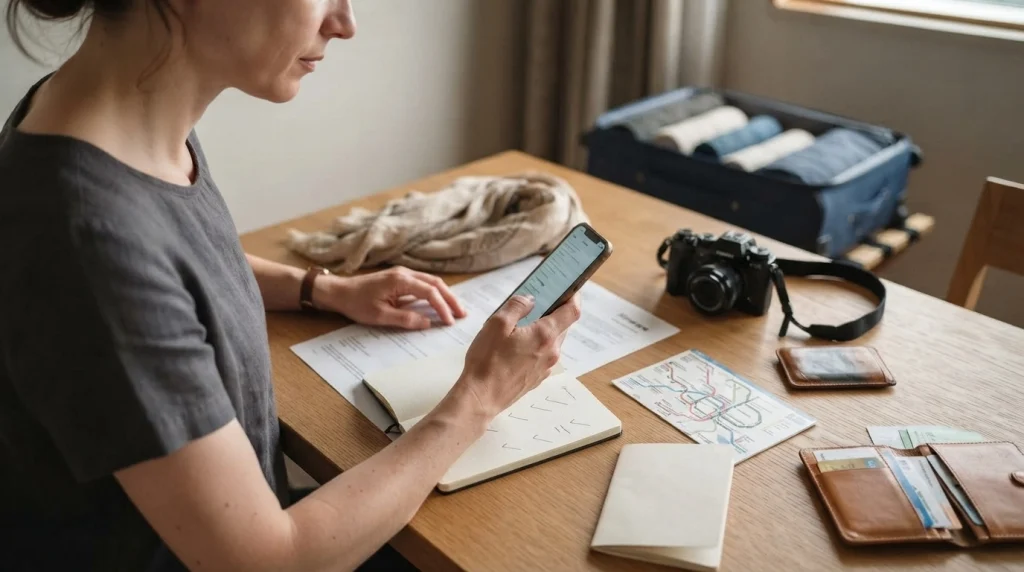
You don’t need weeks of cultural research. A focused 30-to-60-minute customs review can answer most practical questions for a typical city trip.
I organize the research by situations I’m likely to encounter rather than reading random cultural facts.
About one week before departure
- Open the official travel advisory. Read local laws, safety guidance, and information for women travelers.
- Check the tourism authority. Look for religious sites, dress expectations, festivals, public holidays, and visitor etiquette.
- Review your itinerary. Identify temples, rural areas, nightlife districts, homes, beaches, or formal venues that may have special norms.
- Search recent female traveler experiences. Focus on the cities and neighborhoods you’re actually visiting.
- Write five destination-specific notes. Keep only the customs that affect your real plans.
Create a one-screen customs note
Your phone note should be short enough to check in seconds.
- Dress: What should I cover, and where?
- Greetings: Is touching or handshaking appropriate?
- Religion: What should I know before entering worship sites?
- Food: Are there dining or tipping customs I should know?
- Alcohol: Where is drinking permitted?
- Photos: What shouldn’t I photograph?
- Transport: Are there women-specific norms or safety considerations?
- Nightlife: Are late-night behavior and clothing expectations different?
- Language: What polite words should I learn?
- Emergency: What local number should I call if I need help?
Learn a few courtesy phrases
Fluency isn’t necessary. A few words can make interactions smoother and show that you’ve made an effort.
- Hello
- Please
- Thank you
- Excuse me
- Sorry
- Yes
- No
- Help
Learn how to say them rather than relying only on written spelling.
Keep your research flexible after arrival
Even careful online research won’t explain every local situation. Watch how people around you behave and ask trusted locals when something isn’t clear.
Hotel or hostel reception staff can be helpful for neighborhood-specific questions. A simple “Would this be appropriate here?” often solves the problem quickly.
Australia’s Smartraveller guidance similarly advises travelers to respect local laws and customs and seek local advice when unsure.
Section Takeaway: Turn cultural research into a short, practical checklist you can use while packing and again after you arrive.
Frequently Asked Questions
How far in advance should I research local customs?
Start basic research when you choose the destination, then review customs again about one week before departure. Recheck official travel advice shortly before you leave because laws, security conditions, religious events, and visitor restrictions can change.
Are travel blogs reliable for learning local etiquette?
Travel blogs can be useful for everyday etiquette and personal experiences, but they shouldn’t be your only source. Verify anything involving laws, safety, medication, entry requirements, or restricted behavior through current official guidance.
Should I change how I dress when traveling alone?
That depends on the destination and setting. Research local expectations for streets, religious sites, rural areas, nightlife venues, and beaches separately rather than assuming one dress rule applies everywhere.
How can I avoid stereotyping local people while researching customs?
Focus on behaviors and situations instead of describing entire populations with broad labels. Compare several sources, recognize regional differences, and treat traveler anecdotes as individual experiences rather than proof that everyone behaves the same way.
What customs are most important for first-time solo female travelers?
Prioritize dress expectations, interactions with strangers, religious etiquette, transportation norms, photography, alcohol rules, public behavior, tipping, and any local laws that differ from home. These are more useful than memorizing ceremonial traditions you’re unlikely to encounter.
Can social media help me research cultural norms?
Yes, especially for current clothing, nightlife, restaurants, and street-level experiences. Check dates and compare several creators. Never rely on a social post alone for legal, safety, health, or immigration information.
What should I do if I accidentally break a local custom?
Stay calm, apologize briefly, and follow the guidance of the person correcting you. Most minor etiquette mistakes are easier to resolve when you’re respectful and willing to adjust instead of becoming defensive.
Final Takeaway
Researching local customs before a solo trip isn’t about changing who you are. It’s about knowing the environment you’re entering well enough to make informed choices.
Start with official guidance, then add local tourism information and recent female traveler experiences. Focus on customs that affect your clothing, communication, transportation, religious visits, photography, dining, and public behavior.
Save the important details in one short phone note before you leave. You’ll arrive better prepared without spending your entire trip worrying about whether you’re doing everything perfectly.