How Should a Solo Female Traveler Prepare for Jet Lag?
Quick Answer
A solo female traveler should prepare for jet lag by getting enough sleep before departure, shifting sleep toward the destination schedule when practical, using daylight strategically, and changing meals and sleep to local time during the journey. I also treat arrival planning as part of jet-lag preparation because fatigue can reduce concentration and make an unfamiliar airport or neighborhood harder to navigate. The CDC Yellow Book jet lag guidance is a useful starting point for current medical advice.
Your quick preparation plan
- Sleep first: Avoid starting a long-haul trip already sleep-deprived.
- Shift gradually: For the two or three days before departure, move bedtime toward your destination schedule when possible.
- Use local time: Once your journey begins, think in your destination’s time for sleeping, meals, and activity.
- Manage light: Daylight can help move your body clock, but timing matters.
- Plan arrival: Pre-book your first transfer and avoid demanding plans immediately after landing.
- Nap carefully: If exhaustion wins, keep an arrival-day nap short instead of sleeping through the afternoon.
One solo-travel rule I prioritize
- Never schedule an arrival that requires tired, complicated decision-making if a safer and simpler option is available.
Jet lag is annoying on any trip, but it can feel more disruptive when you’re traveling alone. You don’t have a companion reminding you which train to take when your brain thinks it’s 3 a.m.
I prepare for jet lag as both a sleep issue and a solo-travel planning issue. This guide explains how to manage your body clock while protecting your energy, judgment, and arrival-day safety.
In This Guide
- What is jet lag, and why does it matter more when traveling alone?
- How should I prepare for jet lag before my flight?
- What should I do during the flight to reduce jet lag?
- What should a solo female traveler do on arrival day?
- How should I use light, naps, caffeine, and melatonin?
- How can I make a jet-lag plan safer for solo travel?
- Frequently asked questions
What Is Jet Lag, and Why Does It Matter More When Traveling Alone?
Jet lag is a temporary mismatch between your internal body clock and the local time at your destination. It commonly follows rapid travel across several time zones.
Your internal 24-hour timing system is called your circadian rhythm. It influences sleep, alertness, appetite, and other daily body processes.
Jet lag can cause more than sleepiness. Possible symptoms include trouble falling asleep, waking too early, daytime fatigue, reduced concentration, digestive discomfort, and a general feeling that your body is operating on the wrong schedule.
- Sleep problems: You may be wide awake at midnight or struggling to stay awake at lunch.
- Slower thinking: Directions, ticket machines, prices, and transportation choices may require more effort.
- Low energy: A packed sightseeing schedule can become harder than expected.
- Mood changes: Exhaustion can make small travel problems feel much bigger.
- Digestive changes: Hunger and meal timing may feel out of sync.
For a solo traveler, the concentration issue matters to me as much as the sleep problem. Every airport transfer, check-in, payment, and navigation decision is mine to manage.
Is eastbound travel worse than westbound travel?
For many travelers, eastward adjustment is harder because the body generally finds it easier to shift later than earlier. Your personal experience can still differ.
| Factor | Eastward Travel | Westward Travel |
|---|---|---|
| Body-clock change | Usually requires shifting earlier | Usually requires shifting later |
| Average adaptation cited by CDC | About 1 hour per day | About 1.5 hours per day |
| Pre-trip adjustment | Move sleep earlier when practical | Move sleep later when practical |
| Solo-travel concern | Early-evening exhaustion may be strong | Very early waking can disrupt plans |
The numbers are general averages, not a countdown for your individual recovery. Flight timing, sleep debt, light exposure, and your normal schedule also matter.
Section Takeaway: Jet lag affects alertness as well as sleep. For a woman traveling alone, that makes arrival logistics part of the preparation plan.
How Should I Prepare for Jet Lag Before My Flight?
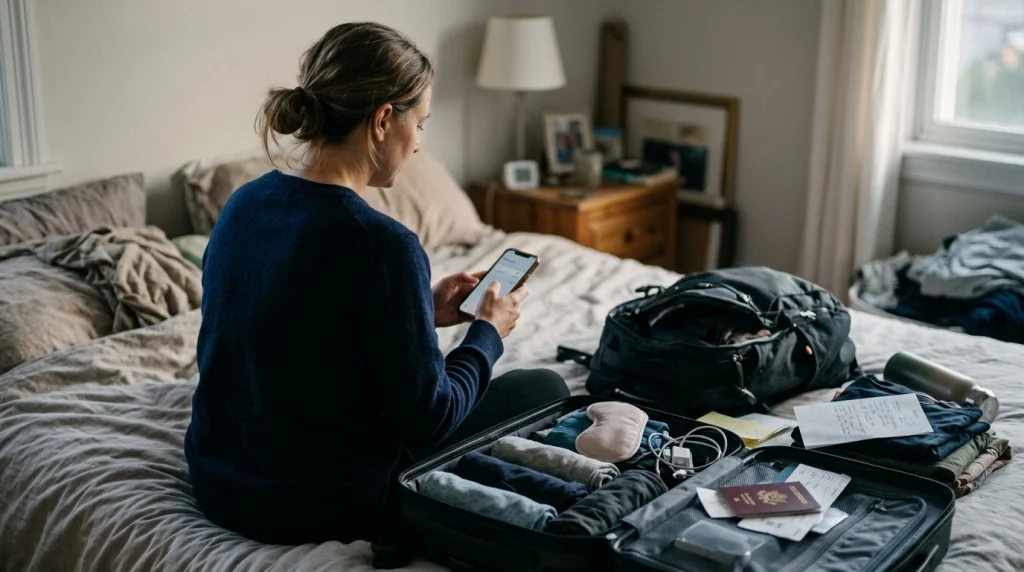
Start with sleep rather than supplements. A few nights of adequate rest give you a better starting point than trying to repair major sleep loss after landing.
Two to three days before departure
If your schedule allows, begin moving sleep toward your destination’s time. The CDC gives an example of shifting by about one hour per day for two or three days before travel.
- Flying east: Try moving bedtime and wake time earlier.
- Flying west: Try moving bedtime and wake time later.
- Keep it realistic: Don’t sacrifice hours of sleep merely to force a schedule change.
- Protect the final night: Finish packing early enough that you’re not awake at 1 a.m. searching for chargers.
I also switch my phone’s secondary clock to the destination time before leaving. It makes the upcoming schedule easier to visualize.
Build an easy first 24 hours
One of my strongest solo-trip habits is leaving arrival day deliberately light. I don’t treat the first day as a challenge to prove how much I can see.
For example, imagine landing in London at 7 a.m. after an overnight eastbound flight. I would choose luggage drop, breakfast, an outdoor walk, check-in, and an early evening over a prepaid six-hour excursion.
- Pre-book or research airport transportation.
- Save the accommodation address offline.
- Download an offline map if needed.
- Confirm check-in or luggage-storage times.
- Save important reservation details on your phone.
- Keep the first evening close to your accommodation.
This is not about being fearful. It’s about reducing decisions when fatigue is predictable.
For broader air-travel health considerations, the CDC Yellow Book air travel guidance is a useful reference before a long international flight.
Pro tip: If you have a medical condition, take regular medication, are pregnant, or have significant sleep problems, discuss long-haul travel and time-zone changes with a qualified healthcare professional before departure.
Section Takeaway: Arrive rested, shift gradually when practical, and make your first day simpler than your normal sightseeing days.
What Should I Do During the Flight to Reduce Jet Lag?
Once I’m traveling, I start organizing my behavior around destination time. I don’t expect perfect airplane sleep, but I want my choices moving in the right direction.
Change your mental clock
Set your watch or phone to the destination time after boarding. Then ask whether people at your destination are normally sleeping, eating, or beginning their day.
Your flight schedule may make perfect alignment impossible. That’s fine.
- If it’s destination nighttime: Dim screens, use an eye mask, reduce stimulation, and try to rest.
- If it’s destination daytime: Stay awake when practical and use light appropriately.
- For meals: Gradually think in destination meal times rather than eating every offered snack automatically.
Hydrate without turning it into a competition
Drink water regularly through the journey. You don’t need to force excessive amounts.
I also keep alcohol modest or skip it on long flights. Alcohol may make you feel sleepy initially while reducing sleep quality later.
Don’t rely on endless coffee
Caffeine can improve alertness, but late use may make your first local bedtime harder. Think of caffeine as a timed tool rather than a survival strategy.
The medically reviewed Sleep Foundation travel and sleep guide also emphasizes sleep planning, light exposure, and limiting caffeine and alcohol when travel disrupts sleep.
Pack a tiny sleep kit
- Comfortable eye mask
- Earplugs or noise-reducing headphones
- Travel pillow if you use one
- Light layer for a cold cabin
- Water bottle for use after security where permitted
I keep these items in my personal bag, not my overhead luggage. A sleep mask isn’t useful if retrieving it means waking three people in your row.
Section Takeaway: During the flight, think in destination time, protect your opportunity to sleep, stay sensibly hydrated, and use caffeine strategically.
What Should a Solo Female Traveler Do on Arrival Day?
Your arrival day should help your body adapt without requiring peak mental performance. Daylight, gentle movement, local meal timing, and a manageable schedule usually make more sense than collapsing into bed for five hours.
Get onto local time quickly
If you land during the local day, try to stay awake until a reasonable local bedtime. Spend some time outside if the timing suits your adjustment plan.
- Eat meals according to local time.
- Take an easy outdoor walk.
- Drink water.
- Check into your accommodation.
- Prepare tomorrow’s clothes and essentials early.
- Keep the evening simple.
If I desperately need a nap, I set an alarm before closing my eyes. A 20- to 30-minute nap is less likely to steal the whole afternoon than an open-ended sleep.
Don’t make your hardest navigation decision while exhausted
A cheap route with four transfers may look sensible when planning at home. It may feel completely different after an overnight flight with luggage.
I compare airport transfers using three things: simplicity, arrival time, and how much attention the journey requires. Cost matters, but it isn’t the only variable.
| Arrival Situation | Lower-Stress Choice | Why It Helps |
|---|---|---|
| Morning arrival | Luggage drop plus daylight walk | Keeps you moving toward local daytime |
| Late-night arrival | Direct, pre-researched transfer | Reduces tired navigation decisions |
| Severe daytime fatigue | 20-30 minute alarmed nap | May improve alertness without replacing nighttime sleep |
| First evening | Dinner near accommodation | Limits complicated travel while tired |
The goal isn’t to stay inside because you’re solo. It’s to save your most ambitious exploring for when your attention is sharper.
Section Takeaway: Use arrival day to synchronize with local time, not to complete a sightseeing marathon. Simpler logistics can also reduce solo-travel risk when you’re tired.
How Should I Use Light, Naps, Caffeine, and Melatonin?
Light is one of the strongest signals affecting your circadian rhythm. However, more light isn’t automatically better because the timing can shift your internal clock in different directions.
Use daylight deliberately
Morning light generally helps shift the body clock earlier, while evening light can help shift it later. That distinction matters when you’re adapting to eastward versus westward travel.
If you’re crossing many time zones, generic advice can become inaccurate. A personalized schedule from a travel-medicine or sleep professional may be more useful.
Keep naps short
The CDC notes that short daytime naps of roughly 20 to 30 minutes can support alertness. Longer naps may make it harder to sleep at local nighttime.
I treat a nap as an emergency recharge, not a second night’s sleep.
Time caffeine around local bedtime
Coffee can be useful when you need to remain alert during the local day. It becomes less helpful when it pushes sleep later.
CDC guidance advises avoiding caffeine close to bedtime. Its example schedule stops caffeine about six hours before sleep.
What about melatonin?
Melatonin can influence circadian timing, but timing is important. Taking it at the wrong point in your body-clock cycle can work against the shift you’re trying to make.
I would not experiment with an unfamiliar sleep aid for the first time while alone on a flight. Medication interactions, unexpected grogginess, and individual health factors deserve more consideration than a social-media travel hack.
The NHS jet lag guidance also recommends basics such as rest before travel, water during the flight, natural light after arrival, and avoiding excessive caffeine or alcohol.
Pro tip: Ask a doctor, pharmacist, travel clinic, or sleep specialist before using melatonin or another sleep aid, especially if you take other medicines or have an ongoing medical condition.
Section Takeaway: Light, naps, caffeine, and melatonin all depend on timing. Start with simple sleep and daylight habits, and get professional advice when medication or complex time-zone shifts are involved.
How Can I Make a Jet-Lag Plan Safer for Solo Travel?
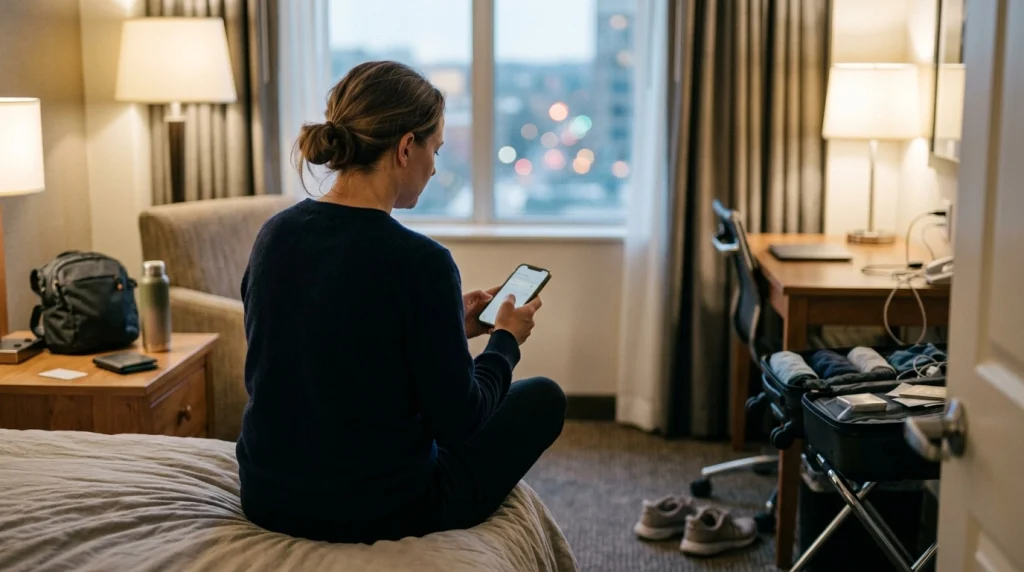
I use one simple principle: assume my tired brain will be less patient than my rested brain. Then I remove as many arrival-day decisions as possible.
Prepare your arrival information offline
- Accommodation name and full address
- Check-in instructions
- Airport-transfer route
- Backup transportation option
- Local emergency information
- Offline or saved map
- Reservation numbers
- Important contact details
A screenshot is useful when airport Wi-Fi or mobile data refuses to cooperate. I also keep the accommodation address available separately from the booking app.
Give yourself a low-pressure first evening
Jet lag can make a normal decision feel surprisingly complicated. This isn’t the evening I want to evaluate an unfamiliar station at midnight or walk a long route just to save a small fare.
Whenever possible, I choose food, basic supplies, and an evening walk near my accommodation. Exploration becomes much more enjoyable after proper sleep.
Don’t confuse exhaustion with intuition
Solo female travelers often talk about trusting their instincts, and that matters. Severe fatigue can also increase irritability, anxiety, and confusion.
If something feels wrong, move somewhere safer first. Then reassess after you’ve eaten, hydrated, checked your route, or contacted someone you trust.
Create a first-morning reset
A simple morning routine gives the body useful local-time cues. It also gives the trip some structure without creating pressure.
- Wake at a reasonable local time.
- Open the curtains and get daylight.
- Drink water.
- Eat breakfast on local time.
- Take a short outdoor walk.
- Begin with one straightforward activity.
As of 2026, jet-lag preparation is still less about finding a miracle cure and more about coordinating sleep, light, timing, and realistic expectations.
For me, the solo-travel difference is simple. I plan not only for when my body will be tired, but also for what decisions I’ll have to make while tired.
Section Takeaway: Good solo jet-lag planning reduces both circadian disruption and decision fatigue. Make transport, check-in, navigation, and your first evening as easy as reasonably possible.
Frequently Asked Questions About Solo Travel and Jet Lag
How many days should I allow for jet lag?
There isn’t one recovery period that fits everyone. The number of time zones, travel direction, sleep loss, light exposure, and individual circadian rhythm all affect adjustment, so give yourself flexibility during the first few days of a long-haul trip.
Is jet lag worse when traveling east?
It often is. The CDC explains that most people adjust more easily when their internal clock shifts later, which generally favors westward travel. Individual responses differ, so use your previous travel experience when planning important activities.
Should I sleep as soon as I reach my hotel?
Usually not if it’s daytime and you’re trying to adjust to local time. If you’re struggling to function, a short 20- to 30-minute nap can improve alertness without disrupting nighttime sleep as much as a long afternoon nap.
Should a solo female traveler book activities on the first day?
I prefer flexible, low-stakes activities such as a neighborhood walk, café stop, simple museum visit, or grocery run. Save expensive timed tours, remote day trips, and complicated transportation for when you’re more alert.
Does drinking water prevent jet lag?
No. Hydration doesn’t reset your circadian rhythm, so water isn’t a cure for jet lag. It can still help you avoid feeling worse from dehydration during a long flight.
Can I use caffeine to stay awake until local bedtime?
Caffeine may help with daytime alertness, but timing matters. Using it too close to local bedtime can interfere with the sleep you’re trying to establish, so avoid treating coffee or energy drinks as an unlimited fix.
Should I take melatonin for jet lag?
Melatonin may help some travelers when timed appropriately, but it isn’t a one-size-fits-all solution. Because timing, dose, medicines, and individual health factors matter, discuss it with a healthcare professional rather than experimenting during the trip.
Preparing for jet lag as a solo female traveler isn’t about controlling every hour of sleep. It’s about giving your body useful time cues while making your first days easier to manage.
Rest before departure, use daylight thoughtfully, keep naps short, and simplify your arrival. Your first day doesn’t have to be your biggest day for the trip to start well.