How Can a Solo Female Traveler Plan a Beach Day Alone?
Quick Answer
If you’re wondering how can a solo female traveler plan a beach day alone, start with the beach rather than the swimsuit. Choose a staffed, easy-to-reach beach, check weather and water conditions, pack lightly, protect your valuables, and decide how you’ll get home before leaving. I also check official beach swimming guidance before entering unfamiliar ocean water.
Plan Your Solo Beach Day in Six Steps
- Choose the beach: Favor an accessible beach with lifeguards, facilities, transport, and other visitors nearby.
- Check conditions: Review weather, waves, warning flags, tides, heat, and local beach notices.
- Pack lightly: Bring water, sun protection, a towel, phone, payment method, and only the valuables you need.
- Plan your swim: Stay in designated swimming areas and near lifeguards rather than entering isolated water alone.
- Protect your exit: Keep enough battery, money, and transport options available to leave whenever you want.
- Set a backup: Know what you’ll do if weather, crowds, unwanted attention, or water conditions change.
A solo beach day can be one of the easiest ways to enjoy traveling alone. You control the pace, the view, your lunch, and exactly when you leave.
I also find beaches slightly different from normal solo sightseeing. Water conditions, exposed belongings, heat, transport, and personal boundaries all deserve a little planning.
The goal isn’t to turn a relaxing day into a security exercise. It’s to remove the small problems that are harder to solve when nobody else is watching your bag or checking the route home.
In This Guide
- What Does Planning a Solo Beach Day Actually Mean?
- How Do You Choose a Beach That Works Well Alone?
- What Should You Pack for a Solo Beach Day?
- How Can You Swim Safely When You’re Alone at the Beach?
- How Do You Protect Valuables and Personal Boundaries?
- What Should Your Solo Beach-Day Timeline Look Like?
- Frequently Asked Questions
What Does Planning a Solo Beach Day Actually Mean?
Planning a solo beach day means creating a simple plan for access, water safety, belongings, comfort, communication, and your return trip. You don’t need to schedule every hour.
You need enough structure that you can relax once you arrive.
Solo beach-day planning is the process of choosing a suitable beach and preparing the practical systems you’ll manage without a travel companion.
I think of it as five small questions.
- Can I reach it easily? Know your route, parking, public transport, walking distance, or taxi options.
- Is this a sensible place to swim? Check lifeguards, designated swimming areas, flags, local warnings, and current conditions.
- What happens to my belongings? Decide before arriving rather than improvising after you’ve changed clothes.
- Can I stay comfortable? Plan for shade, drinking water, toilets, food, sun exposure, and changing weather.
- Can I leave easily? Keep your phone, money, transport plan, and accommodation details available.
That last point matters more than many travelers expect. A beautiful beach can become inconvenient quickly when the final bus is infrequent or ride-hailing coverage is poor.
When I travel alone, I don’t ask only, “Is this beach pretty?” I ask whether the entire day still works if I’m tired, wet, sunburned, or ready to leave early.
Solo does not need to mean isolated
There is an important difference between going to the beach independently and choosing an empty stretch of coastline. I usually prefer a beach where I can enjoy personal space without losing access to help.
A staffed public beach, hotel beach, beach club, or popular swimming area may feel less adventurous. It often makes the practical side much easier.
| Beach Type | Main Advantage Alone | Main Trade-Off | What I Check First |
|---|---|---|---|
| Staffed public beach | Lifeguards and facilities may be available | Can be crowded | Patrol hours and swimming zones |
| Hotel or resort beach | Simple access to your room and valuables | Usually tied to accommodation cost | Guest access and water supervision |
| Beach club or managed area | Chairs, food, toilets, and staff may be nearby | Entry or rental fees may apply | Opening hours and return transport |
| Remote beach | Quiet scenery and fewer crowds | Less help, transport, and infrastructure | Access, signal, tides, and emergency options |
Section Takeaway: A good solo beach is not simply beautiful. It should also give you workable transport, water-safety information, facilities, and an easy way to leave.
How Do You Choose a Beach That Works Well Alone?
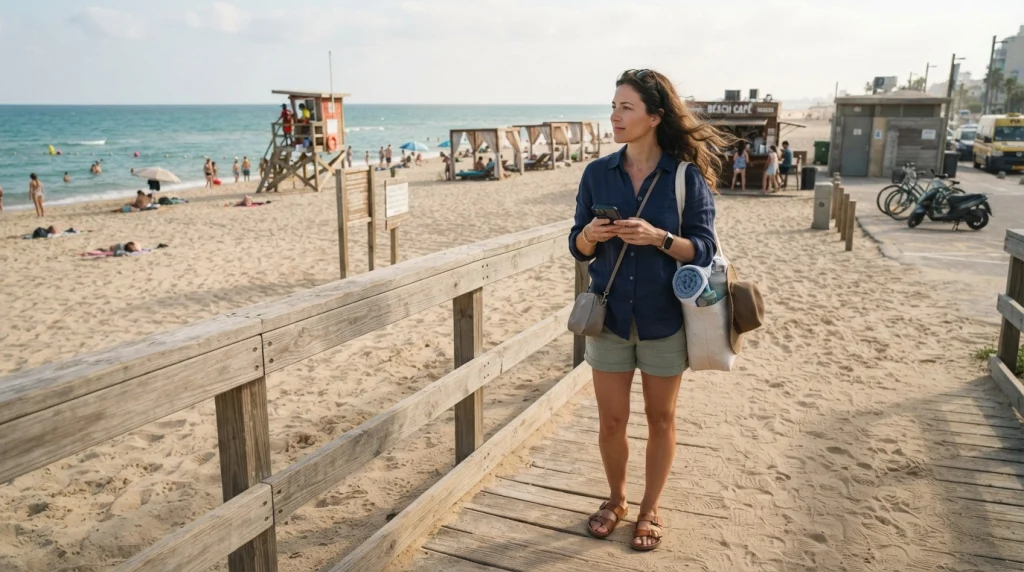
Choose a beach by researching the experience around the water, not only the water itself. Access, lifeguards, crowds, facilities, transport, and local conditions shape the day.
I start with logistics because those are hardest to fix after arrival.
Check how you will get there and back
Open your map and trace the entire trip from your accommodation to the sand. Include the final walking section rather than stopping at the nearest bus station.
Then check the return.
- Public transport: Note the last practical departure and how often service runs.
- Taxi or ride app: Check whether pickups are normally available near the beach.
- Rental vehicle: Research parking areas, opening restrictions, and what you should not leave inside.
- Walking: Consider distance, heat, lighting, road conditions, and whether you’ll want that walk while carrying wet belongings.
- Boat access: Confirm the last return rather than assuming boats run continuously.
I like having two return options whenever possible. That could mean public transport plus enough money for a licensed taxi.
Look for practical facilities
A toilet, shower, café, staffed rental stand, shade area, or locker can make a big difference alone. Facilities also reduce how much you need to carry.
I especially check whether food and drinking water are available nearby. An isolated beach becomes much less relaxing when you’ve underestimated the heat.
Check the beach conditions on the same day
A beach that was calm in someone else’s video may have different conditions when you arrive. Weather, surf, tides, storms, and local warning flags can change.
For U.S. beaches, the National Weather Service beach forecast is useful for checking current beach hazards where forecasts are available.
Elsewhere, use the country’s meteorological service, lifeguard authority, park authority, or local beach-management service.
Pro tip: Check official beach and weather information shortly before leaving your accommodation. Current warnings matter more than yesterday’s travel post.
What Should You Pack for a Solo Beach Day?
Pack enough to stay comfortable and solve small problems, but don’t bring valuables you cannot secure. I prefer one manageable beach bag rather than several loose items.
Less gear means less to watch.
My basic solo beach packing checklist
- Water: Bring enough for the expected heat and duration of your visit.
- Sun protection: Pack sunscreen, sunglasses, a hat, and clothing that gives you extra coverage when needed.
- Towel or mat: Choose something easy to shake clean and repack.
- Phone: Start with a strong battery and save essential information offline.
- Portable battery: Bring one when you’ll be away for several hours or depend on your phone for transport.
- Small payment method: Carry only the cash and cards you expect to need.
- Waterproof pouch: Use one for a phone, card, room key, or other essentials when appropriate.
- Light cover-up: Useful for cafés, transport, stronger sun, and local dress expectations.
- Snack: Helpful when nearby food options are uncertain.
- Small first-aid items: Pack what you normally use for minor cuts, blisters, or personal needs.
- Reusable bag: Useful for separating wet items from dry ones.
What I leave behind
I avoid carrying my passport to the sand unless local circumstances require it. I also leave unnecessary electronics and sentimental jewelry at secure accommodation.
The cheapest way to protect an expensive item is often not bringing it.
If a beach offers lockers, check whether they are staffed, what size they are, and how payment works. Don’t assume every locker system accepts your card or app.
Plan for sun and heat
Sand and water can increase sun exposure, so a cloudy sky doesn’t automatically mean you can ignore sun protection. The CDC advises travelers to protect themselves from excessive sun exposure and heat.
You can review destination health guidance through CDC Travelers’ Health before an international trip.
I also build shade into my day. A beach umbrella, rented chair with shade, covered café, or shorter beach session can be more useful than trying to tolerate several exposed hours.
How Can You Swim Safely When You’re Alone at the Beach?
A solo beach trip should not mean swimming alone in unmonitored water. When I want to enter the ocean, I favor designated areas with lifeguards and other swimmers nearby.
The water deserves more caution than the towel-and-book part of the day.
Check before entering
- Look for lifeguards: Set up within the supervised area when possible.
- Read the flags: Local flag systems can communicate changing conditions.
- Ask: If you’re unfamiliar with the beach, ask a lifeguard about currents and safe swimming areas.
- Watch the water: Don’t assume calm-looking water is automatically safer.
- Know your limits: Ocean swimming can be different from swimming in a pool.
NOAA advises beachgoers to check weather and rip-current forecasts, swim near lifeguards, and follow local warnings. Those are habits I use even when the beach looks peaceful.
Know what a rip current is
A rip current is a concentrated flow of water moving away from shore. It can pull a swimmer farther from land without pulling the swimmer underwater.
If you’re caught in one, fighting directly against the current can exhaust you. NOAA guidance says to remain calm, avoid fighting the current, and escape across it rather than trying to overpower it directly toward shore.
If you cannot escape, float or tread water and signal for help.
For detailed guidance, review the National Weather Service rip-current safety information before swimming in surf you don’t know.
Give yourself permission not to swim
I have had beach days where I arrived, looked at the water, and decided the ocean was not part of that day’s plan. The trip was still worth taking.
You can walk the shoreline, read, photograph the scenery, eat lunch, or sit under an umbrella instead.
This matters because solo travel sometimes creates pressure to “make the most” of every experience. You never need to enter unfamiliar water just because you traveled there.
Pro tip: Follow lifeguards, local warning flags, and official water-safety advice. If authorities say conditions are unsafe, make it a dry beach day.
Section Takeaway: Enjoying the beach alone and swimming alone are different decisions. Treat water conditions as a separate safety check every time.
How Do You Protect Valuables and Personal Boundaries?
The simplest valuables strategy is to bring less. Your phone, room key, payment method, and perhaps an ID copy may be all you need.
I decide how I’ll handle those items before I put on my swimsuit.
Use layers of protection
- Reduce: Leave unnecessary valuables securely stored at your accommodation.
- Consolidate: Keep essentials together instead of spreading them through several bags.
- Use facilities: Choose lockers or managed storage when trustworthy options exist.
- Keep critical items close: A suitable waterproof pouch may help when entering the water.
- Separate backups: Don’t keep every payment method in one beach wallet.
I don’t like relying on a stranger to watch my belongings while I take a long swim. A friendly nearby traveler might help for a quick moment, but that isn’t my security system.
Think about personal boundaries too
A woman sitting alone may sometimes attract conversation. Most interactions may be harmless, but you never owe a stranger personal information or continued company.
You can be polite without explaining your itinerary.
- Keep accommodation private: You don’t need to say exactly where you’re staying.
- Avoid advertising isolation: You don’t need to explain that nobody expects you back.
- Move if needed: Change your chair, go near staff, or leave when an interaction becomes uncomfortable.
- Use a clear answer: A simple “No, thank you” is enough.
- Protect your exit: Keep your transport method and phone accessible.
The U.S. State Department’s guidance for women travelers recommends researching destination-specific issues, protecting personal information, and planning ahead for unsafe situations.
Your own government’s travel authority may provide similar destination advice.
I treat leaving as a normal option rather than a dramatic response. If a place or person makes the day uncomfortable, changing beaches or returning to my hotel is simply another travel decision.
What Should Your Solo Beach-Day Timeline Look Like?
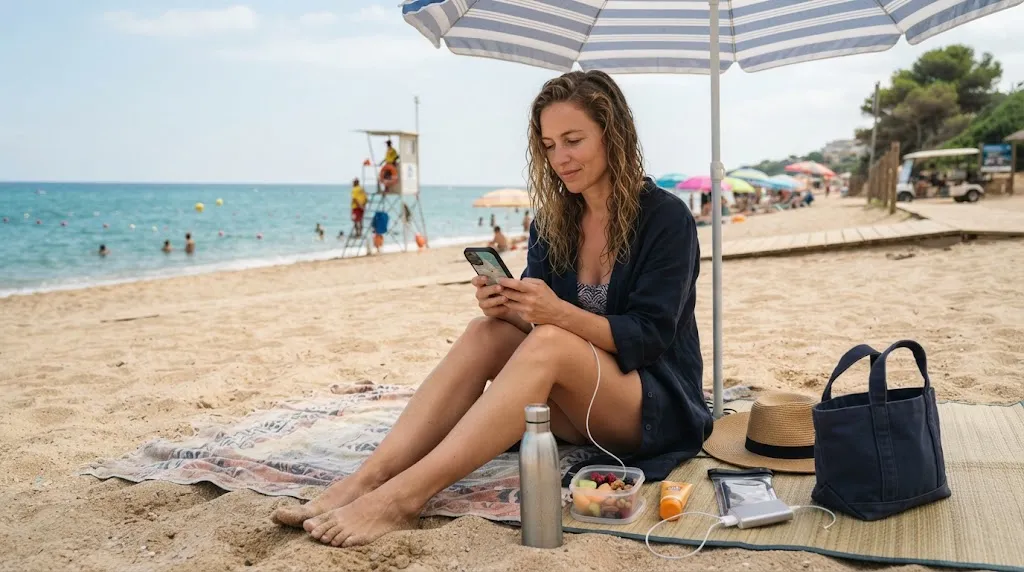
A good solo beach schedule leaves room to change your mind. I usually prefer a shorter, comfortable beach session over trying to stay from sunrise until sunset.
Here’s an example for a relaxed day.
| Example Time | Plan | Solo-Travel Check |
|---|---|---|
| 7:30 a.m. | Recheck weather and beach conditions | Confirm return transport and phone battery |
| 8:30 a.m. | Travel to the beach | Save the route and accommodation address offline |
| 9:00 a.m. | Arrive and survey the beach | Find lifeguards, toilets, shade, exits, and swimming zones |
| 9:30 a.m. | Swim or relax | Follow flags and decide how valuables will be secured |
| 11:30 a.m. | Shade, water, and food break | Check battery, weather, energy, and return options |
| 1:00 p.m. | Leave or continue somewhere shaded | Don’t stay simply because the original plan said you would |
The times are only an example. Climate, season, tides, transportation, opening hours, and your energy should determine your real schedule.
Build a backup plan before arriving
I like one simple alternative for bad beach conditions. It might be a waterfront café, museum, market, spa, hotel pool, or another staffed beach nearby.
That prevents disappointing weather from turning into a wasted day.
Know your exit triggers
- Water warnings: Leave the water when flags, lifeguards, or authorities indicate unsafe conditions.
- Storms: Don’t wait on exposed sand for severe weather to arrive.
- Heat: Move into shade or leave if you become unwell.
- Transport problems: Leave earlier if your reliable return options are disappearing.
- Unwanted attention: Move near staff or other visitors, or leave entirely.
- Low phone battery: Protect enough charge to navigate and arrange transport.
- Fatigue: You don’t gain anything by forcing another two hours when you’re ready to go.
I also tell someone I trust the general plan when I’m visiting an unfamiliar area. It doesn’t need to become a minute-by-minute tracking arrangement.
A simple beach name and expected return window can be enough for many ordinary trips.
As of 2026, I still think the best solo planning habit is preserving options. You want enough flexibility to leave, change beaches, spend more for safer transport, or skip the swim without feeling that the day has failed.
Section Takeaway: Build the day so changing your mind is easy. Your best backup plan is one you can use before a small problem becomes a stressful one.
Frequently Asked Questions
Is it safe for a woman to go to the beach alone?
It can be practical to enjoy a beach alone when you choose the location carefully, research current conditions, keep transport available, and manage your belongings. For swimming, favor designated areas with lifeguards rather than isolated or unfamiliar water.
Where should a solo female traveler sit on the beach?
I prefer a visible spot near lifeguards, staffed facilities, families, or other beachgoers without sitting directly in a crowded walkway. The exact location matters less than having easy access to help, shade, facilities, and an exit.
What should I do with my phone while swimming alone?
Use secure lockers or another trustworthy storage option when available. A suitable waterproof pouch may work in some situations, but avoid bringing unnecessary valuables and don’t assume an unattended beach bag is secure.
Should I ask someone to watch my bag while I swim?
You can ask for brief help, but I wouldn’t make an unknown stranger the main security plan for important belongings. Bring fewer valuables, use secure storage where available, or keep critical items with you using equipment designed for water exposure.
How long should a solo beach day be?
There is no ideal number of hours. I would choose a duration based on heat, shade, water conditions, energy, transport, and how comfortable the day feels rather than trying to remain until a fixed time.
Is an empty beach better for a woman traveling alone?
Not automatically. A remote beach may be peaceful, but it can also mean fewer lifeguards, less transport, weaker mobile coverage, and fewer people nearby if you need help.
What if I arrive and the beach does not feel comfortable?
Leave or switch to your backup activity. A solo travel plan should protect your ability to change direction without needing anyone else’s approval, and no beautiful beach is important enough to override your judgment.
A solo beach day should feel like freedom, not a test of how much uncertainty you can tolerate. Choose the beach carefully, keep your essentials simple, respect the water, and protect your ability to leave.
Once those basics are handled, put the phone down for a while. Read your book, walk the shoreline, order something cold, and enjoy having the day entirely to yourself.