How Can a Solo Female Traveler Understand Local Driving Rules?
Quick Answer
A solo female traveler can understand local driving rules by researching official government guidance, checking destination-specific traffic laws, and confirming license and insurance requirements before departure. Start with the official guide to driving abroad, then verify the rules with local transport authorities and your rental company.
What to Check Before Driving
- Driving side: Confirm whether vehicles travel on the left or right and learn which side of the road you must use at junctions.
- Legal documents: Check license validity, International Driving Permit requirements, rental conditions, and insurance coverage.
- Traffic laws: Research speed limits, road signs, seatbelt rules, phone restrictions, and drink-driving laws.
- Local customs: Learn how drivers handle roundabouts, pedestrian crossings, horns, and priority at intersections.
- Personal safety: Check road conditions, emergency numbers, daylight driving options, and areas where driving may be inadvisable.
A Practical Tip
- Save official rules offline, plan your first drive in daylight, and practice on familiar roads before attempting busy city traffic.
Understanding local driving rules is an important part of planning a safe solo trip, especially when you’re visiting a country with unfamiliar roads, signs, and driving habits.
When traveling alone, you need to make decisions without a companion beside you, so preparation matters. This guide explains how to verify traffic laws, understand unfamiliar road systems, and decide whether driving yourself is the right choice.
In This Guide
Why Do Local Driving Rules Matter When Traveling Alone?
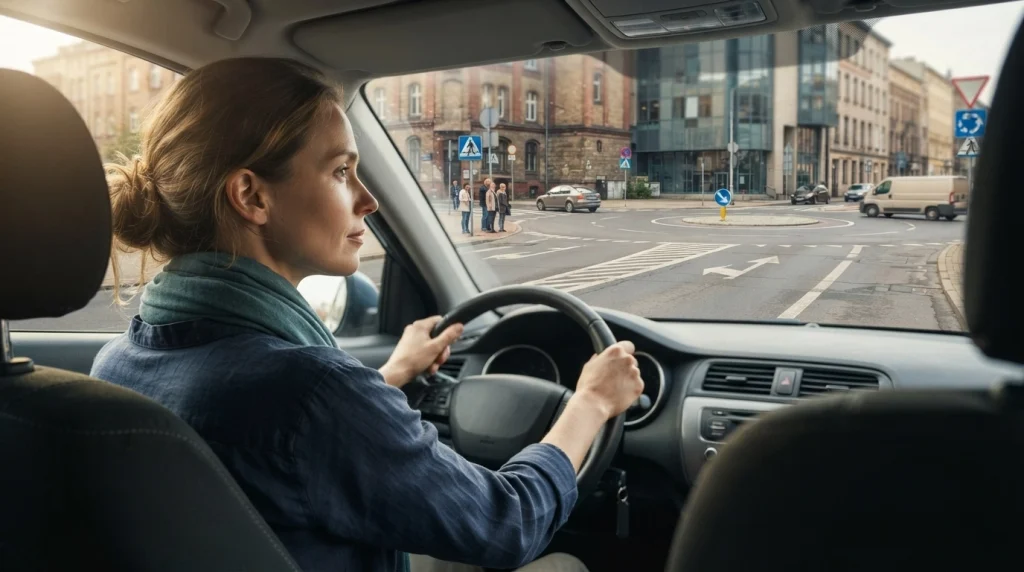
Local driving rules explain how to use roads legally and safely in a particular country. They cover more than speed limits; they can include driving direction, right-of-way, required documents, road signs, and vehicle equipment.
For a woman traveling alone, understanding these rules also supports better planning. You can choose suitable routes, avoid stressful driving conditions, and recognize when public transport or a professional driver may be a better option.
Driving laws can differ significantly between countries
Never assume that the rules you follow at home apply at your destination. Even familiar-looking roads can operate differently.
- Driving side: Some countries drive on the left, while others drive on the right.
- Intersection priority: The rules for giving way, turning, and entering roundabouts may differ.
- Speed limits: Signs may use kilometers per hour rather than miles per hour.
- Required equipment: Some destinations require items such as reflective vests or warning triangles.
- Legal restrictions: Mobile phone use, alcohol limits, and seatbelt requirements vary by jurisdiction.
For example, someone accustomed to right-side driving must adjust to keeping left in countries such as the United Kingdom. The change affects junctions, roundabouts, lane positioning, and the direction you should look before moving.
Why preparation matters more when you’re alone
Solo travelers cannot always rely on a passenger to read road signs, check navigation, or spot a missed turn. Learning the basics beforehand helps you concentrate on driving instead of searching for answers at a busy intersection.
It also helps you recognize your limits. You don’t have to drive every part of your itinerary to enjoy an independent trip.
Section takeaway: Learn the laws before you arrive, and treat unfamiliar driving conditions as a reason to prepare carefully rather than improvise.
Where Can You Find Reliable Local Driving Rules?
The most reliable way to understand local driving rules is to start with official government sources, then confirm practical details with the relevant transport authority and rental company. Use travel blogs and videos for context, not as your final legal reference.
1. Read your government’s travel advice
Check the travel advisory issued by your country’s foreign ministry or equivalent government department. Look for transportation, road safety, local laws, and driving permit information.
The U.S. Department of State’s driving and transportation guidance explains common overseas road hazards and the importance of verifying local license and insurance requirements.
2. Check the destination’s transport authority
Search for the official government department responsible for driving licenses, road rules, or vehicle registration in your destination. Its website may publish the current traffic code, road signs, speed limits, and requirements for foreign drivers.
Prioritize these details:
- Which side of the road should you drive on?
- What are the posted speed limits and local units?
- Who has priority at intersections and roundabouts?
- Are there toll roads, restricted driving zones, or congestion charges?
- What documents must foreign visitors carry?
3. Confirm the International Driving Permit requirement
An International Driving Permit (IDP) is a standardized document that translates information from a domestic driving license into multiple languages. It does not replace your original license.
Whether you need one depends on your destination, the country that issued your license, and sometimes the length or purpose of your stay. Check the official requirements before booking a rental car.
For travelers with U.S. licenses, USAGov’s International Driving Permit guidance explains how to check the requirements and obtain an authorized permit.
4. Ask your rental company specific questions
A rental company’s guidance can help clarify local driving conditions, required documents, and vehicle restrictions. However, rental approval alone doesn’t guarantee that you meet every legal requirement.
Ask the company to confirm:
- Whether your license and any required IDP are accepted.
- Whether insurance covers the countries and roads on your itinerary.
- Whether the vehicle has mandatory safety equipment.
- Whether your booking includes toll charges, roadside assistance, or breakdown support.
Use the UK government’s driving-abroad checklist as another example of the practical checks travelers should make before taking a vehicle overseas.
Pro tip: Government advice can change. Recheck official information shortly before departure and whenever your itinerary crosses an international border.
Section takeaway: Verify legal requirements through official sources first, then use rental staff and local tourism offices to clarify practical questions.
Which Driving Rules Should You Learn Before Your Trip?
Focus on the rules that directly affect your ability to drive legally and respond to everyday road situations. Create a short destination-specific checklist instead of trying to memorize an entire traffic code.
Driving direction, turns, and right-of-way
First, establish whether you will drive on the left or right. Then learn the correct lane for turning, how to enter roundabouts, and when you must yield to other road users.
Right-of-way means the legal priority to proceed in a particular road situation. Never assume that another driver will stop simply because you expect them to.
Before your first journey, review:
- Left-side or right-side driving.
- Rules for turning across oncoming traffic.
- Roundabout entry, lane selection, and exit procedures.
- Pedestrian crossings and bicycle lanes.
- Rules for emergency vehicles and railway crossings.
Speed limits, signs, and road markings
Learn the main traffic signs before renting a vehicle. Recognizing stop signs, speed restrictions, no-entry signs, and lane markings helps you make decisions without repeatedly checking your phone.
Pay special attention to measurement units. A speed limit of 50 km/h is approximately 31 mph, while 50 mph is approximately 80 km/h.
Also check whether local authorities enforce variable speed limits, school-zone restrictions, toll-road rules, or city-center access regulations.
Seatbelts, mobile phones, alcohol, and safety equipment
These rules deserve particular attention because misunderstandings can lead to serious consequences. The exact legal requirements depend on the country and sometimes the region.
- Seatbelts: Confirm the rules for drivers and passengers, including rear-seat requirements.
- Mobile phones: Check whether hands-free systems are permitted and whether navigation must be set before driving.
- Alcohol: Research the legal limit and avoid driving after drinking.
- Helmets: Check requirements if you plan to use a motorcycle or scooter.
- Vehicle equipment: Verify requirements for items such as warning triangles, reflective clothing, or first-aid kits.
For a practical health and safety reference, the CDC’s road safety guidance for travelers recommends seatbelt use, avoiding distracted driving, and understanding local traffic laws before getting behind the wheel.
Parking, tolls, and restricted zones
Driving legally includes knowing where you can stop, park, and enter. Some historic city centers restrict private vehicles, while other places require electronic toll payments or special permits.
Check parking signs carefully, especially when they use unfamiliar abbreviations or local languages. If you’re unsure whether a space is legal, choose a clearly marked public parking area instead.
The following comparison shows how your preparation should change depending on the rule you’re checking.
| Rule category | What to verify | Where to check |
|---|---|---|
| Driving direction | Left or right, turning lanes, roundabouts | Official traffic guide |
| License and permits | License validity, IDP, age restrictions | Transport authority and rental company |
| Road behavior | Speed limits, priority, overtaking | Official driving handbook |
| Personal safety | Road conditions, emergency contacts, night-driving risks | Government travel advice |
| Vehicle requirements | Insurance, required equipment, tolls | Transport authority and rental agreement |
Section takeaway: Prioritize driving direction, legal documents, road signs, and everyday traffic rules before researching less common situations.
How Can You Prepare to Drive Safely in an Unfamiliar Country?
The best preparation combines research with a simple plan for your first journey. You don’t need to become an expert in every local custom, but you should understand the laws and conditions that could affect your safety.
Build a destination-specific driving checklist
About a week before departure, set aside time to review your route and driving requirements. Repeat the checks closer to your trip in case official guidance has changed.
- Confirm eligibility: Check your license, IDP requirements, minimum driving age, and rental conditions.
- Study the basics: Learn the driving side, road signs, speed limits, and right-of-way rules.
- Check your route: Identify tolls, restricted zones, roadworks, border crossings, and possible detours.
- Review safety advice: Look for warnings about poor roads, severe weather, nighttime travel, or areas to avoid.
- Prepare your documents: Keep your license, permits, rental details, insurance information, and emergency contacts accessible.
- Plan a simple first drive: Choose a short route with straightforward roads and a convenient stopping point.
Learn from maps, videos, and local explanations
Online maps can help you preview junctions, road layouts, parking locations, and alternative routes. Street-level imagery may also help you recognize landmarks before arrival.
Use recent driving videos to observe local traffic patterns, but don’t treat another driver’s behavior as proof of what the law permits. A common habit can still be illegal or unsafe.
If official information is unclear, ask a reputable local driving instructor, tourism information office, or rental provider to explain the specific rule.
Make navigation safer when driving alone
Navigation should support your attention, not compete with it. Set your destination before moving and avoid typing directions while the vehicle is in motion.
- Download an offline map for areas where mobile coverage may be unreliable.
- Use voice navigation when it is legal and practical.
- Keep your phone mounted securely rather than holding it.
- Identify fuel stations and suitable rest stops along longer routes.
- Share your itinerary and expected arrival time with someone you trust.
If you miss a turn, continue to a safe, legal place to stop before adjusting the route. Never make a sudden turn or stop in moving traffic simply to follow a navigation instruction.
Start small and reassess your comfort level
For your first drive, choose daylight hours, reasonable weather, and a familiar type of vehicle. Avoid combining several challenges, such as driving on the opposite side, navigating a dense city, and handling an unfamiliar manual transmission.
For example, if you’re staying outside a city, a short daytime drive to a nearby supermarket can be a better first test than a long airport-to-hotel journey through rush-hour traffic.
Consider hiring a local driver for difficult mountain roads, remote routes, or destinations with especially challenging traffic. Choosing not to drive is a sensible travel decision, not a failure of independence.
Section takeaway: Prepare your documents, route, and navigation before departure, then begin with a manageable journey that matches your experience.
Should You Drive Yourself or Hire a Local Driver?

Driving yourself offers flexibility, but hiring a driver can reduce stress when roads, traffic patterns, or local rules feel unfamiliar. The right choice depends on your confidence, destination, route, budget, and safety needs.
Compare your transportation options
| Option | Best suited for | Main consideration |
|---|---|---|
| Rental car | Confident drivers exploring multiple locations | Licensing, insurance, navigation, and parking |
| Licensed local driver | Unfamiliar roads or complex traffic conditions | Driver credentials, agreed pricing, and reliability |
| Public transport | Cities with reliable bus, train, or metro networks | Schedules, luggage, and late-night connections |
| Licensed taxi or reputable ride-hailing service | Airport transfers and shorter journeys | Driver verification, fare transparency, and route sharing |
Know when to reconsider driving
Even after studying local rules, you might encounter conditions that exceed your comfort level. Pay attention to that feeling before committing to a long journey.
Consider another transportation option if:
- You struggle to adjust to driving on the opposite side of the road.
- Heavy traffic makes it difficult to follow signs and maintain safe distances.
- Roads are poorly lit, damaged, or affected by severe weather.
- Your route involves remote areas with limited mobile coverage or emergency assistance.
- You feel tired, anxious, or unable to concentrate fully.
When hiring a driver, book through a reputable hotel, established transport company, or verified service. Confirm the total fare, pickup location, and expected journey time before setting off.
For solo travel, it’s also sensible to share the vehicle details and trip information with someone you trust. Keep your phone charged and avoid accepting unexpected changes to your planned journey when they make you uncomfortable.
Section takeaway: Choose transportation that lets you travel confidently and safely, even if that means driving only part of your itinerary.
Frequently Asked Questions
How can I check driving laws in another country before traveling?
Start with your government’s travel advisory and the destination’s official transport authority. Check driving direction, speed limits, right-of-way, license requirements, insurance, and mandatory vehicle equipment. Confirm any unclear details with your rental company before booking or collecting a vehicle.
Do solo female travelers need an International Driving Permit?
An International Driving Permit may be required, depending on the destination and the country that issued your license. Some countries also impose specific translation, duration-of-stay, or license conditions. Check the official rules and carry your original driving license alongside any required permit.
How can I learn unfamiliar road signs quickly?
Review an official road-sign guide for your destination before departure. Focus on speed limits, stop and yield signs, prohibited turns, roundabouts, lane markings, and parking restrictions. Save a copy for offline reference, and avoid checking your phone while the vehicle is moving.
Is it safe for a woman to drive alone in a foreign country?
It depends on local road conditions, traffic behavior, personal security risks, and your driving experience. Research official travel advice, avoid routes or driving times associated with specific risks, and plan reliable stops. If the conditions exceed your comfort level, consider a licensed local driver or public transport.
What documents should I carry when driving abroad?
Requirements vary, but you may need your valid driving license, International Driving Permit, passport or accepted identification, rental agreement, vehicle registration documents, and proof of insurance. Confirm which originals must be carried and which copies are accepted under local law before departure.
Should I practice driving before my solo trip?
Yes, especially if you’ll drive on the opposite side of the road or use a different transmission. Practice in a quiet area, review junctions and roundabouts, and learn the vehicle’s controls. Start with a short daytime journey before attempting busy city streets or long-distance driving.
What should I do if I don’t understand a local traffic rule?
Don’t guess while driving. If necessary, continue to a safe, legal stopping place and consult official guidance or a qualified local professional. If a situation feels dangerous or you cannot confidently follow the rules, postpone the journey and arrange alternative transportation.
Pro tip: Recheck your destination’s official travel advisory and road regulations before leaving. For U.S. travelers, the Department of State’s destination guidance is a useful starting point; travelers of other nationalities should also consult their own government’s advice.
Final Takeaway: Understand the Rules Before You Drive
Learning local driving rules is one of the most useful preparations you can make for a solo trip. It helps you avoid preventable mistakes, meet legal requirements, and decide which routes and transportation options suit your abilities.
Before you leave, confirm your documents, study the destination’s traffic laws, check road conditions, and plan a straightforward first drive. Keep official information accessible and leave room in your itinerary for unexpected delays.
Most importantly, remember that independent travel doesn’t mean doing everything yourself. Whether you choose a rental car, public transport, or a licensed driver, the goal is to explore confidently while making informed decisions about your safety.