What Should a Solo Female Traveler Carry on a Day Hike? Complete Packing Guide
Quick Answer
A solo female traveler should carry water, food, navigation, sun protection, weather layers, a headlamp, first-aid supplies, emergency shelter, a charged phone, backup power, identification, and personal medication on a day hike. I use the National Park Service Ten Essentials as a baseline, then adjust my pack for the trail, weather, remoteness, and local hazards.
My day-hike priorities
- Water: Carry enough for the route, heat, altitude, and available water sources.
- Navigation: Keep an offline trail map available and know your planned route before leaving.
- Emergency backup: Pack a headlamp, whistle, basic first aid, and lightweight emergency shelter.
- Weather protection: Carry sun protection, rain protection, and an extra layer suitable for expected conditions.
- Communication: Start with a charged phone and add a power bank or satellite communication option when remoteness justifies it.
- Personal essentials: Keep identification, medication, menstrual supplies if needed, and emergency details protected from weather.
One rule I never ignore
- Tell someone your trail, starting point, expected finish time, and when they should take action if you do not check in.
When I pack for a solo day hike, I am not trying to prepare for every disaster imaginable. I am trying to stay comfortable while keeping enough backup capacity for an unexpected delay, weather change, navigation problem, or minor injury.
The exact answer to what should a solo female traveler carry on a day hike depends on the trail. A two-hour popular woodland loop needs a different setup from an exposed six-hour mountain route.
In This Guide
- What should a solo female traveler carry on a day hike?
- How much water, food, and clothing should you pack?
- What safety gear matters most when hiking alone?
- What belongs in a day-hike first-aid and emergency kit?
- How should your packing list change by trail and weather?
- Solo female day-hike packing FAQ
- Final takeaway
What Should a Solo Female Traveler Carry on a Day Hike?

A good solo day-hike pack covers ten basic needs: navigation, hydration, food, weather protection, sun protection, light, first aid, emergency shelter, communication, and personal essentials. The goal is not a heavy backpack.
I think of this as a solo day-hike packing system: the smallest practical group of supplies that helps me navigate, stay hydrated, manage changing conditions, and handle a reasonable delay without depending on another hiker.
My core solo female day-hike checklist
- Trail navigation: Offline map, physical map when appropriate, compass if the terrain requires one, and a clear understanding of the route.
- Water: Enough drinking water for the distance, temperature, elevation, and available water sources.
- Food: Normal snacks or lunch plus an extra calorie-dense snack.
- Sun protection: Sunscreen, sunglasses, a hat, and sun-protective clothing where appropriate.
- Weather layer: A rain shell, wind layer, or insulating layer based on realistic conditions.
- Headlamp: A small light even when I expect to finish well before sunset.
- First-aid kit: A compact kit focused on problems I can reasonably manage myself.
- Emergency shelter: A lightweight emergency blanket or similar compact protection.
- Phone: Fully charged before leaving the trailhead.
- Power bank: Especially when my phone handles maps, transport, photos, and communication.
- Whistle: Lightweight and simple to keep accessible.
- Identification: Protected from rain and sweat.
- Personal medication: Anything I may need during the planned hike or an unexpected delay.
- Personal hygiene supplies: Tissues, hand sanitizer, waste bag, and menstrual supplies if relevant.
The National Park Service also recommends planning around your abilities, trail conditions, weather, and communication limitations in its Hike Smart guidance. That matters even more when nobody else is sharing your equipment.
I keep frequently needed items near the top or outside of my pack. My phone, water, snacks, rain layer, sunscreen, whistle, and map should not require unpacking the entire bag.
What I would not pack automatically
Solo travel can tempt us to carry too many “just in case” items. Extra weight can make a hike harder without solving a realistic problem.
- Multiple large electronic gadgets
- A huge first-aid kit I do not know how to use
- Heavy duplicate clothing
- Large cosmetic or toiletry bags
- Valuable jewelry
- Equipment designed for hazards that do not exist on the route
- Specialized survival tools without the skills to use them
My test is simple: does this item solve a realistic problem on this specific trail? If not, it probably stays at my accommodation.
Section Takeaway: Build your pack around essential functions rather than random gear. Carry enough backup to manage a delay, but do not turn a day hike into an expedition.
How Much Water, Food, and Clothing Should You Pack?
Water, food, and clothing should match the actual environment rather than a generic online checklist. Temperature, humidity, altitude, shade, route length, and reliable water access all affect what you need.
Carry water based on conditions
I decide my water plan before reaching the trailhead. I never assume that a stream, visitor center, café, or refill station will be usable unless current local information confirms it.
- Short, mild hike: Carry enough water to comfortably complete the planned route.
- Hot or exposed trail: Increase your water margin and consider electrolytes when appropriate.
- High altitude: Pay closer attention to hydration and how your body responds to exertion.
- Remote route: Research water availability and whether treatment equipment is appropriate.
Water is one area where I would rather carry a little extra weight than finish the trail rationing my final mouthfuls. Conditions can change faster than expected.
Bring normal food plus a small reserve
For an ordinary day hike, I prefer familiar food that is easy to eat without cooking. I also pack one extra snack that I do not plan to eat unless the hike takes longer.
- Nuts or trail mix
- Energy or granola bars
- Dried fruit
- Sandwiches or wraps
- Crackers with nut butter
- Another compact snack you already know agrees with your stomach
New foods are not something I like testing halfway up a mountain. Familiar and simple wins.
Pack clothing for the worst realistic conditions
Your hiking outfit handles normal conditions. The clothing inside your pack should help if the day becomes colder, wetter, or windier than expected.
- Rain: Lightweight waterproof shell with a usable hood.
- Wind: Wind-resistant outer layer if the route is exposed.
- Cold: Packable insulating layer appropriate for the destination.
- Sun: Hat, sunglasses, sunscreen, and protective clothing.
- Wet feet: Spare socks can be useful on longer or consistently wet routes.
I protect critical clothing and electronics inside a waterproof liner or dry bag when sustained rain is possible. A backpack rain cover alone may not keep everything dry in prolonged bad weather.
Pro tip: Before international hiking trips, check the destination’s official weather information and health guidance rather than relying only on a packing article.
Section Takeaway: Water, food, and clothing are not fixed quantities. Adjust them for heat, altitude, exposure, duration, water availability, and the forecast.
What Safety Gear Matters Most When Hiking Alone?
The most important solo-hiking safety system is not a gadget. It is a combination of route planning, communication, navigation, turnaround decisions, and enough equipment to handle foreseeable problems.
Share a trip plan before leaving
I want at least one trusted person to know where I am going and when I should return. “I’m going hiking today” is not detailed enough.
- Exact trail or route name
- Trailhead or starting point
- Planned start time
- Expected finish time
- Transportation plan
- Any planned side route or viewpoint
- My check-in deadline
- What they should do if I miss that deadline
The National Park Service provides a broader trip-planning framework that includes preparation, emergency planning, and the Ten Essentials. I like having the same mindset even on relatively easy trails.
Do not make your phone the entire safety plan
A smartphone is useful for navigation, transport, communication, photos, and emergency calls. It can still lose signal, break, get wet, overheat, or run out of battery.
- Download the trail map before leaving.
- Start with a full battery.
- Carry a charged power bank when appropriate.
- Protect the phone from water.
- Know key route details without depending on live internet access.
- Consider satellite communication for genuinely remote terrain.
A satellite communicator or personal locator device can make sense for remote hiking, but it is not necessary for every maintained local trail. I match the communication tool to the consequences of losing cellular service.
Carry personal security items that are legal and practical
Solo female hiking safety is partly about wilderness risk and partly about feeling able to respond to uncomfortable situations. My first choices are awareness, route selection, distance, and leaving early when something feels wrong.
- Whistle kept within reach
- Phone stored where it can be accessed quickly
- Emergency contact information
- Identification
- Necessary cash or payment card for transportation
- Any lawful personal-safety item you are trained and legally permitted to carry
Local laws differ, especially across international borders. Never assume a personal-defense item that is legal at home can be carried into another country, park, or protected area.
Set a turnaround time before you become tired
I decide when I need to turn back before starting the route. That removes some of the temptation to keep pushing toward a viewpoint when time, weather, or energy are already telling me to stop.
Turning around is not a failed hike. It is part of hiking well.
Section Takeaway: Solo safety comes from layers. Share your route, carry independent navigation and communication backups, know your turnaround point, and leave whenever conditions stop making sense.
What Belongs in a Day-Hike First-Aid and Emergency Kit?
A small first-aid kit should match your training and likely problems. Carrying medical supplies you do not understand can create false confidence.
My basic first-aid items
- Adhesive bandages in several sizes
- Blister treatment or moleskin
- Gauze
- Medical tape
- Antiseptic wipes
- Small elastic bandage
- Tweezers
- Personal medication
- Any doctor-recommended emergency medication
- Disposable gloves
I periodically check expiration dates and restock anything used. The kit stays in a lightweight, water-resistant pouch.
Add simple emergency equipment
Some of the smallest items in my pack become most useful when a hike does not go to plan. A headlamp is a good example.
- Headlamp: Lets you navigate after an unexpected delay while keeping both hands free.
- Whistle: Provides a simple way to attract attention.
- Emergency blanket: Adds lightweight protection from exposure.
- Fire-starting option: Appropriate mainly where local rules, conditions, and your skills make it useful.
- Repair item: A small amount of suitable tape can handle minor equipment failures.
I carry a headlamp even when sunset is hours after my planned finish. Delays rarely ask permission first.
Think about insects and environmental exposure
Outdoor health risks vary by destination. The CDC advises travelers to consider insect protection, sun protection, appropriate clothing, and basic first aid when spending time outdoors.
Its travel health guidance is a useful starting point before international trips, but destination-specific advice should always take priority.
- Use suitable insect repellent where insects are a concern.
- Check yourself for ticks after hiking in tick habitat.
- Protect exposed skin from intense sun.
- Avoid touching or feeding wildlife.
- Research destination-specific plant, animal, and insect hazards.
Pro tip: If you have a medical condition, severe allergy, or specific medication requirement, get personalized advice from a qualified healthcare professional before remote hiking.
Section Takeaway: Your emergency kit should be small, understandable, and tailored to the route. First aid, light, signaling, shelter, and personal medication matter more than carrying dozens of unfamiliar tools.
How Should Your Packing List Change by Trail and Weather?
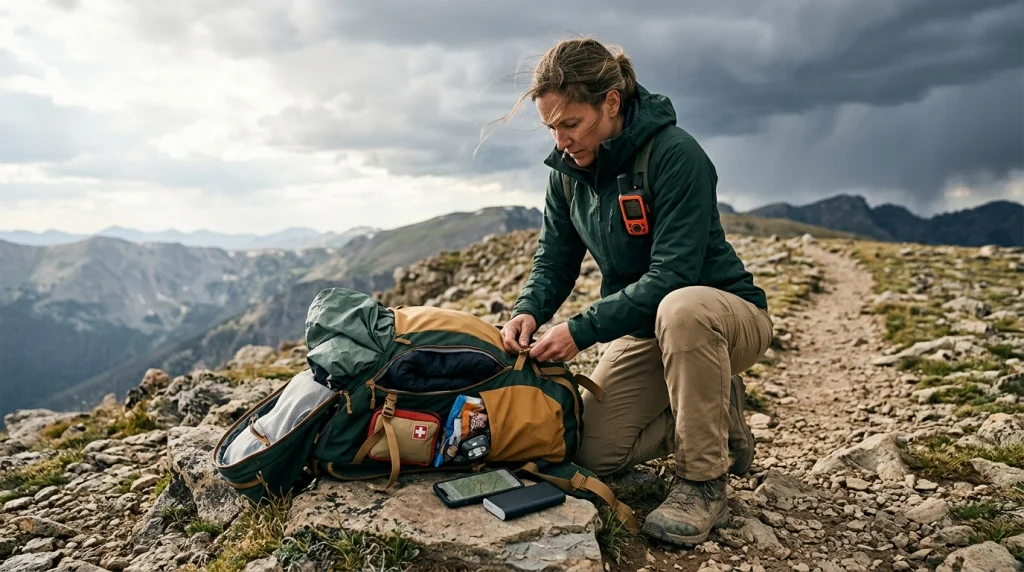
Your backpack should change when the consequences of a problem change. I carry more backup for long, remote, exposed, high-altitude, or weather-sensitive routes.
Here is how I would scale a basic packing system for three common day-hike situations.
| Packing category | 2–3 hour maintained trail | 4–6 hour exposed trail | Remote full-day route |
|---|---|---|---|
| Navigation | Offline trail map | Offline map plus backup route information | Offline map plus appropriate independent navigation tools |
| Water | Enough for planned duration and conditions | Larger margin for heat and exposure | Larger reserve or verified treatment plan where appropriate |
| Food | Snack plus small reserve | Meal, snacks, extra energy food | Full-day food plus meaningful reserve |
| Weather gear | Forecast-appropriate layer | Rain, wind, sun, or insulation as conditions require | More complete protection for realistic weather changes |
| Communication | Charged phone | Phone plus power bank | Consider satellite communication where cell coverage is unreliable |
| Emergency backup | First aid, whistle, headlamp | First aid, whistle, headlamp, emergency shelter | Full essential system tailored to remoteness and conditions |
Hot and sunny trails
- Carry more water.
- Use sun-protective clothing.
- Pack sunscreen and sunglasses.
- Consider an earlier start.
- Know where shade exists.
- Reduce the route if extreme heat makes the original plan unsafe.
Cold, wet, or windy trails
- Carry a waterproof shell.
- Protect insulation from moisture.
- Add gloves or a warm hat when conditions justify them.
- Keep navigation equipment dry.
- Watch how quickly wind and wet clothing reduce comfort.
Thunderstorm-prone routes
Check the forecast before starting and understand where safe shelter exists. Do not treat a rain jacket as protection from lightning.
The National Weather Service advises people to move to a substantial building or enclosed hard-topped vehicle when thunder is heard. Its lightning safety guidance also emphasizes planning early rather than waiting until the storm is directly overhead.
Remote trails without dependable cell service
- Carry stronger navigation backup.
- Leave a detailed trip plan.
- Increase your food and water margin.
- Carry emergency shelter.
- Consider an appropriate satellite communication device.
- Choose a conservative turnaround time.
As of 2026, I still think the smartest solo hiking habit is adjusting the plan instead of trying to buy enough gear to overcome a bad decision. Equipment provides backup, not permission to ignore conditions.
Section Takeaway: Increase your safety margin as routes become longer, more remote, more exposed, or harder to escape. Your packing list should respond to consequences, not just mileage.
Solo Female Day-Hike Packing FAQ
Is it safe for a woman to hike alone?
Solo hiking carries additional risk because nobody is beside you if you become injured, lost, or ill. Choosing a manageable trail, checking current conditions, sharing your route, carrying appropriate supplies, and keeping a conservative turnaround plan can reduce risk, but no system removes risk completely.
What should I carry on my first solo hike?
For a first solo hike, carry water, food, offline navigation, weather protection, sun protection, a charged phone, power bank, headlamp, whistle, first aid, identification, medication, and basic emergency shelter. Choose a maintained, well-marked route that matches your current experience.
Should I carry a personal alarm or whistle while hiking alone?
A whistle is lightweight, simple, and useful for attracting attention in an emergency. A personal alarm may also be useful where legal, but neither replaces navigation, route sharing, good judgment, or an emergency communication plan.
Do I need a satellite communicator for a day hike?
Not necessarily. A satellite communicator becomes more useful when you are hiking in remote terrain where cellular coverage is unreliable and reaching help could take significant time. For a short, maintained trail near populated areas, it may provide little practical benefit.
Should I bring a headlamp if I plan to finish before dark?
Yes, I consider a small headlamp worthwhile even on daytime hikes. An injury, navigation mistake, transport problem, slower pace, or unexpected trail condition can delay your return beyond sunset, while a compact headlamp adds little weight.
Where should I keep my phone when hiking alone?
Keep your phone somewhere protected but quickly accessible, such as a secure backpack pocket or zipped clothing pocket. Avoid leaving it loose in an open side pocket where it can fall out, and use waterproof protection when rain or river crossings are possible.
How heavy should a solo day-hike backpack be?
There is no single correct weight because water, weather, route difficulty, body size, and remoteness vary. I focus on carrying the required safety systems without unnecessary duplicates, then test the loaded pack before committing to a longer trail.
Final Takeaway: Pack for Independence, Not Fear
A solo female day-hike packing list should help you stay independent when small problems appear. Water, navigation, food, weather layers, first aid, light, communication, and emergency backup form the core of that system.
Then adjust it. A popular two-hour trail and an isolated mountain route should never have identical packing lists.
- Research the trail before leaving.
- Check current weather and closures.
- Share your exact route with someone you trust.
- Download navigation before losing service.
- Carry the essentials you know how to use.
- Set a turnaround time.
- Change plans when conditions stop looking right.
I would rather return with an unused rain shell, headlamp, and emergency snack than wish I had packed them. At the same time, I do not let extra gear convince me to continue into conditions that are beyond my skills.
That balance is the goal: carry enough to be prepared, hike within your limits, and give yourself permission to turn around.