
How Can a Solo Female Traveler Use a Bus Ticket Machine?
Quick Answer
A solo female traveler can use a bus ticket machine by choosing the correct ticket, selecting her destination or fare, paying with an accepted method, and collecting the ticket and receipt. The exact process depends on the local transport system, so check the operator’s instructions before paying and confirm whether the machine sells bus tickets or only train and metro tickets.
Six steps to buy your ticket confidently
- Check your route: Confirm your destination, bus number, fare, and boarding stop.
- Find the right machine: Look for an official machine that sells tickets for your service.
- Select your ticket: Choose a single journey, return ticket, day pass, or travel card as appropriate.
- Choose payment: Follow the displayed instructions for cash, bank cards, or contactless payment.
- Collect everything: Take your ticket, change, card, and receipt if provided.
- Validate if required: Check whether you must scan, tap, or validate the ticket before boarding.
A useful safety reminder
- Keep your belongings close, protect your payment details, and ask uniformed transport staff for help if you become unsure.
Using a bus ticket machine for the first time can feel intimidating when you’re traveling alone in an unfamiliar city. I recommend learning the basic steps before arriving, so you can focus on your journey rather than feeling rushed at the station.
In this guide, I’ll explain how bus ticket machines work, which ticket to choose, how to pay, and what to do when something goes wrong. These tips are useful for first-time solo travelers and women navigating public transportation abroad.
In This Guide
- What Is a Bus Ticket Machine and How Does It Work?
- How Do You Use a Bus Ticket Machine Step by Step?
- Which Ticket Should You Choose and How Can You Pay?
- How Can a Solo Female Traveler Stay Safe at a Ticket Machine?
- What Should You Do If the Machine Doesn’t Work?
- What Should You Check Before Boarding the Bus?
- Frequently Asked Questions
What Is a Bus Ticket Machine and How Does It Work?
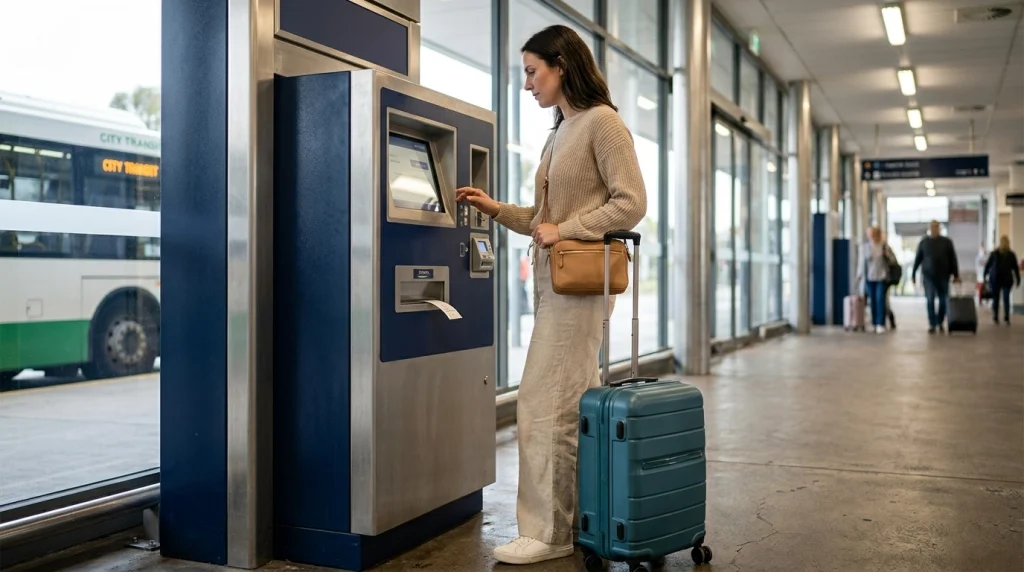
A bus ticket machine is a self-service device that lets passengers buy eligible tickets or load value onto a travel card without speaking to a ticket seller. Depending on the transport network, you might find one at a bus station, a transit hub, or inside a vehicle.
Some machines sell paper tickets, while others issue smartcards or recharge existing travel cards. A machine at a train or metro station might not sell tickets for every bus operator, so check its listed services first.
Where can you find a ticket machine?
When arriving at an unfamiliar bus terminal, look for official signs directing passengers to ticket sales, ticket vending machines, or customer service.
- Bus terminals: Larger stations may have machines near the main entrance, waiting area, or departure platforms.
- Transit stations: Some transport networks let passengers buy bus tickets at integrated train or metro stations.
- Onboard buses: Certain buses have ticket machines, validators, or contactless readers, although these devices may not offer the same options as a station machine.
- Transport interchanges: Stations connecting multiple services may offer machines for several operators.
Before queuing, check the operator’s website or official app to confirm where tickets are sold. This is especially helpful when you have luggage or need to catch a bus at a particular time.
What information should you prepare?
You don’t need to memorize every instruction. Having a few basic details ready makes the process easier.
- Your destination or destination stop.
- Your planned departure date and approximate time.
- The bus route number or operator, if known.
- The number of passengers and applicable fare category.
- Your preferred payment method and a backup option.
Key takeaway: A ticket machine is straightforward once you know which service you need. Confirm that the machine supports your bus journey before starting a payment.
How Do You Use a Bus Ticket Machine Step by Step?
To use a bus ticket machine, select the appropriate service, enter your journey details, choose the ticket type, review the price, pay, and collect your ticket. Follow the instructions on the particular machine because screen layouts and payment procedures vary by operator.
Step 1: Find the correct machine and check the screen
Choose a machine displaying the name or logo of your transport provider. Read its opening screen to determine whether it sells single tickets, travel passes, or stored-value cards.
If the screen offers several transport modes, select the bus service you intend to use. Don’t assume that the first option is the right one.
Step 2: Choose your destination or route
Some machines ask you to enter a destination, while others require a route number, fare zone, or ticket category. A fare zone is an area used by a transport network to calculate ticket prices.
Check your destination spelling and any transfer requirements before continuing. If you’re traveling to an airport, hotel, or another major attraction, use the exact stop name from the official journey planner.
Step 3: Select the appropriate ticket
Choose the ticket that matches your intended journey. A single ticket may cover one trip, while a day pass might allow multiple journeys during a specified period.
Read the validity conditions carefully. Some tickets activate at purchase, while others become valid only after scanning or tapping them.
Step 4: Review the price and pay
Before paying, confirm the destination, ticket quantity, fare category, and total amount. Check the screen for accepted cash denominations and card symbols.
Insert cash or follow the machine’s instructions for card or contactless payment. If a bank card requires a PIN, shield the keypad from nearby observers.
Step 5: Collect your ticket and change
Wait for the machine to complete the transaction. Collect the printed ticket, any change, your payment card, and your receipt if one is issued.
Check the ticket immediately for the destination, date, route, or other printed details. If something looks wrong, seek help before boarding rather than discovering the mistake during inspection.
Step 6: Validate or scan your ticket if necessary
Some paper tickets require validation before travel, while others are valid from the time of purchase. Electronic tickets and smartcards may need to be tapped at a reader or gate.
Don’t assume that buying a ticket automatically completes every boarding requirement. Check the transport operator’s official instructions.
Pro tip:
Save a screenshot of your route and the operator’s ticket instructions before leaving your accommodation. You’ll have something to check even if the station has weak mobile reception.
Key takeaway: Take a few seconds to verify each selection before paying. A correct ticket is more useful than a rushed purchase that doesn’t cover your journey.
Which Ticket Should You Choose and How Can You Pay?
The right ticket depends on how far you’re traveling, how many journeys you’ll make, and which fare rules apply. Cash, bank cards, contactless payments, and travel cards are not accepted at every machine.
Compare common ticket types
Use this table as a starting point, not as a guarantee that every transport network offers all these options.
| Ticket type | Best for | What to check |
|---|---|---|
| Single ticket | One journey | Route and validity period |
| Return ticket | A planned return journey | Whether a return fare is available and when it expires |
| Day pass | Several journeys in one day | Eligible services and activation rules |
| Multi-day pass | A longer city stay | Start date, duration, and route coverage |
| Stored-value card | Repeated trips on a supported network | Top-up rules, balance, and reader requirements |
For a single trip, a single ticket is often the simplest option. If you’ll take several buses in one day, compare the total single fares with the price and restrictions of a day pass.
What payment methods can you use?
Available payment methods depend on the machine and the local transport authority. The options below are common, but none should be assumed universally available.
- Cash: Check whether the machine accepts coins, notes, or exact change.
- Debit or credit card: Look for the relevant card symbols and check whether a PIN is required.
- Contactless card: Use the designated reader if contactless payment is supported.
- Mobile wallet: Apple Pay, Google Pay, or another wallet may work on compatible machines.
- Travel card: Some systems let you buy a new card or add money to an existing one.
Keep a backup payment method separate from your primary wallet. If a machine rejects your card, you can try another approved option without becoming stranded.
How can you avoid paying for the wrong ticket?
Check whether the fare covers the entire journey or only part of it. Some networks calculate fares by zones, while others charge according to distance, route, or transfer rules.
Don’t buy a discounted ticket unless you meet its eligibility conditions. If you’re unsure, ask official staff to explain the available adult fare or other applicable category.
Key takeaway: Choose a ticket based on your actual itinerary, not simply the cheapest price displayed. Check validity and payment rules before completing the transaction.
How Can a Solo Female Traveler Stay Safe at a Ticket Machine?
A solo female traveler can use a ticket machine more confidently by choosing a visible location, keeping her belongings secure, protecting payment information, and avoiding unnecessary distractions. These simple habits help you manage the purchase without feeling pressured by people waiting behind you.
Choose a comfortable place to buy your ticket
When possible, use an official machine in a staffed, well-lit area with other passengers nearby. At a large or unfamiliar terminal, look for information desks, security staff, or clearly marked customer service counters.
Don’t assume that a busy location is automatically safe. Stay aware of your surroundings and move to another machine or staffed area if someone makes you uncomfortable.
Protect your money, phone, and documents
Ticket machines can attract crowds, especially during commuting hours. Keep your belongings close while reading the screen or entering payment information.
- Wear a zipped bag or keep your handbag securely closed and within reach.
- Keep your phone and wallet out of easy reach of strangers.
- Shield your PIN when entering it.
- Avoid displaying large amounts of cash.
- Put your payment card away immediately after the transaction.
- Store your passport and other essential documents securely rather than leaving them on the machine.
It’s also sensible to check the payment terminal for anything unusual before using it. If the reader looks damaged or suspicious, choose another official machine and report your concern to staff.
What if someone offers to help you?
Many people genuinely want to help confused passengers, but you don’t need to hand your phone, bank card, or cash to a stranger. If someone approaches while you’re purchasing a ticket, you can politely decline and ask official staff for assistance instead.
If you accept directions, keep control of your payment and read the screen yourself. Never share your PIN or banking password with anyone.
What should you do if the station feels uncomfortable?
You can stop the transaction and leave if you feel unsafe. Move toward a staffed public area and contact station security or local authorities if someone threatens or harasses you.
For additional preparation, consult the U.S. State Department’s guidance for women travelers, or your own government’s equivalent travel advice. Local transport safety and reporting procedures vary by destination.
Key takeaway: You don’t have to finish a purchase just because you’ve started it. Your comfort and safety matter more than avoiding a delay.
What Should You Do If the Machine Doesn’t Work?
If a ticket machine freezes, rejects your payment, or fails to print a ticket, don’t repeatedly pay without checking the transaction status. First, look for an on-screen message and follow the operator’s instructions for reporting a fault or recovering your payment.
If the machine rejects your card or cash
Check that you’re using an accepted payment method and that the machine supports the ticket you’ve selected. A card may also be declined because of bank restrictions, insufficient funds, or a payment-terminal problem.
Try another approved method if you have one. If the machine continues to reject payment, use another official machine or contact the operator’s staff.
If your money is taken but no ticket appears
Keep any receipt or transaction confirmation and note the machine’s location, identification number, time, and amount. Take a photograph of the displayed error if it’s safe and permitted.
Contact the transport operator using its official customer-service channel. Avoid paying again immediately unless you have confirmed that the first transaction failed and you still need a valid ticket.
If the machine keeps your bank card
Don’t attempt to open the machine or retrieve the card with a tool. Contact station staff or the operator’s official support service, and ask your bank whether the card should be frozen or replaced.
If you need to continue traveling, use another legitimate payment method. Never share your banking PIN with someone who claims they can recover the card for you.
If you can’t understand the language on the screen
Look for a language selector, often represented by a language name or flag icon. If English isn’t available, use the operator’s official app or website to check the purchase steps before selecting a ticket.
You can also show a written destination name to official staff. Avoid making a purchase based on a guess if the ticket price or destination isn’t clear.
Quick troubleshooting checklist
- Read the error message before trying again.
- Keep your payment confirmation or receipt.
- Record the machine number and transaction time.
- Contact official staff or customer service.
- Use another authorized ticket option if necessary.
Key takeaway: Keep evidence of a failed transaction and seek help through official channels. Don’t risk your money or personal information trying to fix a machine yourself.
What Should You Check Before Boarding the Bus?

Before boarding, confirm that you have the correct ticket, know where the bus departs, and understand whether you must validate or scan your fare. A ticket purchase is only one part of completing the journey correctly.
Confirm the bus and departure stop
Check the route number, destination displayed on the bus, and departure information on the station board. Large terminals sometimes have several platforms serving similar destinations.
If the departure bay changes, follow the official announcements and information displays. Don’t follow an unfamiliar person who claims a different bus is yours without verifying the information.
Keep your ticket accessible
Store a paper ticket somewhere secure but easy to reach. Keep an electronic ticket available in the correct app, and make sure your phone has enough battery to display it.
If your ticket requires a scan or tap, use the designated reader as instructed. Keep your ticket until the journey ends and any inspection requirements have been satisfied.
Know what to do when boarding
Board using the designated entrance and follow the driver’s or station staff’s directions. Depending on the network, you may need to show a paper ticket, scan a QR code, tap a smartcard, or use a contactless payment reader.
For contactless systems, check whether the same card or device must be used when transferring or exiting. Some networks calculate fares differently for bank cards, mobile wallets, and travel cards.
Prepare for the journey ahead
Once you’ve boarded, keep your belongings secure and follow your route on an official journey planner if you need help identifying your stop. Set a reminder or monitor the bus display if you’re unfamiliar with the route.
For longer journeys, save the operator’s contact information and your destination address before departure. A little preparation can make an unfamiliar trip easier to manage independently.
Key takeaway: Check your ticket, boarding point, and validation rules before traveling. A calm final check can prevent missed buses and avoidable fare problems.
Frequently Asked Questions
Can I buy a bus ticket at a machine without speaking the local language?
Yes, if the machine offers a language you understand or its icons and instructions are clear enough to follow. Prepare your destination name in writing and use the transport operator’s official journey planner. If you’re unsure about the fare, ask official staff before paying.
Do all bus ticket machines accept credit cards?
No. Payment options vary by machine and transport provider. Some accept bank cards and contactless payments, while others accept cash, travel cards, or only selected payment methods. Check the symbols and instructions displayed on the machine before starting your purchase.
Should I buy a ticket before getting on the bus?
That depends on the local transport system. Some operators require passengers to purchase tickets at a station, while others sell tickets onboard or allow contactless payment when boarding. Check the official rules for your route to avoid buying the wrong ticket or traveling without valid proof of payment.
What happens if I lose my bus ticket?
Contact the transport operator or station staff and explain what happened. Whether a replacement is possible depends on the ticket type and local rules. Keep digital confirmations or receipts when available, but don’t assume that a payment receipt alone counts as a valid travel ticket.
Is it safe to use a bus ticket machine at night?
It can be reasonable to use an official machine at night, but conditions vary by station and destination. Prefer staffed, well-lit areas where possible, keep your belongings secure, and plan your onward journey before arriving. If you feel uncomfortable, move to a safer public area or seek assistance.
Can I use one ticket for multiple buses?
Sometimes. Certain tickets allow transfers within a specified period, while others cover only one journey or route. Read the ticket’s conditions before purchasing and check whether you need to validate it again when changing buses. Transfer rules differ between transport networks.
What should I do if I don’t have the correct change?
Check whether the machine accepts bank cards, contactless payments, or larger notes before inserting money. Some machines don’t provide change, and others issue a voucher or accept only specific denominations. If your preferred payment method isn’t accepted, find an authorized alternative rather than handing money to an unknown person.
Final Thoughts: Buy Your Ticket With Confidence
Learning how to use a bus ticket machine can make solo travel feel more manageable, especially when you’re navigating a new city without a companion. The process usually comes down to choosing the correct service, reviewing the fare, paying with an accepted method, and collecting or validating your ticket.
My advice is to check the transport operator’s instructions before you arrive, keep a backup payment option, and give yourself a few extra minutes at the station. You don’t need to know everything in advance; you just need enough information to make your next decision confidently.
Every independent journey becomes easier with practice. Start with these steps, stay aware of your surroundings, and ask official transport staff for help whenever you need it.
Pro tip: Transport rules, ticket validity, and emergency procedures differ between destinations. Confirm current details through the local transport operator or official tourism authority before you travel.
