How Can a Solo Female Traveler Stay Safe at a Beach Alone?
Quick Answer
A solo female traveler can stay safe at a beach alone by choosing a supervised beach, protecting her valuables, checking ocean conditions, and keeping someone informed of her plans. Most importantly, avoid swimming without a buddy, even when lifeguards are present. Follow official beach safety guidance and leave whenever conditions or interactions feel unsafe.
Your essential beach safety checklist
- Choose a supervised beach: Look for lifeguards, nearby businesses, and other visitors.
- Protect your belongings: Bring minimal valuables and keep important items with you.
- Check swimming conditions: Read warning flags and ask lifeguards about currents.
- Share your plans: Tell someone your beach location and expected return time.
- Stay connected: Carry a charged phone and save emergency contact information.
- Leave before dark: Arrange your return transportation while the area remains busy.
One rule worth remembering
- Enjoy the beach independently, but never treat ocean swimming as a solo activity.
Wondering how a solo female traveler can stay safe at a beach alone? I’ve always believed beach days should feel relaxing, not like a constant security exercise.
Still, enjoying the ocean independently requires a few thoughtful decisions. I’ll walk you through choosing beaches, protecting belongings, handling unwanted attention, and planning a safe return.
In This Guide
- How do you choose a safe beach when traveling alone?
- What should you do before visiting a beach alone?
- Is it safe to swim at the beach alone?
- How can you protect your belongings and personal safety?
- What should you do about unwanted attention or emergencies?
- What does a safe solo beach day look like?
- Frequently asked questions
How Do You Choose a Safe Beach When Traveling Alone?
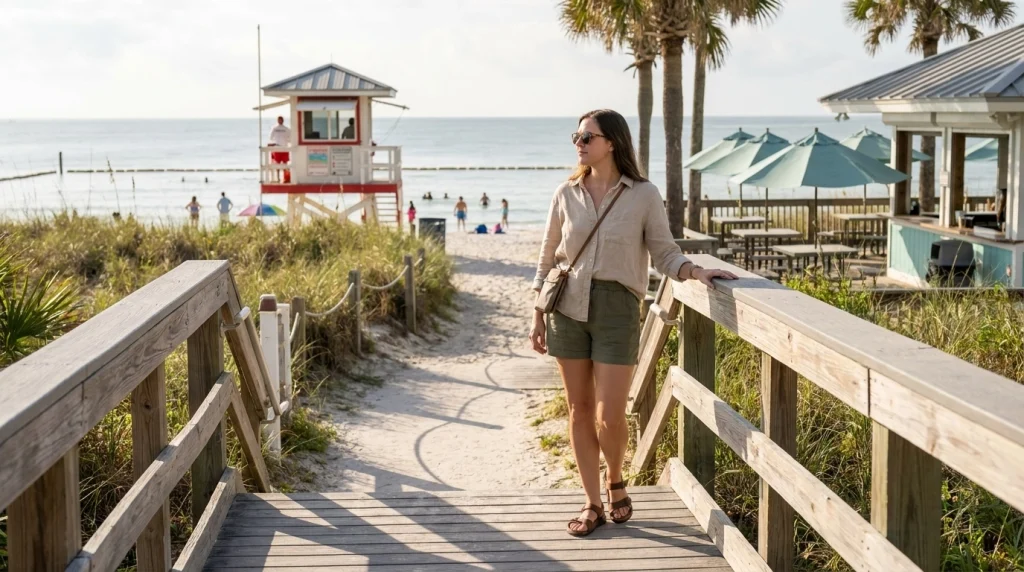
The safest starting point is a managed beach with lifeguards, clear access routes, and reliable facilities. A beautiful beach isn’t necessarily suitable for visiting alone.
In solo female travel, beach safety means managing both environmental hazards and personal security risks. These include water conditions, isolation, theft, harassment, and access to help.
Choose lifeguarded beaches over isolated locations
I recommend looking beyond beautiful beach photographs before choosing a location. Check whether the beach has lifeguards and how easily visitors can reach assistance.
A beach with restaurants, bathrooms, nearby transportation, and visible staff usually offers more practical support. However, crowds and lifeguards cannot guarantee personal security.
- Lifeguard coverage: Confirm operating hours and where supervised swimming areas begin and end.
- Visitor activity: Favor locations with regular daytime foot traffic.
- Accessible facilities: Look for toilets, cafés, staffed entrances, and emergency equipment.
- Transportation: Check how you’ll return without depending on an unfamiliar stranger.
- Mobile coverage: Confirm your phone works near the beach.
- Local restrictions: Review swimming closures, wildlife warnings, and access rules.
Research recent local conditions
Online photographs rarely show dangerous currents, construction closures, or poorly lit access roads. Recent visitor reports can reveal practical issues, but official information should guide safety decisions.
Before an international beach visit, check your government’s destination advisory and local tourism information. For U.S. citizens, the U.S. Department of State travel advisories provide country-level safety guidance.
Pro tip: Search the beach’s official name alongside terms such as “lifeguard hours,” “swimming warnings,” and “beach access.”
Which beach environment is better for a solo traveler?
Not every beach suits the same activity. I use this comparison to decide whether a beach works for a peaceful solo visit.
| Beach type | Practical advantages | Main concerns | Solo suitability |
|---|---|---|---|
| Managed public beach | Potential lifeguards, services, clear access | Crowds, theft, changing surf | Preferred when supervised |
| Resort beach | Staff, facilities, nearby accommodation | Variable supervision and access rules | Good when conditions are verified |
| Remote natural beach | Quiet scenery and privacy | Limited help, weak signal, difficult access | Better with companions |
| Unsupervised surf beach | Open access and fewer facilities | No immediate water rescue support | Avoid entering the water |
These categories describe typical conditions, not guaranteed safety ratings. A supervised beach can become unsuitable when weather, staffing, or local conditions change.
Section Takeaway: Choose beaches based on available help, safe access, and current conditions rather than scenery alone.
What Should You Do Before Visiting a Beach Alone?
Preparation should make your beach day easier without turning it into a complicated itinerary. I focus on communication, essential supplies, and a reliable way home.
Tell someone where you’re going
Choose a trusted friend, relative, or travel contact who knows your general plans. Sharing your beach location helps someone respond appropriately if you miss a check-in.
- Send the beach name and a map pin.
- Share your expected arrival and departure times.
- Agree on a reasonable check-in time.
- Explain what your contact should do if you cannot respond.
- Update them if you move to another beach.
I prefer a short message rather than broadcasting my exact location online. Private communication protects both safety and personal privacy.
Pack a practical solo beach bag
Bringing too much creates unnecessary decisions about where to leave things. My ideal packing list covers sun protection, communication, hydration, and transportation.
- Charged phone: Store emergency numbers and offline maps.
- Portable charger: Bring a compact power bank and suitable cable.
- Waterproof phone pouch: Protect electronics from splashes and sand.
- Reusable water bottle: Carry enough drinking water for the visit.
- Broad-spectrum sunscreen: Choose SPF 30 or higher.
- Sun protection: Pack sunglasses, a hat, and protective clothing.
- Small payment backup: Carry a second payment method separately.
- Basic essentials: Take a towel, footwear, and necessary medication.
Leave unnecessary jewelry and expensive electronics at your accommodation. Use secure hotel storage when available, while remembering that no storage arrangement is risk-free.
Plan your return before you arrive
A beach can feel comfortable at midday and isolated near sunset. Transportation planning prevents a relaxing afternoon from becoming a stressful evening.
Check bus schedules, official taxi options, walking routes, and estimated travel time. Keep enough money for an alternative journey if your first option fails.
- Save your accommodation address offline.
- Identify the nearest staffed pickup point.
- Check when public transportation stops operating.
- Arrange an earlier departure if the beach becomes empty.
- Avoid accepting rides from strangers you meet on the beach.
Pro tip: Review current official destination advice before international travel, especially when your plans involve unfamiliar transportation or remote coastal areas.
Section Takeaway: Share your location privately, pack only essentials, and arrange your return before leaving your accommodation.
Is It Safe to Swim at the Beach Alone?
No. Swimming completely alone is not recommended, even for experienced swimmers. Visit a lifeguarded beach and arrange a swimming buddy if you intend to enter the ocean.
This distinction matters because visiting a beach alone and swimming alone are different activities. You can enjoy an independent beach day without entering the water.
Why ocean swimming requires extra caution
Ocean conditions can change quickly. Rip currents, shorebreak, changing depth, and fatigue can challenge confident swimmers.
A rip current is a concentrated flow of water moving away from shore. It can carry swimmers offshore without pulling them underwater.
The National Oceanic and Atmospheric Administration explains these hazards in its official guide to beach dangers. Understanding them matters more than judging the water by appearance.
- Rip currents: Fast-moving channels can pull swimmers away from shore.
- Shorebreak: Waves breaking directly onto shallow water or sand can cause injuries.
- Changing tides: Water levels and currents can alter safe access routes.
- Marine hazards: Local conditions may include jellyfish, sharp rocks, or other dangers.
- Fatigue: Heat, waves, and prolonged activity can reduce swimming ability.
What should you do before entering the ocean?
Start by speaking with the lifeguard. Ask which swimming areas are open and whether any currents or other hazards require special caution.
Beach warning-flag colors can vary by location. Read the posted local explanation instead of assuming every destination uses identical meanings.
- Check the current surf and weather forecast.
- Confirm that lifeguards are on duty.
- Ask about dangerous currents and wave conditions.
- Follow all swimming restrictions.
- Never enter the water after drinking alcohol.
- Arrange a swimming companion instead of swimming alone.
What if you get caught in a rip current?
Your first priority is staying calm and conserving energy. Do not exhaust yourself by swimming directly against the current.
- Keep your head above water and control your breathing.
- Float or tread water when necessary.
- Call and wave for help.
- If able, swim parallel to the shoreline to escape the current.
- Once free, return toward shore at an angle when conditions allow.
- If you cannot escape, continue floating and signaling for assistance.
These are general survival measures, not a reason to enter unsafe surf. Following lifeguard instructions and avoiding dangerous water remains the stronger choice.
Pro tip: Check the National Weather Service’s rip current safety information before visiting unfamiliar surf beaches.
Section Takeaway: Enjoy the beach independently, but arrange a swimming buddy and use supervised swimming areas whenever you enter the ocean.
How Can You Protect Your Belongings and Personal Safety?
Keep your valuables limited and under your control. A beach towel, unattended bag, or hidden phone should never be treated as secure storage.
What do you do with your phone when alone at the beach?
Your phone serves as a navigation tool, emergency contact device, and payment backup. Protecting it should take priority over bringing extra entertainment devices.
For a dry beach visit, use a secure bag that remains within reach. A waterproof pouch helps protect against moisture, but it cannot guarantee complete protection underwater.
- Use a suitable water-resistant pouch for splashes.
- Keep your phone accessible for emergencies.
- Avoid leaving electronics unattended on your towel.
- Use lockers where properly managed facilities provide them.
- Never depend on burying valuables in sand.
If you plan to enter the water, arrange secure storage and a trusted swimming companion beforehand. Keeping a phone dry doesn’t solve the risks of swimming alone.
Where should you sit on the beach?
I recommend a spot with clear visibility and easy access to staffed facilities. You don’t need to sit directly beside a crowd.
Choose an area where other visitors and staff are reasonably nearby. Avoid places hidden behind rocks, dunes, abandoned buildings, or isolated vegetation.
- Sit within the supervised public area.
- Keep the main access path visible.
- Leave sufficient distance from rising water.
- Avoid blocking emergency access routes.
- Stay aware of people approaching your belongings.
How can you protect your privacy?
You aren’t required to tell strangers that you’re traveling alone. Friendly conversation doesn’t create an obligation to share personal information.
I prefer keeping accommodation details, room numbers, and daily schedules private. I also avoid posting my exact real-time location publicly.
Photos and social updates can wait until after you leave. This simple habit allows you to share travel memories without broadcasting where you’re sitting.
How do you prevent heat and sun problems?
Sun exposure and dehydration deserve the same attention as personal security. Long beach visits can become uncomfortable before you notice the warning signs.
The CDC’s sun safety guidance recommends shade, protective clothing, and sunscreen.
- Apply broad-spectrum SPF 30 or higher sunscreen.
- Reapply according to product instructions, especially after swimming or sweating.
- Take regular shade breaks.
- Drink water throughout your visit.
- Seek cooler surroundings if you feel overheated or unwell.
Section Takeaway: Bring fewer valuables, choose a visible location, protect your privacy, and take sun exposure seriously.
What Should You Do About Unwanted Attention or Emergencies?
If someone makes you uncomfortable, prioritize reaching a safer location rather than remaining polite. You can leave a conversation without explaining yourself.
How should you handle unwanted attention?
Most ordinary beach interactions require no special response. Persistent questioning, unwanted contact, or someone ignoring clear boundaries deserves a different approach.
You can decline conversation firmly and move toward a staffed, populated area. Avoid becoming isolated while trying to escape an uncomfortable interaction.
- Set a boundary: Say, “No, thank you. I want to be alone.”
- Move toward help: Walk to lifeguards, beach staff, or an established business.
- Avoid sharing details: Keep your accommodation and itinerary private.
- Seek assistance: Tell staff clearly if someone follows or harasses you.
- Contact authorities: Call local emergency services if you face immediate danger.
You don’t need to confront someone to prove confidence. The safest decision may simply be leaving early.
What if someone follows you?
Move toward a busy, staffed place rather than walking to an isolated route. Ask a lifeguard, security employee, or business worker for direct assistance.
If you believe you’re in danger, contact emergency services. Don’t lead a suspicious person toward your accommodation if you can safely avoid doing so.
What should you do during a beach emergency?
Your response depends on the type of emergency. Physical safety comes before recovering belongings or documenting an incident.
- Medical emergency: Alert lifeguards or emergency responders immediately.
- Water emergency: Call for trained assistance rather than attempting an untrained rescue.
- Theft: Move somewhere safe, then contact local authorities and your bank if necessary.
- Severe weather: Follow local warnings and leave exposed beach areas promptly.
- Lost phone: Seek staffed assistance and use your backup contact information.
- Harassment or assault: Prioritize immediate safety and contact trusted support or authorities when appropriate.
Save the destination’s emergency number before traveling. Emergency services and response procedures vary between countries.
If someone is struggling in the water, alert a lifeguard immediately. An untrained rescue attempt can put another person at risk.
Pro tip: Before international travel, review the destination’s official emergency guidance and your insurance assistance information. U.S. citizens can also consider the Smart Traveler Enrollment Program.
Section Takeaway: Set clear boundaries, move toward staffed areas, and seek trained assistance instead of handling dangerous situations alone.
What Does a Safe Solo Beach Day Look Like?

A safe beach day doesn’t require constant worry. I find it easier to follow a predictable routine that leaves plenty of room for relaxation.
A sample solo beach itinerary
Here’s an example of a three-hour beach visit. Adjust the timing to match local weather, lifeguard coverage, and transportation.
| Time | Activity | Safety priority |
|---|---|---|
| 9:00 AM | Arrive and inspect the beach | Locate lifeguards and exits |
| 9:20 AM | Relax, read, and enjoy the scenery | Keep belongings nearby |
| 10:15 AM | Take a shaded refreshment break | Hydrate and check messages |
| 11:00 AM | Enjoy a walk in the public beach area | Stay away from hazardous surf |
| 11:40 AM | Pack and head toward transportation | Check your route and belongings |
| 12:00 PM | Leave and send your check-in | Confirm a safe return |
Activities you can enjoy without swimming alone
A solo beach visit offers plenty beyond ocean swimming. I like activities that make it easy to stay aware of my surroundings.
- Read a book beneath a beach umbrella.
- Take photographs along approved public paths.
- Journal while enjoying the ocean view.
- Walk near busy, accessible sections of the shoreline.
- Enjoy refreshments at a staffed beachfront café.
- Join a supervised activity organized by a reputable local provider.
How do you enjoy yourself without feeling anxious?
Confidence comes from knowing what you’ll do if plans change. You don’t have to anticipate every possible problem.
Choose one or two activities, keep your essentials close, and check your surroundings periodically. Then give yourself permission to enjoy the experience.
For me, that balance is the point of thoughtful solo travel planning. Practical precautions should support your independence rather than take away the pleasure of traveling alone.
Section Takeaway: Keep your beach visit simple, flexible, and close to reliable help so you can enjoy your independence.
Frequently Asked Questions
Is it safe for a woman to go to the beach alone?
Yes, a woman can enjoy a beach visit alone with sensible precautions. Choose a supervised location, stay near other visitors, protect your belongings, and arrange transportation. However, going to the beach alone doesn’t mean you should swim alone.
Can I leave my belongings on the beach while swimming?
Leaving valuables unattended is risky, even at popular beaches. Use a managed locker where available or arrange secure storage before entering the water. Avoid hiding electronics beneath towels or sand. You’ll also need a swimming companion for safer ocean swimming.
Is it safe to visit a beach alone at sunset?
Sunset visits depend on lighting, location, staffing, and transportation. A supervised beachfront with nearby businesses differs from an isolated shore. Plan to leave before the area empties, and don’t assume lifeguards remain on duty until dark.
What should a solo female traveler wear to the beach?
Wear comfortable swimwear or beach clothing that respects local customs and laws. Add sun-protective clothing, secure footwear, and a hat. There’s no outfit that guarantees protection from harassment, and responsibility for inappropriate behavior always belongs to the person causing it.
Should I tell people at the beach that I’m traveling alone?
You don’t need to disclose your travel situation to strangers. You can enjoy friendly conversation while keeping your accommodation, room number, and daily plans private. If questions become intrusive, end the interaction and move toward other people or staff.
What should I do if I feel unsafe at the beach?
Leave the uncomfortable situation and move toward lifeguards, staff, or a busy public area. Contact local emergency services if you face immediate danger. Inform a trusted contact when safe, and use a reliable transportation option to reach your accommodation.
What is the most important safety tip for a solo beach trip?
Choose a beach where help is readily available. Lifeguards, nearby businesses, clear exits, and dependable transportation make problems easier to handle. Combine that planning with a reliable check-in system, limited valuables, and the rule against swimming alone.
Final Thoughts: Enjoy the Beach Without Compromising Your Safety
Traveling alone doesn’t mean avoiding beautiful beaches or peaceful moments by the water. It means choosing environments where you can relax while managing reasonable risks.
Start with a supervised beach, share your plans, and keep your essentials secure. Respect water warnings and arrange company whenever you intend to swim.
Most importantly, trust yourself to change plans. Leaving early, skipping unsafe water, or asking for assistance are sensible decisions, not failures of independence.
For your next solo beach day, save this checklist and choose one accessible, well-supervised beach. A little preparation can make the experience far more enjoyable.