How Can a Solo Female Traveler Stay Safe During a Solo Road Trip?
Quick Answer
A solo female traveler can stay safe during a solo road trip by planning a reliable route, checking her vehicle, choosing secure stops, and keeping someone informed. The safest approach also includes driving while alert, preparing for emergencies, and avoiding unnecessary risks after dark. Before leaving, review the official road trip safety recommendations.
Six essential solo road trip safety habits
- Plan your route: Research roads, fuel stations, rest areas, and overnight stops before departure.
- Inspect your vehicle: Check tires, brakes, lights, fluids, and emergency equipment.
- Share your itinerary: Give a trusted person your expected route and agreed check-in times.
- Choose secure stops: Prefer busy, well-lit businesses and reputable accommodation.
- Protect your energy: Schedule breaks and stop driving when you feel tired.
- Prepare backup plans: Carry offline maps, charging options, emergency supplies, and roadside assistance details.
One rule worth remembering
- Safety comes before schedules: Change your plans whenever weather, fatigue, road conditions, or an uncomfortable situation makes continuing unsafe.
Wondering how can a solo female traveler stay safe during a solo road trip? I believe the answer starts with preparation, not fear.
Solo driving offers wonderful freedom, but it also means handling unexpected problems independently. I’ll walk through practical ways to protect yourself, prepare your car, choose stops, and respond calmly when plans change.
In This Guide
- What Makes a Solo Female Road Trip Safe?
- How Should You Plan a Safe Solo Road Trip?
- How Do You Prepare Your Car and Emergency Supplies?
- How Can You Stay Safe While Driving Alone?
- Where Should Solo Female Travelers Stop and Stay Overnight?
- What Should You Do If Something Goes Wrong?
- Frequently Asked Questions About Solo Female Road Trip Safety
What Makes a Solo Female Road Trip Safe?
A safe solo female road trip combines reliable transportation, thoughtful planning, personal awareness, and dependable communication. No single precaution removes every risk, but several layers of preparation can reduce avoidable problems.
Solo female road trip safety means protecting yourself from driving hazards, vehicle problems, theft, harassment, and isolation. It also means having a realistic plan when ordinary travel arrangements fail.
Understand the risks without becoming fearful
Women traveling alone may face unwanted attention or uncomfortable encounters. Yet traffic crashes, fatigue, severe weather, and vehicle breakdowns deserve just as much attention.
I find it helpful to separate potential risks into clear categories:
- Driving risks: Fatigue, distraction, poor weather, difficult roads, and speeding.
- Vehicle risks: Flat tires, overheating, mechanical faults, and low fuel.
- Personal safety risks: Harassment, theft, unsafe parking areas, and unwanted approaches.
- Communication risks: Weak cellular reception, dead batteries, and unreliable navigation.
- Planning risks: Arriving after dark, unrealistic driving schedules, and unavailable accommodation.
Each category needs a different solution. A personal alarm cannot fix driver fatigue, just as a spare tire cannot replace good judgment.
Build confidence through smaller trips
For a first solo road trip, I’d choose a familiar region before attempting a remote cross-country drive. A one-night trip gives you room to practice without unnecessary pressure.
Try this gradual approach:
- Complete a daytime drive of roughly 60–90 minutes.
- Practice stopping at an unfamiliar but reputable service station.
- Take a day trip that includes navigation and parking.
- Plan one overnight stay within a manageable driving distance.
- Review what felt difficult before extending your next trip.
The distances are practice examples, not safety limits. Your comfort, experience, road conditions, and physical needs should determine the actual journey.
Section Takeaway: Safe solo travel begins with realistic decisions. Confidence grows when you develop skills and know how to respond if something changes.
How Should You Plan a Safe Solo Road Trip?
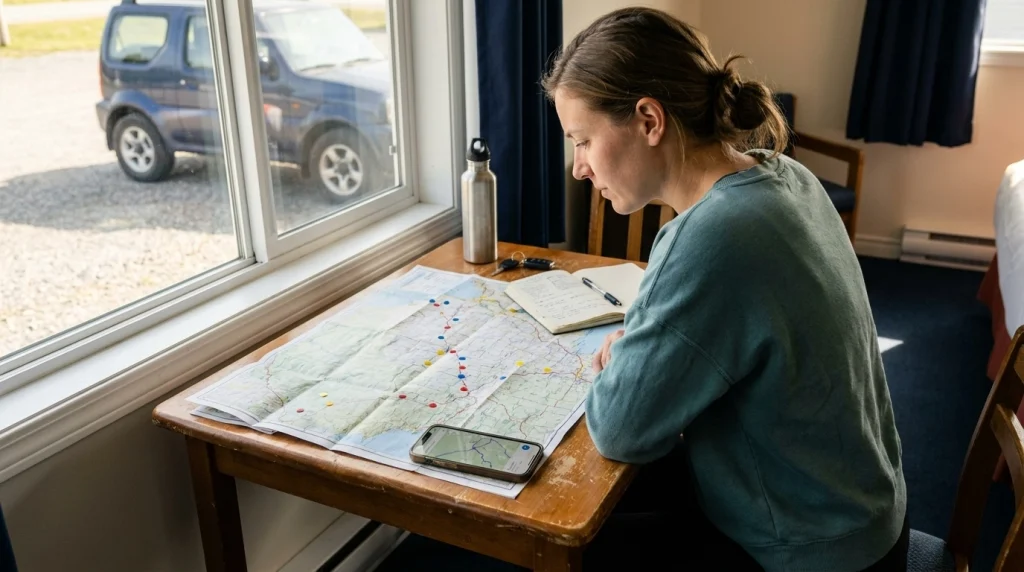
Plan your solo road trip around manageable driving days, verified accommodation, dependable communication, and practical backup routes. The goal is flexibility without leaving important decisions until the last minute.
Choose a route with reliable services
Start by reviewing the entire route, not just the final destination. Look for towns, fuel stations, hospitals, rest areas, and alternative roads.
Remote scenery can be beautiful, but isolated roads may have limited services. Consider whether your vehicle, experience, and communication tools suit those conditions.
My planning checklist would include:
- Download an offline map for each driving region.
- Mark reputable fuel and charging locations.
- Check official road closures and construction notices.
- Review mountain passes, seasonal roads, and difficult terrain.
- Identify an alternative route for weather delays.
- Save accommodation addresses and phone numbers.
For international road trips, also check local driving laws, license requirements, insurance rules, and road conditions. Your usual driving habits may not transfer safely to another country.
Pro tip: Review the U.S. Department of State travel advisories when planning international travel, alongside your own government’s advice and local road authority updates.
Set driving limits that leave room for delays
A six-hour navigation estimate rarely includes every meal, fuel stop, scenic detour, or traffic delay. Avoid building a schedule that requires perfect conditions.
For a beginner, I would initially plan about three to four hours of driving on a sightseeing day. That’s a comfortable planning example, not a universal safe maximum.
| Travel day | Planned driving | Best approach |
|---|---|---|
| Relaxed sightseeing | 2–3 hours | Allow generous time for attractions and meals. |
| Balanced travel | 3–4 hours | Plan breaks and arrive comfortably before dark. |
| Long transfer | 5–6 hours | Use only when well-rested and conditions permit. |
| Remote or difficult route | Condition-dependent | Prioritize daylight, fuel range, weather, and available help. |
These figures are sample itinerary choices rather than government recommendations. Stop earlier whenever fatigue or road conditions require it.
Share your itinerary with someone you trust
A trusted contact can help if you unexpectedly lose communication. Give that person enough information to recognize when something might be wrong.
- Your planned route and major stops.
- Accommodation names and addresses.
- Approximate arrival and departure windows.
- Your vehicle description and registration details.
- Agreed check-in times and emergency contacts.
- A clear plan for missed check-ins, including when to request help.
Location sharing can add reassurance, but it isn’t a substitute for communication. Cellular service, phone batteries, and application permissions can all interrupt updates.
I prefer predictable check-ins rather than constant messaging. It keeps loved ones informed without turning a vacation into a tracking exercise.
Keep your itinerary private from strangers
Avoid giving unfamiliar people your exact hotel, upcoming route, or travel schedule. Friendly conversation doesn’t require sharing information that could expose your movements.
Posting your location after leaving a place also reduces real-time exposure. Adjust social media privacy settings before departure.
Section Takeaway: A strong itinerary identifies where you’ll drive, when you’ll rest, and how someone can reach you. Build in enough flexibility to change plans safely.
How Do You Prepare Your Car and Emergency Supplies?
Prepare your vehicle with a maintenance check, functioning safety equipment, and supplies for unexpected delays. A reliable car and realistic emergency plan are central to independent road travel.
Check your car before leaving
I wouldn’t begin a long drive with an unresolved warning light or an unfamiliar mechanical problem. Have a qualified mechanic inspect concerns you cannot assess yourself.
Complete these checks before departure:
- Tires: Inspect tread, damage, and pressure, including the spare if equipped.
- Brakes: Investigate unusual sounds, vibrations, or reduced braking performance.
- Fluids: Check oil, coolant, brake fluid, and washer fluid according to the owner’s manual.
- Lights: Test headlights, brake lights, and turn signals.
- Wipers: Replace worn blades before traveling through rainy areas.
- Battery: Investigate weak starting or other signs of battery trouble.
- Vehicle documentation: Confirm registration, insurance, and roadside assistance information.
If renting a vehicle, photograph its condition during pickup. Learn how its locks, headlights, spare-tire equipment, and emergency controls work.
Pack a practical solo road trip emergency kit
The right emergency kit depends on climate, distance, and service availability. Start with essentials that support communication, visibility, warmth, and basic survival.
- Fully charged phone, compatible car charger, and power bank.
- First-aid kit and personal prescription medication.
- Flashlight or headlamp with working batteries.
- Drinking water and shelf-stable snacks.
- Reflective warning equipment appropriate to local laws.
- Seasonal clothing, rain protection, and emergency blanket.
- Tire pressure gauge and suitable tire-changing equipment.
- Jumper cables or a compatible portable jump starter.
- Paper map or saved offline route information.
- Emergency contact details and backup payment method.
Keep critical supplies accessible instead of burying them beneath luggage. In cold or remote conditions, carry additional equipment suited to local hazards.
Plan for unreliable phone coverage
Never assume navigation will work everywhere. Download maps before departure and save essential information where you can access it offline.
For remote routes, investigate satellite emergency communication options and their coverage limitations. Standard mobile emergency calling may not work without an available network.
Know your vehicle’s approximate fuel or electric driving range. Charge or refuel earlier when the next dependable service is uncertain.
Section Takeaway: Good emergency preparation supports self-reliance without expecting you to solve every problem alone. Professional assistance remains the safest response to many roadside failures.
How Can You Stay Safe While Driving Alone?
Stay safe while driving alone by remaining alert, avoiding distractions, following traffic laws, and stopping before fatigue affects your judgment. Your driving condition matters more than reaching a planned destination on time.
Recognize fatigue before it becomes dangerous
Long, quiet highways can make tiredness difficult to notice. Missing road signs, drifting within your lane, and struggling to remember recent miles are serious warning signs.
Don’t rely on loud music or caffeine to make unsafe driving acceptable. Find a safe stopping place and get adequate rest.
Before a driving day:
- Get sufficient sleep the previous night.
- Check how medications might affect alertness.
- Avoid alcohol and other impairing substances.
- Plan regular stops for movement and food.
- Keep your schedule flexible enough for an unplanned rest.
The National Highway Traffic Safety Administration’s drowsy-driving guidance explains why adequate sleep matters and why fatigue can contribute to serious crashes.
Use navigation without losing attention
Set your destination before moving and use spoken directions when helpful. Pull over somewhere safe before changing routes or responding to messages.
Keep your phone secured in an appropriate mount if local laws allow it. Avoid looking down repeatedly to interpret complicated junctions.
If you miss a turn, continue safely until you can reroute. A missed exit is less important than a dangerous sudden maneuver.
Protect yourself during unexpected interactions
You don’t owe a stranger personal information simply because they approach your car. Keep doors locked when appropriate and assess the setting before lowering a window.
If someone follows you or behaves threateningly:
- Stay calm and avoid confrontation.
- Do not drive to your accommodation or another private location.
- Head toward a populated public location, such as a staffed police station, when safe.
- Contact local emergency services if you believe you’re in immediate danger.
- Follow emergency dispatch instructions rather than attempting risky maneuvers.
Do not increase speed dangerously or violate traffic rules to test whether someone is following you. Prioritize predictable driving and access to assistance.
Take weather and road conditions seriously
Rain, fog, snow, flooding, and high winds can change a routine journey quickly. Review official forecasts and road alerts before entering unfamiliar areas.
Never drive through floodwater or around road-closure barriers. If conditions exceed your experience, wait somewhere safe or change your route.
For mountain drives, check seasonal access and traction requirements. Some roads may require winter equipment or close without much notice.
Section Takeaway: The safest driver isn’t the person who completes every planned mile. It’s the person willing to slow down, rest, or change course when necessary.
“`html
Where Should Solo Female Travelers Stop and Stay Overnight?
Solo female travelers should prioritize busy, well-lit stops, reputable accommodation, and parking areas with dependable access to help. Choose convenience and security over saving a few minutes or dollars.
Choose fuel stations and rest stops carefully
I would rather stop at a staffed service station along a main road than risk an unfamiliar isolated location. Good lighting and visible staff are useful factors when choosing where to stop.
Before getting out of your vehicle:
- Look at the lighting, activity, and available exits.
- Park near the business entrance when practical.
- Lock the car and take essential valuables with you.
- Avoid displaying large amounts of cash.
- Keep your keys and phone readily accessible.
- Leave if the location or an interaction makes you uncomfortable.
Don’t wait until your fuel tank is nearly empty before looking for a station. In remote areas, opportunities to refuel may be far apart.
How do you choose a safe hotel when traveling alone?
Look for accommodation with recent credible reviews, secure entry, reliable reception arrangements, and suitable parking. Confirm arrival procedures before reaching the property.
When evaluating accommodation, check:
- Location: Is the property accessible from reliable roads and established neighborhoods?
- Reception: Is staff assistance available during your planned arrival time?
- Parking: Is parking well-lit and close to the building?
- Security: Do guest rooms have functional locks and controlled access?
- Reviews: Are there repeated concerns about security, harassment, or staff responsiveness?
- Cancellation: Can you change plans if weather or delays prevent safe arrival?
Ask staff not to announce your room number publicly. If your assigned room has a faulty lock, request another room immediately.
Whenever possible, arrange to arrive during daylight or staffed check-in hours. If you’re running late, contact the property before continuing.
Should a woman sleep in her car during a solo road trip?
Sleeping in a car requires careful attention to legal parking rules, weather, ventilation, personal security, and access to facilities. It isn’t automatically safer or more affordable than accommodation.
Rest areas and overnight parking locations follow different rules depending on the jurisdiction. Some allow short rest periods but prohibit overnight camping.
If you need to sleep, choose a lawful, suitable location where help is reasonably accessible. Never run a vehicle engine in an enclosed space or anywhere exhaust could accumulate dangerously.
I’d favor a reputable hotel, staffed campground, or established overnight facility when circumstances allow. Avoid treating a deserted parking lot as a substitute for a safety plan.
What if you feel uncomfortable at your accommodation?
You can request assistance, change rooms, or leave when doing so is safe. You don’t need to justify your discomfort to someone behaving inappropriately.
Keep the following options in mind:
- Contact reception or the property’s security staff.
- Request another room if the lock, location, or access feels unsuitable.
- Document serious concerns once you are safe.
- Contact your booking provider when appropriate.
- Move to an alternative property if you can do so safely.
- Call emergency services if you face an immediate threat.
Having a backup accommodation option reduces pressure to remain somewhere unsuitable. Include that possibility in your travel budget.
Section Takeaway: Safe stopping decisions depend on your surroundings, available help, and ability to leave. Choose overnight accommodation before exhaustion makes those decisions harder.
What Should You Do If Something Goes Wrong?
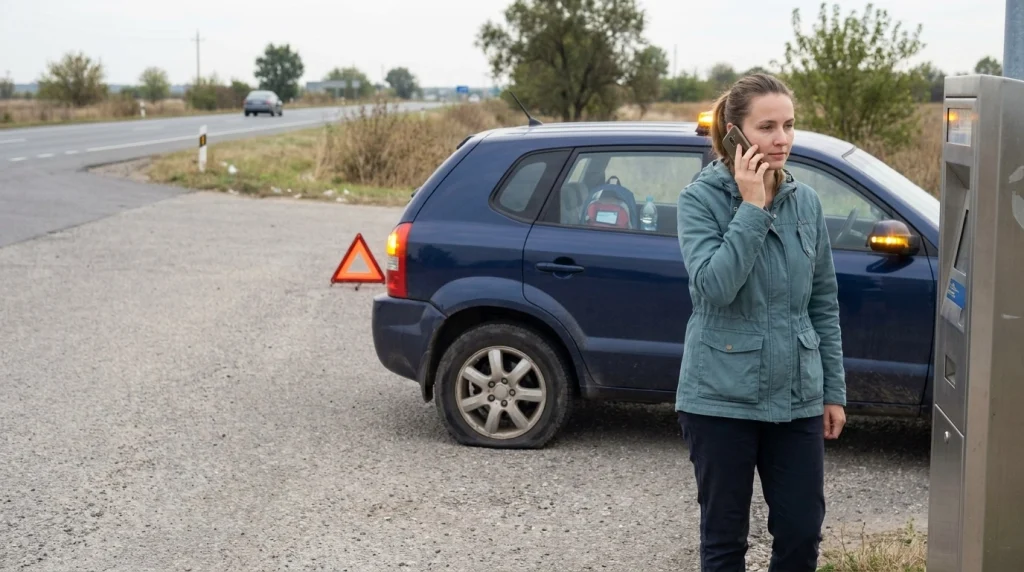
If something goes wrong during a solo road trip, prioritize immediate safety, contact appropriate assistance, and communicate your location. The correct response depends on whether you’re facing a mechanical problem, medical emergency, or personal threat.
What should you do if your car breaks down?
Move out of traffic if the vehicle can reach a safe location without creating further danger. Activate hazard lights and assess whether remaining inside the car is safer than exiting.
Follow this general response plan:
- Bring the vehicle to a safe stop, away from moving traffic when possible.
- Switch on your hazard lights.
- Contact roadside assistance or emergency services as appropriate.
- Share your location, road name, direction of travel, and nearby landmarks.
- Follow the instructions of emergency dispatch or roadside professionals.
- Inform your trusted contact when it is safe to do so.
On a busy highway, never stand in a traffic lane or attempt repairs beside passing vehicles. Your location, road barriers, and traffic conditions determine the safest place to wait.
If smoke, fire, or another immediate hazard develops, move away from the vehicle when safe and contact emergency services.
What if a stranger offers roadside assistance?
Not every offer of help is suspicious, but you are entitled to decline assistance. It’s reasonable to prefer a verified roadside professional over an unknown person’s help.
Keep communication brief and avoid sharing unnecessary personal details. If someone claims to represent a service provider, verify their identity through the company you contacted.
If you feel threatened, prioritize access to emergency services. Do not confront someone merely to confirm your suspicions.
What if your phone loses service or battery power?
Offline maps and a charged backup power source can prevent a minor inconvenience from becoming a larger problem. Save the contact information you may need before entering remote areas.
If service disappears, avoid driving randomly in search of reception. Continue only when you know the route and conditions are safe.
When an emergency occurs without cellular coverage, a compatible satellite emergency device may help where supported. Learn its features, subscriptions, and regional limitations before departure.
How should you respond to harassment or a personal safety threat?
Move toward safety rather than trying to win an argument. A staffed business or public location may provide opportunities to request assistance.
If someone threatens or assaults you:
- Get away from the immediate threat when possible.
- Contact local emergency services.
- Request medical assistance if needed.
- Preserve relevant evidence when safe and appropriate.
- Inform someone you trust.
- Seek support from local victim-assistance services where available.
Personal safety devices are not a substitute for avoiding danger and seeking help. Check local laws before carrying any defensive item.
Build a realistic emergency backup budget
Unexpected repairs, additional accommodation, and route changes can create costs beyond your original travel plan. Keep some money available rather than committing your entire budget in advance.
For example, a traveler with a $600 planned trip budget might set aside another $150 for contingencies. That amount is illustrative and may be inadequate for towing, major repairs, or medical expenses.
Consider the following backup expenses:
- One additional night’s accommodation.
- Unexpected fuel or charging costs.
- Roadside assistance charges or insurance deductibles.
- Alternative transportation.
- Necessary food, water, or medication.
- Emergency travel arrangements.
Confirm exactly what your insurance and roadside assistance plans cover. Some policies exclude specific locations, vehicle types, or services.
Prepare differently for international road trips
International driving introduces additional questions about licensing, local emergencies, insurance, and regional road conditions. Don’t assume that rules from home apply elsewhere.
Before crossing a border, verify:
- Passport, visa, and entry requirements.
- Whether an International Driving Permit is required.
- Local driving side, road signs, and traffic laws.
- Rental-car border restrictions.
- Vehicle insurance and medical coverage.
- Official emergency telephone numbers.
- Current regional safety and road advisories.
Eligible U.S. travelers can also review the Smart Traveler Enrollment Program information for international travel alerts and embassy assistance details.
Pro tip: Verify emergency numbers through official government sources for every country you’ll visit. Keep those numbers available offline, and check current health guidance before international travel.
Section Takeaway: Preparation doesn’t mean handling every emergency yourself. It means recognizing danger, knowing whom to contact, and having enough resources to reach safety.
Frequently Asked Questions About Solo Female Road Trip Safety
Is it safe for a woman to take a road trip alone?
Yes, solo road trips can be a reasonable option for women who prepare carefully and choose suitable routes. Safety depends on the destination, road conditions, driving experience, vehicle reliability, and personal circumstances. Planning, reliable communication, and sound decisions help manage risks, although no trip is completely risk-free.
How many hours should a woman drive alone each day?
There’s no universal safe driving limit based on gender. For a beginner’s sightseeing trip, three to four planned driving hours may leave comfortable time for breaks and activities. Actual driving time should depend on sleep, road conditions, experience, and fatigue. Stop immediately when continuing becomes unsafe.
Should I tell strangers that I’m traveling alone?
You don’t need to disclose that you’re traveling alone, especially when the information serves no practical purpose. Keep hotel details, upcoming stops, and your exact route private when speaking with strangers. You can remain friendly without sharing information that could compromise your personal security.
Is it safer to drive during the day or at night?
Daytime driving is often a practical preference for unfamiliar roads because visibility may be better and services easier to identify. However, weather, traffic, local conditions, and fatigue still matter. Don’t continue driving tired merely to arrive before sunset, and verify local safety concerns before departure.
What should I do if I feel unsafe at a rest stop?
If you’re still inside the vehicle, keep the doors secured and leave safely if conditions permit. Avoid confrontations or risky maneuvers. If someone threatens you or prevents you from leaving, contact emergency services. At staffed facilities, ask an employee or security officer for help.
What is the most important thing to pack for a solo road trip?
A working phone with reliable charging options is particularly important because it supports navigation, communication, and requests for assistance. It shouldn’t be your only preparation. Carry water, medication, first-aid supplies, weather protection, roadside equipment, offline maps, and information about emergency services.
How can I feel less nervous about my first solo road trip?
Begin with a familiar daytime route and a manageable overnight stay. Practice navigation, parking, fuel stops, and check-ins before attempting longer drives. Preparation can reduce uncertainty, but feeling nervous doesn’t mean you’re incapable. Build confidence gradually and change your plans when circumstances require it.
Final Thoughts: Stay Prepared, Stay Flexible, and Enjoy the Journey
A solo road trip can give you freedom to explore places at your own pace. You don’t have to sacrifice safety to enjoy that independence.
I believe the strongest travel plan is one that allows you to change your mind. A delayed arrival, different route, or extra overnight stop can be a sensible decision.
Before your next departure, focus on five priorities:
- Choose a manageable route.
- Prepare your vehicle and emergency supplies.
- Tell someone you trust where you’re going.
- Protect your energy and personal information.
- Make safety more important than your schedule.
Start with a journey that suits your confidence and driving experience. As your skills improve, you can gradually explore farther while keeping the same careful habits.
Your next step: Choose a comfortable destination, map your stops, and create your personal road trip safety checklist before booking your first night.