What Should a Solo Female Traveler Do If a Rideshare Feels Unsafe?
Quick Answer
If a rideshare feels unsafe, trust your instincts and prioritize getting to a safer place over avoiding an awkward interaction. If the driver hasn’t started moving, don’t get in; if you’re already inside, ask to stop at a busy, well-lit public location when it’s safe to do so, and contact emergency services if you face an immediate threat. Use the app’s safety features, share your trip with someone you trust, and follow guidance from official sources such as the National Highway Traffic Safety Administration when reviewing general transportation safety.
What to do immediately
- Before boarding: Check the license plate, car model, driver photo, and driver’s identity; cancel if anything doesn’t match.
- During the ride: Share your live trip, keep your phone accessible, and use the in-app safety tools.
- If uncomfortable: Ask to exit somewhere public and populated if you can do so safely.
- If threatened: Contact local emergency services as soon as you safely can.
- Afterward: Report the incident through the app, save relevant details, and tell someone you trust.
One important rule
- You don’t need proof that something is wrong before deciding to leave a situation that makes you feel unsafe.
When you’re traveling alone, getting into a rideshare can feel like one of the easiest ways to get around until something doesn’t seem right. Maybe the driver takes an unexpected turn, the vehicle doesn’t match the booking, or the conversation makes you uncomfortable.
As a solo female traveler, it’s worth having a clear response plan before you need one. This guide explains what to do before boarding, during an uncomfortable ride, and afterward, including how to use safety features and handle situations when you’re in an unfamiliar city.
In This Guide
- What should you do first if a rideshare feels unsafe?
- How can you check a rideshare before getting in?
- What should you do if you feel unsafe during the ride?
- Which rideshare safety features should solo travelers use?
- Should you cancel the ride or switch to another transport option?
- What should you do after an unsafe rideshare experience?
- Frequently asked questions
What Should You Do First If a Rideshare Feels Unsafe?
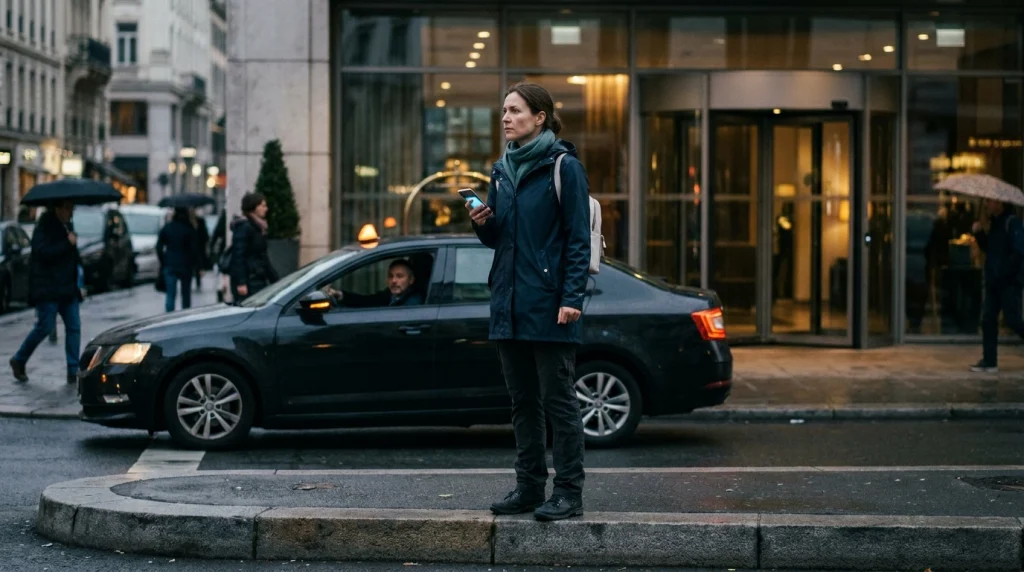
If a rideshare makes you uncomfortable, pause and assess your immediate surroundings rather than ignoring the feeling. Your response depends on whether you’re still waiting, have entered the car, or face an immediate threat.
1. If you haven’t entered the car
You can refuse the ride, step away, and cancel the booking if the vehicle, driver, or situation seems wrong. You don’t have to get inside just because the driver has arrived or you’re worried about a cancellation fee.
- Check the details: Compare the registration plate, make and model, and driver photo with the booking.
- Stay in public: Wait near a hotel reception, staffed business, airport desk, or other populated location.
- Keep your distance: Don’t approach a car that pressures you to ignore the app or change the agreed pickup arrangements.
- Arrange another ride: Request a replacement through the official app or ask a trusted local contact for help.
2. If you’re already inside
Stay focused on getting to a safer location. If the driver is simply taking a route you don’t recognize, check the navigation and ask a calm, direct question; if you suspect a threat, prioritize your exit and emergency options instead.
If you can safely speak, say something simple such as, “Please stop at the next busy, well-lit location.” A hotel entrance, staffed petrol station, or open business may offer a safer place to leave than an isolated roadside.
3. If you’re in immediate danger
If the driver threatens you, refuses to stop, or deliberately takes you somewhere that creates an immediate threat, contact local emergency services when you safely can. Use the app’s emergency assistance feature if available, and share your location with someone you trust if doing so won’t increase the danger.
Don’t put yourself at greater risk trying to film the driver, argue, or retrieve belongings. If you can exit safely in a populated place, move toward other people and ask for help.
Safety reminder
A safety plan is a guide, not a rigid sequence. If a situation escalates, choose the action most likely to protect you in that moment.
Section takeaway: Before boarding, you can simply refuse the ride. Once inside, focus on a safe exit, contact help when necessary, and don’t let politeness override your safety.
How Can You Check a Rideshare Before Getting In?
A few checks before boarding can help you catch booking mismatches and avoid unnecessary risk. This is particularly important when arriving late at night, leaving an airport, or navigating an unfamiliar destination alone.
Match the driver and vehicle
Use the details in the official booking screen rather than relying on someone who calls out your name or claims to be your driver. Confirm the license plate, vehicle description, and driver’s photo before opening the door.
If any detail differs, don’t get in to ask questions from inside the vehicle. Move to a staffed or populated area and contact the rideshare company through its official app.
Keep the booking inside the official app
A driver who asks you to cancel the app booking and pay cash, offers an unofficial ride, or insists on a different vehicle creates a reason to pause. These requests can remove useful trip records and make it harder to access the platform’s safety support.
There may be legitimate local transport arrangements outside a rideshare app, but don’t accept an unverified substitute simply because someone claims it’s faster or cheaper. Use licensed, locally recognized alternatives you can independently verify.
Prepare your phone and trip details
Before leaving your accommodation, make sure your phone has enough battery for navigation, calls, and emergency use. If possible, keep a charging cable or power bank with you during longer journeys.
- Share your trip: Send your live location or trip details to someone you trust.
- Check your destination: Confirm the drop-off point in the app before the vehicle moves.
- Review the route: Keep navigation visible and notice major deviations from the expected journey.
- Know your backup: Identify a hotel, staffed venue, or transport desk you could approach if plans change.
For solo female travel safety, preparation is useful because it reduces the number of decisions you must make under pressure. You don’t need an elaborate security routine; a few repeatable checks are often easier to maintain.
What if the driver asks personal questions?
Friendly conversation is common, and a personal question doesn’t automatically mean danger. Still, you don’t owe a stranger details about your accommodation, whether you’re traveling alone, your daily plans, or where you’re staying overnight.
You can answer vaguely, redirect the conversation, or say you prefer a quiet ride. If the driver ignores your boundaries, combines intrusive questions with suspicious behavior, or makes you feel threatened, consider ending the trip at a safe public location.
Section takeaway: Verify the vehicle and driver through the app, keep the trip documented, and share your journey with someone you trust before setting off.
What Should You Do If You Feel Unsafe During the Ride?
If the ride has already started, focus on your surroundings, your available communication options, and the safest realistic way to exit. You don’t need to determine whether the driver’s behavior is intentional before taking reasonable precautions.
What if the driver takes an unexpected route?
A route change can happen because of traffic, road closures, or navigation errors, so an unfamiliar turn isn’t proof of danger. Check your map and ask, “Could you explain why we’re taking this route?” if you feel comfortable speaking.
If the driver continues away from your destination without a reasonable explanation, tell a trusted contact what is happening and consider requesting a stop at a busy public location. If you believe you’re in immediate danger, contact emergency services rather than waiting for the driver to explain.
What if the driver makes you uncomfortable?
Unwanted flirting, invasive questions, sexual comments, or repeated disregard for your boundaries can make a ride feel unsafe. You can end the conversation, avoid sharing personal information, and ask to be dropped off somewhere public.
Try a short, neutral statement if speaking feels safe:
- “I’d prefer to keep the conversation about the route.”
- “Please drop me off at the next busy location.”
- “I need to make a call now.”
You don’t have to confront the driver or explain your discomfort. If you think direct confrontation could make things worse, focus on contacting someone you trust or seeking emergency assistance.
What if the driver refuses to stop?
A driver refusing a reasonable request to stop can become a serious safety concern, especially if you’re being taken somewhere against your wishes. Contact local emergency services when possible, and use the app’s emergency feature if available in your location.
Share your live location, the vehicle details, and your direction of travel with emergency responders or a trusted person if you can do so safely. Avoid attempting to jump from a moving vehicle or physically fighting the driver, because either action could increase your immediate risk.
What if you feel trapped or your phone battery is low?
Use the communication option most likely to work in the circumstances. A short message containing your location, vehicle details, and a request for help may be more practical than a long explanation.
If your phone is nearly dead, prioritize emergency communication and sharing essential trip information over recording the incident or posting online. If you can safely reach a staffed venue, ask an employee to help you contact emergency services.
A practical example
Imagine you’re returning from dinner in an unfamiliar city and your driver turns away from the route shown on your phone. Check the map, share your trip, and ask about the detour if it’s safe. If the explanation doesn’t make sense and you feel threatened, seek a safe public exit and contact local emergency services as needed.
Section takeaway: Respond to the behavior and your immediate circumstances, not just one unexplained turn. A public exit, reliable communication, and timely emergency help matter more than avoiding an awkward conversation.
Which Rideshare Safety Features Should Solo Travelers Use?
Rideshare safety tools can help you verify a pickup, share your location, and report a concerning incident. Their names, availability, and emergency options vary by platform and country, so check the app you use before traveling.
Which features are worth setting up in advance?
- Trusted contacts: Add a friend or family member who can follow your journey and notice if you stop communicating.
- Live trip sharing: Share the vehicle details, route, and estimated destination with someone you trust.
- PIN verification: Where supported, use a ride-verification PIN to help confirm you’re entering the vehicle matched to your booking.
- Emergency assistance: Learn where to find the in-app emergency option and what local emergency number it connects to.
- Safety reporting: Know how to contact the platform’s safety team and report inappropriate conduct.
Uber describes features including trip sharing, an emergency button, ride verification, and GPS-based ride monitoring on its official rider safety page. Lyft also explains its location-sharing and in-ride emergency tools on its rider safety page.
How should you use these tools during an incident?
If the situation feels concerning but isn’t an immediate emergency, share your trip and contact platform support when safe. If you face an immediate threat, don’t rely on a customer support report alone; contact local emergency services when possible.
Remember that an emergency button may call a specific number or connect to a safety partner depending on the location. Don’t assume that a feature available in the United States will work identically in another country.
| Safety tool | What it helps with | Important limitation |
|---|---|---|
| Trip sharing | Lets a trusted person follow trip details and location. | Someone must be available to check the shared information. |
| PIN verification | Helps confirm the vehicle matches the requested ride. | It doesn’t guarantee safe driving or behavior. |
| In-app emergency help | May connect you with emergency responders or a safety partner. | Features and availability vary by country and platform. |
| Incident reporting | Creates a record for the platform to review. | It isn’t a substitute for emergency assistance. |
These features provide useful layers of protection, but none guarantees a safe ride. Your own judgment, awareness of your surroundings, and ability to seek outside help remain important.
Section takeaway: Set up trip sharing and verification before you need them. Know how to reach local emergency services, and don’t confuse app support with an immediate emergency response.
Should You Cancel the Ride or Switch to Another Transport Option?
Cancel or leave a rideshare when the driver, vehicle, or behavior makes you feel unsafe, and choose an alternative you can verify independently. The best replacement depends on your location, the time of day, and whether you can reach a staffed public place safely.
Which alternative is safest for your situation?
| Alternative | Best suited for | What to consider |
|---|---|---|
| Another verified rideshare | When the first driver or vehicle doesn’t match expectations. | Check the new driver and vehicle before boarding. |
| Licensed taxi | When taxis are regulated and available through a trusted stand or dispatch service. | Verify licensing and agree on the fare or meter arrangements. |
| Hotel-arranged transport | When you need help from a staffed accommodation or reception desk. | Confirm who is collecting you and which vehicle to expect. |
| Public transportation | When a suitable route is operating and the stations or stops are accessible. | Check service hours, route changes, and the safety of the walk to your stop. |
| Help from a staffed venue | When you need somewhere safer to wait and make another plan. | Ask staff to help contact a trusted person or emergency services if needed. |
What if it’s late at night?
Don’t feel obligated to walk a long distance through an unfamiliar area just to avoid another rideshare. If possible, remain inside a staffed hotel, restaurant, airport, or other public venue while arranging a replacement.
Check local transport hours and use reputable, locally recognized services. If no suitable transport is available, consider waiting somewhere secure rather than accepting an unverified ride out of urgency.
How should you handle a cancellation fee?
A possible fee shouldn’t determine whether you enter a vehicle you distrust. If the app charges you, review its cancellation policy and contact support to explain the safety concern.
Keep the cancellation record and any relevant booking details. You can address the charge later, when you’re somewhere safe.
Section takeaway: Choose a verified alternative based on local conditions. A staffed venue can provide a safer starting point when you’re unsure which transport option to trust.
What Should You Do After an Unsafe Rideshare Experience?

Once you’re somewhere safe, report what happened, preserve relevant details, and give yourself time to recover. You don’t have to decide immediately how to describe the experience or whether you want to make a formal complaint.
1. Get to a secure place
Go somewhere you feel comfortable, such as your accommodation’s reception area or another staffed public venue. Contact a trusted person and let them know you’re safe, especially if they were tracking your trip.
2. Save the relevant details
Write down the facts while they’re fresh in your mind. Include details that could help the platform investigate or help authorities understand what happened.
- The date, approximate time, pickup point, and destination.
- The driver’s name, vehicle description, and registration plate, if available.
- The route taken and any unusual stops or changes.
- Specific comments, threats, or actions that concerned you.
- Relevant messages, trip receipts, and screenshots already available to you.
Keep this information somewhere secure. If you have a recording, preserve the original and consider local laws governing audio or video recording before sharing it.
3. Report the incident through the platform
Use the official app or website to submit a safety report. Explain what happened in factual language and identify the trip, the driver, and any evidence you can provide.
For a serious threat, assault, attempted abduction, or other suspected crime, consider contacting local law enforcement as well. The platform’s investigation and a police report serve different purposes.
4. Take care of yourself afterward
An upsetting ride can leave you shaken, angry, embarrassed, or uncertain about continuing your trip. Those reactions don’t mean you overreacted, and you don’t need to justify your decision to leave an uncomfortable situation.
Talk with someone you trust, take a break, and reassess your next journey when you’re ready. If the experience continues to affect your sleep or sense of safety, consider seeking support from a qualified professional or an appropriate local support service.
5. Review your plan for the next ride
You don’t necessarily need to stop using rideshares altogether. Instead, identify what would help you feel more prepared on your next journey.
- Enable available trip-sharing and ride-verification features.
- Keep your phone charged and emergency contacts accessible.
- Save the details of a trusted local taxi or transport provider.
- Choose pickup and drop-off points that are easy to identify and reasonably populated.
Section takeaway: Report the incident, preserve useful information, and give yourself time to recover. Use what you’ve learned to adjust your travel plan without blaming yourself for what happened.
Pro tip: Before traveling internationally, review your destination’s official government travel advice and local emergency contacts. If you’re a U.S. citizen traveling abroad, the U.S. Department of State provides destination information and safety guidance; travelers of other nationalities should also check their own government’s advice.
Frequently Asked Questions
Should I get out of a rideshare if I feel uncomfortable?
Yes, if you can exit safely. Ask to be dropped off at a busy, well-lit public location rather than an isolated roadside, and contact emergency services if you face an immediate threat. If the driver refuses to stop, prioritize contacting help over trying to force your way out of a moving vehicle.
What if I don’t have proof that the driver is dangerous?
You don’t need proof of wrongdoing to refuse a ride or request a safe stop. A mismatch between the booking and vehicle, persistent boundary violations, or unexplained behavior can justify taking precautions. Focus on getting somewhere safe rather than trying to prove the driver’s intentions.
Should I tell the driver that I’m sharing my location?
You generally don’t need to announce that you’re sharing your trip with a trusted contact. Use the platform’s location-sharing feature or another safe method available to you. If you think mentioning it could escalate the situation, keep your attention on reaching a safe place and getting assistance.
Can I report a rideshare driver after the trip ends?
Yes. Most major rideshare platforms provide ways to report safety concerns after a journey, although the exact process varies. Include the trip details, a factual account of the behavior, and any relevant evidence. For an immediate threat or suspected crime, don’t rely on a platform report as your only source of help.
What should I do if my phone dies during an unsafe ride?
If your phone stops working, look for a safe opportunity to seek help from other people. Once you can exit safely, approach staff at a hotel, business, transport station, or another staffed venue and ask to use a phone. Avoid leaving a vehicle in a dangerous location solely to seek a charging point.
Should solo female travelers avoid rideshares at night?
Not necessarily. A rideshare may be a practical option at night, but it’s sensible to verify the driver and vehicle, share trip details, and choose safe pickup and drop-off points. Consider local conditions and your comfort level rather than assuming every ride is safe or every nighttime journey is dangerous.
What emergency number should I call abroad?
Use the emergency number applicable to your current country, not automatically the number you use at home. Check official government or local police information before traveling, and learn how to access emergency assistance in your rideshare app. App-based emergency features may work differently depending on the country.
Final Takeaway: Trust Yourself and Put Safety First
Knowing what to do if a rideshare feels unsafe can make solo travel feel more manageable, especially when you’re navigating an unfamiliar place. Check the driver before boarding, share your trip, and know how to reach help before you set off.
If something feels wrong during the ride, you can change your plan. Ask for a safe public stop, contact someone you trust, and seek emergency assistance when necessary.
The most important thing to remember is simple: you don’t owe a driver your trust, your personal information, or an explanation for choosing your safety. Being prepared isn’t about expecting the worst; it’s about giving yourself more options when plans change.