How Can a Solo Female Traveler Handle Hotel Check-In Alone?
Quick Answer
A solo female traveler can handle hotel check-in confidently by preparing her reservation details, keeping identification and payment secure, protecting her room number, and confirming essential safety features before going upstairs. Choose a well-reviewed property, use official booking and communication channels, and ask reception to resolve any concerns before accepting a room. For additional preparation, review the U.S. Department of State’s travel safety resources.
Your essential check-in steps
- Prepare documents: Keep your booking confirmation, identification, and payment method accessible but secure.
- Use the official desk: Confirm your reservation directly with authorized hotel staff.
- Protect privacy: Avoid announcing your room number or sharing unnecessary personal details.
- Ask questions: Confirm Wi-Fi, breakfast, check-out, deposits, and available security features.
- Check the room: Test the door lock, inspect windows, and identify the nearest emergency exit.
- Trust your judgment: Request another room or contact management if something feels wrong.
One important precaution
- If your room is not ready or a booking problem arises, stay in the staffed reception area while arranging a verified solution.
Checking into a hotel alone can feel like a small but important milestone, especially on your first solo trip. I want you to feel organized and comfortable from the moment you approach reception, rather than worrying about every interaction.
This guide explains how to prepare, what to say at the front desk, which privacy precautions matter, and how to respond when something goes wrong. These practical steps work for hotels in familiar cities and unfamiliar international destinations.
In This Guide
- 1. How should you prepare before arriving?
- 2. What should you do at the hotel front desk?
- 3. How can you protect your privacy and safety?
- 4. What should you check before settling into your room?
- 5. How should you handle check-in problems?
- 6. Which check-in options work best for solo travelers?
- 7. Frequently asked questions
1. How Should You Prepare Before Arriving at the Hotel?
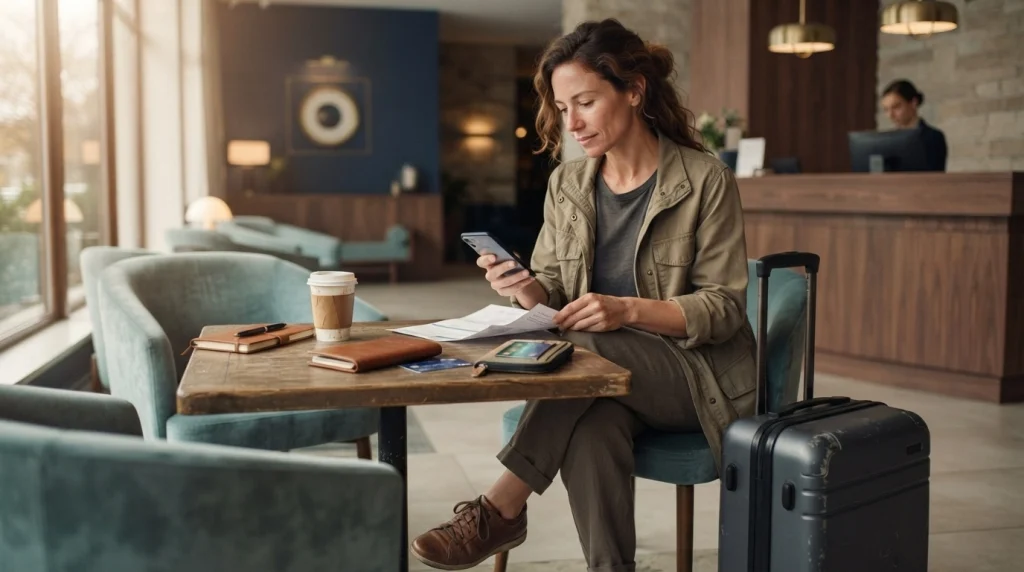
Prepare your booking details, payment method, arrival plan, and essential safety information before reaching reception. A little organization makes check-in faster and leaves you better prepared to handle unexpected questions or delays.
Confirm your reservation and arrival time
Check your confirmation email or booking app before leaving the airport, station, or previous accommodation. Verify the hotel name, street address, reservation dates, room type, and check-in time.
If you expect to arrive late, contact the property through its verified contact details. Ask whether reception remains open and whether the hotel requires advance notice for late arrivals.
Save your confirmation offline, particularly if you’re traveling internationally. Hotel Wi-Fi or mobile data may not work immediately when you arrive.
Keep your documents and payment ready
Place essential items where you can reach them without opening your entire bag at the front desk. You should be able to retrieve what staff legitimately need without exposing everything you carry.
- Identification: Carry the passport or government-issued identification required by your destination and property.
- Booking confirmation: Save a screenshot or offline copy of your reservation.
- Payment card: Check that your card works internationally if necessary and has enough available credit for any deposit.
- Backup payment: Keep another payment method separate from your main wallet when possible.
- Emergency details: Save the hotel’s verified phone number and address.
Hotels may request a deposit or place a temporary authorization on your card. Ask about the amount, payment method, and release process before agreeing if the terms aren’t clear.
Research the property and your route
Solo female travel means making your own decisions about accommodation, transport, and personal comfort. For this guide, solo female travel means traveling independently as a woman without a companion who shares responsibility for these decisions.
Before arrival, check recent accommodation reviews, the property’s location, available reception hours, and transport options. If you’re arriving after dark, arrange a reliable transfer and confirm that the driver is taking you to the correct entrance.
As of 2026, booking apps and digital keys can simplify arrival, but they don’t replace basic verification. Check the property’s official instructions rather than following an unexpected payment link or message.
Section takeaway: Prepare your documents and arrival plan before you travel. You should reach reception knowing where you’re staying, what you’ve booked, and how you’ll pay.
2. What Should You Do at the Hotel Front Desk?
Approach the official reception desk, state that you have a reservation, and follow the property’s standard check-in process. You don’t need to apologize for traveling alone or explain your personal circumstances.
Use a simple, confident check-in script
You don’t need a special approach to check into a hotel alone. A short, polite introduction is enough to start the process.
Try saying:
“Hello, I have a reservation under [your name]. Could you please confirm my booking and let me know what I need to complete check-in?”
Present the required identification and payment method when requested. Listen to the instructions, ask questions when necessary, and check the room type and departure date before accepting your key.
If staff ask unnecessary personal questions, answer briefly or redirect the conversation to your reservation. You can be friendly without disclosing your itinerary, relationship status, or the fact that nobody is traveling with you.
Confirm the details before accepting your key
Don’t rush through the administrative details just because other guests are waiting. A quick confirmation now can prevent avoidable problems later.
- Confirm the room category and number of nights booked.
- Ask whether the quoted total includes taxes and mandatory fees.
- Clarify any deposit, incidental charge, or temporary card authorization.
- Confirm check-out time and the procedure for requesting an extension.
- Ask how to contact reception or security from your room.
- Find out how to access the building if you return late.
Ask for a printed receipt or an electronic confirmation of any payment. If the amount differs from your reservation, request an explanation before authorizing additional charges.
Choose your words without revealing too much
You can tell the receptionist that you’re the registered guest without volunteering information about your wider travel plans. There’s generally no need to tell other guests that you’re alone or describe when you’ll be returning.
If someone asks whether you’re traveling alone, a neutral response works well: “I’m just checking in, thanks.” You can then turn your attention back to the receptionist.
Being discreet doesn’t mean being unfriendly. Professional, ordinary communication is usually all you need.
Section takeaway: Treat check-in as a routine transaction. Confirm the booking, understand the charges, and share only the information necessary to complete the process.
3. How Can You Protect Your Privacy and Safety During Check-In?
Protect your room number, keep your belongings under your control, and use verified hotel staff for assistance. Good hotel check-in safety relies on practical boundaries, not on assuming that every unfamiliar person poses a threat.
Keep your room number private
If the receptionist announces your room number loudly, politely ask whether they can write it down instead. Keep the key card and any sleeve displaying your room number out of public view.
If another guest overhears your details, there’s no need to panic. Simply avoid repeating the information and ask reception for a new key or room change if you have a credible reason to believe your privacy is compromised.
Stay aware of your belongings
Keep your handbag, phone, and luggage close while completing paperwork. Avoid leaving valuables unattended on the counter while you search through your bag.
If someone offers unsolicited help with your luggage, you can accept or decline according to your comfort level. When accepting assistance, confirm that the person is authorized hotel staff and keep track of your belongings.
Understand what hotel staff legitimately need
Hotels may need identification, a signature, payment authorization, or contact information to complete a reservation. Requirements differ by country and property, so ask questions if a request seems unusual.
Never share your banking password, email password, or one-time authentication code with a receptionist. If a payment problem requires online verification, use the booking provider’s official app or website independently.
Arrange transport and late arrivals carefully
If you’re arriving late at night, verify your driver and destination before entering a vehicle. Use an official taxi rank, a reputable transport app, or a transfer arranged through a confirmed hotel booking.
Send your hotel name and expected arrival time to a trusted contact if that helps you feel prepared. Share your location privately when useful, but avoid posting your live room details on public social media.
For international trips, review the U.S. Department of State’s international travel guidance or your own government’s equivalent. Save local emergency numbers because the correct number varies by destination.
Practical safety tip
If anyone claiming to be hotel staff approaches you unexpectedly, verify their identity with reception before providing information or granting access to your room. You can make that call without opening your door.
Section takeaway: Protect personal information without making check-in stressful. Keep your room number private, verify unusual requests, and maintain control of your belongings.
4. What Should You Check Before Settling Into Your Room?
Once you receive your key, go directly to the assigned room and make sure the accommodation matches your expectations. Before unpacking, check that the door locks properly, the room offers reasonable privacy, and you know how to get help.
Inspect the room in the first few minutes
Put your luggage somewhere you can keep an eye on it, then carry out a brief visual check. You don’t need to inspect every corner obsessively; focus on obvious access, privacy, and maintenance concerns.
- Door: Close it fully and test the available deadbolt, latch, or other interior lock.
- Windows: Check that accessible windows and balcony doors close and secure properly.
- Connecting doors: Confirm that any adjoining door remains locked when not in use.
- Privacy: Check that curtains or blinds close and the bathroom door functions properly.
- Communication: Find the room phone, reception contact details, or another way to request help.
- Emergency exit: Identify the nearest exit and read the posted evacuation instructions.
If the door won’t latch or a window won’t secure, contact reception before settling in. Request maintenance or a different room if staff cannot resolve the issue promptly.
Test the key card and learn the hotel’s procedures
Make sure your key card works and understand whether it also opens the main entrance or elevator. Keep it separate from documents that display your room number.
Ask reception what to do if you lose the card or get locked out. Some properties require identification before issuing a replacement, which is a useful security measure.
Know when to request another room
A room change is reasonable when you discover a broken lock, a damaged window, an unresolved cleanliness problem, or a location that creates a specific privacy concern. Explain the practical issue rather than feeling obliged to justify your personal comfort.
For example, you might say, “The door doesn’t lock securely. Could you please arrange a room with a working lock?” If you feel unsafe, remain in a staffed area while reception resolves the problem.
Don’t rely on a portable door alarm or travel lock to compensate for a defective hotel door. Any additional device must be permitted by the property and must not obstruct emergency evacuation.
Section takeaway: Check the essential safety features before unpacking. A short inspection and a clear way to contact reception help you settle in with greater confidence.
5. How Should You Handle Hotel Check-In Problems?
Stay calm, explain the problem clearly, and ask for a specific solution. If the issue affects your security, payment, or ability to access your reservation, resolve it before moving to an unfamiliar location or handing over additional money.
What if the hotel cannot find your reservation?
First, show the confirmation number and verify the booking dates, property name, and reservation holder’s details. Check whether you booked through the hotel directly or a third-party platform.
If staff still cannot locate the reservation, ask them to check their system and contact the booking provider if necessary. Keep screenshots, receipts, and written messages documenting what happened.
Don’t immediately pay for another room without understanding your options. If you need alternative accommodation, compare the total cost and confirm the new property’s identity before booking.
What if the receptionist requests an unexpected payment?
Ask for an itemized explanation and compare the amount with your original confirmation. Taxes, deposits, and incidental holds may explain a difference, but you should understand each charge before authorizing it.
If the request seems suspicious, pause the transaction and contact the hotel through a verified phone number or your booking provider’s official support channel. Never transfer money to an unverified personal account simply because someone claims your reservation will otherwise disappear.
What if your assigned room feels unsafe?
You don’t need to prove that a room is dangerous before raising a reasonable security concern. A broken lock, a door that won’t close, or an unresolved access issue is enough to request assistance.
- Return to reception if the route is safe, or contact staff from your room.
- Describe the problem clearly and request a secure alternative.
- Ask for a manager or security staff member if the first response doesn’t resolve it.
- Keep your belongings with you if you move rooms.
- Leave the property if a credible threat remains unresolved, provided you can leave safely.
If someone threatens you or tries to enter your room without authorization, prioritize immediate safety and contact local emergency services when necessary. Don’t put yourself at risk to argue about hotel policy.
What if you feel uncomfortable asking for help?
Remember that requesting a functioning lock, clarification about a charge, or a different room is a normal part of being a hotel guest. You are paying for accommodation, and you can reasonably expect the property to address legitimate concerns.
Keep your language short and direct. “I’m not comfortable with this arrangement. Could you please help me find another option?” is enough to begin the conversation.
Section takeaway: Solve administrative issues with clear questions and documented information. When a concern affects your immediate safety, prioritize getting somewhere secure over resolving the booking dispute.
6. Which Check-In Options Work Best for Solo Travelers?
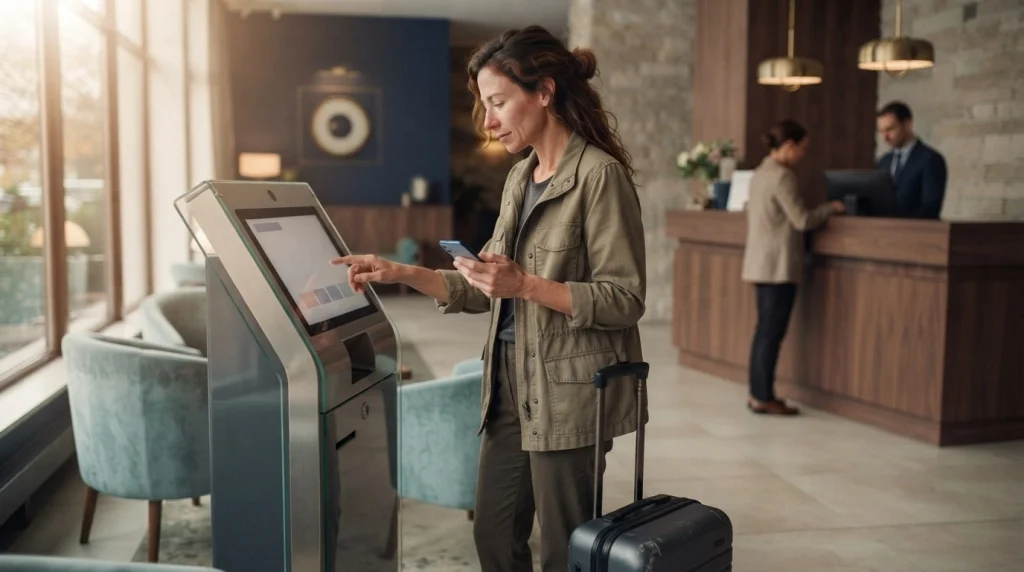
Traditional reception, mobile check-in, and self-service kiosks can all work for women traveling alone. The best choice depends on the property’s procedures, your arrival time, your comfort level, and whether you need help with anything beyond collecting a key.
Compare the available check-in methods
| Check-in method | Main advantage | What to check |
|---|---|---|
| Staffed reception | Direct assistance with bookings, room requests, and payment questions. | Verify staff credentials and keep your room number private. |
| Mobile check-in | May reduce waiting and limit how much information you discuss in public. | Use the official app and confirm how you’ll receive your key. |
| Self-service kiosk | Can offer a straightforward check-in when staff are busy. | Protect your PIN and payment details from nearby observers. |
| After-hours check-in | May accommodate late arrivals at properties with suitable arrangements. | Confirm access instructions, identity verification, and emergency contact procedures beforehand. |
No method guarantees safety, and digital check-in isn’t automatically more secure than speaking with a receptionist. Choose the option that lets you verify your reservation and obtain help when needed.
Should you request a particular room location?
You can ask for a room that meets your practical needs, although availability and hotel design will determine what’s possible. Consider these preferences when making your request:
- A room with a functioning door lock and secure windows.
- A location away from excessive noise if you need to rest.
- A room that offers reasonable privacy from public areas.
- Convenient access to staffed areas if you expect to arrive late.
- A room that allows you to follow the property’s emergency evacuation guidance.
Don’t assume that the highest floor or the room closest to the elevator is always the safest. Different layouts create different access and evacuation considerations, so focus on the property’s actual security features.
How can you make late-night check-in easier?
For a late arrival, confirm reception hours, access arrangements, and transport before your journey begins. Keep your phone charged and your booking confirmation available offline.
If you reach the property and find an unexpected locked entrance, contact the hotel using its verified number. Stay in a well-lit, staffed location while arranging access or alternative accommodation.
Section takeaway: Choose the check-in method that offers the right balance of convenience, privacy, and access to assistance. Verify the arrangements in advance, especially for late-night arrivals.
7. Frequently Asked Questions
Is it safe for a woman to check into a hotel alone?
Yes, women can check into hotels alone, and no companion is required for an ordinary hotel reservation. Choose reputable accommodation, verify your booking, protect your personal information, and check the room’s essential security features before settling in.
Should I tell hotel staff that I’m traveling alone?
You generally don’t need to volunteer that information beyond what’s required for your reservation. Answer legitimate check-in questions honestly, but keep your wider itinerary and personal circumstances private when they’re irrelevant to the transaction.
What documents do I need to check into a hotel?
Most hotels require a reservation confirmation and valid identification, and many request a payment card or deposit. Requirements vary by property and country, so check the booking conditions and local identification rules before arrival.
Can I request a different room if I feel uncomfortable?
Yes, you can ask reception for another room and explain your concern. A broken lock, a privacy issue, or a room that doesn’t match your booking provides a practical reason to request a change, subject to availability and the hotel’s policies.
What should I do if a hotel asks for my passport?
Some destinations and hotels require passport details or document inspection under local rules. Ask why the information is needed, how the property handles it, and whether a permitted alternative exists. Avoid surrendering your passport for unnecessary periods or leaving it without a clear explanation.
Should I book a hotel with a 24-hour reception?
A hotel with 24-hour reception can be useful if you’re arriving late, need assistance outside standard hours, or prefer having staff available. Confirm that the desk is genuinely staffed around the clock and ask how guests access the property at night.
What if I arrive and discover that the hotel is fully booked?
Ask staff to verify your confirmed reservation and explain what alternative accommodation or assistance they can offer. Contact your booking provider through its official support channel, keep records of the issue, and arrange a verified alternative if you cannot safely stay at the property.
Pro tip: Before an international trip, review your government’s official travel advice, save the destination’s emergency number, and keep the hotel address accessible offline.
Make Hotel Check-In Part of Your Solo Travel Routine
Handling hotel check-in alone becomes easier when you treat it as a familiar routine rather than a test of confidence. Prepare your documents, communicate clearly, protect your privacy, and check your room before unpacking.
You don’t have to anticipate every possible problem. You simply need a practical plan, a way to contact help, and the confidence to speak up when something doesn’t seem right.
Before your next solo trip, save this checklist with your booking confirmation and transport details. A few minutes of preparation can help you begin each stay feeling more organized, independent, and ready to enjoy the journey.