How Can a Woman Sleep Safely on an Overnight Bus While Traveling Alone?
Quick Answer
A woman can reduce the risks of sleeping on an overnight bus by choosing a reputable operator, selecting a suitable seat, securing her belongings, and sharing her journey details with someone she trusts. However, no seat or accessory guarantees safety, and avoiding overnight public transport may be the better choice in destinations where official guidance warns against it. Before booking, check the official safety guidance for women travelers alongside local transport advice.
Before You Fall Asleep
- Choose carefully: Book with a reputable bus company and check available safety features before paying.
- Protect valuables: Keep your phone, money, passport, and essential medication close to your body.
- Secure your bag: Keep your daypack within reach and use a small luggage lock where appropriate.
- Share your route: Send a trusted contact your booking details, expected arrival time, and planned stops.
- Stay reachable: Charge your phone, carry a power bank, and keep emergency contacts accessible.
- Plan your arrival: Arrange reliable onward transport before reaching an unfamiliar terminal at night.
One Important Rule
- Trust your instincts: If a bus, operator, passenger, or situation feels unsafe, seek assistance and consider another travel option rather than forcing yourself to sleep.
Traveling alone gives you the freedom to choose your own route, but overnight bus journeys can bring a different set of worries. You might need to sleep beside unfamiliar passengers, protect your belongings, and arrive in a new place before sunrise.
In this guide, I’ll explain how a woman can sleep safely on an overnight bus while traveling alone, what to pack, which seats to consider, and how to handle uncomfortable situations. These precautions are useful in 2026, although the safest choice always depends on the route, operator, and destination.
In This Guide
- Should you sleep on an overnight bus when traveling alone?
- How do you choose a safer bus and seat?
- How can you protect yourself and your belongings while sleeping?
- What should you pack for a safe overnight bus journey?
- What should you do if you feel unsafe during the journey?
- How do you plan a safe nighttime arrival?
- Overnight bus safety FAQs
Should You Sleep on an Overnight Bus When Traveling Alone?
Sleeping on an overnight bus can be practical, but it is not automatically the safest or most comfortable choice for a solo woman. Your decision should consider the local security situation, the transport operator, the route, and whether you can reach help if something goes wrong.
Solo female travel safety means planning your journey to reduce avoidable risks while keeping realistic alternatives available. It does not mean eliminating every possible danger or staying awake throughout every trip.
When an overnight bus may be a reasonable option
An overnight journey may suit you when the operator has a credible safety record, the route is established, and you can book through a reliable channel. A direct service with a confirmed arrival point can also simplify your plans.
Before booking, check these details:
- Whether the operator is licensed or otherwise authorized where required.
- Whether passenger reviews identify recurring safety or service problems.
- Whether the bus has working seat belts, where fitted or required.
- Whether you can contact the operator during the journey.
- Whether your destination has safe transport and accommodation available at your arrival time.
When should you avoid sleeping on an overnight bus?
Consider traveling during daylight or choosing another form of transport when official travel advice warns against solo nighttime journeys, the operator cannot be verified, or the route has significant security concerns.
For example, the Australian government’s solo-traveler safety guidance warns that sleeping on public transport can increase vulnerability to theft or assault. Local advice may be more restrictive for particular destinations.
If you are traveling in Bangladesh, check the current destination-specific advice carefully. The UK government has warned of risks involving buses, including poor driving standards, inadequate maintenance, and crime. Its guidance advises against traveling alone and at night by bus.
Section takeaway: Choose an overnight bus only when the route and operator meet your safety requirements. If official guidance recommends avoiding that journey, take the warning seriously.
How Do You Choose a Safer Bus and Seat?
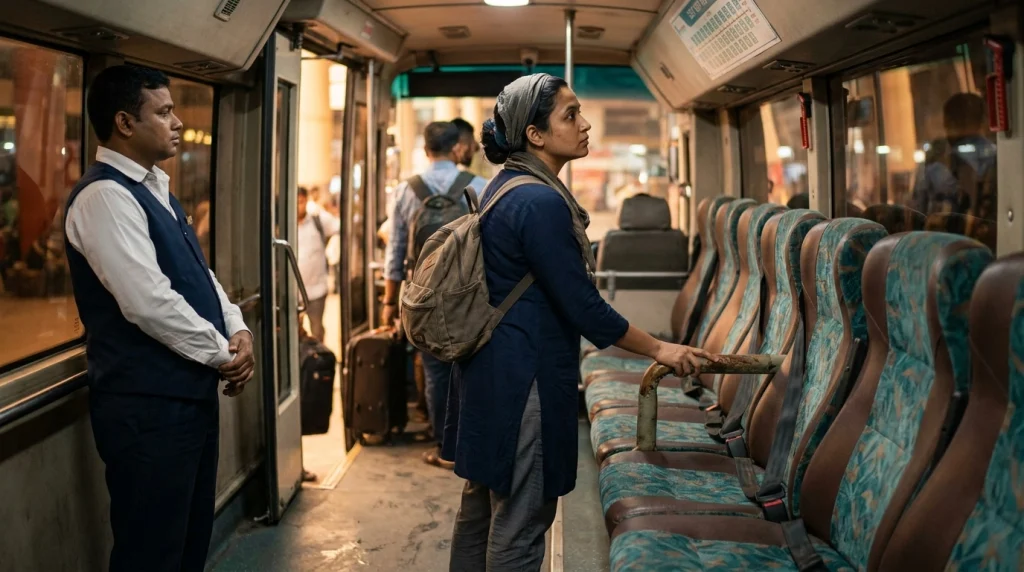
Choosing the right operator matters more than finding a supposedly perfect seat. A seat near the driver or another visible area may make it easier to ask for help, but seat position alone cannot guarantee protection.
Compare your transport options before booking
Use this table to compare common overnight travel choices. The ratings are qualitative planning guidance, not measured incident rates; actual safety varies by location and provider.
| Travel option | Potential advantage | Main concern | What to check |
|---|---|---|---|
| Reputable overnight coach | May offer a direct route and reserved seat | You may be vulnerable while asleep | Operator record, seat belt, route, emergency contact |
| Daytime bus | You can remain more aware of your surroundings | Traffic, theft, and route-specific risks remain | Daylight arrival, reputable operator, safe transfer |
| Train with suitable sleeping accommodation | Some services offer compartments or assigned berths | Access control and security vary by service | Compartment access, door locks, staff availability |
| Private transfer or hired car | May allow a more controlled departure and arrival | Driver, vehicle, and provider still require verification | Licensed provider, vehicle details, trip sharing |
Which bus seat should a solo woman choose?
If the operator offers seat selection, consider a seat that lets you reach staff easily and remain aware of activity around you. A forward-facing seat near the driver or a staffed area may be preferable to an isolated position, depending on the bus layout.
There is no universally safest seat. On some services, a front seat offers visibility; on others, the layout or driver’s responsibilities may make interaction difficult.
Use these practical guidelines when selecting a seat:
- Choose visibility: Prefer a location where you can observe your surroundings and attract attention if needed.
- Check the seating layout: Review whether the bus has individual seats, shared berths, or enclosed sleeping pods.
- Consider the exit: Know where the doors and emergency exits are, and keep access routes clear.
- Ask about women-only seating: If offered, confirm the policy and how seating is assigned.
- Wear your seat belt: Use the installed belt whenever the vehicle is moving, if available.
Do not assume that a premium ticket, a single berth, or a women-only section guarantees safety. Treat these as potential advantages, not substitutes for checking the operator and route.
Section takeaway: Select a credible operator first, then choose a seat that offers visibility and access to assistance. Check the actual layout instead of relying on generic seat-position rules.
How Can You Protect Yourself and Your Belongings While Sleeping?
The most useful approach is to prepare your space before becoming sleepy. Keep essential items close, reduce opportunities for theft, and make sure you can respond if you need help.
Keep important belongings within reach
Use a small daypack or crossbody bag for items you need during the journey. Keep it close enough to monitor without placing it in the aisle or blocking an emergency exit.
- Passport and identification: Keep them in a secure pocket or pouch on your person.
- Phone: Charge it before departure and keep it accessible for emergency calls.
- Money and bank cards: Separate a backup payment method from your everyday wallet.
- Medication: Store essential doses where you can reach them promptly.
- Main luggage: Follow the operator’s storage rules and retain any luggage claim ticket.
A small luggage lock may discourage casual tampering, but it will not make a bag theft-proof. Avoid attaching your body to luggage or using a strap arrangement that could trap you during sudden braking or an emergency evacuation.
Use practical sleep accessories
A few lightweight items can make it easier to rest without leaving you unprepared. Choose accessories that improve comfort without interfering with your awareness or movement.
- Travel pillow: Supports your neck when the seat reclines.
- Eye mask: Blocks light, but remove it whenever you need to check your surroundings.
- Earplugs: Reduce noise, although keeping the volume of your surroundings in mind is important.
- Light jacket or wrap: Helps with cold air-conditioning and provides a comfortable layer.
- Small personal alarm: May help attract attention where legal and permitted by the operator.
Avoid sleeping with noise-canceling headphones that prevent you from hearing important announcements or unusual activity. You should also avoid taking sedatives or sleep aids simply to make an uncomfortable journey easier, particularly without advice from a qualified healthcare professional.
Protect your personal space
If another passenger repeatedly touches you, moves into your space, or behaves in a way that makes you uncomfortable, you do not need to wait until the behavior becomes more serious before acting.
Move to another available seat if possible, approach the driver or a staff member, and clearly state what is happening. If you feel threatened, prioritize getting assistance over maintaining politeness.
Be cautious about accepting food, drinks, medication, or other substances from strangers. Keep your own food and drinks under your control, and do not leave them unattended.
Section takeaway: Keep essentials accessible, use sleep accessories sensibly, and avoid anything that leaves you unable to hear, move, or seek assistance.
What Should You Pack for a Safe Overnight Bus Journey?
A compact safety kit can reduce stress and help you handle common problems. You do not need expensive travel gear; the goal is to keep essential items available when the lights are off and shops are closed.
Use this overnight bus packing checklist
- Fully charged phone and a compatible power bank.
- Charging cable and plug adapter if needed.
- Offline copies of your ticket, accommodation details, and route information.
- Passport or identification, plus a securely stored backup copy.
- Emergency contacts and the relevant local emergency number.
- Small wallet with cash and a backup payment method.
- Essential medication and basic personal hygiene supplies.
- Water and familiar snacks, subject to local rules and your needs.
- Travel pillow, eye mask, earplugs, and a light layer of clothing.
- Small flashlight or phone light for checking your belongings.
- Personal alarm, if legal and permitted where you are traveling.
Prepare your phone before departure
Download your ticket, the operator’s contact information, and an offline map if the route passes through areas with unreliable mobile coverage. Save your destination address and transport arrangements so you do not have to search for them when tired.
Share your booking reference and expected arrival time with someone you trust. Agree on a simple check-in plan, including what they should do if you do not respond within an agreed period.
Location sharing can be useful, but it depends on your phone’s battery, network access, and settings. It should support your safety plan rather than replace direct communication or emergency services.
Section takeaway: Pack for communication, identification, comfort, and quick access to essentials. Prepare your digital travel information before boarding instead of relying on a working connection during the trip.
What Should You Do If You Feel Unsafe During the Journey?
If something feels wrong, act while you can still make choices. You do not have to prove that a situation is dangerous before requesting help or changing your plans.
Respond to uncomfortable behavior early
If a passenger or staff member makes unwanted contact, threatens you, or refuses to respect your boundaries, use a clear voice and seek assistance.
- Move toward help: If safe, relocate to a more visible area or closer to responsible staff.
- State the problem: Tell the driver or another authorized staff member what happened and what assistance you need.
- Contact someone you trust: Share your location or the next known stop if doing so is safe.
- Seek emergency assistance: Contact local emergency services if you face an immediate threat.
- Preserve useful details: If safe, note the bus registration, operator, time, and location for reporting.
Do not confront a threatening person if doing so could increase the danger. Your immediate safety matters more than collecting evidence or trying to manage the situation alone.
What if the driver or another staff member is the problem?
If the person causing concern is responsible for operating the bus, try to contact another staff member, the transport company’s official support channel, or local authorities. Where possible, move toward other passengers or a staffed public location rather than an isolated area.
If the driver appears impaired or drives dangerously, report the concern through the operator’s emergency process or local emergency services when safe. In the United States, the Federal Motor Carrier Safety Administration provides bus passenger safety guidance that covers operator checks, seat belts, and emergencies.
What if you wake up at the wrong stop?
First, confirm your location and whether the bus is still operating. Contact the operator or your trusted contact before leaving the vehicle if you are unsure where you are or whether the area is safe.
Avoid accepting an unverified ride from someone who approaches you at an unfamiliar stop. Instead, use an official transport provider or wait in a staffed, well-lit place when it is safe to do so.
Section takeaway: Respond to warning signs early, contact responsible staff or emergency services when needed, and never let embarrassment stop you from asking for help.
How Do You Plan a Safe Nighttime Arrival?
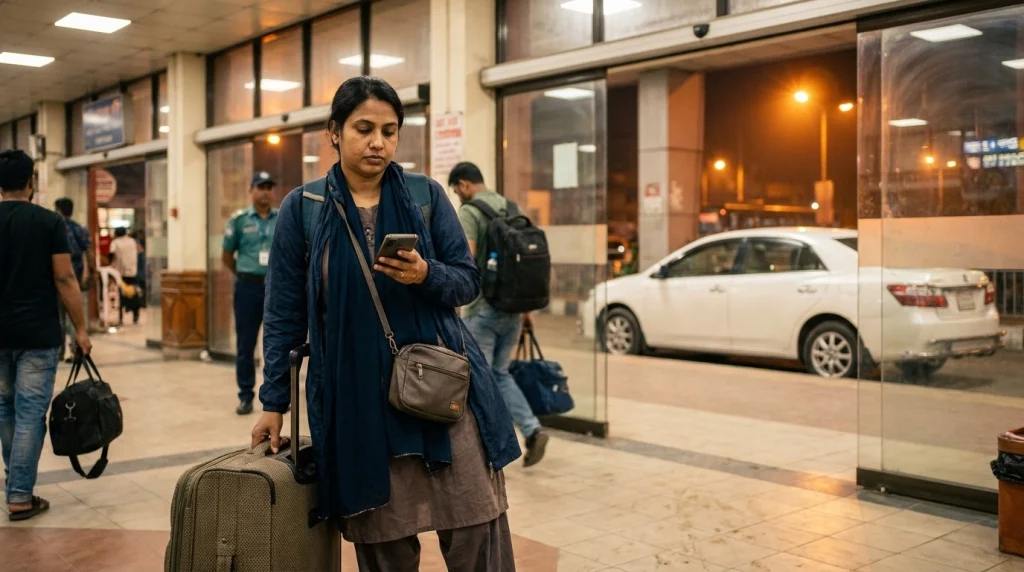
Your journey does not end when the bus reaches its destination. A tired traveler arriving at an unfamiliar terminal may face additional challenges, especially when local transport is limited or the surrounding area is quiet.
Arrange onward transport in advance
Before boarding, find out exactly where the bus will stop and when it is expected to arrive. Check whether the terminal has staff, official taxis, or other reputable transport options available at that hour.
If you plan to use a ride-hailing service, verify the vehicle registration, make and model, and driver details shown in the app. Share the trip with a trusted contact if that feature is available.
Do not get into a vehicle simply because the driver knows your name or claims to work for your hotel. Confirm the booking through the official provider or accommodation first.
Choose accommodation that accepts late arrivals
If you will reach your destination after midnight, confirm your check-in arrangements before departure. Ask whether reception will be available, whether you need an entry code, and what to do if the bus arrives late.
Having a confirmed room can prevent you from wandering around an unfamiliar area while tired. If your accommodation cannot accept your arrival time, consider changing the bus schedule or arranging a reputable alternative.
Keep someone informed without oversharing
Send your expected arrival time and the name of your accommodation to a trusted person. You do not need to broadcast your live location or travel plans publicly on social media.
Once you reach a safe place, send a brief check-in message. If you have a missed check-in plan, make sure your contact knows which transport operator to call and when to seek additional help.
Pro tip: Review the destination’s current government travel advisory and official transport guidance before departure. Conditions can change, and advice written for one country may not apply to another.
Section takeaway: Plan the final leg of your journey before you board. A confirmed arrival arrangement is more useful than improvising transport after a sleepless night.
Overnight Bus Safety FAQs
Is it safe for a woman to sleep alone on a night bus?
It depends on the destination, operator, route, and available safety measures. A reputable service may be a reasonable option in some places, but sleeping makes it harder to notice theft or threatening behavior. Check official local guidance and consider daytime travel when nighttime transport carries significant risks.
Should I choose a window seat or an aisle seat?
Neither is universally safest. A window seat may offer less exposure to people passing through, while an aisle seat may make it easier to leave your row. Consider the bus layout, your access to staff, the exit locations, and your ability to move safely.
How can I stop someone from stealing my bag while I sleep?
Keep your essential daypack close to your body or within immediate reach, and follow the operator’s luggage storage rules. Use a small lock where appropriate, keep valuables out of sight, and avoid leaving your phone or wallet on an adjacent seat. No method can guarantee that your belongings will remain untouched.
Should I wear an eye mask and earplugs on an overnight bus?
They can improve comfort, but use them thoughtfully. Choose earplugs that still allow you to notice important sounds, and remove your eye mask when you need to check your surroundings. Avoid becoming so distracted or deeply asleep that you cannot respond to announcements or an emergency.
Is it better to sit near the bus driver?
A seat near the driver may make it easier to attract attention on some buses, but it is not a guarantee of safety. The best choice depends on the seating layout, staff responsibilities, and available exits. Prioritize a reputable operator and a seat that allows you to seek assistance.
What should I do if another passenger makes me uncomfortable?
Move away if possible, tell the driver or another responsible staff member, and contact someone you trust when safe. If you face an immediate threat, seek emergency assistance. You do not need to tolerate unwanted contact or wait for a situation to escalate before asking for help.
Is a night bus better than a hotel for saving money?
An overnight bus can sometimes save the cost of one night’s accommodation, but the savings depend on ticket prices, the route, and your arrival arrangements. Compare the total cost with a daytime journey and a hotel stay. If the route presents serious safety concerns, saving money should not be the deciding factor.
Final Takeaway: Make Sleep Part of Your Safety Plan
Sleeping on an overnight bus while traveling alone requires more than a travel pillow and a comfortable seat. Choose a reputable operator, keep essentials secure, prepare your phone, and arrange safe transport at the other end.
Most importantly, give yourself permission to change plans. If official guidance warns against the journey or something feels seriously wrong, choose a safer alternative whenever possible.
Solo travel should give you independence without forcing you to ignore your instincts. Plan ahead, stay connected with someone you trust, and make decisions that protect both your safety and your peace of mind.