Should a Solo Female Traveler Use the Hotel Safe?
Quick Answer
Yes, a solo female traveler should generally use the hotel safe for valuables she doesn’t need while exploring. A working, properly secured hotel safe can reduce casual theft, but it isn’t completely theft-proof. Some safes have staff override systems, weak installation, or technical problems. Combine safe use with sensible hotel safety precautions, and never keep every payment option in one location.
My Hotel Safe Safety Rules
- Test before storing: Lock and unlock the empty safe before placing anything valuable inside.
- Choose a unique code: Avoid birthdays, room numbers, and easy combinations.
- Check the mounting: A visibly loose or unsecured safe offers less protection.
- Separate your money: Keep a daily spending card and some cash accessible.
- Protect your passport: Store the original securely when local identification rules permit.
- Consider hotel storage: Ask about supervised front-desk storage for especially valuable belongings.
One Rule Worth Remembering
- Never rely on one security measure. A hotel safe should be part of your travel safety routine, not your entire plan.
Should a solo female traveler use the hotel safe, or keep everything in her bag? It’s a small decision that deserves more thought than most travelers give it.
My approach is to balance security with easy access. Here’s how I evaluate hotel safes, decide what belongs inside, and prepare for problems without making travel stressful.
In This Guide
- Are Hotel Room Safes Actually Safe?
- What Should a Solo Female Traveler Put in the Hotel Safe?
- How Do You Use a Hotel Safe Securely?
- What Are the Best Alternatives to a Hotel Safe?
- What Should You Do if the Hotel Safe Fails?
- How Can Women Protect Valuables While Staying Alone?
- Frequently Asked Questions
Are Hotel Room Safes Actually Safe?
Hotel room safes provide useful protection against casual theft, but they aren’t high-security vaults. Their reliability depends on the lock, installation, maintenance, and hotel security procedures.
A hotel room safe is a small lockable compartment provided for guests to store personal belongings temporarily. Most modern versions use an electronic keypad, although some use a physical key.
Why I Prefer a Safe Over Leaving Valuables Exposed
Imagine leaving your passport, spare cash, and jewelry on a bedside table while sightseeing. Anyone entering the room could immediately see those items.
A locked safe creates an extra barrier. It also keeps important belongings together, making them easier to locate before checkout.
- Less visible storage: Valuables aren’t sitting in plain sight.
- Controlled access: Opening the compartment requires an approved access method.
- Better organization: Passports, spare cards, and small electronics have a designated place.
- Convenience: You can leave unnecessary valuables behind while walking around.
Why Hotel Safes Aren’t Completely Theft-Proof
Hotels need procedures for opening locked safes when guests forget their codes. Depending on the model, authorized staff may have access through management credentials or another override method.
That doesn’t mean staff are untrustworthy. It simply means your personal code may not be the only way to open the compartment.
Condé Nast Traveler’s hotel-safe advice discusses the risks associated with unchanged default access settings. Not every model has the same vulnerability, so avoid assuming all safes work alike.
Other potential concerns include:
- A safe that’s loose or poorly attached to furniture.
- A malfunctioning keypad or weak batteries.
- Inadequate hotel procedures for controlling override access.
- A lock that doesn’t close or engage correctly.
- Unclear hotel policies covering theft or missing belongings.
I treat the safe as one security layer rather than a promise of protection. A reputable hotel, secure room access, and thoughtful storage habits still matter.
Section Takeaway: A properly functioning hotel safe is generally better than leaving valuables exposed, but it should never be your only safeguard.
What Should a Solo Female Traveler Put in the Hotel Safe?
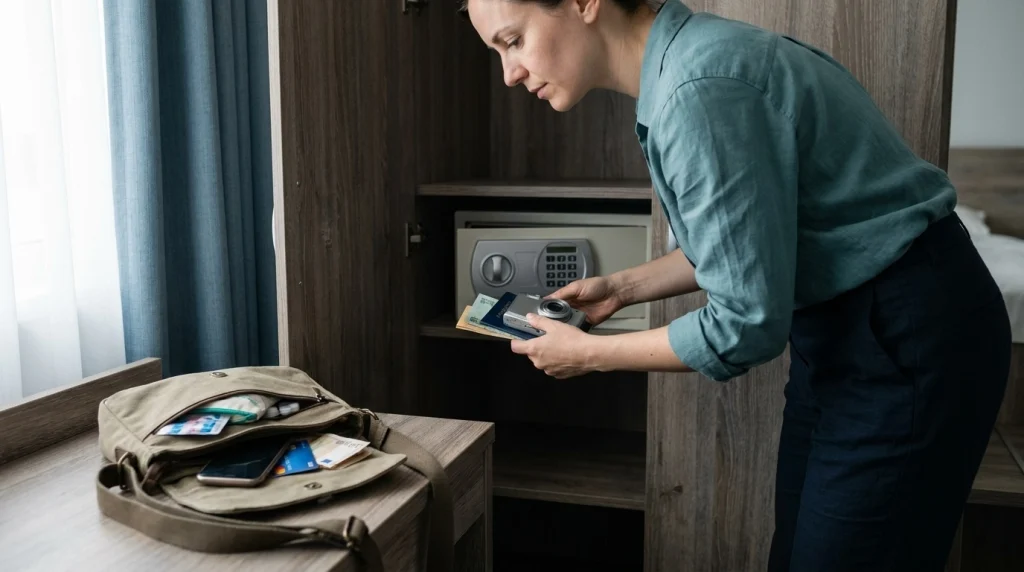
Store valuables you won’t need during the day, while keeping essential identification and emergency spending options accessible. The right arrangement depends on your destination and activities.
What Belongs Inside the Safe?
I divide valuables into two groups: things needed outside and things better left secured. This simple distinction prevents carrying unnecessary items through crowded tourist areas.
- Passport: Store it securely if local identification rules allow you to carry a copy instead.
- Backup bank card: Keep one payment method separate from your daily wallet.
- Emergency cash: Secure some money for unexpected travel disruptions.
- Small electronics: Store devices that fit comfortably and aren’t needed outside.
- Travel documents: Secure important original paperwork that you don’t need that day.
What Should You Keep With You?
Your daily essentials should remain available without carrying every valuable you own. An internal zippered bag compartment usually works well for routine sightseeing.
- One payment card and enough cash for the day’s plans.
- Your charged phone and essential travel information.
- Required identification under local law.
- Necessary medication, especially anything you may need urgently.
- Your hotel key card, kept separate from anything displaying your room number.
Hotel Safe vs. Carrying Valuables: Which Is Better?
Neither option is universally safer. I choose based on how frequently I’ll need an item and the risks of carrying or leaving it.
| Valuable | Preferred Location | Reason |
|---|---|---|
| Original passport | Hotel safe when permitted | Avoid unnecessary exposure during sightseeing |
| Daily spending card | Secure personal bag | Immediate access for purchases |
| Backup bank card | Separate secure location | Backup if your wallet disappears |
| Emergency cash | Split between secure places | Avoid losing all funds together |
| Expensive jewelry | Preferably left at home | Avoid unnecessary loss risk |
| Laptop or camera | Secure storage when unused | Reduce exposure during outings |
Pro tip: Check your destination’s identification requirements through an official government source before leaving your original passport behind. A photograph or photocopy isn’t accepted everywhere.
How Do You Use a Hotel Safe Securely?
Test the empty safe, choose a private code, and confirm that the door locks properly. These checks should happen before you put important belongings inside.
My preferred routine takes about two minutes. It works as a practical checklist rather than a technical security inspection.
My Seven-Step Hotel Safe Checklist
- Inspect the safe. Look for obvious damage, loose fittings, or an unsecured mounting.
- Test it empty. Follow the instructions to lock and unlock the safe without valuables inside.
- Create a private code. Avoid obvious sequences, birthdays, and your room number.
- Check for unusual behavior. If the safe opens unexpectedly or appears improperly configured, stop using it.
- Place valuables inside. Keep contents organized so you can identify missing items quickly.
- Confirm the lock. Gently check that the door stays closed.
- Check before checkout. Open the safe and inspect its entire interior before leaving.
Should You Record Your Hotel Safe Code?
Yes, if forgetting it is a realistic concern. Store the code in a protected password manager or another secure place that doesn’t identify the hotel room.
Avoid leaving the combination on paper beside the safe. I also wouldn’t save an unprotected note labeled with the hotel’s name and room number.
What If the Safe Looks Unreliable?
Don’t put valuables inside a safe that behaves strangely. Contact reception and ask staff to inspect it or explain the available storage alternatives.
As a solo traveler, I prefer solving that problem early. Discovering a jammed safe just before an airport transfer creates an avoidable headache.
What Are the Best Alternatives to a Hotel Safe?
A hotel-managed deposit box, secured luggage, or a carefully divided storage arrangement can be useful alternatives. Each offers different levels of accessibility and protection.
Hotel Front-Desk Safe or Deposit Box
Some hotels offer valuables storage managed by reception. This can be useful when a room safe is broken or an item doesn’t fit.
Before handing over belongings, ask these questions:
- Who can access the storage area?
- Will I receive an itemized receipt?
- When can I retrieve my belongings?
- What happens if something goes missing?
- Does the hotel provide any coverage for stored valuables?
Front-desk storage isn’t automatically safer. Its value depends on access procedures, recordkeeping, and the hotel’s policies.
Locked Luggage
A locked suitcase can discourage casual interference, especially when the bag is stored discreetly. However, ordinary luggage locks are not designed to defeat determined theft.
Use luggage storage as a backup rather than assuming it’s equivalent to a properly installed safe. A loose suitcase can also be removed entirely.
Portable Travel Safes and Lockable Pouches
Portable travel safes may help when staying in accommodation without secure storage. Some designs use a cable to attach the container to a fixed object.
These products vary widely in materials and security. A fabric pouch won’t provide the same resistance as a substantial metal safe.
When Should You Leave Valuables at Home?
Expensive jewelry and irreplaceable sentimental objects create risks that no hotel safe can eliminate. My default advice is simple: don’t pack something you cannot reasonably afford to lose.
Before traveling with valuable equipment, review your insurance policy. Ordinary travel insurance may limit coverage for electronics, jewelry, unattended property, or valuables outside approved storage.
Section Takeaway: Choose storage based on the property’s actual security arrangements, not merely the presence of a lock.
What Should You Do if the Hotel Safe Fails?
If your safe won’t open or you suspect something is missing, contact hotel management promptly. Keep records and avoid trying to force the lock yourself.
What If You Forget the Combination?
Call reception and explain the problem. Hotels normally have an authorized procedure for helping guests regain access.
Ask staff to verify your identity and follow the property’s security protocol. Stay present during the process when permitted.
Avoid accepting help from unknown guests or unofficial repair services. Your valuables should remain under the hotel’s documented process.
What If You Suspect Theft?
First, calmly check your belongings and confirm that the item isn’t elsewhere. If it appears missing, document what you know without disturbing possible evidence.
- Inform hotel management immediately.
- Record the approximate time you last saw the item.
- Request a written incident report.
- Ask management to preserve relevant security records.
- Contact local police when theft is suspected.
- Notify your insurer and financial institutions as appropriate.
If a bank card disappears, freeze or block it quickly through your bank. Check for unauthorized transactions and follow the bank’s replacement process.
What If Your Passport Goes Missing?
Report the loss to local authorities when required and contact your country’s embassy or consulate. They can explain the available emergency travel-document process.
Secure digital copies can help establish document details. They don’t replace an original passport or an official emergency document.
Pro tip: Review the U.S. Department of State travel information or your own government’s consular guidance before departure. Save relevant embassy contacts offline.
How Can Women Protect Valuables While Staying Alone?
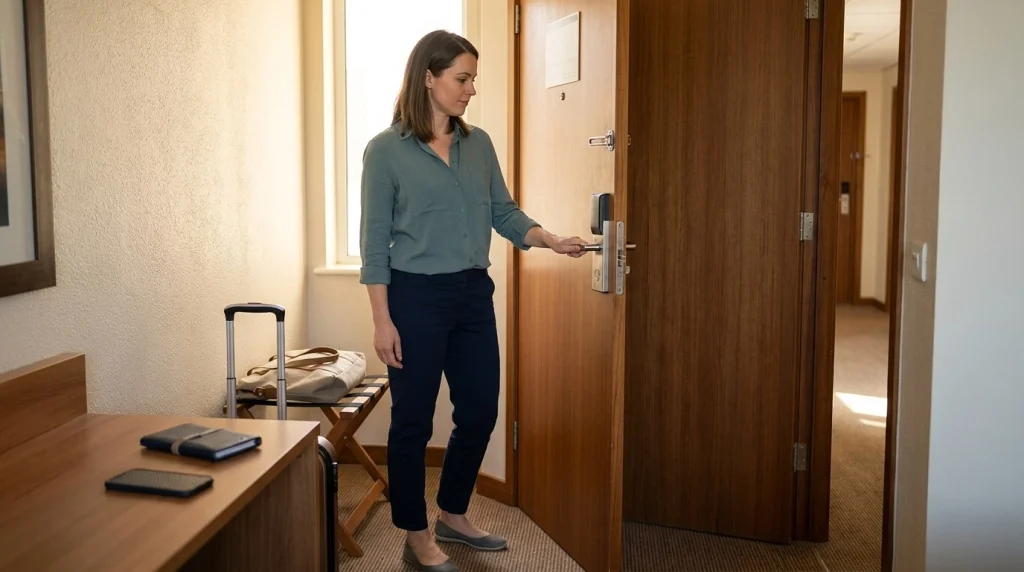
Solo female hotel security works best when you protect your room access, personal information, and belongings together. A safe cannot compensate for a room with broken locks or uncontrolled entry.
Choose the Hotel Carefully
Before booking, I prioritize reliable security features and practical location over decorative extras. A beautiful room isn’t worth much if I feel uncomfortable entering the property after dark.
Look for these features:
- Recent guest reviews discussing security and staff behavior.
- Staffed reception or a clearly managed after-hours entrance.
- Reliable door locks and controlled room access.
- A practical location near transportation and services.
- Clear procedures for storing valuables.
For accommodation safety, the International Federation of Red Cross and Red Crescent Societies hotel-security guidance offers useful precautions concerning room access, valuables, and unexpected visitors.
Keep Your Room Number Private
Avoid announcing your room number in public spaces. You also don’t need to tell strangers that you’re staying alone.
If someone unexpectedly knocks and claims to work for the hotel, call reception using a verified number. Confirm the visit before opening your door.
Inspect Your Room Before Unpacking
I recommend a quick inspection whenever you enter a new hotel room. It’s easier to request another room before your belongings are scattered everywhere.
- Check the main entrance and secondary locks.
- Inspect accessible windows and balcony doors.
- Confirm any connecting door is secured.
- Locate the nearest emergency exit.
- Check the room telephone or other means of contacting reception.
- Look for obvious damage or unusual devices that deserve investigation.
Don’t block fire exits or create hazards with improvised door barriers. Any additional door-security device should be legal, suitable for the door, and easy to release during an emergency.
Share Essential Information With Someone You Trust
A trusted contact should know where you’re staying and how to reach you. This doesn’t require broadcasting your location to everyone online.
Share your accommodation details, general itinerary, and planned check-in times privately. Agree on what your contact should do if they cannot reach you.
Separate Your Emergency Resources
One lost handbag shouldn’t leave you without money, identification information, or communication options. I recommend maintaining independent backups.
- Carry one usable payment method and secure another separately.
- Keep protected digital copies of essential documents.
- Save emergency contact details for offline access.
- Maintain access to a phone charger or suitable power bank.
- Know how to contact hotel reception and local emergency services.
As of 2026, I still consider these basic habits more valuable than relying on a single security gadget. They provide options when something unexpected happens.
Section Takeaway: The safest practical strategy combines secure accommodation, thoughtful storage, discreet personal information, and accessible emergency backups.
Frequently Asked Questions
Is It Better to Use a Hotel Safe or Carry My Passport?
It depends on local identification requirements. When you’re allowed to use a copy, a reliable hotel safe can reduce the risk of losing your original passport while sightseeing. If authorities require the original, carry it in a secure, discreet compartment and avoid unnecessary handling.
Can Hotel Employees Open My Room Safe?
Some hotel safe systems allow authorized staff to open them through management procedures, override credentials, or specialized equipment. Access methods vary by model. Ask your hotel about its security practices if you’re concerned, and don’t assume your personal PIN guarantees exclusive access.
Should I Keep All My Cash in the Hotel Safe?
No. Dividing money between secure locations helps reduce the impact of theft, loss, or temporary lockouts. Carry enough for routine expenses and keep backup funds separately. Avoid leaving large amounts of cash in your room when a safer alternative is available.
Are Hotel Safes Safer Than Locked Suitcases?
A functioning, securely mounted hotel safe generally offers a stronger barrier against casual theft than an ordinary locked suitcase. However, neither guarantees protection. Consider the safe’s condition, the hotel’s security procedures, and whether your valuables require a higher level of protection.
Should I Use the Hotel Safe in a Budget Hotel?
Yes, if the safe works properly and appears securely installed. Price alone doesn’t determine security quality. Check the safe’s condition, test its operation, and ask management about access procedures. If anything seems unreliable, consider supervised storage or a different arrangement.
Does Travel Insurance Cover Items Stolen From Hotel Safes?
Coverage depends on your policy. Some insurers cover theft from locked accommodation, while others apply limits, exclusions, or evidence requirements for valuables. Review the policy wording before departure and keep purchase records, incident reports, and any required police documentation.
What Should I Do if My Hotel Room Has No Safe?
Ask reception whether secure, documented storage is available. Keep unnecessary valuables out of sight, lock your luggage when useful, and divide essential payment methods. If the hotel lacks adequate security and you’re uncomfortable staying there, consider changing accommodation.
Final Takeaway: Should You Trust the Hotel Safe?
Yes, use a reliable hotel safe when it makes sense, but don’t trust it blindly. Its job is to reduce risk, not eliminate every possible problem.
My preferred approach is straightforward: test the safe, secure what I don’t need, carry daily essentials, and separate emergency backups. That leaves me free to enjoy my trip without constantly worrying about my belongings.
Before your next solo trip, make a two-minute valuables plan. Decide what stays in the room, what travels with you, and what you’ll do if either option becomes unavailable.
Travel confidently, stay prepared, and remember that practical habits are your strongest everyday security tools.