How Can a Woman Choose Safe Parking While Traveling Alone?
Quick Answer
A woman traveling alone can choose safer parking by looking for good lighting, visible staff, active businesses, clear exits, and a short walking route to her destination. Whenever possible, choose a well-managed parking facility instead of an isolated street or empty lot. Check the surrounding area before arriving, keep valuables hidden, and leave if something feels unsafe. For international trips, review the U.S. Department of State travel guidance before driving in unfamiliar areas.
My essential safe parking checklist
- Good lighting: Choose parking where you can clearly see surrounding vehicles, walkways, and entrances.
- Visible activity: Prefer locations near operating businesses, hotel entrances, or staffed facilities.
- Security measures: Look for attendants, monitored entrances, cameras, or regular patrols.
- Easy access: Keep the walk between your car and destination short, visible, and straightforward.
- Clear exits: Know how to leave without navigating confusing or restricted routes.
- Secure belongings: Lock your vehicle and never leave luggage or electronics visible.
One rule I always recommend
- Choose safety over convenience: Paying more for a better-managed parking option is often worthwhile, especially after dark.
Parking can feel like a small detail when you’re planning a solo trip. Yet it deserves attention, especially when you’re arriving somewhere unfamiliar after dark.
I prefer making parking decisions before reaching a destination. This guide explains how to assess parking locations, recognize warning signs, and handle uncomfortable situations without unnecessary panic.
In This Guide
- What Makes a Parking Area Safer for Women Traveling Alone?
- How Can You Research Safe Parking Before Arriving?
- Which Type of Parking Is Best for Solo Female Travelers?
- How Can a Woman Park More Safely at Night?
- How Do You Protect Yourself and Your Car While Parking?
- What Should You Do If a Parking Area Feels Unsafe?
- Frequently Asked Questions About Safe Solo Parking
What Makes a Parking Area Safer for Women Traveling Alone?
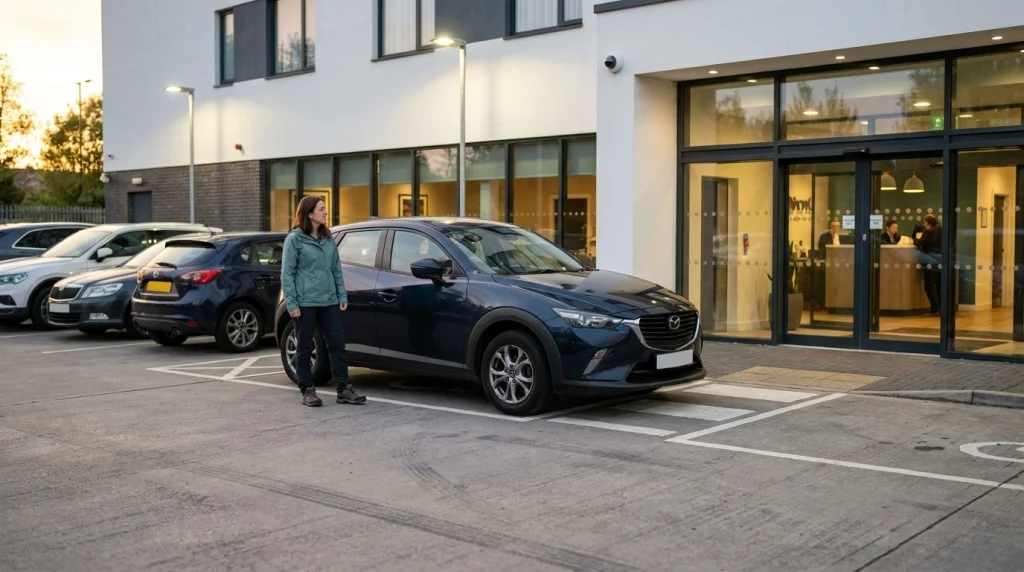
A safer parking area combines visibility, reasonable access control, reliable management, and convenient pedestrian access. No parking location can guarantee personal safety, but these features help you make a more informed choice.
I think of parking safety as two separate concerns. The first is protecting yourself, while the second is reducing theft or damage to your vehicle.
Choose a well-lit parking space
Lighting is one of the first things I would check. It helps you see nearby people, approaching vehicles, walkways, and potential obstacles.
Pay attention to the entire route, not just your parking space. A bright lot offers less practical benefit if the walkway toward your hotel is dark and isolated.
- Look for working overhead lights throughout the parking area.
- Check stairways, elevators, and pedestrian exits for adequate lighting.
- Avoid spaces behind large walls, dumpsters, or poorly maintained structures.
- Choose locations where the route to your destination stays visible.
- Consider whether the lighting will remain on when you return.
Daytime appearances can be misleading. A busy parking area at noon may feel completely different after businesses close.
Look for active businesses and visible staff
Parking near an operating business can offer easier access to assistance if something goes wrong. A hotel entrance, staffed garage, or busy shopping center may be more practical than an empty lot.
Still, crowds alone do not guarantee safety. Pay attention to whether staff are available and whether the surrounding environment feels orderly.
I would favor a parking spot near a functioning entrance over one beside a closed building. That choice also makes finding help easier.
Check security cameras and controlled access
Security cameras can support monitoring and investigations, but they cannot prevent every incident. A camera sign also doesn’t prove someone watches the footage.
When comparing parking facilities, look for several security features working together.
- Controlled entrances: Gates, ticket barriers, or staffed checkpoints.
- Visible attendants: Employees available during your arrival and departure times.
- Security cameras: Cameras covering entrances, payment stations, and pedestrian routes.
- Emergency assistance: Clearly marked help points or contact numbers.
- Maintenance: Working lights, readable signs, and unobstructed exits.
A facility with clear operating procedures is easier to evaluate. If important security details are unclear, ask before booking.
Keep the walking route short and predictable
Distance matters when you’re carrying luggage or returning late. I would rather walk two minutes along a visible route than ten minutes through unfamiliar side streets.
Check whether the walkway has safe crossings, sidewalks, and accessible entrances. Avoid routes that require isolated tunnels or confusing shortcuts.
Consider the return journey as carefully as the arrival. Shops may close, gates may lock, and some pedestrian entrances may stop operating overnight.
Section Takeaway: Evaluate the entire parking experience, from entering the facility to reaching your destination. Good lighting, available assistance, and a clear walking route matter more than appearance alone.
How Can You Research Safe Parking Before Arriving?
Research parking before you start driving, especially when traveling alone in a new city. A few checks can help you avoid stressful decisions after sunset.
My preferred approach is to compare two parking options and save both locations. That gives you a backup when your first choice doesn’t work.
Use maps to examine the surrounding area
Google Maps and other navigation apps can help you identify garages, parking lots, entrances, and nearby businesses. Satellite imagery and street-level photos may reveal useful details.
However, photos can be outdated. Never assume a parking entrance, security gate, or pedestrian route still operates exactly as shown.
- Search for parking close to your accommodation or destination.
- Identify the actual vehicle entrance rather than the building’s mailing address.
- Inspect nearby streets and walking routes using available map imagery.
- Check operating hours, payment methods, and vehicle restrictions.
- Read recent reviews for reports of broken gates, poor lighting, or confusing access.
- Save a second parking option nearby.
I also look for reviews written by people who parked after dark. Their comments may reveal concerns that daytime photos cannot show.
Contact your hotel before booking
If you’re driving to a hotel, ask about parking before your trip. The hotel may offer an attached garage, valet service, or an established parking arrangement.
Don’t assume a property advertising parking has spaces available. Some hotels use nearby public facilities with separate fees and schedules.
Useful questions include:
- Is parking on-site or at another location?
- Does the parking area have staff or controlled access?
- Can guests reach the lobby without walking outside?
- Is the garage entrance open around the clock?
- What happens if I arrive after reception closes?
- Can someone assist if I feel uncomfortable returning to my car?
An attached garage with direct lobby access may be convenient. Still, verify the facility’s actual security arrangements before relying on them.
Check destination safety information
Local conditions can change your parking choices. Neighborhood access, traffic laws, crime concerns, and road conditions differ between destinations.
Before an international road trip, consult official driving and transportation safety guidance. It explains why researching local laws and transportation conditions matters.
Travelers should also consider destination-specific government advice and local tourism information. Check official sources close to your departure date.
Pro tip: Don’t use a single online safety rating to decide where to park. Combine current official guidance, recent visitor feedback, and what you observe when you arrive.
Make a backup parking plan
Even a carefully researched garage might be full or closed. That’s why I recommend identifying an alternative before entering a busy city center.
Your backup should be a legitimate, accessible location. It should not require driving through unfamiliar streets while searching for a vacant curb space.
For example, imagine arriving at a hotel at 9:30 p.m. and discovering its small garage is full.
Having a second garage saved lets you navigate directly there. Without that plan, you might spend unnecessary time driving around and making hurried decisions.
Section Takeaway: Research the parking entrance, security features, hours, and walking route before departure. Keep a backup location ready in case conditions change.
Which Type of Parking Is Best for Solo Female Travelers?
A well-managed hotel garage or staffed parking facility is often a practical choice for women traveling alone. However, the best option depends on location, operating hours, visibility, and the route to your destination.
Not all garages are safer than street parking. A neglected underground garage can be less comfortable than a well-lit legal space near an active entrance.
Comparing common parking options
| Parking option | Potential advantages | What to check | Best use |
|---|---|---|---|
| Hotel garage | Convenient guest access; may offer controlled entry | Direct lobby access, overnight entry, staffing | Overnight hotel stays |
| Staffed parking garage | Possible staff assistance and controlled vehicle access | Actual staff hours, stairwells, payment rules | City centers and evening visits |
| Valet parking | Shorter walking distance; convenient luggage handling | Authorized operator, key procedures, retrieval hours | Hotels and late arrivals |
| Open commercial lot | Easy visibility and straightforward vehicle access | Lighting, security presence, business closing hours | Daytime attractions and shopping |
| Street parking | Sometimes close to the entrance and inexpensive | Local restrictions, foot traffic, lighting, legal hours | Short visits on active streets |
| Remote free lot | Lower parking cost | Isolation, walking distance, closing rules, assistance | Only when conditions are suitable |
These are practical comparisons, not universal safety rankings. Conditions at individual facilities matter more than the parking category.
Is a parking garage safer than street parking?
A staffed, well-lit garage with controlled access may offer advantages over an isolated street. However, a poorly maintained garage with empty stairwells can create other concerns.
I would compare these factors rather than choosing automatically:
- How visible is the car from nearby pedestrian areas?
- Are attendants or employees available when needed?
- Can you reach the exit without using isolated corridors?
- Does the garage allow vehicle retrieval at your planned departure time?
- Are payment stations and elevators in visible locations?
If two options seem similar, I would favor the one with a shorter, clearer walking route. Convenience can support safety when it reduces unnecessary exposure to unfamiliar areas.
Is hotel valet parking worth considering?
Valet parking can be useful when you’re tired, carrying luggage, or arriving after dark. It may reduce the distance between your vehicle and a staffed hotel entrance.
Use only authorized valet services and confirm how keys are handled. Remove essential documents, medication, cash, and valuables before handing over your vehicle.
Ask when the valet service closes. Some properties cannot retrieve vehicles immediately overnight.
What about parking at airports and train stations?
Major transportation centers often have multiple parking areas. Short-term, long-term, and economy lots may differ in distance, access, and staffing.
Review the official airport or station website before selecting a space. Check shuttle operating hours, pedestrian routes, payment methods, and late-night access.
For an early flight, a remote lot may require extra planning. Confirm transportation from your vehicle to the terminal before purchasing parking.
Section Takeaway: Choose parking based on current conditions, not the label on the facility. Staff availability, clear access, lighting, and dependable operating hours are the strongest practical comparisons.
How Can a Woman Park More Safely at Night?
Night parking requires extra attention to lighting, visibility, walking distance, and available assistance. Planning your arrival reduces the need for rushed decisions in an unfamiliar area.
I recommend making a simple night-parking routine. It should be easy enough to follow even when you’re tired from driving.
Before entering the parking area
Review your navigation route while stopped somewhere safe. Confirm that the parking entrance matches the address and signage you researched.
If the area appears unexpectedly deserted or access looks different, reassess before committing. You can choose another legitimate facility without waiting for a problem to develop.
- Check that entrances and exits are open.
- Look for functioning lighting and visible pedestrian routes.
- Notice whether staff or help points are accessible.
- Avoid stopping in traffic to inspect directions.
- Use your prepared backup option if needed.
After finding a parking space
Choose a legal space that offers visibility and a convenient route to your destination. Avoid unnecessary isolation behind large structures or in distant corners.
Before getting out, take a brief look at your surroundings. If you have a clear safety concern, remain in the locked vehicle and drive to a safer location when possible.
- Stop fully and secure your vehicle.
- Check the surroundings before opening your door.
- Keep your phone and essential belongings accessible.
- Take your keys and lock the doors immediately after exiting.
- Walk along the designated, well-lit pedestrian route.
- Go directly toward the staffed entrance or intended destination.
You don’t need to rush or appear distracted. Calm, purposeful movement is a practical habit.
When returning to your car
Returning can deserve more planning than arriving. A busy restaurant district may become quiet after closing time.
Prepare your keys before leaving the building. If your remote key system allows it, unlock the doors only when you’re near the vehicle.
- Check the walkway before leaving a staffed location.
- Ask staff whether an escort is available if you feel concerned.
- Use main pedestrian routes rather than isolated shortcuts.
- Notice unusual activity or obvious damage around the car.
- Once inside, lock the doors before organizing your belongings.
- Set your next destination while safely parked, then depart.
Don’t walk toward someone who appears threatening simply because your car is nearby. Return to a staffed location and seek assistance instead.
What if your flight or road trip arrives after midnight?
Late arrivals are manageable with advance planning. However, limited staffing and closed entrances can change your parking options.
For a rental-car arrival, confirm the rental desk and parking instructions before traveling. Also check whether your hotel accepts late check-in.
Imagine landing in an unfamiliar city at 11:45 p.m. with two suitcases. A direct hotel parking entrance may be worth more than finding the lowest advertised nightly rate.
If driving feels unsafe due to fatigue, stop at a suitable accommodation rather than pushing onward. A parking decision should never take priority over staying alert behind the wheel.
Pro tip: Review the official destination travel advisory before international night driving. Local road hazards, transportation rules, and security concerns may affect whether driving at night is advisable.
Section Takeaway: At night, prioritize active entrances, reliable lighting, and a direct walking route. Prepare your exit and return plans before leaving the vehicle.
How Do You Protect Yourself and Your Car While Parking?
Protecting yourself and your vehicle requires a few consistent habits. Locking doors, reducing visible valuables, and limiting unnecessary distractions can help lower avoidable risks.
These habits also make daily travel smoother. You spend less time searching for keys, reorganizing luggage, or worrying about where you parked.
Keep valuables out of sight
A parked vehicle is not secure storage for important possessions. Even monitored facilities can experience theft.
Take passports, medications, essential documents, money, and electronics with you whenever practical. If luggage must remain in the vehicle, check your insurance terms and avoid displaying it.
For a road trip, I recommend organizing items before reaching a parking destination. Opening the trunk repeatedly in public can draw attention to what you’re carrying.
- Never leave handbags or electronics visible on seats.
- Keep passports and essential medication with you.
- Close windows and secure every door.
- Avoid leaving rental agreements or personal information exposed.
- Do not assume a locked trunk makes valuables completely safe.
Use your phone as a planning and communication tool
Your phone can help with navigation, communication, and emergency assistance. It works best when prepared before a problem occurs.
Save your accommodation address, parking location, and emergency contacts. Keep enough battery power for the return trip.
Useful features include:
- Location sharing: Share relevant trip information with someone you trust.
- Offline maps: Download local maps where mobile coverage may be unreliable.
- Parking location: Save the garage level, space number, or map pin.
- Emergency calling: Learn your destination’s emergency number before arrival.
- Backup power: Carry a charged portable battery when practical.
Technology has limits. A weak signal, dead battery, or inaccurate map can make even useful apps unreliable.
Do not overshare your location publicly
Travel updates can be fun, but real-time location details are not always necessary. Avoid posting your exact parking spot, vehicle location, or accommodation details publicly.
When sharing photos online, consider posting after you’ve left. You can still document your trip without broadcasting every movement as it happens.
Use legitimate parking payment methods
Parking scams and payment confusion can happen in unfamiliar destinations. Use the facility’s official payment machines, verified booking platform, or authorized attendant.
Check signage before scanning unfamiliar QR codes. A sticker placed over an official payment notice may lead somewhere unexpected.
Confirm the displayed website or app belongs to the legitimate parking operator. Keep your receipt until your visit ends.
Take extra care with rental cars
Rental vehicles can have unfamiliar locks, controls, and alarm systems. Learn how yours works before reaching a busy parking area.
Check the rental agreement for parking responsibilities and theft coverage. Some insurance policies have exclusions or deductibles that affect your financial risk.
For international trips, review official crime prevention guidance for travelers. Research the destination rather than assuming practices from home will apply everywhere.
Section Takeaway: Secure your belongings, prepare your phone, and learn your vehicle’s controls before departure. Small habits reduce distractions and make unexpected situations easier to handle.
What Should You Do If a Parking Area Feels Unsafe?
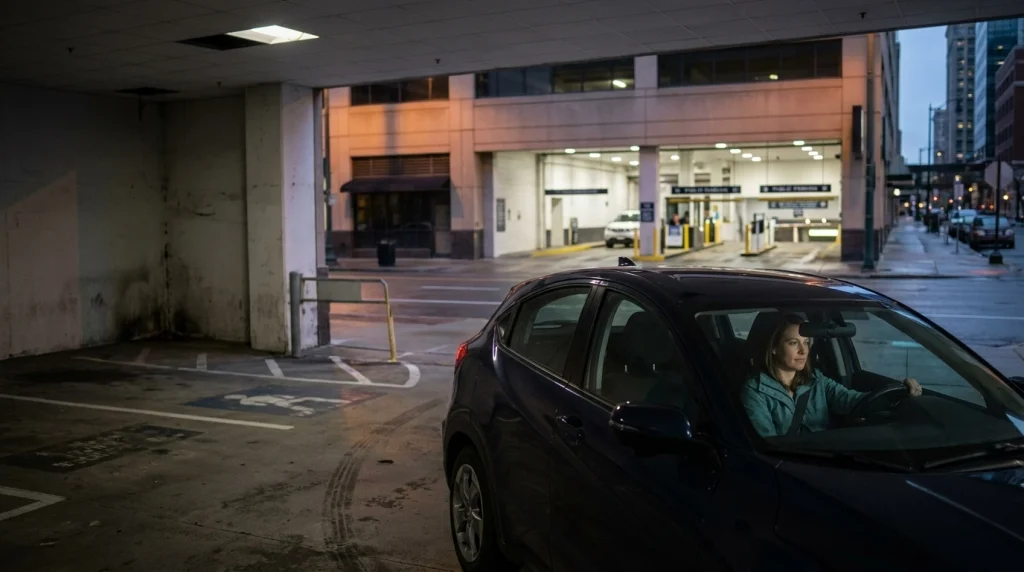
If a parking area presents clear warning signs, you can leave and choose another location. You don’t need to stay simply because you’ve already found a space or paid a fee.
At the same time, an unfamiliar place isn’t automatically dangerous. Look for observable concerns and use reasonable judgment.
Recognize warning signs before parking
Some conditions deserve immediate attention, especially when several appear together. Poor maintenance and limited access to assistance can make an already unfamiliar environment harder to navigate.
- Large sections have broken lights or very poor visibility.
- Emergency assistance equipment appears damaged or unavailable.
- The designated pedestrian exit is blocked or unexpectedly locked.
- Someone appears to be following, threatening, or harassing you.
- Parking instructions conflict with official signs.
- An unauthorized person demands payment or access to your vehicle.
- Your planned walking route is closed or requires an isolated detour.
One warning sign doesn’t always prove criminal activity. But you don’t need proof of danger before making a reasonable decision to leave.
What if someone follows you toward your car?
If you suspect someone is following you, avoid leading them toward an isolated vehicle. Move toward a staffed business, security desk, or other place where you can request help.
If you face an immediate threat, contact local emergency services when safe. Don’t confront the person or attempt to investigate their intentions.
If you’re already inside a locked car, avoid opening the window or door to engage with a threatening person. Seek help and move to a safer location if you can do so safely and legally.
What if someone approaches asking for help?
You can be compassionate without compromising your safety. If someone requests assistance and you feel uncertain, maintain a comfortable distance.
You can offer to contact an appropriate service or alert nearby staff. You are not required to unlock your vehicle, provide a ride, or hand over your phone.
What if you discover damage or a break-in?
If your vehicle appears damaged or someone may still be nearby, prioritize personal safety over inspecting the car. Move to a staffed or otherwise safer location when possible.
Report suspected crime to the appropriate authorities and follow the parking operator’s procedures. Contact your rental company if you’re using a rental vehicle.
Once you’re safe, document visible damage and preserve relevant records. Ask your insurer what evidence and reporting steps your policy requires.
What if your car will not start?
A mechanical problem can be stressful when you’re alone in an unfamiliar place. Keep your first priority on reaching a safe location and obtaining legitimate assistance.
- Secure the vehicle and assess your immediate surroundings.
- Contact the rental company, roadside assistance provider, or insurer.
- Give the operator the exact parking level, space, and facility name.
- Ask parking staff whether a safer waiting area is available.
- Do not accept an unsolicited tow or repair service without verifying it.
- If the location becomes dangerous, prioritize your safety and contact emergency services when appropriate.
Check your roadside assistance coverage before a trip. Save the provider’s contact details somewhere accessible even without mobile internet.
Build a simple parking safety routine
I recommend using the same routine throughout a trip. Familiar steps are easier to remember when you’re navigating a new destination.
Here is a practical routine you can adapt:
- Before departure: Research your primary parking facility and one backup.
- Before arrival: Confirm the entrance, hours, walking route, and payment method.
- Before exiting: Check your surroundings, prepare belongings, and secure the vehicle.
- Before returning: Confirm your route and look for available assistance.
- Before driving away: Lock the doors, set navigation, and check your route while parked.
This approach applies to city breaks, rural road trips, and international travel. Adjust it to local conditions rather than treating every parking location the same.
For 2026 travel planning, check official resources shortly before departure. Operating hours, road conditions, and local security guidance can change.
Section Takeaway: Trust observable warning signs and use your backup plan when conditions are unsuitable. Personal safety comes before parking costs, convenience, or protecting property.
Frequently Asked Questions About Safe Solo Parking
Where is the safest place for a woman traveling alone to park?
A well-managed, well-lit parking area near a staffed entrance is often a strong practical choice. Look for clear walking routes, operating security measures, and convenient access. No location is completely risk-free, so evaluate the specific facility and current conditions.
Should a woman traveling alone avoid parking garages?
No. Parking garages are not automatically unsafe, and some provide useful features such as staffed entrances and controlled access. Check lighting, stairwells, pedestrian exits, operating hours, and security arrangements before choosing one.
Is street parking safe for solo female travelers?
Street parking can be reasonable when it is legal, well-lit, and close to active businesses. Avoid isolated spaces and routes that become deserted after dark. Check local restrictions and make sure you can return to your vehicle safely.
What should I do if I feel unsafe walking back to my car?
Stay in a staffed or otherwise safer location and ask for assistance. Some hotels, venues, and parking facilities may provide an escort. If someone threatens or follows you, contact local emergency services when safe and avoid returning alone to an isolated area.
Is it better to park near an entrance or security camera?
A convenient space near a well-lit, staffed entrance is usually worth considering. Cameras can be useful, but their presence alone does not guarantee monitoring or prevent crime. Evaluate visibility, pedestrian access, and available assistance together.
Should I pay extra for secure parking when traveling alone?
Paying more can be worthwhile when it provides useful benefits such as staffed access, better lighting, or a shorter walking route. However, price alone does not prove safety. Compare the actual facility features before deciding.
How can I stay safe when parking a rental car abroad?
Research local parking laws, choose legitimate facilities, secure valuables, and confirm rental insurance terms. Learn the car’s locking system before driving. Check official travel advice, as transportation risks and emergency procedures vary by country.
Final Thoughts: Choose Parking That Supports a Safer Solo Trip
Safe parking starts long before you turn off the engine. Researching your options, choosing visible locations, and preparing a backup can remove much of the uncertainty.
For me, the most useful question is simple: Can I enter, leave, and return to this parking location comfortably and with access to help?
If the answer is unclear, I would keep looking. An extra parking fee or a few minutes of planning may be worthwhile when it improves your options.
Before your next solo road trip, save two suitable parking locations for each overnight stop. Confirm the entrances and return routes so you can spend more time enjoying your destination and less time worrying about where to leave your car.