What Rain Gear Should a Solo Female Traveler Pack?
Quick Answer
A solo female traveler should pack one lightweight waterproof hooded jacket, weather-ready shoes with good grip, waterproof protection for her phone and documents, and a dry liner or cover for her day bag. Add a compact umbrella, rain pants, or a poncho only when the destination and activities justify the extra space, and review official guidance for women travelers before an international solo trip.
My core rain gear checklist
- Waterproof shell: Pack one hooded jacket that fits comfortably over your normal travel layers.
- Grippy footwear: Choose shoes that stay comfortable on wet pavement and have useful traction.
- Dry storage: Protect your phone, passport, money, and chargers inside waterproof pouches or bags.
- Bag protection: Use a waterproof liner, dry bag, or rain cover when your backpack may face prolonged rain.
- Optional extras: Add an umbrella, poncho, rain pants, or gaiters only for conditions where they solve a real problem.
If you’re wondering what rain gear should a solo female traveler pack, the answer is usually less gear than you expect. The goal is to stay dry enough to move safely without turning your luggage into a heavy weather emergency kit.
I recommend building a small rain system rather than buying one item and hoping it handles everything. Your jacket, shoes, day bag, clothing, and phone protection should work together.
In This Guide
- What rain gear does a solo female traveler actually need?
- Is a rain jacket, poncho, or umbrella better for solo travel?
- What shoes and lower-body rain protection should you pack?
- How should you protect your phone, passport, and luggage?
- How should rain gear change for different solo trips?
- What rain safety habits matter when you’re traveling alone?
- Rain Gear FAQ for Solo Female Travelers
- Final Rain Gear Packing Checklist
What Rain Gear Does a Solo Female Traveler Actually Need?
The best rain gear for solo travel is compact, dependable, and easy to use without help. You should be able to grab it quickly when you’re walking, changing trains, or carrying your own luggage.
Rain gear for solo female travel means clothing and equipment that keep you, your essential belongings, and your travel electronics protected enough to continue moving safely in wet conditions.
Start with one dependable waterproof outer layer
A hooded waterproof shell is the first item I would pack. It keeps both hands free, which matters when you’re handling luggage, checking directions, or moving through a crowded station.
Look for a jacket long enough to cover your waist and with a hood that stays in place when you move. A brim or adjustable hood can also help keep rain away from your face.
There’s an important difference between water-resistant and waterproof. Water-resistant clothing can handle drizzle, while waterproof clothing is designed for more sustained exposure.
Pack clothing that dries quickly
Your jacket may stop most rain, but cuffs, hems, socks, and trousers can still get wet. Quick-drying clothing makes a rainy travel day much easier to manage.
- Travel trousers: Choose fabrics that don’t stay heavy when damp.
- Base layers: Pack tops that can dry overnight in your accommodation.
- Socks: Carry one spare pair in your day bag during wet days.
- Warm layer: Add a light fleece or sweater when rain will combine with cool temperatures.
Cotton can feel uncomfortable when it becomes soaked and stays wet for hours. I prefer saving heavier cotton clothing for trips where prolonged rain is unlikely.
Keep a miniature rain kit in your day bag
Your useful rain gear shouldn’t be buried at the bottom of your suitcase. Keep the items you may need during the day within easy reach.
- Waterproof jacket or compact poncho
- Small waterproof phone pouch
- Spare socks
- Reusable plastic or waterproof pouch
- Compact umbrella when appropriate
- Small microfiber cloth for wet electronics or glasses
This setup is especially helpful when you’re exploring alone. You don’t have a travel partner carrying a second umbrella, spare charger, or extra bag when your own equipment gets wet.
Is a Rain Jacket, Poncho, or Umbrella Better for Solo Travel?
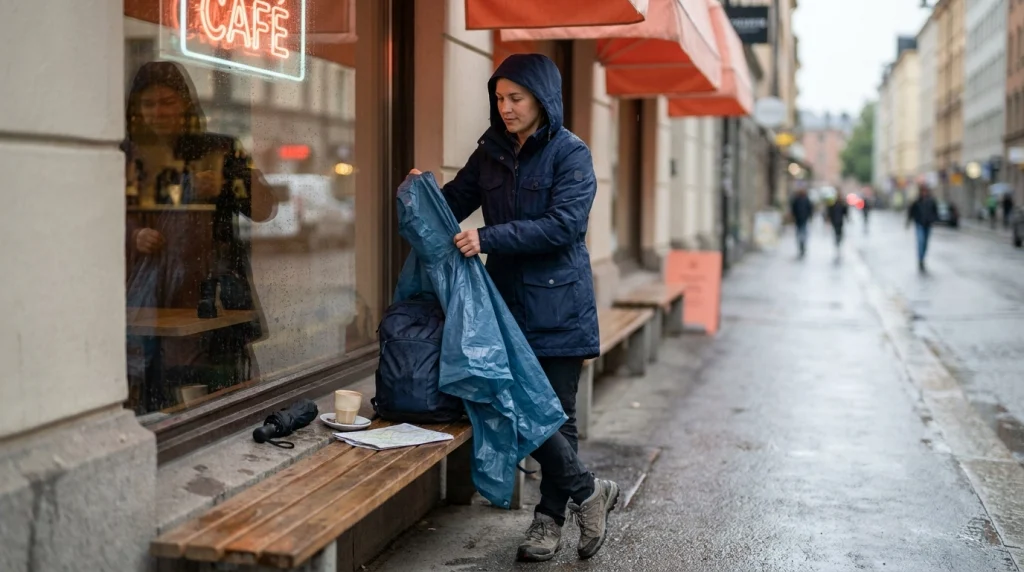
For most solo trips, a waterproof jacket is the most versatile choice. Ponchos work well in heavy rain and over backpacks, while umbrellas make more sense for urban trips with light wind.
| Rain Gear | Pack Quantity | Hands Free? | Backpack Coverage | Best For |
|---|---|---|---|---|
| Waterproof jacket | 1 | Yes | Usually no | Cities, sightseeing, transit, hiking |
| Poncho | 0–1 | Yes | Often yes | Tropical rain, festivals, backpack travel |
| Compact umbrella | 0–1 | No | Limited | Urban sightseeing, light or moderate rain |
| Rain pants | 0–1 pair | Yes | No | Hiking, cycling, prolonged outdoor rain |
Choose a jacket when you want one flexible option
A rain shell is easy to wear on public transportation and simple to layer over normal clothing. It also works when you need both hands for luggage or navigation.
For a city-and-nature itinerary, this is usually my first choice. You can wear the same shell on a rainy street, boat ride, windy viewpoint, or day hike.
Choose a poncho when coverage matters more than style
A poncho can cover more of your body and may fit over a small backpack. That makes it useful in tropical destinations where sudden heavy showers are common.
The tradeoff is wind. Loose ponchos can flap around and become awkward on exposed paths or busy streets.
Pack an umbrella selectively
I like umbrellas for city sightseeing because they can be opened quickly and don’t trap as much body heat as a jacket. They become less useful when strong wind, crowded pavements, or active outdoor plans enter the picture.
If you’re trying to travel carry-on only, don’t automatically pack both an umbrella and poncho. Choose the item that matches your actual itinerary.
What Shoes and Lower-Body Rain Protection Should You Pack?
Wet feet can turn an ordinary sightseeing day into a miserable one. Shoes with dependable traction matter as much as whether the upper material can handle rain.
Prioritize grip before perfect waterproofing
Wet stone, painted road markings, station floors, and smooth tiles can become slippery. I would rather have comfortable shoes with useful tread than stiff waterproof boots I dislike walking in.
For mostly urban trips, water-resistant walking shoes may be enough. For persistent rain, mud, or hiking, waterproof footwear becomes more useful.
Bring spare socks
A dry pair of socks takes little room but can rescue the second half of a rainy day. Keep them inside a waterproof pouch rather than loose in your backpack.
- City trip: One comfortable water-resistant walking shoe may be enough.
- Wet-weather destination: Consider waterproof walking shoes or boots.
- Day hiking: Match the footwear to terrain, mud, temperature, and trail conditions.
- Tropical climate: Choose footwear that drains or dries quickly if full waterproofing would feel too hot.
Rain pants aren’t necessary for every trip
Rain pants earn their space when you’ll spend hours outside. They’re especially useful for hiking, cycling, boat trips, and exposed nature activities.
I usually skip them for short city walks where I can step inside a café, museum, shop, or station. Quick-drying trousers are often easier in that situation.
Think about wet-weather clothing coverage
Rain can make light fabrics cling or become more transparent. If that would make you uncomfortable, choose darker quick-drying trousers or wear a longer rain shell.
This can also matter in destinations with more conservative clothing expectations. Local norms vary, so research your destination rather than assuming one packing rule applies everywhere.
How Should You Protect Your Phone, Passport, and Luggage?
Keeping yourself dry is only half the job. A soaked phone or passport can cause a bigger travel problem than wet clothing.
Waterproof your phone first
Your phone may hold your map, hotel address, boarding pass, ride app, translation tools, and emergency contacts. Give it dedicated protection instead of trusting the main compartment of your bag.
- Use a waterproof phone pouch or sealed internal pocket.
- Keep charging cables inside a separate dry pouch.
- Carry a charged power bank on longer days.
- Save essential addresses and reservations for offline access.
A touchscreen can also become difficult to operate when soaked. Moving under shelter before changing routes or entering payment details is usually easier.
Double-protect passports and important documents
I wouldn’t depend on a backpack rain cover alone for a passport. Water can enter through the back panel, zippers, or openings around the cover.
Put critical documents inside a sealed internal pouch. Then place that pouch inside your main bag for two layers of protection.
Use a liner when your backpack may get soaked
A rain cover protects the outside of a backpack, while a waterproof liner protects the contents. For serious rain exposure, the liner is the protection I care about most.
You don’t need an expensive system for ordinary sightseeing. A sturdy waterproof sack or reusable sealed bags can separate electronics, medication, documents, and dry clothing.
Keep one dry set for arrival
If you’re traveling between cities in rainy weather, keep one dry top, underwear, and socks inside protected luggage. You don’t want every piece of clothing damp when you reach your next hotel.
The same rule applies to medication and personal-care essentials. Keep anything difficult to replace protected from both rain and leaking toiletries.
How Should Rain Gear Change for Different Solo Trips?
Your destination and activities should decide how much rain protection you carry. Packing the same rain kit for Paris, a tropical island, and a mountain hike doesn’t make sense.
For a city break
City travelers usually have easy access to shelter. A waterproof jacket, compact umbrella, grippy shoes, and phone pouch cover most ordinary rainy days.
- 1 lightweight hooded rain jacket
- 1 compact umbrella if wind is not a major concern
- Water-resistant walking shoes
- Spare socks
- Waterproof phone and document pouches
For tropical or monsoon-season travel
Warm-weather rain can be intense while temperatures remain high. Heavy insulated waterproof clothing may leave you soaked with sweat instead.
- Lightweight breathable shell or poncho
- Quick-drying clothing
- Footwear that handles repeated wetting
- Waterproof bag liner
- Extra protection for electronics and documents
Before departure, check destination-specific health information through the CDC’s before-travel guidance. Rainy seasons can overlap with heat, insects, flooding, or other health concerns that clothing alone cannot solve.
For hiking and nature trips
Rain protection becomes more important when getting indoors quickly isn’t possible. Your system should match the trail length, altitude, temperature, and forecast.
- Waterproof shell with secure hood
- Rain pants when prolonged rain is realistic
- Appropriate hiking footwear
- Dry bag or waterproof backpack liner
- Protected navigation and communication equipment
- Warm layer for cool or high-elevation conditions
Rain can also change trails through mud, flooding, reduced visibility, and colder temperatures. Be willing to change the route rather than treating waterproof gear as permission to continue in unsafe conditions.
For cold and wet destinations
Cold rain needs more planning because becoming wet can also make you cold. Use a waterproof outer shell over an insulating layer instead of relying on one thick coat for everything.
Protect gloves, spare socks, and insulation inside your bag. Once insulating clothing becomes wet, it may be less useful when you need it most.
As of 2026, my packing rule remains simple: prepare for the realistic conditions of the trip, not every weather scenario you can imagine.
What Rain Safety Habits Matter When You’re Traveling Alone?
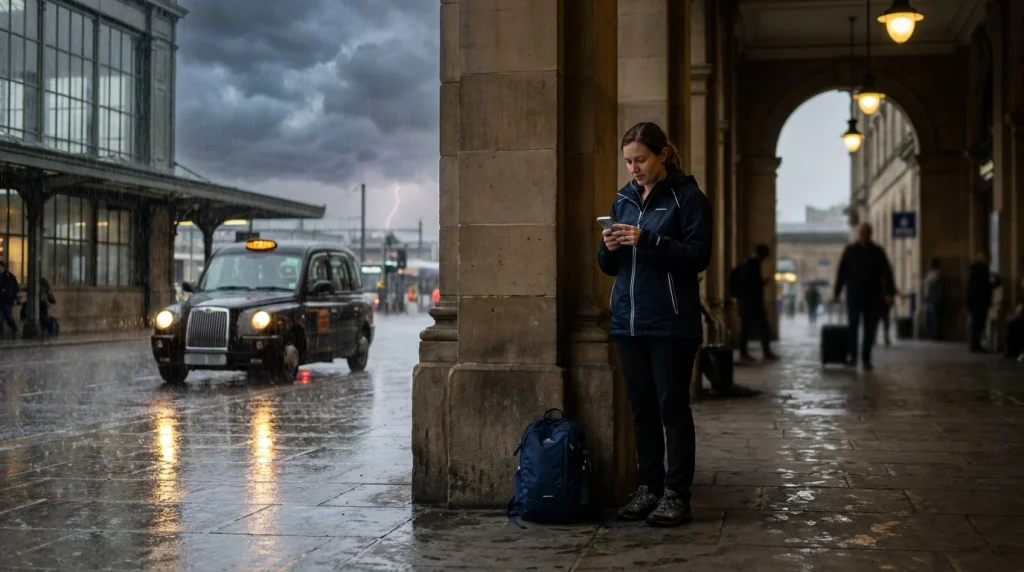
Rain gear helps you stay comfortable, but it doesn’t make severe weather safe. When you’re alone, you also need a plan for transportation, communication, and changing conditions.
Check the forecast before leaving your accommodation
I recommend checking conditions before bed and again before heading out. Short-range information can help you move a walking tour, hike, boat trip, or long transfer before weather becomes a problem.
For significant storms, floods, cyclones, hurricanes, or local hazards, use the destination’s official weather or emergency authority. Don’t make a major safety decision from a social-media weather post.
Don’t keep walking outside during a thunderstorm
Thunderstorms need a different response from ordinary rain. The U.S. National Weather Service says there is no safe place outdoors when thunderstorms are in the area and advises moving into a substantial building or hard-topped vehicle.
Review its lightning safety guidance before outdoor-heavy trips where thunderstorms are possible.
Pro tip: When severe weather threatens, follow the destination’s official meteorological service, emergency authority, transport operator, or government travel guidance rather than relying only on a general forecast app.
Protect your arrival plan
Bad weather can turn a simple transfer into a late-night arrival. I prefer knowing my backup transport before a storm or delay creates pressure to accept the first option available.
- Save your accommodation address offline.
- Know whether reception has limited opening hours.
- Keep enough battery for navigation and communication.
- Save a reputable backup transportation option.
- Carry enough payment flexibility for an unexpected ride or hotel change.
Stay visible around traffic
Heavy rain can reduce visibility for both drivers and pedestrians. A jacket with noticeable or reflective details can help when you’re walking near roads in dark, rainy conditions.
Avoid letting a hood block your side vision when crossing streets. Stop somewhere safe before checking your phone rather than navigating while moving through traffic.
Know when rain has changed the trip
A waterproof jacket solves discomfort. It does not solve flooded roads, dangerous surf, lightning, landslides, closed trails, or cancelled transportation.
If local authorities issue warnings, change the plan. Solo travel gives you the freedom to do that without negotiating with anyone else.
Rain Gear FAQ for Solo Female Travelers
Do I need a waterproof jacket for every solo trip?
No. A waterproof jacket is most useful when rain is likely or you’ll spend long periods outside. For a dry-season city trip with little rain expected, a compact emergency layer or umbrella may be enough.
Should I bring an umbrella and a rain jacket?
You can, but you may not need both. I would pack both for a rainy urban destination, while a carry-on-only traveler can often save space by choosing the option that best matches her itinerary.
Is a poncho better than a rain jacket for backpacking?
A poncho can be useful because some designs cover both your body and backpack. A fitted rain jacket usually handles wind and active movement better, so terrain and weather should determine the choice.
Should I pack waterproof shoes?
Pack waterproof shoes when persistent rain, mud, cold conditions, or wet trails make them useful. For warm city trips, comfortable water-resistant or quick-drying footwear with good traction may be more practical.
How do I keep my passport dry while traveling?
Place your passport inside a sealed waterproof pouch and keep that pouch inside your main bag. Don’t rely solely on an external backpack rain cover because water can still enter through openings and zippers.
Are rain pants worth packing for a city trip?
Usually not unless you expect prolonged outdoor exposure. For ordinary sightseeing, quick-drying trousers and a longer rain jacket are easier to pack and often provide enough protection.
What should stay in my day bag when rain is forecast?
Keep your rain jacket, waterproof phone pouch, spare socks, protected power bank, essential medication, and a dry document pouch accessible. Add an umbrella or poncho when the day’s weather and activities justify it.
Final Rain Gear Packing Checklist
You don’t need a suitcase full of rain equipment to travel confidently alone. Build a compact system that protects your body, footing, phone, documents, and one dry change of essentials.
- Pack: 1 lightweight waterproof hooded jacket.
- Wear: Comfortable shoes with dependable wet-surface traction.
- Protect: Phone, passport, money, medication, and chargers in waterproof storage.
- Carry: Spare socks and a small microfiber cloth on wet days.
- Add if useful: Compact umbrella or poncho.
- Add for outdoor trips: Rain pants and more substantial waterproof footwear.
- Protect your bag: Use a rain cover, waterproof liner, or dry bags when sustained rain is possible.
- Check conditions: Review the current forecast before leaving each day.
- Change plans: Take official severe-weather warnings seriously.
The best solo female travel rain gear is the gear you’ll carry and can use quickly. Pack for your real itinerary, keep your essentials dry, and leave enough flexibility to change plans when the weather becomes more than an inconvenience.
That approach keeps your luggage lighter and your rainy travel days far easier to manage.