How Can a Woman Protect Her Privacy in a Hotel?
Quick Answer
A woman can protect her privacy in a hotel by keeping her room number confidential, securing the door and windows, screening unexpected visitors, protecting personal information, and limiting what she shares online. Choose accommodation with reliable security, check the room upon arrival, and contact reception or local authorities if something feels wrong. The U.S. Department of State also recommends checking locks, curtains, room phones, and emergency exits.
Essential hotel privacy precautions
- Protect your room number: Ask staff not to announce it aloud or disclose it to callers.
- Secure your entrance: Use the deadbolt and secondary lock, and consider a compatible portable door wedge.
- Screen visitors: Verify unexpected staff visits with reception before opening the door.
- Control visual privacy: Close curtains and secure windows, balcony doors, and connecting doors.
- Protect your devices: Use a screen lock, avoid sensitive activity on untrusted Wi-Fi, and disable unnecessary location sharing.
- Keep plans confidential: Avoid sharing your room number, travel schedule, or live location with strangers.
Before you settle in
- Check the locks, inspect the room for anything suspicious, and learn the emergency exit route.
- If a door, lock, window, or privacy feature seems compromised, request another room or move to safer accommodation.
Staying in a hotel alone should give you space to relax, not leave you wondering who knows where you are or whether someone can enter your room.
When I plan solo trips, I treat privacy as part of the accommodation checklist, alongside location, transport, and budget. A few practical habits can help protect your personal information, belongings, and peace of mind.
This guide explains how to protect your hotel room, maintain digital privacy, handle unexpected visitors, and respond when a situation feels uncomfortable. The advice applies to solo female travelers, women traveling for work, and anyone who wants greater control over their personal space.
In This Guide
- What does hotel privacy mean for women traveling alone?
- How can you choose a hotel that respects your privacy?
- How can you secure your hotel room after checking in?
- How can you keep your identity and personal information private?
- How can you protect digital privacy and check for privacy concerns?
- What should you do if someone violates your hotel privacy?
- Frequently asked questions
What does hotel privacy mean for women traveling alone?
Hotel privacy means having reasonable control over access to your room, your personal information, your belongings, and your communications. For solo female travelers, it also means reducing unnecessary exposure of their location and daily plans.
Privacy and physical security overlap, but they aren’t identical. A locked door helps restrict entry, while a confidential room number and careful online sharing help prevent unwanted attention.
Which types of hotel privacy should you protect?
Think about privacy in five practical areas rather than focusing on the door alone.
- Physical privacy: Keep your room inaccessible to unauthorized visitors and protect your belongings from unnecessary exposure.
- Visual privacy: Close curtains, secure balcony doors, and prevent people outside from observing your activities.
- Personal privacy: Limit access to your full name, identification documents, contact details, and room number.
- Digital privacy: Protect your phone, laptop, accounts, browsing activity, and location data.
- Social privacy: Decide who knows where you’re staying, whether you’re traveling alone, and when you’ll return.
Why is hotel privacy especially important when traveling solo?
When you travel alone, there’s no companion automatically sharing the task of checking visitors, safeguarding luggage, or noticing unusual activity. That makes clear routines especially useful.
For example, imagine returning to your hotel after dinner and finding a staff member waiting outside your door. You don’t have to open it simply because the person wears a uniform; you can call reception and verify the visit first.
Privacy measures can’t eliminate every risk. They can, however, reduce unnecessary exposure and give you more options when something feels wrong.
Section Takeaway: Protect your physical space, personal details, and digital information together. A strong privacy routine starts before you book and continues until checkout.
How can you choose a hotel that respects your privacy?
Choose a hotel with controlled guest access, responsive staff, secure room locks, and clear privacy practices. Read recent reviews and confirm essential security features directly before booking.
What should you check before making a reservation?
Hotel photographs and attractive amenities don’t tell the whole story. Check the property’s location, entry arrangements, room features, and how staff handle guest information.
- Reception coverage: Look for a staffed reception or a clearly explained, reliable after-hours assistance system.
- Guest-floor access: Ask whether room floors require a guest key card or another access credential.
- Room security: Confirm the availability of a working deadbolt, secondary lock, peephole, and secure windows.
- Room layout: Ask about connecting doors, accessible balconies, and windows that face public areas.
- Privacy practices: Find out whether reception can withhold your room number from callers and visitors.
- Recent reviews: Look for specific reports about staff conduct, unauthorized entry, poor locks, and management responses.
Prioritize specific, recent accounts over vague statements that a property feels safe. A hotel may have excellent amenities but still lack the privacy features you need.
Pro tip: Review the U.S. Department of State’s lodging safety guidance for a practical checklist before booking and checking in.
Which hotel room features offer the most useful privacy protection?
The best room combines a secure entrance, limited unwanted access, and good control over sightlines. The right choice depends on the building, destination, and your personal needs.
| Feature | Privacy benefit | What to verify |
|---|---|---|
| Deadbolt and secondary lock | Adds a barrier against unwanted entry | Both locks work properly from inside |
| Peephole or door viewer | Helps you assess a visitor without opening the door | The viewer provides a usable view of the hallway |
| Full-coverage curtains | Reduces visibility from outside | Curtains close across the entire window |
| Controlled guest-floor access | Limits casual access to accommodation areas | Guest access rules and working entry controls |
| In-room safe | Provides a place to secure selected valuables | Safe operation and available alternatives |
Room location also matters. A room away from public entrances and secluded access points may reduce unwanted exposure, but you should balance this against convenient access to staffed areas and emergency exits.
Don’t assume that the highest floor is automatically the safest. Choose a room with working locks, suitable access controls, and a clear emergency evacuation route.
Section Takeaway: Confirm the features that matter before paying. If the hotel cannot explain its access controls or provide a room with functioning locks, consider another property.
How can you secure your hotel room after checking in?
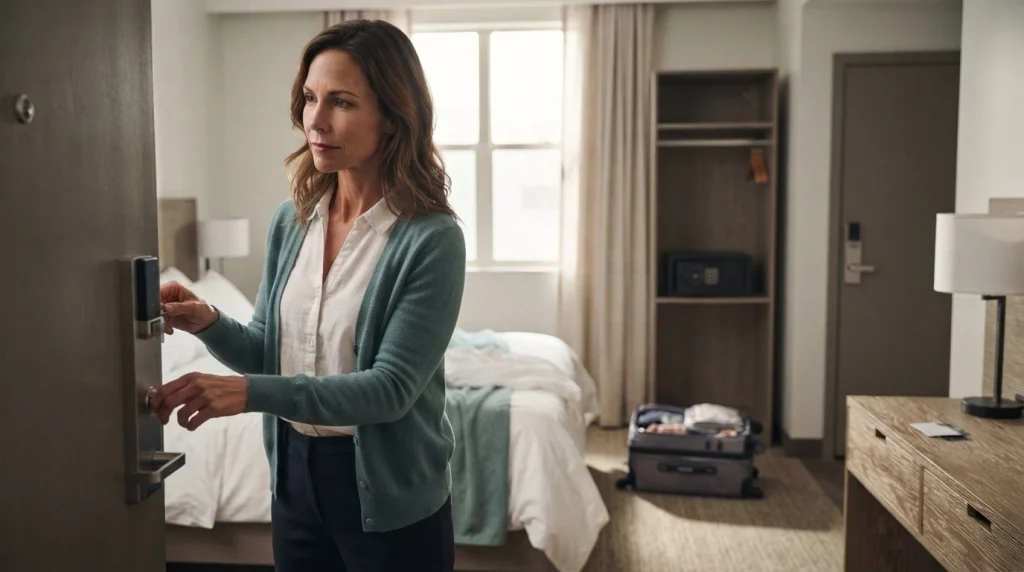
Inspect your room immediately, test every accessible lock, close the curtains, and learn how to contact reception. Repeat the basic checks whenever you return, especially after housekeeping or maintenance visits.
What should you do during your first 10 minutes in the room?
Take a few minutes before unpacking to check your surroundings. This simple routine can reveal problems while it’s still easy to request another room.
- Secure the entrance: Close the door and test the deadbolt, privacy latch, or chain if provided.
- Check accessible openings: Inspect windows, balcony doors, and any connecting door for working locks.
- Check the curtains: Close them fully and look for gaps that expose the bed or changing area.
- Inspect the room: Look behind curtains, under the bed, and around obvious areas for anything unusual.
- Test communication: Confirm that the room phone works, or save the hotel’s verified reception and emergency numbers.
- Locate emergency exits: Read the evacuation information and identify the nearest usable exit route.
If you notice an unexplained device, damaged lock, or sign of unauthorized entry, don’t dismiss it. Contact hotel management and request a room inspection or relocation.
Should you use a portable hotel door lock or door wedge?
A portable door wedge or compatible travel lock can add a layer of protection when you’re inside the room. It doesn’t replace a properly functioning hotel lock, and not every device fits every door.
- Choose a device designed for the door style you expect to encounter.
- Read the manufacturer’s instructions and test it before relying on it.
- Keep the device accessible rather than buried in your luggage.
- Never use a device that blocks your ability to leave quickly during a fire or emergency.
Check local rules and accommodation policies before using additional locking equipment. If a door cannot be secured properly, ask for another room instead of relying on a gadget to compensate for a faulty lock.
How should you handle housekeeping and unexpected visitors?
Keep the door locked whenever you’re inside, and don’t open it solely because someone claims to work for the hotel. Call reception using a verified number to confirm unexpected maintenance, deliveries, or housekeeping visits.
If you have arranged a service visit, you can still ask the employee to identify themselves before opening the door. You can also decline nonessential housekeeping and request a convenient time when you feel comfortable.
When leaving, check that the door closes and locks completely. Keep your room key separate from any paper or luggage tag displaying your room number.
Section Takeaway: A consistent arrival and return routine is more useful than relying on one security gadget. Keep privacy measures compatible with emergency escape.
How can you keep your identity and personal information private?
Protect your hotel location, room number, identification documents, and daily schedule from people who don’t need that information. Share essential details privately with trusted contacts rather than disclosing everything publicly.
How should you check in without revealing your room number?
At reception, ask the staff to write your room number down instead of announcing it aloud. You can also request that they don’t disclose your name, room number, or presence to callers or visitors.
Use the minimum personal information permitted by local law and the hotel’s registration requirements. Never provide false identification details when the property or authorities legally require accurate information.
Keep your key card separate from paperwork displaying your room number. If you lose your key, report it promptly and ask whether the hotel can deactivate it and issue a replacement.
What personal information should you avoid sharing with strangers?
Friendly conversations are part of the pleasure of solo travel, but you can enjoy them without giving away details that make you easy to locate.
- Your accommodation: Avoid disclosing the hotel’s name, room number, floor, or entrance details to people you’ve just met.
- Your schedule: Don’t reveal exactly when you’ll leave, return, or travel to your next destination.
- Your documents: Never send passport images, booking confirmations, or identification details to unverified contacts.
- Your finances: Keep payment card details, account passwords, and banking notifications private.
- Your contact details: Share your personal phone number or messaging accounts only when you’re comfortable doing so.
If someone asks where you’re staying, a simple response such as “I’m staying somewhere nearby” can protect your privacy without making the conversation awkward. You don’t owe a new acquaintance a detailed explanation of your plans.
Should someone know where you’re staying?
Yes, one trusted person should ideally know your accommodation details and have a way to reach you. Privacy means controlling access to your information, not making yourself impossible to find in an emergency.
Share your booking details, arrival plans, and an agreed check-in time with someone you trust. If your itinerary changes, update that person privately.
Section Takeaway: Keep accommodation details away from strangers while maintaining a reliable connection to someone you trust. Confidentiality and emergency preparedness work best together.
How can you protect digital privacy and check for privacy concerns?
Protecting hotel privacy also means securing your phone, laptop, online accounts, photographs, and internet connection. Digital habits can reveal your accommodation and travel schedule even when your room door is locked.
How can you keep your hotel location private online?
Review your social media and location-sharing settings before and during your trip. Avoid publishing identifiable accommodation details while you’re still staying there.
- Delay hotel posts: Share recognizable room views, hotel names, and location-tagged photographs after you’ve checked out.
- Review location permissions: Disable unnecessary access for social apps and other services that don’t need your location.
- Check shared albums: Make sure photographs and travel documents aren’t automatically shared with unintended recipients.
- Secure your accounts: Use strong, unique passwords and multifactor authentication where available.
- Protect your connection: Verify the hotel’s Wi-Fi network with reception and avoid sensitive transactions on untrusted networks.
A virtual private network (VPN) can encrypt traffic between your device and the VPN service, depending on the setup. However, it doesn’t make every online activity anonymous or protect you from every threat.
Pro tip: The U.S. Department of State’s communication abroad guidance explains why travelers should use caution with hotel and public Wi-Fi networks.
How can you check for a possible hidden camera?
Start with a calm visual inspection of the room, especially unfamiliar electronics positioned toward private areas. If you notice an unusual device, don’t assume it is a camera based on its appearance alone.
- Check obvious objects and electronics for unexpected lenses, unfamiliar wiring, or devices that don’t seem to belong.
- Look for items placed in unusually exposed positions facing the bed, bathroom, or changing area.
- Don’t dismantle hotel equipment or damage property while investigating a concern.
- If something appears suspicious, photograph it only if safe, leave the room if necessary, and notify hotel management or local authorities.
Phone apps and internet-connected camera detectors aren’t reliable proof that a room is free of surveillance devices. A basic inspection can identify some concerns, but it cannot guarantee complete privacy.
Also remember that hotel Wi-Fi operators may be able to observe certain network activity. Use secure websites and apps, keep software updated, and avoid accessing sensitive accounts on devices you don’t control.
Section Takeaway: Keep your location offline until you’re ready to share it, secure your devices, and report credible privacy concerns instead of attempting risky investigations yourself.
What should you do if someone violates your hotel privacy?
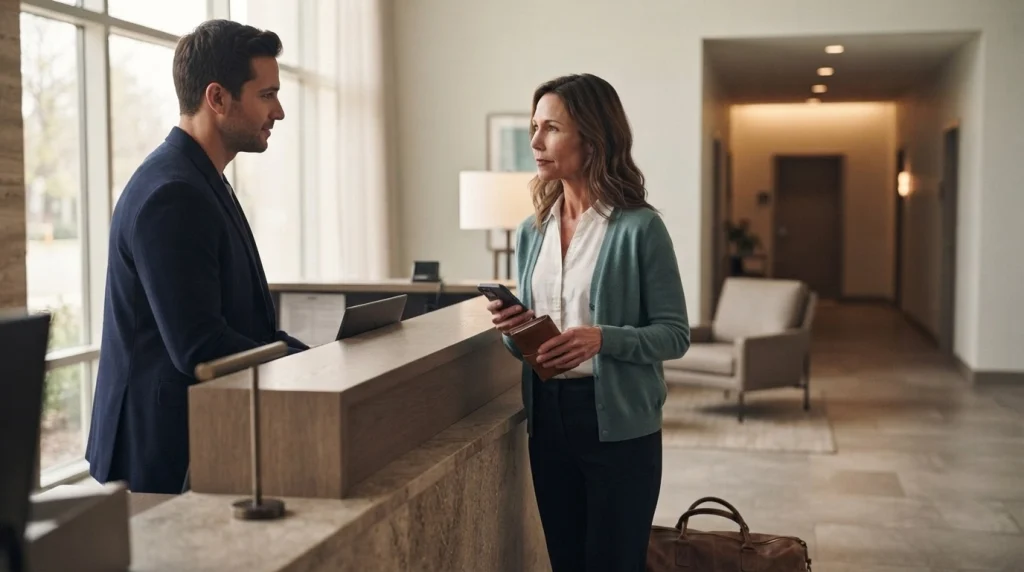
If someone enters your room without authorization, discloses your room number, or makes you feel threatened, prioritize getting to a safer place. Contact hotel management and local emergency services when appropriate, and don’t feel obliged to remain at a property that no longer feels secure.
What if someone knocks and claims to be hotel staff?
Keep the door closed until you can verify the person’s identity. Call reception using a number you know is legitimate and ask whether the visit was authorized.
If the person pressures you to open the door, refuses to identify themselves, or tries to enter, contact hotel security or local emergency services. Move toward a staffed public area if you can do so safely.
What if you find your door open or notice signs of entry?
Don’t enter a room that appears to have been accessed without your permission if you suspect someone may still be inside. Move to a secure public area and contact hotel security or the police.
Once you’re safe, document what happened, preserve relevant messages or booking records, and report missing belongings or suspected unlawful access. Ask management to preserve any relevant security footage if available.
When should you request a different room or change hotels?
Request another room when a lock doesn’t work, your room number has been disclosed, or a privacy concern remains unresolved. If the issue involves a credible threat, suspected unauthorized entry, or persistent harassment, consider leaving the property entirely.
Before moving, arrange transport and alternative accommodation if possible. Keep your phone, identification, payment method, and essential medication with you rather than leaving them unattended while sorting out the problem.
For international travel, consult your country’s official travel advice for destination-specific guidance. The Australian government’s advice for women travelling overseas also covers accommodation security and practical precautions.
Section Takeaway: You don’t need to prove that a threat is serious before taking reasonable precautions. Get to safety, report the issue, and relocate when the circumstances justify it.
Frequently Asked Questions
Can hotel staff enter my room without permission?
Hotel entry rules depend on local law, the booking agreement, and the circumstances. Staff may need access for housekeeping, maintenance, emergencies, or other legitimate reasons, but you can ask about the property’s policies and request privacy when practical.
Should a woman use a portable door lock in a hotel?
A compatible portable door lock or door wedge can provide an additional barrier while you’re inside a room. It isn’t a substitute for working hotel locks, and you should never use one in a way that prevents emergency evacuation.
Is it safe to tell hotel reception that I’m traveling alone?
You can tell reception when that information is necessary for your booking or assistance, but you don’t need to announce it publicly. Ask staff to keep your room number confidential and avoid discussing your travel plans where other guests can overhear.
Should I leave the Do Not Disturb sign on my hotel door?
A Do Not Disturb sign can communicate that you don’t want routine housekeeping, but it doesn’t prevent authorized entry or guarantee security. Follow the hotel’s safety procedures, and remember that some properties conduct welfare checks under their policies.
Can hotel Wi-Fi expose my personal information?
Hotel Wi-Fi can present privacy risks, particularly if the network is untrusted or poorly secured. Verify the correct network with reception, use secure websites and apps, keep your devices updated, and avoid sensitive transactions when you cannot trust the connection.
What should I do if I suspect a hidden camera in my hotel room?
Leave the room if you feel unsafe, avoid touching or dismantling the suspected device, and report the concern to hotel management and local authorities as appropriate. Request alternative accommodation and document what you observed if doing so is safe.
How can I protect my hotel privacy without feeling anxious throughout my trip?
Create a simple routine: check the room on arrival, lock the door, protect your personal information, and share your itinerary with one trusted contact. Once those basics are covered, focus on enjoying your trip rather than repeatedly checking for unlikely threats.
Make Hotel Privacy Part of Every Solo Trip
Knowing how to protect your privacy in a hotel helps you travel with greater confidence and control. The most useful precautions are often simple: choose accommodation carefully, keep your room number confidential, secure your door, protect your devices, and share your plans selectively.
Before your next trip, save a short hotel privacy checklist on your phone and review the latest official safety advice for your destination. If a property cannot provide reasonable privacy or address a legitimate concern, choose a safer alternative whenever possible.
Your accommodation should be a place where you can rest and recharge. A few thoughtful habits can help you protect that personal space while still enjoying the freedom of traveling alone.
Travel safety guidance can change with local conditions. Check current official advice and emergency contacts before departure, and follow local laws and hotel safety procedures during your stay.