How Should a Woman Prepare Emergency Contact Information Before Travel?
Quick Answer
A woman should prepare emergency contact information before travel in several formats, not only inside her phone. Create a short list of trusted people, local emergency services, accommodation contacts, insurance details, and consular information, then keep copies both offline and with someone at home. The CDC’s before-travel guidance also recommends carrying emergency contacts and making sure someone at home knows how to reach you.
Prepare your emergency information in six steps
- 1. Pick trusted contacts: Choose at least two people who know your itinerary and can act if something goes wrong.
- 2. Save local numbers: Record the police, ambulance, fire, accommodation, and relevant embassy or consulate contacts.
- 3. Add medical details: Include allergies, important medicines, insurance contacts, and essential health information when relevant.
- 4. Keep an offline copy: Carry a small printed card in a separate place from your phone and passport.
- 5. Share your plan: Give one trusted person your itinerary, accommodation details, transport plans, and check-in schedule.
- 6. Test access: Make sure you can find the information quickly with no Wi-Fi, no mobile data, or a dead phone.
One useful rule
- If losing your phone would also make you lose every emergency contact, your backup plan is not finished.
When women ask me how they should prepare emergency contact information before travel, my answer is simple: build a small emergency system, not just a phone contact called “Mom.” Your emergency contact list for solo travel should still work if your phone disappears, your battery dies, or you cannot get online.
This matters even more when you’re traveling alone. Nobody beside you automatically knows whom to call, where you’re staying, or what your next stop should have been.
In This Guide
- What emergency contact information should a woman prepare before travel?
- Who should be on your travel emergency contact list?
- What destination-specific emergency numbers should you save?
- Where should you store emergency contact information?
- What medical and personal information should you include?
- How should you create a check-in plan with someone at home?
- Frequently asked questions
Emergency contact information for travel is a compact record of the people, organizations, medical services, accommodation providers, insurers, and official authorities you may need to reach quickly during a serious problem away from home.
What Emergency Contact Information Should a Woman Prepare Before Travel?
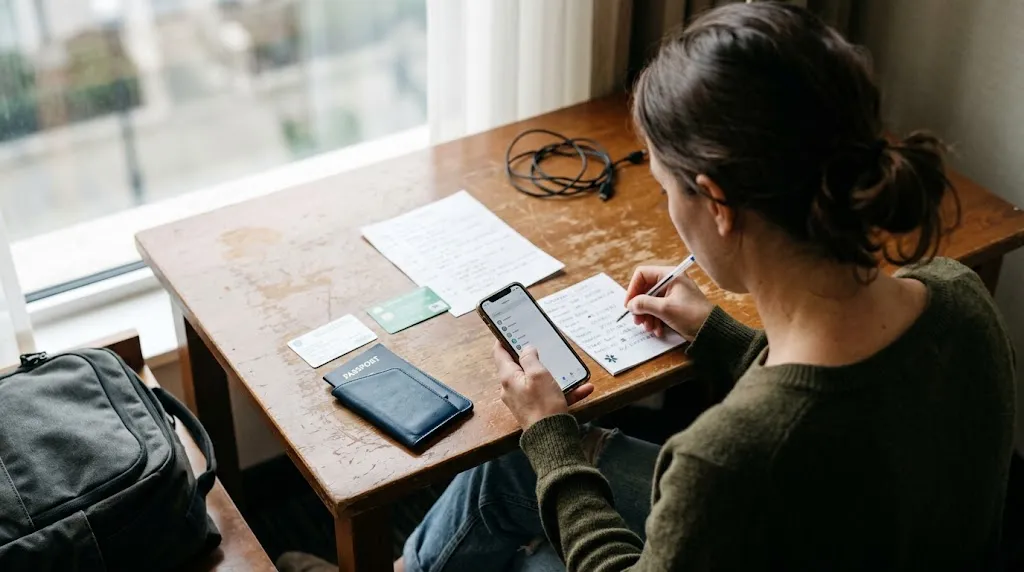
Your list should answer three questions fast: who can help me, who needs to know, and what information will they need? I prefer one short master list rather than several scattered notes.
Keep it practical. You do not need pages of information that become impossible to scan while you’re stressed.
Start with a basic emergency contact sheet
For a typical solo trip, I would include these details:
- Primary trusted contact: Full name, relationship, phone number with country code, and email address.
- Backup trusted contact: A second person in case the first cannot be reached.
- Accommodation: Hotel, hostel, guesthouse, or host name, address, phone number, and booking reference if useful.
- Travel insurance: Insurer name, policy number, emergency assistance number, and claims contact.
- Local emergency services: Police, ambulance, and fire numbers for your destination.
- Consular assistance: Contact details for the embassy, consulate, or diplomatic mission relevant to your nationality.
- Essential medical information: Serious allergies, important medicines, major conditions, and emergency medical contacts when applicable.
- Current itinerary: Cities, accommodation dates, major flights, trains, buses, or transfers.
Include international dialing codes. A number saved without its country code may become much less useful after you cross a border or use another SIM.
I also avoid making one person responsible for everything. Two trusted contacts create a simple backup if one person is asleep, traveling, working, or unreachable.
Section Takeaway: Your emergency sheet should be short enough to scan in seconds but complete enough that another person could understand your situation and start helping.
Who Should Be on Your Travel Emergency Contact List?
Choose people based on reliability and availability, not only emotional closeness. Your best friend may not be your best emergency contact if she rarely answers unknown calls or checks messages once a day.
Before adding someone, ask whether they’re comfortable being your emergency contact. Tell them where you’re going and what you expect them to do if something feels wrong.
Your primary contact
Your primary contact should know your basic itinerary and how you normally communicate. They should also know when a missed message is ordinary and when it deserves attention.
For example, a delayed evening check-in after a long train ride is different from missing two agreed check-ins after you were supposed to arrive hours earlier.
Your backup contact
A backup person matters if your primary contact cannot respond. Ideally, your two contacts should be able to communicate with each other.
- Give both people your travel dates.
- Share your main accommodation information.
- Tell them the best way to reach you.
- Explain your check-in routine.
- Tell them whom to contact next if they become concerned.
Consider a destination-side contact
If you’re visiting friends, attending a conference, joining a tour, or staying with a host, add a reliable local contact too. They may be able to help faster with language, transportation, or local procedures.
Do not treat a person you barely know as your only safety contact. Keep your independent home contacts in the plan.
What Destination-Specific Emergency Numbers Should You Save?
Never assume your home country’s emergency number works abroad. Emergency numbers vary, and some destinations use different services or procedures.
Check official government or destination sources shortly before departure. Numbers and consular arrangements can change.
Save these local services
- Police: For immediate threats, theft, assault, or urgent security problems.
- Ambulance: For serious illness or injury.
- Fire service: Especially useful when staying in apartments, guesthouses, or smaller properties.
- Accommodation front desk: Save a number that works outside normal reception hours when available.
- Travel insurer: Save the insurer’s emergency assistance line, not only its general customer service number.
- Bank or card issuer: Keep a verified lost-or-stolen card number separately from the card itself.
- Embassy or consulate: Record the nearest relevant diplomatic mission and any emergency contact procedure.
U.S. citizens traveling internationally can also consider the Smart Traveler Enrollment Program, or STEP. It can provide embassy or consulate alerts and can help officials reach travelers or their emergency contacts during certain emergencies.
Your own country may offer a similar traveler-registration or consular-alert service. Check your foreign ministry’s official website rather than relying on an old travel blog post.
Pro tip: Verify local emergency numbers and current travel advisories shortly before departure through official government sources. Save screenshots or offline copies if internet access may be unreliable.
Where Should You Store Emergency Contact Information?
Use at least two different storage methods. Your phone is convenient, but convenience disappears if the phone is lost, stolen, damaged, or out of power.
I like the rule “one digital, one physical, one remote.” It gives you three different ways to recover the same essential information.
| Storage Method | Works Offline? | Works if Phone Is Dead? | Best Use |
|---|---|---|---|
| Phone contacts or offline note | Yes, if saved locally | No | Fast everyday access |
| Printed wallet card | Yes | Yes | Immediate backup |
| Paper copy in luggage | Yes | Yes | Backup if wallet or day bag is lost |
| Secure cloud storage | Usually no | Yes, with another connected device | Recovering information remotely |
| Copy held by trusted person | Yes for you only by contacting them | Yes | Remote emergency support |
Keep physical copies in separate places
Do not put every backup beside your passport, phone, and bank cards. One stolen handbag could remove the entire system at once.
I would keep a small emergency card in my wallet or day bag and another copy elsewhere in my luggage. Avoid printing more sensitive information than you genuinely need.
Make your phone useful from the lock screen
Most modern phones offer emergency or medical information that can sometimes be accessed without fully unlocking the device. Check your phone’s current settings and decide what information you’re comfortable making visible.
Do not expose unnecessary financial data, passport numbers, passwords, or full identity records on a lock screen.
Section Takeaway: Redundancy is the goal. Losing one device, bag, password, or connection should not erase your ability to get help.
What Medical and Personal Information Should You Include?
Include information that could change how someone helps you during an emergency. Leave out sensitive details that serve no practical purpose.
The CDC recommends travelers consider carrying information about serious medical conditions, medicines, and allergies. Its guidance on getting health care during travel also suggests planning in advance for how you would obtain care abroad.
Useful medical information may include
- Your full name as shown on your travel documents.
- Date of birth when medically useful.
- Serious allergies.
- Major chronic conditions relevant to emergency care.
- Generic names of important medicines.
- Blood type, if confirmed and medically relevant.
- Travel insurance company and emergency assistance number.
- Your doctor’s contact details when your health situation makes this useful.
If you depend on medication, keep the medication itself in properly labeled packaging where required. Your emergency card should support care, not replace your prescriptions or medical records.
Do not turn the card into an identity file
A small emergency card does not need your banking passwords, full credit card details, email passwords, security answers, or a long list of account credentials. That creates another risk if the card is lost.
For passports and insurance documents, consider secure copies in a separate protected location. Give only the information a trusted contact truly needs.
Pro tip: Travelers with medical conditions should review destination-specific health advice and discuss important needs with a qualified healthcare professional before departure.
How Should You Create a Check-In Plan With Someone at Home?
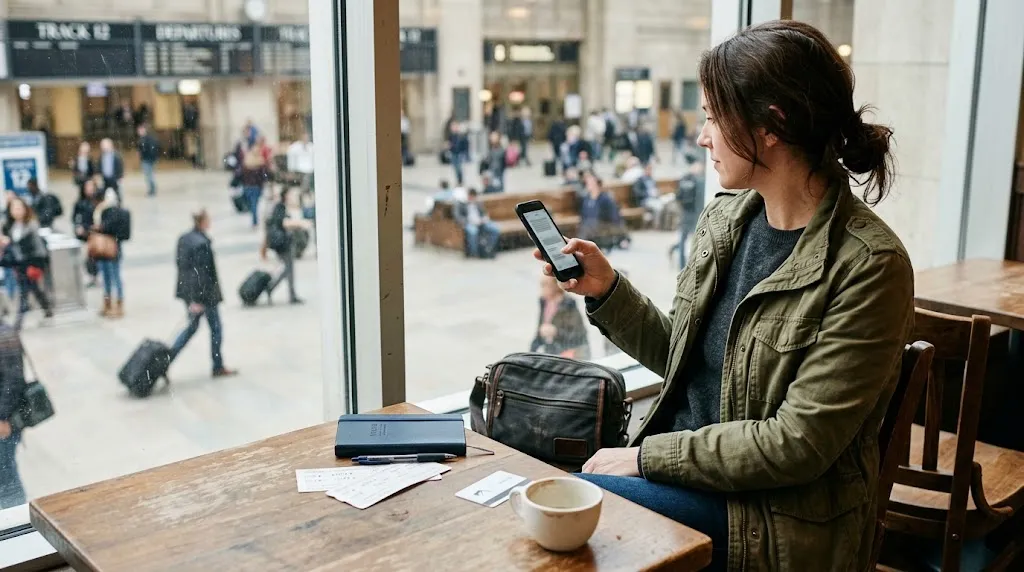
A contact list becomes much more useful when your trusted person knows when they should act. Without a plan, a missed message can create either unnecessary panic or dangerous delay.
Keep the system simple enough that you’ll follow it. Daily hourly updates usually become exhausting on an ordinary vacation.
Set a realistic communication rhythm
For a normal city trip, you might agree to check in after major transfers or once each evening. Remote hikes, overnight transport, high-risk activities, or isolated destinations may justify more frequent communication.
- Arrival check: Message after reaching a new city or accommodation.
- Activity check: Share plans before a remote hike, long drive, boat trip, or isolated excursion.
- Return check: Confirm when you’ve returned from an activity with limited connectivity.
- Escalation time: Agree how long your contact should wait after a missed check-in.
- Next action: Tell them whether to contact your accommodation, tour provider, insurer, local authorities, or consular services.
Give your contact enough information to be useful
Your trusted person should know your destination, accommodation, travel dates, major transport details, and the names of any tour companies involved in higher-risk activities. They do not need a minute-by-minute diary.
The CDC advises leaving copies of important travel information with someone at home and making sure that person knows how to reach you in an emergency.
Plan for a wider crisis too
During a natural disaster, political disruption, major transport shutdown, or other large emergency, normal communications can become unreliable. Decide in advance which messaging app, SMS number, email address, or secondary channel you’ll try.
For U.S. citizens abroad, the State Department’s crisis response guidance explains how embassies and consulates may assist during major emergencies. Travelers of other nationalities should identify the equivalent official resource before leaving home.
Section Takeaway: A useful check-in plan defines what “late” means, who acts first, and which official or local contact comes next.
Frequently Asked Questions
Should I carry emergency contact information on paper?
Yes. A small printed emergency card is a useful backup because it still works if your phone is lost, stolen, damaged, or out of battery. Keep another copy somewhere separate so one missing bag does not remove both your digital and physical emergency information.
How many emergency contacts should a solo woman traveler have?
Two trusted personal contacts are a practical minimum: one primary contact and one backup. You should also save destination-specific contacts such as local emergency services, your accommodation, insurer, and the embassy or consulate relevant to your nationality.
Should my emergency contact have a copy of my passport?
A trusted person may benefit from having access to a secure copy if you lose your passport, but avoid sending sensitive documents casually through unsecured channels. Check your government’s current passport-loss guidance and store copies using a method you consider appropriately secure.
Should I share my complete itinerary with family?
Share enough information for someone to locate your expected route, including destinations, accommodation, key transportation, and major activities. You usually do not need to provide every restaurant or sightseeing stop. Update your contact when important plans change.
What should I do if I travel through several countries?
Create destination-specific sections for each country. Emergency numbers, embassies, insurance procedures, transportation contacts, and local medical resources may change after every border. Review the list before each travel day instead of assuming one set of numbers works everywhere.
When should I update my travel emergency contact list?
Review it shortly before every trip and again when your itinerary changes. In 2026, phone numbers, accommodation details, government advisories, insurance contacts, and consular procedures can still change, so verify important information through official sources close to departure.
Final takeaway: Your emergency contact information should work even when your normal travel routine does not. Prepare it before departure, keep it in more than one place, share the right details with trusted people, and verify official numbers for every destination.
It takes less effort than rebuilding the information during a crisis. Make the list part of your regular pre-trip routine, then enjoy your solo trip knowing that someone can help you quickly if plans go wrong.