How Can a Woman Prepare for Changing Weather on a Solo Trip?
Quick Answer
A woman can prepare for changing weather on a solo trip by checking forecasts repeatedly, packing flexible layers, protecting essential items from rain, and building indoor alternatives into her itinerary. I also recommend reviewing official weather-readiness guidance before outdoor plans where storms, heat, snow, or strong winds could create safety problems.
My six-step weather plan
- Research the season: Check typical temperatures, rainfall, storms, humidity, and daylight before packing.
- Pack flexible layers: Carry pieces you can add or remove instead of relying on one heavy outfit.
- Recheck forecasts: Look again several days before departure, the night before activities, and each morning.
- Protect essentials: Keep your phone, documents, medication, and spare clothing protected from water.
- Create a Plan B: Choose nearby indoor activities before bad weather arrives.
- Change plans early: Don’t wait until conditions become dangerous before returning to shelter.
Changing weather can make solo travel feel harder because every decision is yours. Learning how to prepare for unpredictable weather on a solo trip makes those decisions much easier.
I plan for flexibility rather than trying to predict every cloud or temperature change. A few lightweight layers, regular forecast checks, and a sensible backup plan give me far more confidence than packing for every imaginable emergency.
In This Guide
- What weather changes should you prepare for before a solo trip?
- How should you pack for weather that changes quickly?
- How often should you check the weather while traveling alone?
- What should you do when the weather changes during your day?
- How can a solo woman create a weather backup plan?
- When should weather make you cancel or change an activity?
- Frequently asked questions
What Weather Changes Should You Prepare for Before a Solo Trip?
The most useful preparation starts with understanding how conditions can change, not simply checking the average temperature. Rain, wind, humidity, intense sun, sudden cold, thunderstorms, and large day-to-night temperature differences can all affect a solo itinerary.
Changing-weather preparation means planning clothing, transportation, activities, and backup options so a shift in conditions doesn’t leave you stranded or poorly equipped.
Research the season before you build your itinerary
Start with the destination’s normal seasonal pattern. Then look for weather risks connected to your particular region, elevation, and activities.
- Rainy periods: Learn whether rain usually arrives as short showers or long storms.
- Mountain areas: Expect quicker temperature and wind changes than you may experience in a city.
- Coastal destinations: Watch wind, storms, rough water, and changing ferry conditions.
- Hot destinations: Consider both temperature and humidity when planning long walks.
- Cold destinations: Think about wind, wet clothing, ice, and shorter daylight hours.
- Shoulder seasons: Prepare for warm afternoons and surprisingly cool mornings or evenings.
I pay special attention when one day includes different environments. A sunny city morning can turn into a cold evening after a train ride into higher terrain.
Think about weather as a safety issue
Weather preparation isn’t only about comfort. It can affect transportation, visibility, trail conditions, dehydration risk, and how quickly you can reach your accommodation.
The U.S. State Department recommends checking destination information and current travel guidance before international trips. Its international travel planning guidance also encourages travelers to prepare for emergencies and changing conditions.
Pro tip: Check your destination’s official meteorological service, government travel advisory, and local emergency alerts before activities affected by weather.
Section Takeaway: Research the type of weather change you may face, not just the expected temperature. Your itinerary should work even when the forecast moves in the wrong direction.
How Should You Pack for Weather That Changes Quickly?
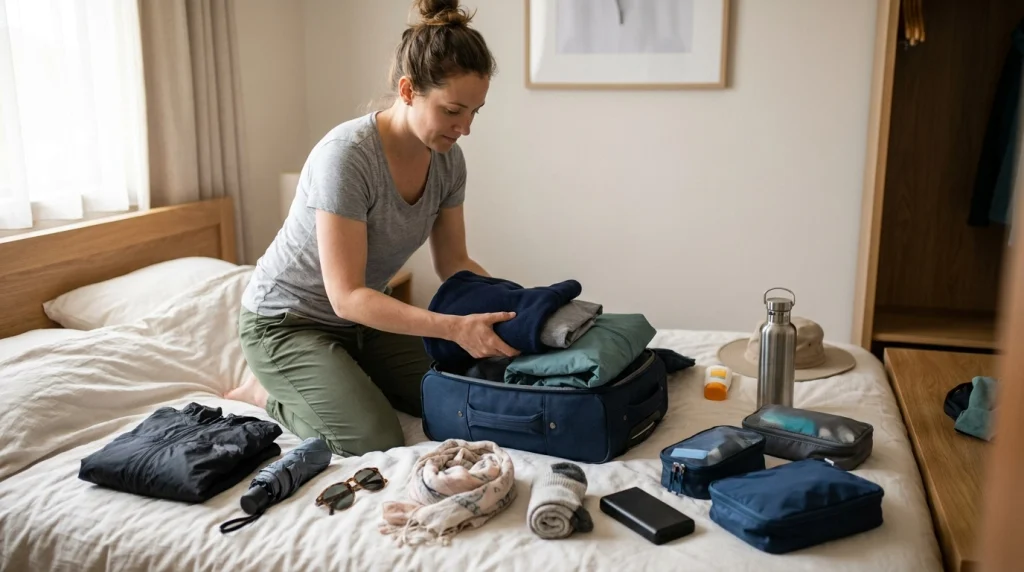
The easiest system is layering. Instead of carrying separate outfits for every forecast, pack clothing that works together.
Use a simple three-layer approach
- Base layer: A comfortable shirt or top suitable for normal daytime temperatures.
- Mid-layer: A sweater, fleece, or light insulated layer for sudden cooling.
- Outer layer: A lightweight waterproof or wind-resistant shell when the destination calls for it.
This system matters even more when you’re traveling alone because you can’t easily borrow a jacket or umbrella from a companion. Each item in my bag needs to solve more than one problem.
Carry a small weather kit
I keep frequently needed weather items where I can reach them without unpacking my entire bag.
- Compact rain jacket or poncho
- Small umbrella when practical
- Sunglasses
- Sun hat or cap
- Sunscreen
- Reusable water bottle
- Light scarf
- Dry socks
- Water-resistant pouch for electronics
- Small power bank
Dry socks sound almost too simple to mention. After several hours in wet shoes, however, they can completely change how comfortable the rest of your day feels.
Protect the items you cannot afford to lose
Rain protection shouldn’t stop with clothing. Keep your phone, identification, medication, tickets, and charging equipment protected inside your main bag.
I prefer several small water-resistant pouches rather than trusting the entire backpack to stay dry. That creates another layer of protection if water gets through a zipper or seam.
For cold environments, the CDC recommends several loose layers and emphasizes staying dry because wet clothing can increase heat loss. Its cold-weather travel guidance also recommends appropriate footwear and weather-specific equipment.
| Weather situation | Useful clothing | Bag item | Solo-travel response |
|---|---|---|---|
| Warm day, cool evening | Base layer + light mid-layer | Packable sweater | Carry the layer even if morning feels warm |
| Intermittent rain | Quick-drying clothes + shell | Rain cover or umbrella | Know your nearest indoor stop |
| Strong sun and heat | Loose, lightweight clothing | Water, hat, sunscreen | Move strenuous sightseeing to cooler hours |
| Cold and wet | Several layers + waterproof outer layer | Dry socks and gloves | Return to shelter before you become chilled |
How Often Should You Check the Weather While Traveling Alone?
Check often enough to catch meaningful changes without letting weather apps control your trip. I use four forecast checkpoints.
- About one week before departure: Use the forecast to identify the general weather pattern.
- About 48 hours before an important outdoor activity: Decide whether your original plan still makes sense.
- The night before: Check timing, temperature, rain, wind, and official alerts.
- The morning of the activity: Make your final go, modify, or cancel decision.
For longer hikes, boat trips, scenic drives, or remote activities, I check again shortly before leaving. Conditions can change faster than a multi-day forecast suggests.
Don’t rely on the temperature alone
A forecast showing 72°F or 22°C doesn’t tell the whole story. Look at rain probability, wind, humidity, thunderstorms, snowfall, visibility, and local warnings when those factors matter.
I also save key information before heading somewhere with weak mobile service. The National Weather Service advises travelers to monitor forecasts and weather watches before outdoor plans rather than waiting until a serious warning forces a rushed decision.
Use more than one source for important plans
Your everyday weather app is convenient, but official local warnings deserve priority. The local meteorological authority usually has better context for severe conditions.
- Use your normal weather app for quick daily planning.
- Use the country’s official weather service for alerts.
- Check transportation providers when weather may affect trains, flights, ferries, or buses.
- Ask accommodation staff about local conditions when geography matters.
Section Takeaway: Forecast checking should become more frequent as an outdoor activity gets closer. For high-impact plans, official alerts matter more than a weather icon on your phone.
What Should You Do When the Weather Changes During Your Day?
Respond early. The safest time to adjust your plan is usually before conditions become uncomfortable or transportation starts failing.
If sudden rain arrives
- Protect your phone and documents first.
- Move to a safe indoor location if visibility or lightning becomes a concern.
- Avoid pushing through flooded streets or unfamiliar routes.
- Check whether your return transport is still operating.
A rainy hour doesn’t need to ruin the day. I often treat it as a cue to swap an outdoor stop with a museum, café, covered market, or longer lunch.
If the temperature suddenly rises
Reduce demanding outdoor activity and move walking-heavy plans toward cooler parts of the day. Drink regularly and take breaks in shade or air-conditioned spaces where available.
The CDC recommends loose, lightweight clothing, fluids, shade, and cooler activity times during hot-weather travel. Its heat illness guidance for travelers also explains warning signs that require prompt attention.
If it becomes colder than expected
Add layers before you become thoroughly chilled. Wet clothing deserves particular attention because staying dry is an important part of cold-weather safety.
If you’re shivering continuously or struggling to get warm, stop treating the situation as an inconvenience. Get into shelter and seek appropriate help if symptoms become concerning.
If thunderstorms or strong winds develop
Outdoor viewpoints, exposed trails, beaches, boat trips, and high places may no longer be sensible choices. Follow local warnings and instructions rather than trying to save a prepaid activity.
I use a simple rule: money already spent doesn’t make unsafe conditions safer.
Pro tip: During severe weather, follow the destination’s official emergency authority and local meteorological service rather than depending on social media posts.
How Can a Solo Woman Create a Weather Backup Plan?
A good Plan B is specific. “I’ll find something indoors” is much less useful than knowing exactly where you can go and how you’ll get there.
Create one indoor alternative for important outdoor days
When I schedule a major outdoor activity, I save at least one nearby alternative. I also check opening hours before the trip.
- Museum or gallery
- Historic indoor attraction
- Covered food market
- Cooking or craft class
- Spa or wellness activity
- Café district
- Indoor shopping area
This works especially well on a five- or seven-day trip. Flexible activities can trade places while fixed reservations stay where they are.
Protect your route back to accommodation
Solo travelers need to think about the return journey before conditions deteriorate. A scenic walk may be easy in daylight and far less appealing during heavy rain after sunset.
Before going somewhere unfamiliar, save:
- Your accommodation address
- A screenshot of the route back
- Public transport alternatives
- A reputable taxi or ride-booking option where available
- Enough battery for navigation and communication
- Emergency contact information
I also avoid draining my phone by constantly taking video when poor weather may force me to use navigation longer than expected.
Tell someone when weather changes a remote plan
If you’re heading into a remote area, share your destination and expected return time with someone you trust. Update them if weather changes your route significantly.
Eligible U.S. travelers can also review the State Department’s STEP information through its travel planning resources. STEP can provide embassy alerts that may include security issues and severe weather.
Section Takeaway: A weather backup plan should answer three questions: where will I go instead, how will I get there, and how will I get safely back to my accommodation?
When Should Weather Make You Cancel or Change an Activity?
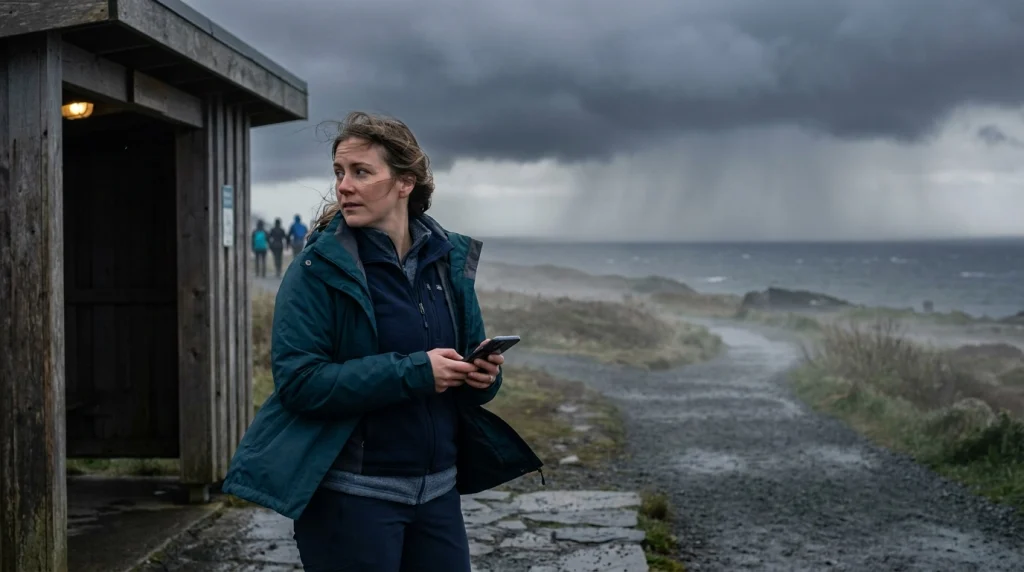
Change the plan when the weather begins affecting safety rather than comfort. Your threshold should become more conservative when you’re alone, remote, inexperienced, or dependent on limited transport.
I would reconsider an activity when any of these situations appears:
- An official severe-weather warning affects the activity area.
- Lightning threatens an exposed outdoor route.
- Flooding affects roads, paths, or public transportation.
- Strong winds disrupt ferries, cable cars, hiking routes, or exposed viewpoints.
- Extreme heat makes the planned physical activity unsafe.
- Snow or ice exceeds my experience or equipment.
- Visibility becomes poor enough to make navigation difficult.
- Local authorities or experienced operators recommend canceling.
Solo travel rewards independence, but independence doesn’t mean refusing to change your mind. Sometimes the smartest decision is eating lunch somewhere warm and trying again tomorrow.
Separate disappointment from risk
Weather cancellations can feel worse on a solo trip because there’s nobody beside you to confirm the decision. I give myself permission to be disappointed without turning that feeling into a risky choice.
Ask yourself one question: “Would I recommend that another woman do this alone in these conditions?”
If your answer is no, listen to it.
Leave extra flexibility around weather-dependent highlights
If one experience matters most, don’t automatically schedule it on your final day. Put it earlier when possible so you have another chance if weather intervenes.
For example, on a four-day coastal trip, I would rather book the weather-dependent boat excursion for day two than day four. That leaves room to move it without rebuilding the entire itinerary.
Pro tip: Check official destination advisories and local emergency guidance whenever severe weather, flooding, storms, wildfire conditions, or another natural hazard affects your plans.
Frequently Asked Questions
What should a woman pack for unpredictable weather on a solo trip?
Pack versatile layers, a weather-resistant outer layer when appropriate, comfortable shoes, sun protection, water, dry socks, and protection for electronics and documents. Choose items that work together so you can adjust without carrying several complete weather-specific outfits.
Should I bring an umbrella or a rain jacket when traveling alone?
A rain jacket is usually easier when walking with luggage or dealing with wind. A compact umbrella can still be useful for urban sightseeing. Check the destination’s climate and consider carrying both when rain is frequent and luggage space allows.
How many times should I check the weather before an outdoor activity?
I check the general forecast about a week ahead, again around 48 hours before, the previous evening, and on the morning of the activity. For remote or weather-sensitive activities, check official conditions again shortly before departure.
How can I protect my phone from unexpected rain?
Keep it inside a water-resistant pouch or secure inner bag pocket when rain begins. Carrying a small power bank also helps because weather disruptions can increase your need for navigation, transport apps, calls, and emergency information.
What should I do if severe weather begins while I’m sightseeing alone?
Move to appropriate shelter, follow official local instructions, and check your route back to your accommodation. Don’t continue an exposed activity simply because you’ve already paid for it or traveled a long distance to reach it.
How do I keep changing weather from ruining my solo itinerary?
Build flexibility into the schedule. Save one indoor alternative for weather-dependent days, avoid stacking every major outdoor activity together, and place important weather-sensitive experiences early enough that you can reschedule them.
Is checking a weather app enough when traveling abroad?
A weather app is useful for everyday planning, but don’t rely on it alone during severe conditions. Check the destination’s official meteorological service, local emergency alerts, transport operators, and government travel guidance when conditions may affect safety.
The goal isn’t to pack for every possible forecast. It’s to give yourself enough flexibility to respond calmly when the weather changes.
Prepare your layers, save a backup activity, protect your essentials, and check reliable forecasts before you leave each morning. Then you can spend less time worrying about the sky and more time enjoying your solo trip.