How Can a Woman Plan for a Canceled Activity While Traveling Alone?
Quick Answer
A woman can plan for a canceled activity while traveling alone by preparing one or two flexible alternatives for each important day. When something gets canceled, confirm the cancellation first, protect any refund or rebooking option, check your location and return transportation, then choose a nearby replacement that fits your time, budget, energy, and comfort level. For international trips, review current official travel guidance before making major changes.
A simple cancellation plan
- Confirm it: Check the provider’s official message, app, desk, or website before changing the rest of your day.
- Protect your money: Save receipts and cancellation messages, then check refund or rebooking terms.
- Check the clock: Work out how much usable time remains instead of rebuilding the whole itinerary.
- Check your location: Know how you will reach the replacement activity and return afterward.
- Choose nearby: Favor a simple backup in the same neighborhood when possible.
- Keep an exit: If the new plan feels complicated or uncomfortable, make the rest of the day lighter.
If you’re asking how can a woman plan for a canceled activity while traveling alone, the best answer is to plan for flexibility before anything goes wrong. A cancellation is much easier to handle when you already have choices.
I treat backup planning as part of my solo trip itinerary, not as evidence that I expect problems. Weather changes, tours get canceled, attractions close, and transportation delays happen.
In This Guide
- What does planning for a canceled activity mean?
- What should you do first when an activity is canceled?
- How can you build a backup plan before your trip?
- How should safety affect your replacement plan?
- Should you rebook, request a refund, or replace the activity?
- What backup activities work when solo travel plans change?
- Frequently asked questions
What Does Planning for a Canceled Activity Mean?
Planning for a cancellation means having enough flexibility to replace, postpone, or skip an activity without losing control of the rest of your day. You do not need a second full itinerary.
Definition: A solo travel cancellation plan is a short set of alternative activities, transportation choices, budget options, and practical information you can use when your original booking no longer works.
I think of it as three layers. The first is the activity I booked, the second is my easy alternative, and the third is permission to stop planning for the day.
- Primary plan: The tour, museum, class, excursion, event, or reservation you expected to do.
- Backup plan: A nearby activity that requires little extra planning.
- Reset plan: A café, meal, neighborhood walk, accommodation break, or early return that gives you time to decide later.
The reset plan matters more when you’re alone. There is no travel companion waiting beside you while you research five replacement options.
It also prevents a small problem from becoming a rushed decision. You can sit somewhere comfortable, charge your phone, eat, and decide what comes next.
As of 2026, I also treat reservations as flexible until I reconfirm important details close to the activity date. Opening schedules, weather, local events, and operator plans can change.
Section Takeaway: A useful backup plan protects your choices without filling your trip with contingency schedules.
What Should You Do First When an Activity Is Canceled?
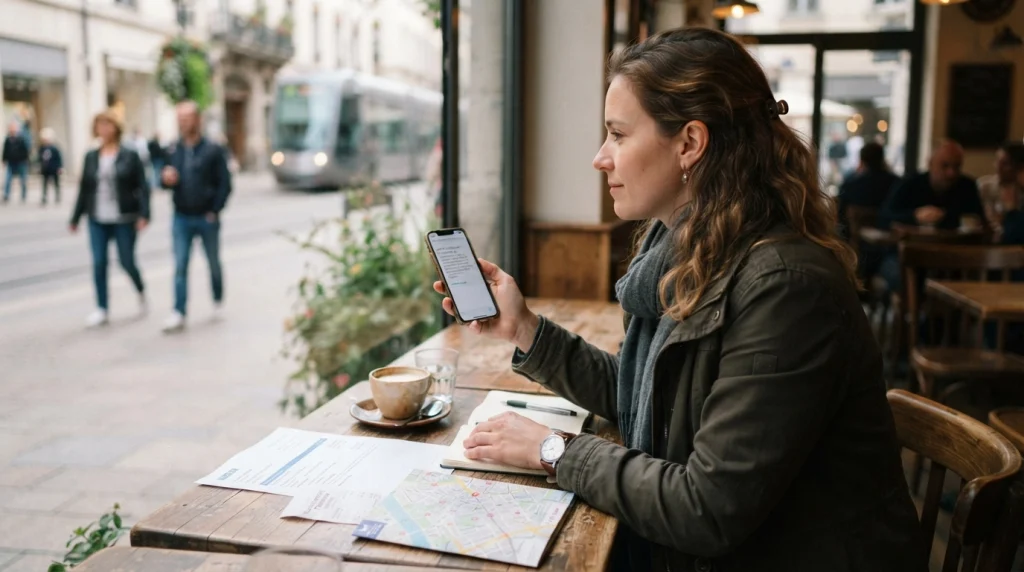
Start by confirming exactly what was canceled and what the provider is offering. Do not rebuild your day from a notification headline alone.
Use a 10-minute reset before choosing something else
My first move is to pause the itinerary rather than immediately filling the empty time. Ten focused minutes can prevent an expensive or inconvenient replacement.
- Confirm the cancellation. Check the provider’s official email, app, website, ticket desk, or message.
- Check your options. Look for a refund, credit, rescheduled departure, or another time slot.
- Save evidence. Keep your booking confirmation, receipts, and cancellation notice until the issue is resolved.
- Check the time. Decide whether you have two hours, half a day, or most of the day available.
- Check your surroundings. Identify transportation, staffed public spaces, food, and your route back.
- Check your energy. A tiring morning may make a lighter afternoon better than another major attraction.
Protect the rest of the itinerary
A canceled morning tour should not automatically disrupt dinner, transportation, or an evening reservation. Start with commitments that still have fixed times.
For example, imagine your 10:00 a.m. walking tour is canceled and you have a 6:30 p.m. theater booking. Your replacement should fit inside that window with enough time to return, eat, and travel to the theater.
I would avoid a distant day trip in that situation. A museum, market, neighborhood walk, or relaxed lunch usually creates less pressure.
Do not spend just because you suddenly have free time
A cancellation can trigger the feeling that you need to rescue the day. That can lead to booking an expensive replacement you never wanted.
I compare the new activity with what I would happily choose on a normal day. If I would not spend $60 on it without the cancellation, I do not suddenly treat $60 as necessary.
Section Takeaway: Confirm first, protect existing commitments, and only then decide how much of the newly open time you want to fill.
How Can You Build a Backup Plan Before Your Trip?
A good backup plan can be built in a few minutes while researching each destination. Save choices instead of scheduling all of them.
Create an optional list by area
I prefer backups that sit near places already on my itinerary. This reduces transportation decisions when plans change.
- Indoor option: Museum, gallery, historic interior, covered market, café, or workshop.
- Outdoor option: Park, waterfront, neighborhood walk, garden, or viewpoint.
- Low-energy option: Long lunch, bookstore, coffee shop, spa treatment, or accommodation break.
- Social option: Hostel event, food tour, class, group experience, or organized meetup.
- Free option: Walking route, public square, market, architecture area, or self-guided photography walk.
Travel resources such as Lonely Planet can help you identify possible neighborhoods and attractions. I still verify opening information with the attraction or local authority before going.
Save backups without assigning them a time
Your saved list is not another itinerary. It is a menu you can use when circumstances change.
I might save six possible places for a four-day city trip while scheduling only two. The unused options become useful when rain, fatigue, closures, or cancellations change the plan.
Keep a small change-of-plan budget
I like to protect roughly 5% to 10% of my flexible trip spending for changes rather than allocating every dollar before departure. That is a personal planning rule, not a required travel budget.
If your normal daily activity budget is $50, for example, keeping even $5 to $10 uncommitted each day creates more flexibility over a week. You can also carry the unused amount forward.
Save practical information offline
A backup activity is less useful if you cannot find it when your mobile connection disappears. Keep essential details accessible offline.
- Accommodation name and address
- Booking confirmations
- Transportation screenshots
- Offline map areas
- Provider contact information
- Emergency and insurance contacts
- A short list of backup places
Section Takeaway: Research more options than you schedule. That gives you flexibility without making the trip feel overplanned.
How Should Safety Affect Your Replacement Plan?
A replacement activity should not require you to abandon the safety decisions you made for the original day. Convenience is useful, but your ability to leave matters more.
Check how the new plan changes your return
A daytime cancellation may push another activity into the evening. That can change transportation frequency, walking conditions, opening hours, and how familiar the area feels.
- Know how you will return to your accommodation.
- Check when public transportation stops or becomes less frequent.
- Keep enough battery for maps, communication, and transportation.
- Keep a backup payment method available.
- Avoid relying on a complicated late connection you have not researched.
- Leave if your replacement plan stops feeling comfortable.
If a new activity moves you to a different part of a city, I treat it as a new logistics decision. I check the route out as carefully as the route in.
Do not turn cancellation stress into urgency
You do not have to accept an invitation, unofficial ride, or unfamiliar arrangement just because your original plan disappeared. Free time is not an emergency.
If you’re traveling internationally, check health information relevant to your destination through the CDC travel resources or your country’s equivalent public-health authority.
Pro tip: For safety, health, legal, or emergency guidance, verify current information through the destination’s authorities and your own government’s official travel resources.
Section Takeaway: Your backup activity should preserve a safe, understandable route back and leave you free to change your mind again.
Should You Rebook, Request a Refund, or Replace the Activity?
The best response depends on how important the activity was, how much usable time remains, and what the provider’s cancellation terms allow. Refund eligibility varies by provider and booking conditions.
| Situation | Usually worth considering | Check first | Time approach |
|---|---|---|---|
| Another departure is available soon | Rebook | Whether it conflicts with later plans | Keep a 30–60 minute buffer afterward |
| The activity was a trip priority | Move it to another day | What you would need to move or drop | Rebuild only the affected day |
| You have only a few hours free | Choose something nearby | Travel time and opening hours | Favor a 1–3 hour activity |
| You no longer want the experience | Request the available refund or credit | Provider policy and deadlines | Do not force a replacement |
| The disruption leaves you tired or stressed | Take a reset period | Food, transport, battery, and next commitment | Give yourself 30–90 minutes |
Rebook when the activity matters
If the experience was one of the main reasons for your trip, look for another date before replacing it. Moving one flexible plan may be worthwhile.
Do not move three important bookings to save one ordinary activity. Protect the experiences that matter most.
Take the refund when flexibility is more valuable
A refund or credit may make more sense when rebooking would create transport problems, a rushed day, or extra costs. Read the provider’s terms instead of assuming what you qualify for.
Replace it when the day still has useful space
A replacement works best when it is simple. I would rather enjoy one nearby experience than spend two hours crossing a city to avoid having an empty afternoon.
Travel publications such as Condé Nast Traveler can provide ideas, but always confirm today’s opening information with the place itself.
Section Takeaway: Rebook priorities, protect legitimate refund options, and use nearby replacements when they improve the day rather than complicate it.
What Backup Activities Work When Solo Travel Plans Change?
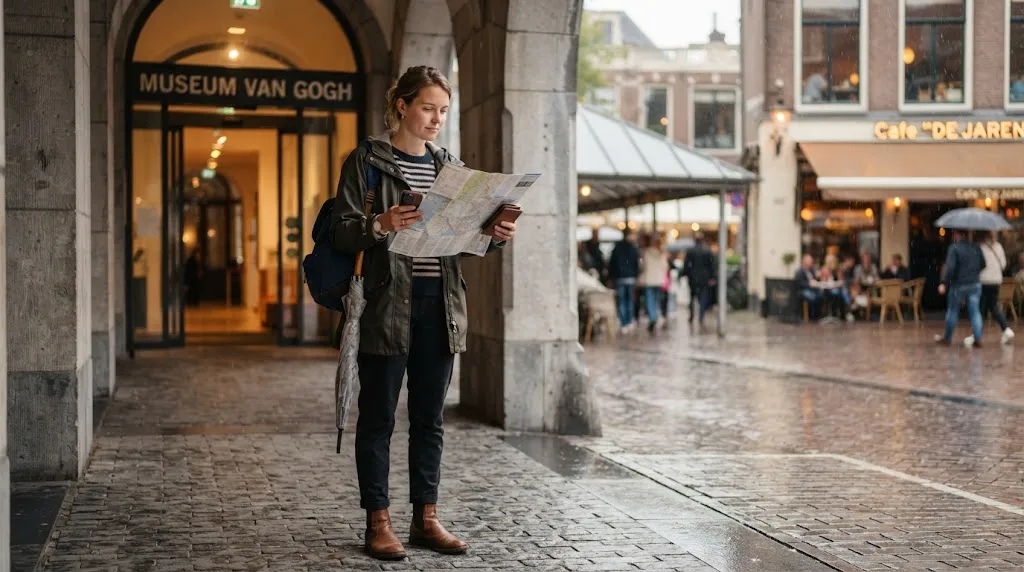
The best backup depends on why the original plan failed. Match the alternative to the problem instead of choosing the first available attraction.
If weather canceled the activity
- Museum or gallery
- Covered market
- Cooking or craft class
- Historic building or indoor attraction
- Long café or restaurant stop
- Bookstore or shopping district with indoor options
Keep travel time short during bad weather when possible. A backup should reduce inconvenience, not move it somewhere else.
If the attraction unexpectedly closed
- Explore another place in the same district.
- Use a saved self-guided walking route.
- Visit a nearby park or public space.
- Move lunch earlier and reconsider afterward.
- Return another day if the attraction is a priority.
If transportation caused the cancellation
Choose something accessible from where you already are. Avoid creating a second transportation problem while trying to fix the first.
If you are tired
Rest can be a legitimate replacement activity. Solo travel gives you the freedom to change the pace without negotiating with anyone.
I use a simple question: “Will I be glad I did this tonight?” If the answer is no, I stop trying to rescue the schedule.
If the canceled activity was expensive
A free or low-cost afternoon can help balance the disappointment without increasing your trip budget. A neighborhood walk, public park, market, or long meal may be enough.
For broader destination research, Nomadic Matt can also provide general planning ideas that you can verify against current local information.
Section Takeaway: Match the backup to the reason for the cancellation. The easiest replacement is often better than the most ambitious one.
Frequently Asked Questions
Should I plan a backup for every solo travel activity?
No. Create backups mainly for days affected by weather, limited schedules, tours, transportation, or important reservations. For ordinary sightseeing, a saved list of nearby alternatives is usually enough.
How many backup activities should I save?
Two or three flexible options per neighborhood or major sightseeing day are usually practical. They should be choices, not extra commitments you feel required to complete.
What should I do if a tour is canceled at the last minute?
Confirm the cancellation with the operator, save the message, and check rebooking or refund options. Then review your remaining time, location, transport, and energy before choosing another activity.
Should I immediately book another paid activity?
Not necessarily. Give yourself a short reset first, especially if the cancellation was stressful or expensive. A free or low-cost replacement may fit the day better.
What if my replacement activity would keep me out later than planned?
Recheck transportation, the return route, phone battery, payment options, and your comfort with the area after dark. Skip or shorten the replacement if getting back becomes unnecessarily complicated.
What if bad weather ruins several activities?
Group your indoor alternatives by neighborhood and protect any activity that still works safely. You can also use the disruption as a lighter day instead of filling every lost hour.
How can I stop a cancellation from ruining my mood?
Separate the lost activity from the entire trip. Give yourself one practical next step, such as lunch or a nearby café, and decide what to do after you have had time to reset.
A canceled activity while traveling alone does not need to become a canceled day. Your goal is to keep enough time, money, energy, and transportation flexibility to make another choice.
I plan the essentials, save a few alternatives, and leave some space unclaimed. When plans change, that empty space becomes one of the most useful things in my itinerary.